
Can Aquaphor Help Diaper Rash? The 40% Zinc Oxide Solution
This post contains affiliate links. As an Amazon Associate, we learn from qualifying purchases
Aquaphor will help diaper rash, but you must pick the right product. Use Aquaphor Healing Fast Relief Diaper Rash Paste with 40% zinc oxide to treat an active rash. Use Aquaphor Healing Ointment with 41% petrolatum to prevent a rash or protect mildly irritated skin. The paste creates a thick, protective barrier that soothes irritation and shields skin from wetness, with relief often starting within 12 hours.
The 40% zinc oxide figure isn’t a marketing claim. It’s the active ingredient concentration listed on the official FDA drug label for Aquaphor Diaper Rash Paste. That specificity matters because lower concentrations work differently.
What follows: a breakdown of which Aquaphor does what, the mechanics of its barrier, a step-by-step application guide most people skip, and the exact signs that mean the rash is winning and you need to call the pediatrician.
Key Takeaways
- Aquaphor’s 40% zinc oxide paste is for treating active diaper rash, while the 41% petrolatum ointment is for prevention and mild protection.
- Zinc oxide works by forming a physical, water-repellent barrier on the skin, separating it from irritants in urine and stool.
- Apply the paste in a thick, visible layer — if you can still see skin clearly, you didn’t use enough.
- If the rash shows blisters, pus, spreads beyond the diaper area, or doesn’t improve within 3 days, stop use and contact your doctor.
- For a stubborn rash, the problem might be the wipe residue. Clean with water and a soft cloth instead of commercial wipes before applying any cream.
How Aquaphor Products Work for Diaper Rash
Aquaphor Healing Fast Relief Diaper Rash Paste contains 40% zinc oxide as its active ingredient, classified as a skin protectant. It works by forming an occlusive barrier on the skin’s surface that repels moisture and irritants, allowing the underlying tissue to heal. The product’s official labeling states it “protects chafed skin associated with diaper rash and helps protect from wetness.”
The two main Aquaphor products are often confused, but they have different jobs. One treats a problem. The other stops it from starting.
Aquaphor Healing Fast Relief Diaper Rash Paste (40% Zinc Oxide) is an over-the-counter drug. Its Drug Identification Number is NDC 10356-115. The 40% zinc oxide concentration is at the top end of the range allowed by the Diaper Rash Products Monograph, which is why it’s labeled for “fast relief.” Zinc oxide doesn’t get absorbed. It sits on top of the skin, creating a shield between your baby’s skin and the wet, acidic environment inside the diaper.
Aquaphor Healing Ointment (41% Petrolatum) is a multi-purpose protectant, also an OTC drug (NDC 10356-101). Its 41% petrolatum formula is excellent for preventing diaper rash by sealing in moisture and providing a light barrier. It’s what you use at every change when things are calm. But for an angry, red, established rash, petrolatum isn’t strong enough to block persistent irritants. You need the heavier artillery of zinc oxide.
| Product Name | Active Ingredient | Best For | How It Works |
|---|---|---|---|
| Aquaphor Healing Fast Relief Diaper Rash Paste | Zinc Oxide 40% | Treating red, inflamed, active rash | Forms a thick, water-repellent physical barrier on skin surface. |
| Aquaphor Healing Ointment | Petrolatum 41% | Preventing rash, protecting mildly chafed skin | Forms a lighter, occlusive layer that seals in skin’s natural moisture. |
The effectiveness of Aquaphor hinges on using the right tool. Putting ointment on a severe rash is like using a raincoat in a flood. It might help a little at the edges, but the main event will wash right through.
When to Use Aquaphor Ointment vs. Paste
This choice comes down to the state of your baby’s skin at the changing table. The visual cue is straightforward.
Use the Aquaphor Healing Ointment (petrolatum) when:
- The skin is intact but slightly pink.
- You’re starting solids or antibiotics, which are common causes of diaper rash.
- You want a daily preventative barrier.
- The skin is dry or chapped from frequent wiping.
Switch to Aquaphor Diaper Rash Paste (zinc oxide) when:
- You see defined patches of red, inflamed skin.
- The skin looks tender or warm to the touch.
- A mild pinkness has deepened into a obvious rash.
- The diaper rash isn’t improving after a day of using just the ointment.
Where this goes sideways: Using the ointment to treat a full-blown rash. Petrolatum is slippery, not sticky. It lacks the drying, protective heft of zinc oxide, so moisture and irritants quickly bypass it. The rash will linger or worsen, often leading parents to think the brand doesn’t work.
The paste is messier and leaves a white cast. That’s the point. The visible layer is proof the barrier is there. If you hate the mess, you’re likely under-applying. For a true severe diaper rash that includes broken skin or dots of blood, even a 40% zinc oxide paste might not be enough. That’s the territory of prescription creams or maximum-strength brands like Desitin Maximum Strength.
Step-by-Step: How to Apply Aquaphor Correctly
The right diaper rash cream applied poorly is no better than the wrong one. Most people don’t use enough.
- Clean the area thoroughly — but gently. Use lukewarm water and a soft cloth or cotton ball. If you use wipes, choose a fragrance-free, hypoallergenic type. Fragrance is a known irritant. For a bad rash, skip wipes entirely; their residue can sting and block the cream from adhering. Pat the skin dry. Don’t rub.
- Check the existing layer. If the previous application of paste is still mostly intact and clean, you don’t need to scrub it all off. The Mayo Clinic diaper rash treatment guide advises that removing it can cause more friction. Just add more on top.
- Apply a thick, generous layer. This is the step everyone skimps on. Squeeze out a blob and spread it over every bit of red or vulnerable skin. You should still see a visible white coating after you smooth it. If the skin tone shows through clearly, you didn’t use enough. The barrier must be continuous.
- Let it set for a moment before diapering. Give the paste 30 seconds to adhere to the skin. This minimizes how much gets immediately wiped off by the diaper’s inner lining.
- Use with every change, especially overnight. Long exposure to a wet diaper is the main enemy. Apply a fresh, thick layer at bedtime and anytime you suspect a diaper might be on longer than usual.
Common mistake: Wiping off all the old cream at every change. This strips the protective barrier and re-irritates the skin with friction. If the old layer is soiled, clean it. If it’s clean, top it up.
Following this proper application method is how you get the 12-hour relief window the manufacturer cites. A thin, patchy layer fails in two.
What to Expect: Timelines and When to Worry
Aquaphor’s diaper rash paste should start providing soothing relief within 12 hours of the first correct application. You’ll likely see a noticeable improvement in redness and irritation within 1 to 2 days.
Mild cases of diaper rash typically resolve fully within 2 to 3 days with consistent care. This timeline assumes you’re also changing diapers promptly, keeping the area dry, and using the paste correctly.
Stop using the product and ask a doctor if symptoms last more than 7 days or clear up and occur again within a few days.
Here are the specific warning signs that the rash is more than a simple irritation and you need to call your pediatrician. Don’t wait.
- The rash spreads beyond the diaper area to the thighs, abdomen, or back.
- You see blisters, pus-filled bumps, or open sores.
- The rash is bright red, raw, and bleeds slightly.
- Your baby develops a fever.
- The rash shows no improvement at all after 3 full days of dedicated treatment.
These can indicate a bacterial infection, yeast infection (which often looks like a solid red rash with sharp borders and satellite dots), or another condition that needs targeted medication. Zinc oxide paste won’t cure a yeast infection.
Aquaphor vs. Other Common Remedies
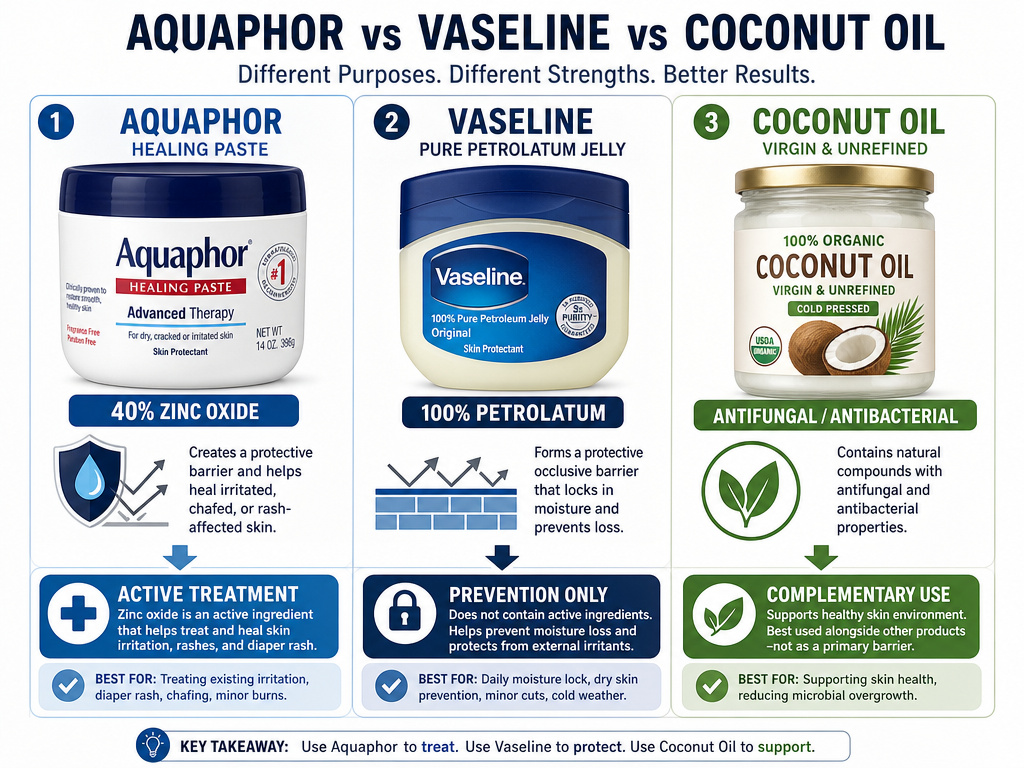
Parents have a cabinet full of options. Here’s how Aquaphor stacks up against two other go-tos.
Aquaphor Paste vs. Vaseline (Petroleum Jelly): This is the clearest contrast. Vaseline is 100% petrolatum—a great moisture barrier for prevention. But for treatment, it has zero active ingredient. It simply sits on the skin. Aquaphor’s 40% zinc oxide paste actively soothes and protects inflamed tissue. Use Vaseline to prevent; use Aquaphor paste to treat.
Aquaphor Paste vs. Coconut Oil (Natural Remedy): Coconut oil has antifungal and antibacterial properties, which can be helpful for mild cases or yeast-prone skin. However, it’s not an occlusive barrier. It absorbs into the skin and does little to block moisture. For a wetness-driven rash, coconut oil gets overwhelmed quickly. It’s a complementary tool, not a primary treatment for a significant rash.
The protective barrier from zinc oxide is what makes the difference. It’s a physical, not chemical, defense.
How to Prevent Diaper Rash from Returning
Once you’ve cleared a rash, the goal is to stop it from coming back. Preventing diaper rash is a simpler routine than treating one.
- Change diapers frequently. This is the single most effective tactic. A wet diaper against skin is the primary irritant.
- Size up. If diapers are consistently leaving red marks or fitting snugly, move to the next size. More room means less friction and better air circulation.
- Incorporate diaper-free time. Let your baby kick on a waterproof mat or towel for 10-15 minutes a few times a day. Air drying is powerful.
- Use a barrier at every change. Once the skin is healed, switch back to a thin layer of Aquaphor Healing Ointment or petroleum jelly as a maintenance shield.
- Be vigilant during triggers. When starting new foods or if your baby is on antibiotics, be extra proactive with your prevention routine.
These steps build a routine that makes a rash the exception, not the rule.
Frequently Asked Questions
Can I use Aquaphor healing ointment for diaper rash every day?
Yes, you can use Aquaphor Healing Ointment daily as a preventative barrier. Its 41% petrolatum formula is designed for frequent use to protect skin from wetness and chafing. It’s an ideal part of a routine to prevent diaper rash.
Is Aquaphor or Desitin better for diaper rash?
For an active, inflamed rash, Desitin Maximum Strength (with 40% zinc oxide) is often more effective due to its additional skin protectants and a thicker, paste-like consistency that adheres stubbornly. For prevention or very mild irritation, Aquaphor Ointment is a excellent, less messy choice. It’s a matter of matching the product to the rash’s severity.
How long does it take for Aquaphor to clear up diaper rash?
You should see improvement within 12-24 hours, and a mild rash often clears within 2-3 days with proper application and frequent diaper changes. If you see no improvement after 3 days, the rash may be infected or require a different treatment, and you should consult your doctor.
Can Aquaphor make diaper rash worse?
The products themselves are unlikely to worsen a standard rash, as they are fragrance-free and hypoallergenic. However, using the ointment instead of the paste on a severe rash will be ineffective, allowing the rash to progress. Also, not cleaning the area properly before application can trap irritants against the skin.
What is the difference between Aquaphor diaper rash cream and ointment?
The “cream” (often the 40% zinc oxide paste) is a medicated treatment for active rashes. The “ointment” (41% petrolatum) is a general skin protectant for prevention and mild irritation. Always check the active ingredient list on the back to confirm which one you have.
Before You Go
Aquaphor will help diaper rash if you use the 40% zinc oxide paste for treatment and the petrolatum ointment for prevention. The paste works by laying down a physical shield—apply it thickly and don’t scrub it all off at each change. Expect improvement in a day or two.
If the rash has blisters, spreads, or doesn’t budge in three days, that’s your signal to call the doctor. For everything else, a consistent barrier, frequent changes, and a little air time are the tools that keep your baby comfortable.
