
Are 2 Year Olds Potty Trained? The Data-Driven Answer
This post contains affiliate links. As an Amazon Associate, we learn from qualifying purchases
Most 2-year-olds are not fully potty trained. While some show strong interest and may achieve daytime dryness, complete and reliable training, managing both bowel and bladder independently, day and night, typically consolidates between ages 3 and 4. The strongest predictor isn’t age; it’s a specific cluster of cognitive and behavioral signs, particularly a child’s ability to express a need to go and show awareness of evacuation.
That gap between showing interest and achieving independence is where the whole process lives. Age two is a launch window, not a finish line. Pushing before a child’s brain and body are in sync guarantees months of frustration and accidents for everyone.
What follows: the four developmental signs that matter more than age, the one common belief pediatric sources now say to ignore, and a realistic month-by-month map of what “potty trained” actually looks like for a two-year-old.
Key Takeaways
- Age is a poor solo predictor. A 2020 peer-reviewed study of 269 toddlers found the strongest predictor of toilet training success was a child “expressing a need and showing awareness to evacuate,” not their calendar age.
- “Readiness signs” can be misleading. The NHS Western Isles Bowel & Bladder service explicitly advises against waiting for classic readiness cues, as many children never show them. Early routine formation is key.
- Full training takes time. Daytime bladder and bowel control is often achieved by age 3 or 4, with nighttime dryness frequently coming later. A child using the potty 10 times a day at age 2 is normal, not a setback.
- Cognitive signs trump physical ones. The ability to follow a two-step command, say “no,” and take pride in a new skill are more predictive of success than simply being able to sit still or stay dry for two hours.
- Rushing has a cost. The Washington State Department of Health warns that pushing training before a child is ready can prolong the process and increase stress.
What Does “Potty Trained” Actually Mean at Age 2?
You need to define the finish line before you start the race. At two, “potty trained” rarely means what a parent of a four-year-old would recognize.
A 2020 study in PubMed Central followed 269 children aged 15-35 months. It defined toilet training completion as “the child evacuates on the potty when it has the urge to pee or to have a bowel movement” and “can sit still on the potty for some time without being forced.” This was observed in 89 out of 89 children who had completed training.
For a two-year-old, training is a spectrum. On one end, you have the child who reliably tells you they need to go, pulls their own pants down, and uses the potty for both pee and poop during the day. On the other, you have the child who will sit on the potty if placed there every two hours and might occasionally go. Both are “training.” Only the first is “trained.”
The bridge from interest to independence is built on specific cognitive skills. It’s less about bladder capacity and more about brain wiring: understanding cause and effect, feeling bodily signals, and having the verbal or gestural ability to communicate them.
Where this goes sideways: Assuming a dry diaper after a nap means a child is ready for full-bore training. That’s a physiological sign of bladder maturation, which is necessary but not sufficient. Without the cognitive piece, the ability to connect the feeling to the action to the potty, you’re just catching accidents before they happen.
The 4 Developmental Signs That Matter More Than Age
Forget the vague lists. Research has pinpointed which specific behaviors actually correlate with success. The 2020 PMC study evaluated 18 previously described Developmental Signs (DS). The ones that didn’t predict anything? Stable walking, picking up small objects, putting toys in a container. Every kid does those.
The signals that matter are cognitive and temperamental.
| Developmental Sign (DS) | What It Looks Like | Why It Predicts Success |
|---|---|---|
| DS 7: Expressing need/awareness | Child says “pee” or “poop,” holds self, hides, or makes a face before going. | Shows the child feels the internal signal and can connect it to an action. This was the single strongest predictor. |
| DS 16: Participation & interest | Asks to use the potty, wants to wear underwear, mimics parents in bathroom. | Indicates internal motivation, which is more powerful than any external reward chart. |
| DS 14: Desire to be clean | Asks for a diaper change, is upset by wetness, tries to wipe self. | The child has developed a preference for cleanliness over the familiar feeling of a wet diaper. |
| Cognitive/Temperament Signs | Can follow a two-step command (“get the potty and sit down”), says “no,” shows pride in new skills. | Demonstrates the comprehension, willfulness, and positive reinforcement loop needed for learning any complex skill. |
These signs often cluster. A child who is proud of pulling up their pants (a new skill) is also more likely to want to keep those pants dry (desire for cleanliness). This is why a holistic view beats a checkbox approach.
The NHS Western Isles guide takes a firmer stance. It argues that for many children, especially those with processing differences, waiting for these signs means waiting forever. Their advice: don’t wait for readiness. Start forming a routine around age two based on bladder maturity, and build the cognitive skills as you go.
The Realistic Timeline for a 2-Year-Old
If you start introducing the potty at 24 months, what can you realistically expect by the third birthday? The path is not linear. It’s a series of plateaus and sudden leaps.
Months 1-3 (The Introduction Phase): Goal is familiarity, not performance. The potty is a chair that sometimes appears in the living room. You offer sits after meals and before bath. Expect zero to one actual use per day. Success is measured by a lack of tears, not a full potty. This is where you lay the groundwork for starting potty training without pressure.
Months 4-6 (The Pattern Phase): You might see a predictable poop time or a longer dry stretch in the morning. The child may start telling you after they’ve gone. This is progress. It means they’re recognizing the sensation, just not early enough. This phase can feel endless. It’s where strategies for potty training a stubborn toddler become relevant.
Months 7-9 (The Communication Phase): The child begins to signal before the event. This is the golden DS 7 sign. Accidents still happen frequently, maybe 50% of the time, because the interval between feeling the urge and needing to go is about 60 seconds. You must drop everything and run.
Months 10-12 (The Consolidation Phase): Daytime dryness for bowel movements usually comes first, then bladder. The child initiates most trips. They may still need help wiping and pulling pants up perfectly. Night training is a separate neurological process and is typically not achieved yet.
Common mistake: Quitting after a week of accidents in the Pattern Phase. The learning curve for a toddler’s brain is measured in months, not days. Consistency over three months beats intensity over three days.
This timeline assumes a neurotypical child. For children with developmental differences, the sequence may be similar, but the duration of each phase can be much longer. The principle of skill-building before expectation remains the same.
The 4-Step Readiness Checklist (That Actually Works)
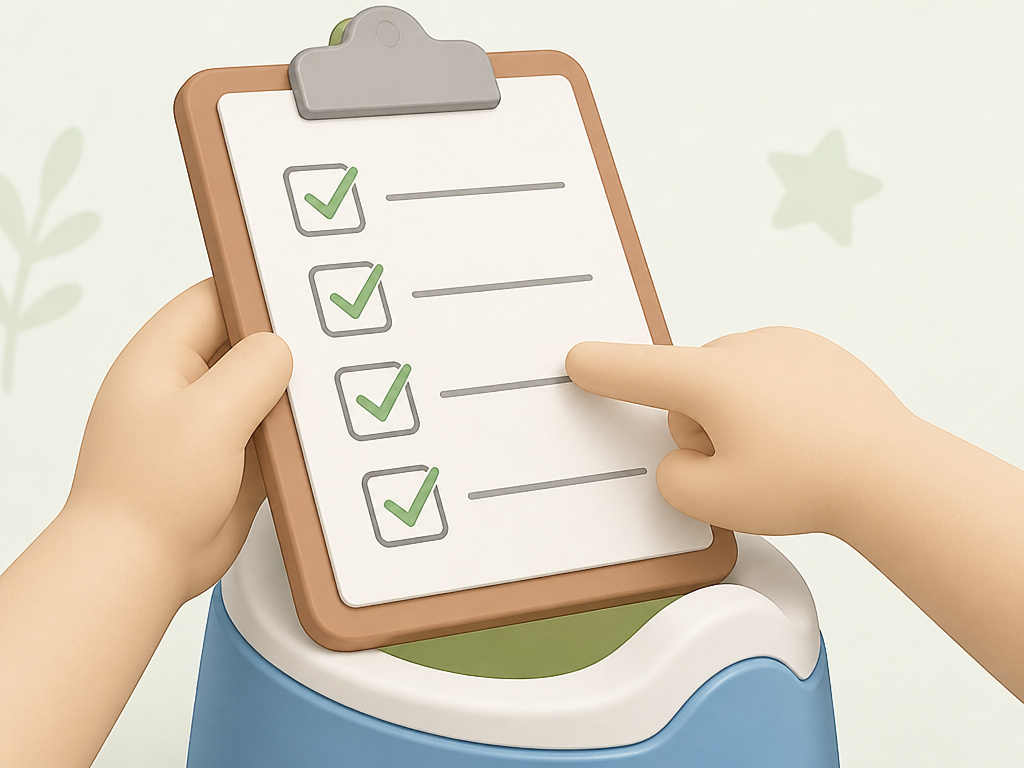
Throw out the old list. This checklist is based on the predictive signs from the research and is designed to be action-oriented.
- The Communication Check: Can your child communicate a basic need, like thirst or hunger, using words or signs? If they can say “milk,” they can learn to say “potty.” This is the foundational skill for DS 7.
- The Comprehension Check: Can they follow a simple two-step command? “Pick up the block and give it to me.” This tests the cognitive ability to listen, sequence, and act, precisely what’s required for potty training a 2-year-old.
- The Routine Check: Does your child’s day have predictable elements (meal, nap, bath)? A predictable schedule allows you to anchor potty sits to existing routines, creating natural opportunities without constant asking.
- The Autonomy Check: Does your child show a desire to “do it myself” in other areas? Putting on shoes, feeding themselves, saying “no.” This willfulness is a strength in training. It means they want to own the process.
If you check 3 out of 4, the environment is ready for training, even if the child isn’t producing classic “readiness” signals. This aligns with the NHS approach of routine-first, signs-second.
Why “Staying Dry for 2 Hours” is Only Half the Story
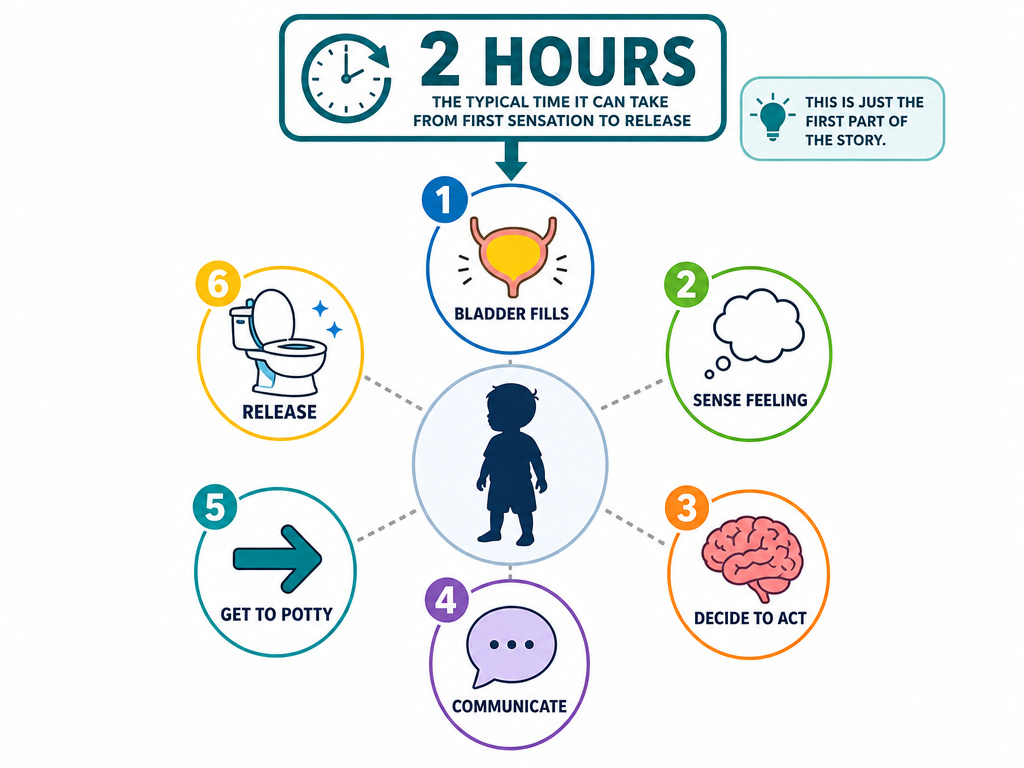
This is the most quoted readiness sign. It’s also the most misunderstood. A dry diaper for two hours tells you the child’s bladder has the capacity to hold urine. It’s a green light for physiological readiness.
But it says nothing about the neurological loop. The child must still: 1. Sense the bladder filling. 2. Interpret that sensation as “need to pee.” 3. Decide to act on it. 4. Communicate that need. 5. Get to the potty. 6. Release the sphincter muscles on command.
Step 2 is the cognitive hurdle. Many toddlers simply don’t recognize the sensation until the bladder is at crisis pressure, which is why you get the “potty dance” followed by an immediate accident. Teaching them to identify the earlier, subtler feeling is the core work of potty training a 2-year-old boy or girl.
This is also why frequency is high. A toddler’s small bladder, combined with a high liquid intake, means the urge cycle is short. The Johns Hopkins toilet training guide notes that dry periods after naps are a key sign, precisely because it shows bladder control during sleep, a more advanced skill.
How to Start (And What to Do When It Stalls)
Start with observation, not intervention. For a week, note when your child typically wets or soils their diaper. You’re looking for patterns, not judgments. This data tells you when to offer the potty proactively, turning a guess into a strategic offer.
Then, introduce the potty as a piece of furniture. Let them sit on it fully clothed while you read a book. The goal is to make it neutral and safe. Only after it’s familiar do you suggest trying without a diaper.
When progress stalls, and it will, revert to the last successful step. If they were telling you but have stopped, go back to offering every two hours without pressure. If they refuse to sit, put the potty away for two weeks. A power struggle is a sign the child feels controlled, and you cannot win a control battle with a two-year-old. This is the time to deploy creative potty training strategies to re-engage their interest.
The part nobody mentions: The parent’s patience threshold is a critical variable in the success equation. If you are stressed and reactive, your child will be anxious and resistant. Your calm consistency is the single most effective tool you have.
If you’ve been consistent for three months with zero progress on communication (DS 7), it’s reasonable to pause and revisit in a month or two. This isn’t quitting; it’s respecting the child’s developmental timeline. For guidance on when to try again, consider the factors in our article on the starting potty training age.
Frequently Asked Questions
Can you potty train a 2-year-old in 3 days?
The “three-day method” can work for some children over 30 months who are already showing most readiness signs. For a typical 24-month-old, it’s usually a recipe for frustration. It confuses intensive conditioning with genuine learning. You might get a child who pees on command when placed on the potty, but not one who independently recognizes and acts on the urge.
Is 2 too early to potty train?
No, it is not too early to begin the process of introduction and routine-building. However, it is early to expect full, independent training. The U.S. National Library of Medicine toddler record lists it as a milestone they “may be ready for,” which is deliberately non-committal. Starting early with zero pressure is different from training early with high expectations.
Do boys potty train later than girls?
On average, yes. Observational data, like that from the Boston Children’s Hospital potty training guide, suggests girls often train around 2.5 and boys closer to 3. The difference is likely a mix of social, developmental, and motivational factors, not just physiology. Focus on your individual child’s signs, not the average.
What if my 2-year-old shows no interest?
This is common. The NHS guidance is clear: don’t wait for interest. Create a gentle, non-negotiable routine. Sit them on the potty at predictable times (after breakfast, before bath). You’re not waiting for a sign; you’re teaching a habit. The interest often develops because of the routine, not before it.
How many times a day should a potty-training 2-year-old go?
Lot. The guide from Johns Creek Pediatrics states a child may use the toilet as many as 10 times each day. This is due to small bladder capacity and high fluid intake. It’s not a sign of a problem; it’s a reason why patience is required.
Before You Go
Are 2-year-olds potty trained? Most are not. But age two is the right time to start the conversation, with yourself, about realistic expectations.
The goal isn’t to check a box by a certain birthday. It’s to guide your child through learning a complex, intimate life skill with their dignity and your relationship intact. The data tells us to watch for specific cognitive signs, to value routine over vague readiness, and to measure progress in seasons, not days.
Your job is to provide the calm, consistent framework. Their job is to grow into it, on their own unique timeline. Trust the process, trust the research, and trust that a child who is not pressured today will master the skill confidently tomorrow.
For a deeper look at methods that respect this timeline, the Mayo Clinic potty training guide offers a balanced, evidence-based approach.
