
Master How to Potty Train a 2-Year-Old and Stop Resistance
This post contains affiliate links. As an Amazon Associate, we learn from qualifying purchases
Potty training a 2-year-old works by establishing a predictable daily routine, first thing in the morning, after meals, and before bed, not by waiting for elusive readiness signs. The NHS Western Isles states that starting a toileting routine around age two is key, as many children won’t show classic signs. Keep each potty session to five minutes, use a chair or footstool for proper support, and expect the process to take 3 to 6 months before diapers are gone for good.
The pivot from diapers involves building a new muscle memory for the bladder and bowels, a physical skill layered with big emotions. The old advice to watch for “signs of readiness” has a flaw, plenty of kids never show them, and waiting can delay the very routine that teaches the skill.
What follows is the stripped-down method: a daily schedule drawn from pediatric guidelines, the two pieces of gear that actually matter, and a clear map of the setbacks you will hit (and how to get past them without starting over).
Key Takeaways
- Start a toileting routine at age two, even without classic readiness signs, as advised by the NHS Western Isles.
- Limit potty sits to five minutes to prevent resistance and keep the experience positive.
- Always ensure your child’s feet are supported flat on the floor or a stool; lack of support is a leading cause of stool withholding and constipation.
- Plan for a 3 to 6 month timeline from first routine to being reliably day-dry, with night dryness often taking years longer.
- If your trained child starts having accidents due to stress, revert to diapers without guilt for 1–3 months, then restart.
Why Age Two is the Right Starting Point (And What “Ready” Really Means)
Most pediatric bodies point to the window between 22 and 30 months as the typical starting line. The MassGeneral Hospital for Children notes readiness often begins between 22–30 months. But the word “readiness” is where parents get stuck.
Where this goes sideways: Waiting for a child to tell you they need to go. The NHS Western Isles guidance is blunt: “It is now known that we should not depend on these [signs], as many will not show these signs, so early routine forming is key to success.”
You are not looking for a perfectly verbal, self-motivated toddler. You are looking for a child who is physically capable of walking to the potty, sitting with stability, and following a simple one-step direction. If they can bring you a toy or point to a body part, they have the cognitive and motor skills to begin learning. The routine itself teaches the bodily awareness that gets labeled as “readiness.”
The Data on Starting Age and Outcomes
The clinical conversation focuses on avoiding the pitfalls of starting too late. A review in the NIH toilet training review found associations between later training (particularly after 32 months) and a higher incidence of daytime wetting issues.The goal isn’t to race, but to avoid the complications that can arise from prolonged diaper dependency when a child is physically capable of learning.
This doesn’t mean starting at 18 months is wrong, it often just takes longer. The Canadian Paediatric Society confirms some start as young as 18 months, but the core window for most families is the two-year mark. Your job is to pick a stable 2–3 week period in your family’s life and commit to the routine.
The Non-Negotiable Gear: Support Matters More Than Bells and Whistles
You need two functional items, not a gadget-filled bathroom. The right setup prevents physical discomfort, which is the fastest route to refusal and constipation.
First, a potty chair or a toilet seat reducer. A standalone potty chair wins for most two-year-olds because it puts them in a secure, grounded position where they can push effectively. If you use the big toilet, you must add a sturdy footstool. The Canadian Paediatric Society explicitly links a lack of foot support to stool withholding.
Second, training pants or cotton underpants. The switch from diapers to a different garment is a tangible signal. Training pants like Pull-Ups can help bridge the gap for outings, but at home, cotton underpants that feel wet are a powerful teacher.
| Gear Choice | Best For | Risk If Skipped |
|---|---|---|
| Potty Chair | First-time trainers, small bathrooms | Child feels unstable, refuses to push, increases constipation risk |
| Toilet Reducer + Footstool | Families short on space, toddlers who mimic older siblings | Feet dangle, abdominal muscles can’t engage, leading to withholding |
| Cotton Underpants | At-home training days | Child doesn’t feel the wetness, delaying bladder awareness |
| Training Pants | Nap time, car rides, errands | Can feel too much like a diaper, slowing the learning connection |
Skip the musical potties and light-up targets. They distract from the core task and can create a dependency. The signal you want your child to listen for is internal, not electronic.
The 4-Step Daily Routine That Works at Age Two
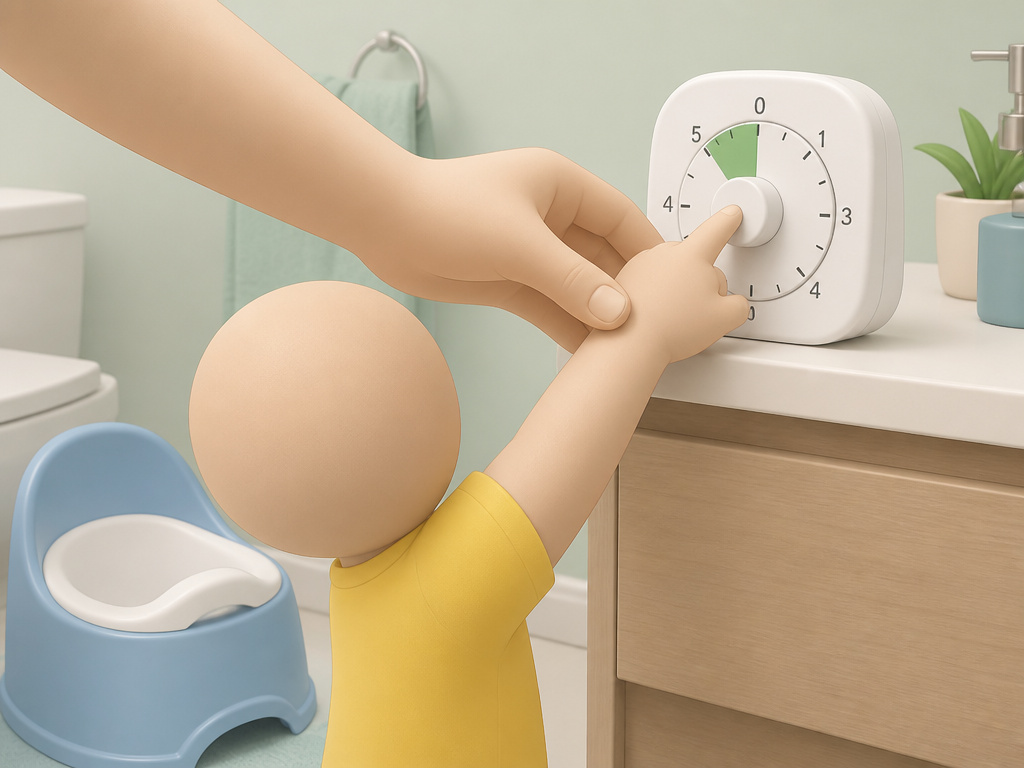
This is the engine. Consistency here builds the neural pathway faster than any reward chart. The Mayo Clinic potty training guide recommends practice runs every two hours, and that’s the backbone.
Step 1: Scheduled Sits, Not Vigilance.
Take your child to the potty at five fixed points: first thing in the morning, after breakfast, after lunch, after nap, and before bath. Don’t ask, “Do you need to go?” Simply say, “It’s potty time,” and go. This builds habit, not negotiation.
Step 2: Cap the Clock at Five Minutes.
Set a timer. If nothing happens after five minutes, help them off calmly. A prolonged sit turns into a power struggle and makes the potty a place of boredom or frustration. This is the single most effective tactic to prevent pushback.
Step 3: Demonstrate and Narrate.
Let them watch you or a same-gender parent use the toilet. Use simple, neutral language: “Mommy is making pee in the toilet.” Ditch the euphemisms like “go potty” for the actual actions, pee and poop. Clear language builds clear understanding.
Step 4: The Clean-Up Lesson.
When accidents happen, and they will, involve your child in the clean-up. Have them help you carry wet clothes to the laundry. Not as punishment, but as a natural consequence that teaches responsibility. “Oops, our pee went in our pants. Let’s put these in the washer and get dry ones.”
The part nobody mentions: The first two weeks of this routine might yield zero catches. That’s normal. You’re not failing; you’re filling the pipeline. Success often appears suddenly in week three, after the schedule is ingrained.
Troubleshooting Common Setbacks at Two Years Old
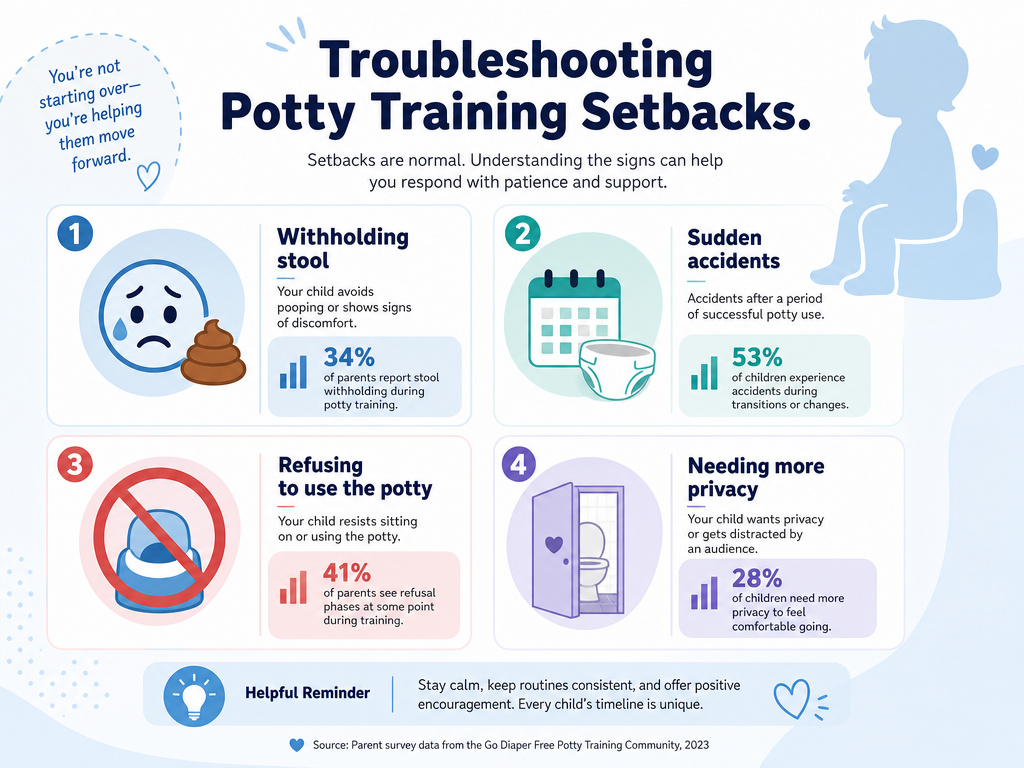
Every family hits at least one of these. Seeing them as phases, not failures, keeps you from quitting.
Problem: They withhold stool and cry on the potty.
This is often a physical issue, not a behavioral one. Go back to the gear check: are their feet supported? If not, they cannot physiologically relax their pelvic floor. Let them have that bowel movement in a standing diaper to avoid constipation, then re-establish the footstool. Forcing a sit on an unsupported toilet guarantees a setback.
Problem: They were dry for weeks, then start having daily accidents.
This is regression, and it’s almost always triggered by stress. A new sibling, a move, a change in daycare. The Canadian Paediatric Society’s advice is permission-giving: “It’s okay to go back to using a diaper. Watch for signs that your child is ready to try again.” Put the training pants away for 1–3 months. The pressure valve releases, and you can restart fresh.
Problem: They have zero interest and scream when you mention the potty.
You’ve hit a power struggle. Stop mentioning the potty. Take a full break for a month. In the meantime, read picture books about using the toilet and let them play with a doll that has its own potty. You’re resetting the association from battlefield to neutral territory.
| Symptom | Likely Cause | Immediate Action |
|---|---|---|
| Withholding stool, red face, crying | Physical discomfort, lack of foot support | Ensure feet are flat; allow poop in diaper; treat constipation first |
| Sudden increase in accidents after success | Life stress (new baby, travel, illness) | Revert to diapers for 1–3 weeks without drama; restart routine later |
| Flat refusal to sit, screaming | Power struggle, negative potty association | Full 1-month break; introduce topic only through books and play |
| Only pees, never poops on potty | Fear of the sensation, need for privacy | Create a more private, calm setup; allow diaper for poop initially |
How Long Does This Actually Take? Setting Realistic Timelines
Manage your expectations with hard numbers from pediatric sources. This defuses the anxiety that comes from comparing your child to a cousin who “trained in a week.”
The Canadian Paediatric Society states toilet learning can take 3 to 6 months before a child is out of diapers for good. Day dryness comes first. The NHS Western Isles notes that by age two, some children are day dry, but it’s early; by age four, most children are.
Nighttime dryness is a separate biological development. It can take “several more months or years” after day training is complete. Most children stop nighttime bowel movements by age one, but bladder control during sleep often isn’t achieved until age 5 or later. Use overnight diapers or training pants without shame until they start waking up dry consistently.
TL;DR: Aim for 3–6 months for reliable day dryness. Treat night dryness as a separate, longer-term project. Any timeline shorter than that is a bonus, not the standard.
Frequently Asked Questions
What if my 2-year-old doesn’t show any readiness signs?
Proceed with the routine anyway. The NHS guidance is clear that waiting for signs can delay training unnecessarily. Many children learn what the urge feels like through the consistent routine. Physical capability (walking, sitting, following a direction) is your green light.
How do I handle potty training when we’re away from home?
Pack your portable potty seat or reducer and a foldable footstool. Use training pants for the journey. Upon arriving, immediately show your child where the bathroom is and do a scheduled sit. Keeping the routine, even loosely, maintains continuity and prevents confusion.
Is the three-day potty training method effective for a 2-year-old?
The three-day method is an intensive, parent-led boot camp. It can work for some children with a very consistent temperament and a parent who can commit 72 focused hours. For many two-year-olds, especially those prone to power struggles, the slower, routine-based approach outlined here causes less stress and has a higher long-term success rate.
Should I use rewards like stickers or candy?
Small, immediate rewards (a single sticker on a chart) can help motivate a hesitant child. But the goal is to phase them out quickly in favor of intrinsic pride and natural praise. Over-reliance on treats can turn every potty trip into a negotiation. The biggest reward should be your genuine, calm excitement: “You did it! You listened to your body!”
When should I be concerned and talk to a doctor?
Consult your pediatrician if your child is older than 2.5 years and shows no interest whatsoever, is older than 3 and not day-trained, or if you see signs of painful constipation, bleeding, or severe withholding. These can indicate underlying physical issues that need addressing before training can succeed.
Before You Go
Potty training at two is about rhythm, not readiness. Install the daily schedule, support their feet, and keep every sit to five minutes. The accidents are data, not disasters. When stress hits and regression follows, use the diaper reset, it’s in the official guidance for a reason.
Your goal is a child who, in 3 to 6 months, has mastered a fundamental skill without a side of anxiety. That timeline is normal.The routine is the tool. Trust it, and you’ll both get there.
