
Does Vaseline Help Diaper Rash? How It Prevents & Protects
This post contains affiliate links. As an Amazon Associate, we learn from qualifying purchases
Vaseline (petroleum jelly) helps prevent and treat mild diaper rash by creating a protective barrier that seals out wetness and irritants. Its active ingredient, White Petrolatum USP at 99.96% concentration, is recognized by health authorities for this use. Apply it liberally to clean, dry skin with each diaper change.
The mechanism is straightforward. A thick layer of petrolatum sits on top of the skin. It does not absorb or heal existing irritation. Instead, it blocks urine and stool from making direct contact, which gives the skin underneath a chance to recover on its own.
What follows is a breakdown of how this barrier works, when it’s the right pick, and the specific types of diaper rash where you need a different weapon entirely. We’ll compare it to zinc oxide creams and ointments like Aquaphor, so you know exactly what to reach for.
Key Takeaways
- Vaseline is a proven barrier protectant, best for preventing rash or treating very mild, early-stage irritation.
- It contains 99.96% White Petrolatum, a concentration officially recognized for diaper rash use in documents like the Health Canada Diaper Rash Products Monograph.
- For moderate to severe rash, or rashes with broken skin, a zinc oxide-based cream is more effective because it adds healing and anti-inflammatory action.
- Never use Vaseline alone to treat a suspected yeast diaper rash; it requires an antifungal medication.
- Correct application is a thick, visible layer—don’t rub it in like lotion.
How Vaseline Works as a Diaper Rash Treatment
Vaseline doesn’t treat diaper rash. It manages the environment that causes it. Think of it as a raincoat for your baby’s skin.
The FDA drug label for Vaseline lists its single active ingredient: White Petrolatum, USP. This is a highly refined petroleum jelly that is inert and hypoallergenic. When you apply a generous layer, it forms an occlusive film. This film is water-repellent. Urine and liquid stool cannot penetrate it to macerate the skin, and digestive enzymes in stool are blocked from causing direct chemical irritation.
Petroleum jelly acts as a physical, occlusive barrier. It does not contain medicinal ingredients to reduce inflammation or fight infection. Its sole function is to separate vulnerable skin from wetness and irritants, which is why regulatory monographs list it for helping prevent diaper rash and protecting chafed skin.
The protection is temporary but reliable. It lasts until the next diaper change, which is why reapplication is non-negotiable. The official direction from the label is to apply “liberally… with each diaper change and especially at bedtime.” A thin smear won’t do it. You need enough to see a glossy coat.
This is its core strength and its main limitation. For skin that is already intact or only slightly pink, this barrier is perfect. It stops the problem before it starts. For skin that is visibly inflamed, cracked, or weeping, a barrier alone is not enough. The skin underneath needs active help to heal, which petrolatum does not provide.
When Vaseline is the Right Choice (And When It Isn’t)
Your choice hinges on what you see in the diaper area. Match the tool to the problem.
Use Vaseline for:
- Prevention. This is its ideal role. A thick layer at bedtime or during long car rides seals out moisture during prolonged exposure.
- Very mild redness. At the first sign of pink, uniform skin irritation without bumps or broken skin.
- Protecting healed skin. After a more serious rash has cleared up, using Vaseline for a few days can prevent immediate recurrence.
- Sensitive skin reactions. If your baby reacts to the fragrances or other ingredients in some diaper rash cream, pure petrolatum is a simple, low-risk alternative.
Switch to something else for:
- Moderate to severe rash. Redness with bumps, broken skin, or small ulcers needs the soothing and healing properties of zinc oxide.
- Yeast (fungal) infection. A bright red, shiny rash with distinct spots at the edges (satellite lesions) indicates yeast. Vaseline will do nothing here and may trap moisture, making it worse. You need an antifungal cream like clotrimazole.
- Bacterial infection. Any rash with pustules, yellow crusting, or spreading redness requires a pediatrician’s diagnosis and likely a prescription antibiotic ointment.
The table below breaks down the decision by rash severity and primary cause.
| Rash Presentation | Best First-Line Treatment | Why Vaseline Isn’t Enough |
|---|---|---|
| Pink, intact skin (Prevention/Mild) | Vaseline or similar barrier ointment | It’s perfect for this job—creates the needed seal. |
| Red, inflamed skin (Moderate) | Zinc oxide cream (40% concentration) | Barrier needed, but skin also requires anti-inflammatory and healing action. |
| Bright red with satellite spots (Yeast) | Antifungal cream (e.g., Clotrimazole) | Fungus grows despite barrier; needs medication to kill the organism. |
| Broken skin, ulcers (Severe) | Medicated cream per pediatrician + zinc oxide | Open skin risks infection; needs medical oversight and potent healing agents. |
Where this goes sideways: Using Vaseline on a rash that’s already bright red and spotty. You’ll waste three days watching it spread before realizing it’s fungal. If the rash looks different from a simple irritation, assume it is.
If the primary causes of diaper rash for your baby are frequent loose stools or extreme sensitivity, prevention is your entire game. Vaseline is a key player. But for many babies, rash is a multi-factor issue, and a one-ingredient solution has a ceiling.
Vaseline vs. Zinc Oxide Cream vs. Multi-Ingredient Ointments
Most parents have a tube of zinc oxide paste and a jar of petroleum jelly. They are not interchangeable.
Zinc Oxide Cream (like Desitin or Triple Paste) is the workhorse for treatment. Zinc oxide is a mild astringent and anti-inflammatory. It doesn’t just block moisture; it helps dry out weeping areas and soothes inflamed skin. For a moderate rash, a high-percentage zinc oxide paste (40%) is significantly more effective than plain petrolatum. The zinc oxide particles sit on the skin, providing both barrier and medicinal effect.
Multi-Ingredient Ointments (like Aquaphor) occupy a middle ground. Aquaphor Healing Ointment contains about 41% petrolatum, but it also adds lanolin and glycerin. These are humectants and emollients—they help protect skin and may slightly aid in healing by creating a better moisture balance. It’s a more robust barrier than pure Vaseline for everyday prevention and very mild issues, but it still lacks the therapeutic punch of zinc oxide for an established rash.
The choice isn’t about good versus bad. It’s about matching the product’s capability to the skin’s need. * Prevention / Mild: Vaseline or Aquaphor. * Treatment / Moderate: Zinc oxide cream. * Severe / Infected: Pediatrician.
A Cureus systematic review on barrier creams noted the evidence landscape is mixed, with some studies questioning the prophylactic efficacy of plain petroleum jelly. This underscores the point: for prevention, it’s helpful. For active treatment, the data supports reaching for more.
How to Apply Vaseline Correctly for Diaper Rash
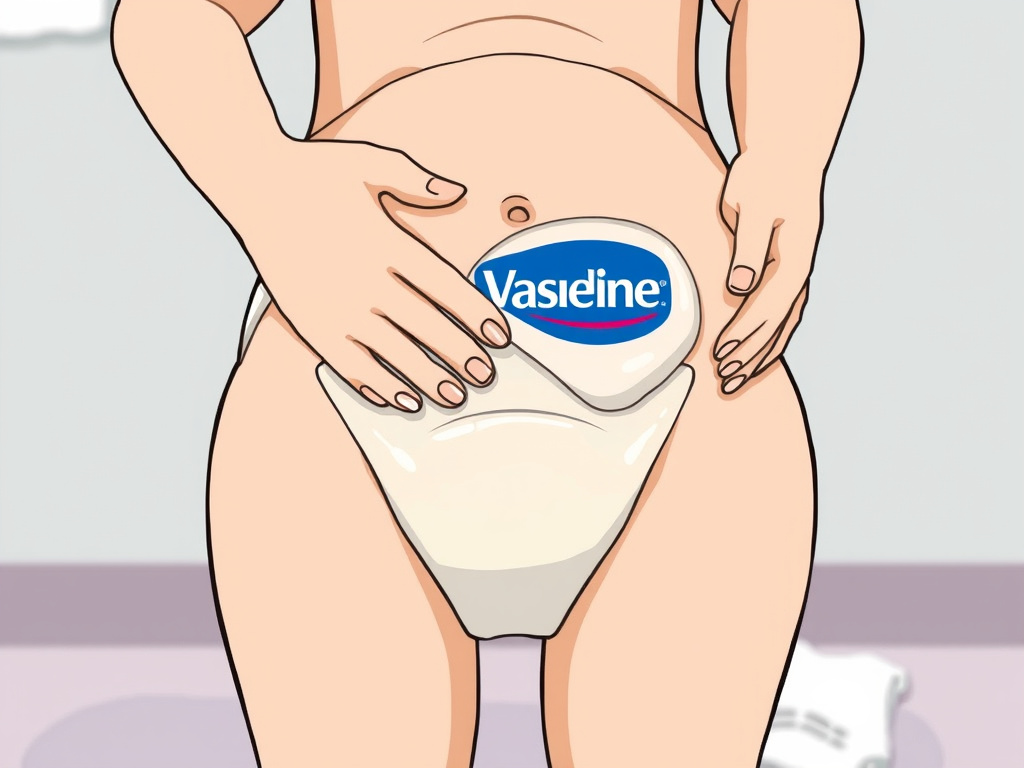 The method matters as much as the ingredient. Doing it wrong turns a helpful product into a useless one.
- Clean and Dry Thoroughly. Gently pat the area clean with a soft, wet cloth or fragrance-free wipe. Let the skin air-dry completely or pat dry with a towel. Moisture trapped under the barrier causes maceration.
- Scoop a Generous Amount. Use enough to cover the entire diaper area that contacts wetness. For a standard diaper change, this is a blob about the size of two quarters.
- Spread, Don’t Rub. Gently spread the Vaseline over the skin in a thick, visible layer. You should still see it on the skin. If you’ve rubbed it in until it disappears, you’ve used too little.
- Reapply Every Change. Without exception. The barrier is compromised with each soiled diaper.
- Use Extra at High-Risk Times. Apply an even thicker layer before naps and overnight. This is when you have the least control over exposure time.
Common mistake: Applying barrier cream over damp skin. Water gets sealed in, softening the skin and making it more susceptible to breakdown, not less. Wait that extra 30 seconds for true dryness.
The goal is to create a continuous, waterproof coat. Check it at the next change. If you see areas where the Vaseline has completely worn away, you either didn’t use enough or the diaper friction is too high. Consider a different diaper brand or a even more generous application.
Frequently Asked Questions
Can Vaseline make diaper rash worse?
It can, if used incorrectly. Applying it over damp skin traps moisture, which macerates skin. Using it on a severe or fungal rash delays proper treatment. As a simple barrier, it is inert and rarely causes its own reaction.
Is Vaseline or diaper cream better?
For prevention and very mild pinkness, they are comparable, though some creams add skin-soothing ingredients. For treating an existing rash, a diaper rash cream with zinc oxide is objectively better because it adds healing action to barrier protection.
How long does it take for Vaseline to work on diaper rash?
For prevention, it works immediately by blocking irritants. For treating mild redness, you should see improvement within 12-24 hours if it’s the right tool. If the redness is the same or worse after a day, the rash is beyond Vaseline’s scope and needs zinc oxide or a doctor’s assessment.
Can I use Vaseline and diaper cream together?
Not usually. Layering products is messy and can prevent either from working correctly. Pick one based on the rash stage. The only exception is if a pediatrician recommends a specific medication first, followed by a barrier like Vaseline to protect it.
What’s the difference between Vaseline and Aquaphor for diaper rash?
Vaseline is 100% petrolatum—a pure barrier. Aquaphor is about 41% petrolatum plus skin protectants like lanolin and glycerin. Aquaphor may be slightly more effective for everyday prevention and minor irritation, but neither is a strong treatment for an established rash compared to zinc oxide.
Before You Go
Vaseline is a useful, simple tool for your diaper bag. Its job is to seal and protect. For proactive diaper rash prevention, applied correctly to dry skin, it does that job well. When you see the first hint of pink, it can be a good first response.
But know its limits. When redness is more than faint, when skin is broken, or when the rash has a distinct pattern, it’s time to switch. Have a tube of 40% zinc oxide paste on hand for those moments. For anything that looks like a severe diaper rash or a potential yeast diaper rash, skip the home cabinet and call your pediatrician. The right barrier at the right time stops small problems from becoming big ones.
