
How to Treat Yeast Diaper Rash: The 3-Day Rule & Best Remedies
This post contains affiliate links. As an Amazon Associate, we learn from qualifying purchases
Treat a yeast diaper rash with a targeted antifungal cream like clotrimazole or miconazole, applied twice daily for 7 to 10 days. This must be paired with a strict air-and-clean routine: rinse with water, pat dry, and give ample diaper-free time. If the bright red rash shows no improvement within three days of starting antifungal treatment, you need to call your doctor, that’s the signal the infection isn’t responding or something else is going on.
That three-day window isn’t a suggestion. It’s the line between a routine treatment and a visit to the pediatrician. A yeast rash that lingers past 72 hours on antifungals can mean a few things: the specific strain of Candida is resistant, the rash has a secondary bacterial infection, or it was misdiagnosed from the start. The treatment protocol hinges on matching the right medication to the organism, applied in the right way, for the right amount of time.
What follows is the breakdown of that protocol. You’ll get the specific antifungal names, the exact cleaning method that doesn’t feed the yeast, the one product to avoid at all costs, and the clear signs that mean “stop home treatment and call for help.”
Key Takeaways
- Use an azole antifungal cream like clotrimazole or miconazole, rubbed in thoroughly twice a day for a full 7–10 days, even after the rash looks better.
- Stop using wipes with alcohol or fragrance immediately; they disrupt the skin’s barrier and can worsen the rash. Clean with water and a soft cloth only.
- If the rash shows no improvement after three days of correct antifungal treatment, contact your doctor. This indicates potential treatment failure.
- Never use cornstarch or talcum powder on a suspected yeast rash; it can promote further fungal growth and is a inhalation hazard.
- For severe inflammation, a doctor may recommend a short course of 1% hydrocortisone ointment applied under the antifungal cream, but never use steroid creams alone on a yeast infection.
What a Yeast Rash Actually Is (And Why It Won’t Heal Like a Regular Rash)
A yeast diaper rash is an infection, not just irritation. The fungus Candida albicans, which lives harmlessly in small amounts in the mouth and gut, overgrows in the warm, wet diaper environment. This is a key differentiating yeast from irritant rash moment. An irritant rash responds to barrier creams and better diapering. An infection fights back.
The visual signs are distinct. Look for a deep red or purple rash that seems shiny. It often has raised bumps or tiny pustules at the edges, known as satellite lesions. Crucially, it thrives in the skin folds, the groin, between the buttocks, areas that a simple chafing rash often spares. If you’re trying to identify yeast diaper rash, the location and those satellite spots are your biggest clues.
Common mistake: Treating a yeast rash with only a zinc oxide barrier cream. The cream sits on top of the skin, sealing in moisture and the fungus, which can make the infection worse. Yeast needs an antifungal that penetrates.
The yeast feeds on moisture. This is why a standard diaper rash treatment of frequent changes and paste isn’t enough. You’re drying the surface but not killing the organism underneath. The infection will continue until it’s addressed directly with medication, a fact underscored in the NCBI Bookshelf medical reference on the topic.
The 3-Step Treatment Protocol
This isn’t a pick-and-choose list. All three steps work together. Skip one, and you lengthen the battle.
Step 1: Clean Without Harming
Every diaper change starts here. Ditch the wipes, especially any with fragrance or alcohol. They strip the already compromised skin barrier and sting raw areas. Instead, use lukewarm water and a soft washcloth or cotton ball. Gently rinse; do not scrub. If the skin is very raw, a squirt bottle of water is gentlest.
Pat the area completely dry with a clean towel or let it air dry. Rubbing creates friction and micro-tears, giving the yeast more entry points. This cleaning method is non-negotiable for both treating and preventing a recurrence.
Step 2: Apply the Right Antifungal Correctly
This is the core of treatment. You need an antifungal cream from the azole family. Common over-the-counter options are clotrimazole (Lotrimin AF) or miconazole.
| Antifungal Cream | Application Frequency | Full Course Duration | Key Point |
|---|---|---|---|
| Clotrimazole | Twice daily | 7 to 10 days | Rub in thoroughly until it disappears. |
| Miconazole | Twice daily | 7 to 10 days | Often found combined with zinc oxide. |
| Nystatin (Rx) | With every change | Switch if no improvement in 1-3 days | Often first-line Rx; has higher resistance rates. |
The technique matters. Squeeze a small amount onto your finger and rub it in gently over the entire rash and a bit beyond the borders. You should not see a thick white layer. It needs to absorb to work. This is different from slathering on a barrier paste.
Continue the full course, even if the rash looks vastly better in 4 days. Stopping early is the fastest way to see it rebound. For a deep dive on options, our guide to the best antifungals for diaper rash breaks down ingredients.
Step 3: Maximize Air Exposure
Yeast suffocates without moisture. Create a dry environment. – After applying cream, let your baby kick diaper-free on a towel for 10-15 minutes. – Use breathable diaper covers if using cloth. – Ensure disposable diapers are not too tight. A loose fit allows air circulation.
This step directly undermines the yeast’s ideal living conditions. Think of it as cutting off its supply line.
When to Add a Steroid (and When to Absolutely Avoid It)
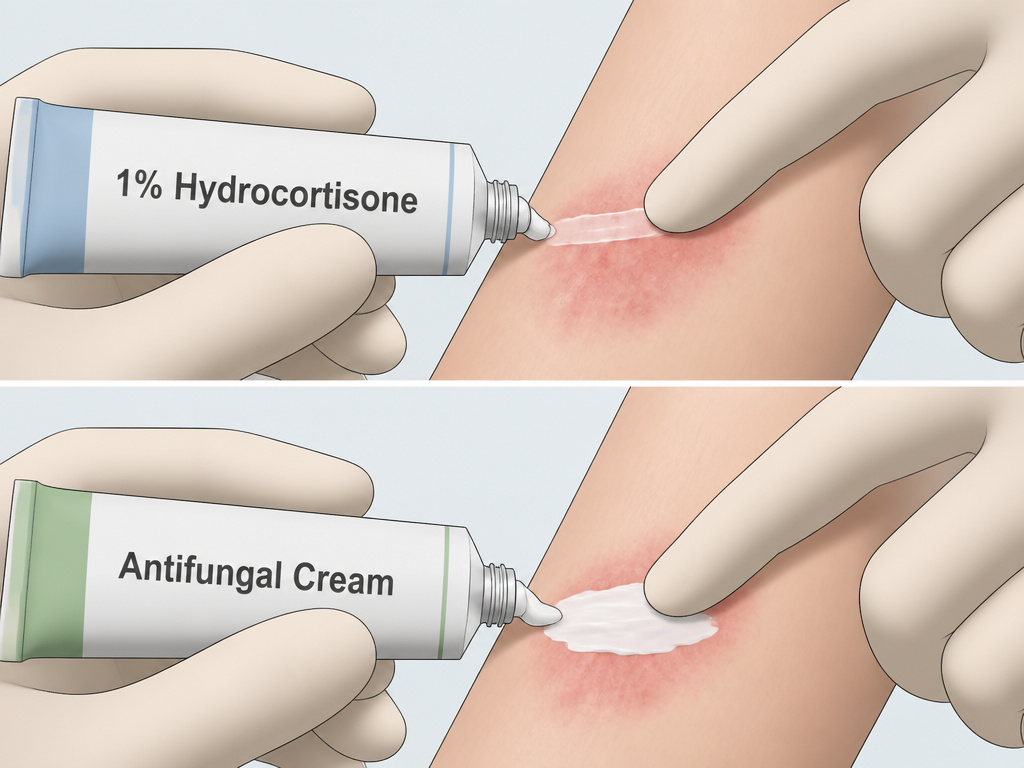
Sometimes the inflammation is so severe it hinders healing. The skin is angry, swollen, and intensely red. In these cases, a doctor may advise using a 1% hydrocortisone ointment for a short period.
Where this goes sideways: Using a steroid cream alone on a yeast rash. Steroids suppress the immune response and reduce redness, but they do not kill yeast. Using them solo can create a temporary illusion of improvement while the fungus grows unchecked, leading to a much worse rebound infection.
The correct protocol, if directed, is to apply the thin layer of 1% hydrocortisone first, wait a minute for it to absorb, and then apply the antifungal cream on top. This two-step process tackles both the inflammation and the infection. This approach is typically reserved for a severe diaper rash and should never exceed one week without direct medical supervision.
The Products: What to Use and What to Banish
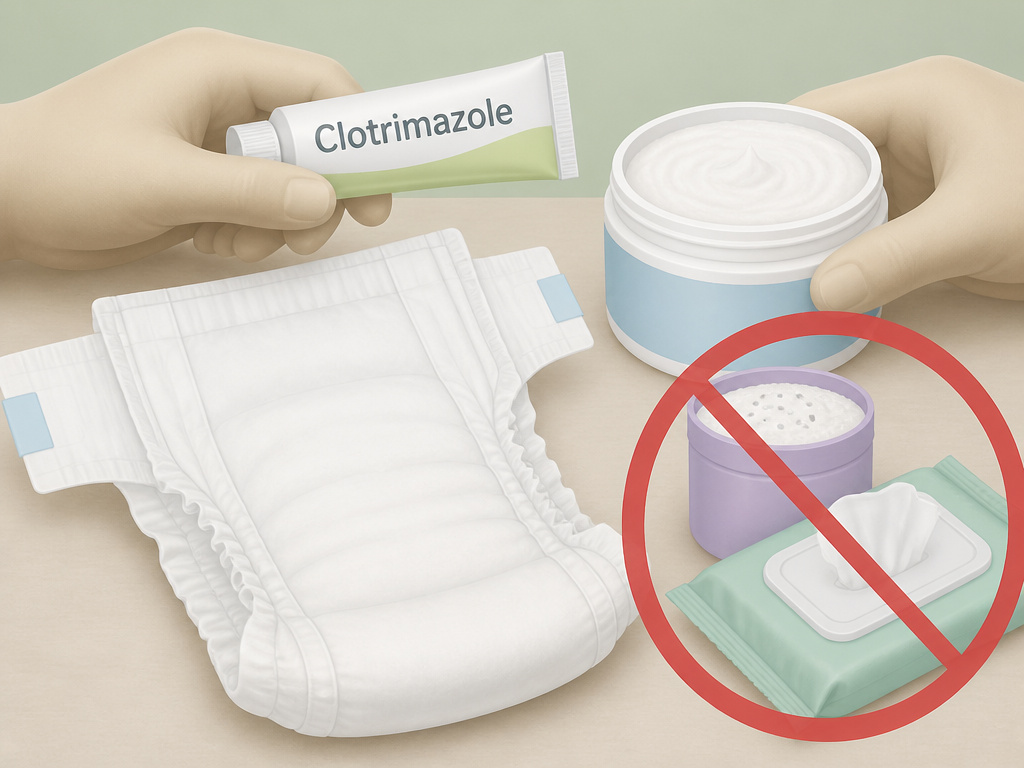
Your product choices can speed healing or sabotage it.
Reach For These:
- Antifungal Creams: Clotrimazole (Lotrimin AF) or Miconazole. These are your active fighters.
- Barrier Ointment (Afterwards): Once the infection is clearing, a zinc oxide or plain petroleum jelly ointment can protect healing skin. Apply it over the absorbed antifungal cream.
- Plain, Absorbent Diapers: Whether cloth or disposable, the goal is to pull moisture away from the skin instantly.
Throw These Out:
- Cornstarch or Talcum Powder: Cornstarch can feed fungal growth. Both powders are serious inhalation risks for infant lungs.
- Scented or Alcohol-Based Wipes: They are irritants on broken skin.
- Generic “Diaper Rash Creams” Without Antifungal: If the label doesn’t list clotrimazole, miconazole, or ketoconazole, it’s just a barrier. It won’t treat a yeast diaper rash.
For specific brand recommendations and formulations, our review of the best cream for yeast rash compares effectiveness and ease of use.
The Critical Timelines: When to Know It’s Working (or Not)
Yeast treatment has a schedule. Mark your calendar.
- Days 1-3: You should see a halt in progression. The red may start to fade from a deep purple to a lighter pink. Satellite lesions should begin to flatten. Intense discomfort during changes should lessen.
- Day 3 Checkpoint: This is the line. If there is no noticeable improvement, the rash is the same size, equally red, or has new bumps, you must contact your doctor. This is the primary guidance from sources like the Cleveland Clinic yeast diaper rash guide. It signals the need for a prescription-strength antifungal like Nystatin for diaper rash or a different azole.
- Days 7-10: The rash should be nearly or completely resolved by the end of your antifungal course. A faint pink area may remain where the skin is still healing.
If the rash ever develops open sores, yellow crusting, or weeps pus, stop home treatment. These are signs of a secondary bacterial infection, which requires a different medication entirely.
Frequently Asked Questions
Can I use Lotrimin AF on my baby’s yeast diaper rash?
Yes, Lotrimin AF contains clotrimazole, an antifungal effective against Candida. Apply a thin layer, rubbed in completely, twice a day for 7 to 10 days. Ensure the skin is clean and dry first. Monitor for improvement within three days.
How long does it take for a yeast diaper rash to go away?
With proper antifungal treatment, you often see improvement within 3 days. However, to fully clear the infection and prevent relapse, you must complete the full 7- to 10-day course of cream. The entire process from start to fully healed skin can take two to three weeks.
What happens if a yeast diaper rash won’t go away?
If a yeast rash shows no improvement after three days of correct antifungal use, contact your pediatrician. The yeast strain may be resistant, requiring a prescription antifungal like nystatin. It could also be a misdiagnosed rash, such as a severe diaper rash with a bacterial component, which needs an antibiotic ointment.
Can you use hydrocortisone on a yeast diaper rash?
Only under a doctor’s specific direction and never alone. If inflammation is severe, a doctor may advise a short course (up to 7 days) of 1% hydrocortisone ointment applied before the antifungal cream. Using steroid cream by itself on a yeast infection will suppress visible symptoms while the fungus spreads.
Before You Go
Treating a yeast diaper rash is a precision task. Match the organism with the right antifungal, clotrimazole or miconazole, applied thin and rubbed in. Support the medicine with a clean, dry environment, and ban the products that feed the problem. Your most important tool is the calendar: if three days pass without clear progress, that’s your signal to call the doctor. It moves the process from guesswork to a resolved infection. For persistent or complex cases, the government medical encyclopedia entry remains a trusted source for understanding when professional care is essential.
