
The 2-3 Day Rule for How to Treat Diaper Rash Successfully
This post contains affiliate links. As an Amazon Associate, we learn from qualifying purchases
To treat diaper rash, clean the area with water and a fragrance-free cleanser, pat it completely dry, and apply a thick layer of a barrier cream containing zinc oxide or petrolatum with every change. If the rash shows no improvement within 2-3 days, is moderate to severe, or has bright-red patches with satellite spots, you likely need a medical intervention like a low-potency corticosteroid or an antifungal cream.
That 2-3 day window is the whole game. Most rashes clear with consistent barrier protection. The ones that don’t are signaling a different problem, usually a fungal infection or significant inflammation, that a basic cream can’t fix. Ignoring that signal is how a mild irritation turns into a weeks-long battle.
What follows: the exact ingredients that work, the step-by-step cleaning method most people skip, the visual cues for a yeast infection, and the specific medical treatments (with names and timelines) for when the basics fail. By the end, you’ll know how to read the rash itself and act on its timeline.
Key Takeaways
- Clean with water, not just wipes. Residue from soap or fragrance is a primary irritant. Pat, don’t rub, the skin completely dry before any cream touches it.
- Apply barrier cream like frosting. A thin smear does nothing. You need a thick, opaque layer of zinc oxide or petrolatum that fully separates skin from moisture.
- Watch the clock: 2-3 days. If a rash doesn’t start improving within this timeframe with proper care, it’s time to consider a medicated cream.
- Bright red + satellite spots = yeast. A fiery red rash with defined edges and small red dots around it is classic Candida. This needs an antifungal, not just a barrier.
- Skip the powder. Talc or cornstarch can clump with moisture, creating abrasive granules and providing a food source for fungal growth.
The First Line of Defense: Barrier and Hygiene
Head design changes the entire process. Look at the business end of your trimmer.
Effective treatment starts before you open the cream tube. The goal is to remove irritants and create a physical shield. Get this sequence wrong, and you’re just sealing moisture and bacteria against the skin.
A 2022 study in Kendari City found that applying olive oil reduced the mean severity of diaper rash from 1.88 to 0.84 on a clinical scale within five days. After the treatment, 37.5% of infants had no rash remaining.
Clean with lukewarm water and a soft cloth or a fragrance-free, soap-free cleanser. The wipes in your drawer? Check the label. If they contain alcohol, fragrance, or essential oils, they are likely making things worse. Modern pH-balanced, fragrance-free wipes are acceptable, but for an active rash, plain water is safest.
Common mistake: Rubbing skin dry with a towel. This friction worsens irritation on already inflamed skin. Fix: Gently pat the area dry until it’s completely moisture-free. Let the baby air-dry for a minute if possible. Damp skin under cream leads to maceration, which weakens the skin barrier further.
Next, apply your barrier. This isn’t a moisturizer; it’s a paste. Use a generous amount, thick enough that you can’t see the skin color underneath. Your two main choices are zinc oxide (like in Desitin or Triple Paste) and plain petrolatum (like Vaseline or Aquaphor).
| Barrier Type | Best For | Application Note |
|---|---|---|
| Zinc Oxide (40%) | Moderate to severe rash, weeping skin | Forms a thick, protective paste that soothes and shields. Harder to wash off, which is the point. |
| Petrolatum | Daily prevention, mild redness, very sensitive skin | Creates a water-repellent seal. Easier to spread and remove than zinc oxide. |
| Dimethicone | Mild irritation, parents who dislike greasy creams | A silicone-based barrier that feels drier. Good for prevention, less robust for an established rash. |
Why the thickness matters? A thin layer absorbs into the skin or wipes away with the first wet diaper. A thick, opaque layer stays put, ensuring that urine and stool never contact the skin directly. Reapply this heavy layer with every single diaper change.
The 2-3 Day Rule: When to Escalate Treatment
If you’re doing everything right, frequent changes, thorough cleaning, a heavy barrier, and the rash looks the same or worse after 48 to 72 hours, stop. The problem is no longer simple irritation.
This timeline isn’t arbitrary. It comes from clinical guidelines. When basic measures fail within 2 to 3 days, or if the rash is moderate to severe from the start, a different approach is needed.
Where this goes sideways: Continuing the same cream for a week on a worsening rash. By day seven, a simple yeast infection can spread and become deeply inflamed, requiring a longer, more complex treatment course.
Your next step is diagnosis. Look for these specific signs:
- Candida (Yeast) Rash: This is the most common complicating infection. It looks intensely red, shiny, and has very sharp borders. The hallmark is satellite lesions, smaller red pimples or pustules that appear just outside the main rash border. It often thrives in the deep skin folds, which simple irritant rashes usually spare.
- Severe Inflammatory Rash: The skin is uniformly beefy red, may be warm to the touch, and the baby is clearly in pain. There may be pimples, bumps, or even small open sores.
For a suspected yeast infection, you need an antifungal. The first-line choice is often nystatin cream, applied at every diaper change. If you see zero improvement after 1 to 3 days on nystatin, a healthcare provider may recommend switching to an azole antifungal like clotrimazole or miconazole, applied twice daily for 7 to 10 days.
For a severe, inflamed rash without signs of yeast, a short course of a low-potency corticosteroid like hydrocortisone 0.5% can be prescribed to quickly reduce inflammation. The standard course is twice daily for no more than seven days.
| Symptom | Likely Cause | Action | Timeline |
|---|---|---|---|
| No improvement after 2-3 days of barrier cream | Persistent irritation or early infection | Reassess hygiene, consider pediatrician visit | Seek advice within 3-5 days |
| Bright red rash with satellite spots | Candida (yeast) infection | Apply antifungal cream (nystatin) | Switch antifungal if no improvement in 1-3 days |
| Beefy red, painful, inflamed skin | Severe inflammatory dermatitis | Consult doctor for possible corticosteroid | Typically a 7-day course |
| Rash with blisters, pus, or fever | Bacterial infection (e.g., Staph) | See a doctor immediately | Requires prompt medical evaluation |
Medical-Grade Treatments: What a Doctor Might Recommend
When over-the-counter options hit their limit, pediatricians have a toolkit of prescription and targeted treatments. These aren’t for guessing. They’re for the specific scenarios confirmed by the 2-3 day rule.
The most common prescription is for a stronger antifungal. While nystatin is available over-the-counter in some places, a doctor may prescribe a more potent formula or an azole like ketoconazole for a stubborn case. These work by breaking down the cell wall of the Candida fungus.
For severe inflammation, the go-to is often hydrocortisone 0.5%. It’s crucial to understand the strength.
Worth knowing before you start: Hydrocortisone 1% is available over-the-counter. For the delicate diaper area, most pediatric guidelines recommend starting with the milder 0.5% strength to minimize the risk of skin thinning. Never use a stronger steroid on diaper skin without explicit doctor instruction.
Combination creams are another tool. These pair a low-potency steroid with an antifungal (e.g., hydrocortisone + clotrimazole). They’re used when both significant inflammation and yeast are present. The steroid calms the fire, the antifungal kills the infection. These are always prescription-only and for short-term use.
In all cases, the barrier cream strategy doesn’t go away. You typically apply the medicated cream first, let it absorb for a minute, and then slather the barrier cream on top. The medication treats the problem; the barrier protects the healing skin from new attacks.
What Not to Do: Products and Habits That Make It Worse
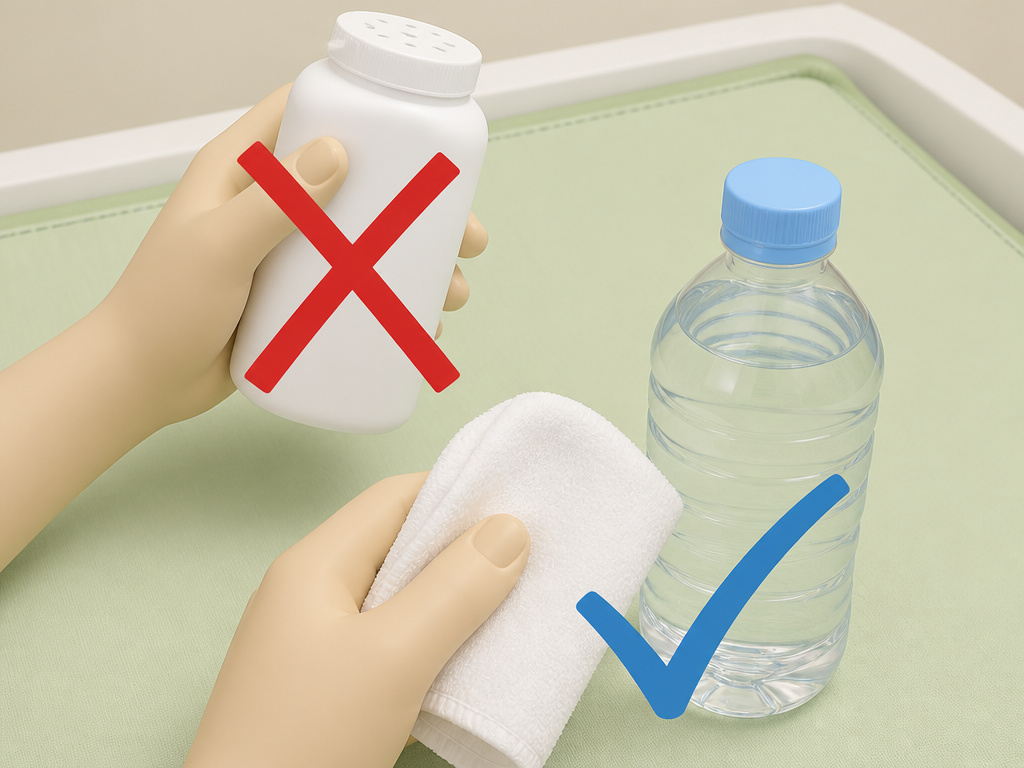
Good intentions can backfire. Several common products and habits actively interfere with healing.
Skip the baby powder. Full stop. Talc is a lung irritant if inhaled. Cornstarch, while safer to breathe, can clump with moisture and create a gritty paste that traps bacteria and provides a food source for yeast. It also doesn’t create a true moisture barrier.
Avoid wipes with fragrance or alcohol. These are sensitizers. They strip natural oils and can cause a secondary allergic contact dermatitis, making the original rash look more angry and widespread. For a raw rash, even water wipes can sting. Using a soft cloth and lukewarm water is the gentlest option.
Don’t scrub. Vigorous rubbing with a washcloth damages the fragile top layer of skin. Pat gently. If stool is stuck, let a layer of cream or a warm, wet cloth sit on it for 30 seconds to loosen it before wiping.
Don’t ignore a worsening rash. Hoping it will just “go away” is the fastest path to a severe diaper rash that requires oral antibiotics or a trip to urgent care. The timeline is your best guide. If it’s not getting better, your plan needs to change.
Frequently Asked Questions
How often should I apply diaper rash cream?
Apply a thick layer of barrier cream with every single diaper change for an active rash. For prevention, a good layer at night or during long naps is often sufficient.
Can I use coconut oil or olive oil for diaper rash?
Yes, as a gentle moisturizer and mild barrier. The 2022 olive oil study showed a clear reduction in rash severity. However, for a significant, established rash, a dedicated zinc oxide cream provides a more robust, proven barrier. Think of oils as good for prevention and mild cases.
What’s the difference between diaper rash cream and ointment?
Ointments (like petrolatum) are oil-based, creating a superior water-repellent seal. They are best for very dry or sensitive skin. Creams (like most zinc oxide formulas) are water-based, spread more easily, and can have drying properties, which is helpful for weepy rashes. Pastes are the thickest, with the highest concentration of powder (like zinc oxide) for maximum protection.
When should I call the doctor about diaper rash?
Call if: the rash doesn’t improve in 2-3 days with proper care; it bleeds, weeps fluid, or has blisters; your baby has a fever; the rash spreads beyond the diaper area; or you suspect a yeast diaper rash that isn’t responding to over-the-counter antifungal cream.
Is it okay to use a steroid cream like hydrocortisone?
Only under a doctor’s guidance for a short period. Using the wrong strength or for too long can thin the skin, cause stretch marks, or lead to systemic absorption. For most inflammatory rashes, a pediatrician will recommend hydrocortisone 0.5% for no more than seven days.
Before You Go
Treating diaper rash is a sequence: clean perfectly, dry completely, and seal thoroughly. The clock starts the moment you see red. Give a proper barrier 2-3 days to work. If it doesn’t, the rash is telling you it’s more than just irritation, it’s likely yeast or needs an anti-inflammatory.
Your best tools are a tub of thick zinc oxide paste, a package of fragrance-free wipes, and the discipline to apply cream like you’re frosting a cake. When in doubt, a quick call to your pediatrician beats a week of guesswork. Keep the area dry, protected, and watched. Most rashes resolve quickly when you interrupt the cycle of wetness and irritation.
