
Does a Swim Diaper Hold Pee? The Straight Answer & Stakes
This post contains affiliate links. As an Amazon Associate, we learn from qualifying purchases
No. A swim diaper does not hold pee. It is intentionally designed to let urine pass through while containing solid waste. This is a public health feature, not a flaw, an absorbent diaper in water would swell, become heavy, and fail at its primary job of trapping fecal matter.
The distinction between containing solids and passing liquids is the entire point of the product. It’s also where most public confusion starts. You buy a diaper, you expect it to hold all waste. But water changes the rules.
What follows is the mechanics of why, the specific germs it’s built to guard against, and the exact routine that keeps pools safe. The stakes are higher than a wet changing mat.
Key Takeaways
- Swim diapers are non-absorbent by design. Urine passes through freely; chlorine in the pool handles it.
- Their only job is to contain solid fecal matter, specifically to trap bacteria and parasites like Cryptosporidium that chlorine cannot kill quickly.
- No swim diaper, reusable or disposable, can contain diarrhea. The CDC states no manufacturer claims they can.
- You must check and potentially change a swim diaper every 30 to 60 minutes, and always change it away from the poolside.
- Layering a regular diaper under a swim diaper is dangerous, it will swell with water and become a mobility risk.
The Short Answer: No, and That’s By Design
A swim diaper is a physical barrier, not an absorbent one. Its construction uses a water-resistant outer shell and tight elastic seals at the waist and legs. There is no super-absorbent polymer inside, the material is a mesh or fabric that lets water flow in and out.
A swim diaper’s function is singular: to act as a containment vessel for solid feces. The 2011 study on disposable swim diaper retention of Cryptosporidium-sized particles confirmed they can delay, but not prevent, leakage of diarrheal germs. For urine, there is no barrier at all.
This means you will see pee leak out on the walk from the changing room to the pool. That’s normal. It also means a heavily soiled regular diaper is a drowning hazard in water, while a swim diaper is not. The trade-off is absolute: swim diapers contain poop, not pee.
The first time you use one, this feels wrong. It looks like a diaper. It goes where a diaper goes. But its entire engineering opposes a regular diaper’s purpose. Recognizing that split is how you use it correctly.
Why Absorbency is the Enemy in Water
Put a regular diaper in a bathtub. It balloons into a saturated, several-pound mass within minutes. Now imagine that weight on a baby trying to kick and learn to swim. The risk is physical mobility, not just mess.
An absorbent swim diaper would also suck in pool water continuously, becoming waterlogged long before any “accident” occurred. It would be useless at containing solids because its structure would be compromised. The non-absorbent design is a safety and hygiene necessity.
The Public Health Reason It Matters
The “pee passes through” design isn’t an oversight. It’s a direct response to the real threat in public pools: fecal-borne pathogens. Chlorine neutralizes urine relatively effectively. It does not instantly kill germs like E. Coli or the parasite Cryptosporidium (“Crypto”).
Crypto can survive in a properly chlorinated pool for up to ten days. It causes severe, prolonged diarrhea and is the leading cause of waterborne illness outbreaks linked to pools. A swim diaper’s tight seals are the first physical line of defense against these solids getting into the water.
Where this goes sideways: Assuming a swim diaper makes a child with diarrhea pool-safe. The Utah Department of Health is explicit: “No swim diaper (no matter how good) will stop diarrhea from getting into the water.” Wait two full weeks after diarrhea stops before returning to the pool.
This is why health codes, like Utah’s Rule R392-302, mandate that non-toilet-trained children wear both a water-resistant swim diaper and waterproof swimwear that fits snugly at the waist and legs. The diaper contains; the swimwear provides a secondary containment layer.
The CDC swim diaper guidelines frame this as a shared responsibility. The diaper is a tool, but frequent checking, every 30 to 60 minutes, and immediate removal after a bowel movement are non-negotiable parent duties.
What Swim Diapers Actually Hold (And What They Don’t)
Understanding the limits prevents nasty surprises and protects public health. This isn’t about product failure; it’s about product scope.
| Waste Type | Swim Diaper Effective? | Reason & Consequence |
|---|---|---|
| Solid Feces (Formed) | Yes, with a proper fit. | Tight elastics create a seal. Consequence if loose: Solid matter escapes into pool, requiring immediate closure and hyper-chlorination per health code. |
| Loose Stools / Diarrhea | No. Not even temporarily. | Liquid feces bypass elastic seals. Consequence: Immediate contamination with germs like Crypto. The Utah epidemiology Crypto Swim report cites this as a major outbreak vector. |
| Urine | No. Designed to pass through. | No absorbent material. Consequence: Pee enters pool, where chlorine breaks it down. This is the intended function. |
| Pool Water | No. Designed to pass through. | Prevents dangerous waterlogging. Consequence: Diaper remains light and child remains mobile. |
The takeaway is brutal but simple: A swim diaper is a solid-waste container for healthy babies. It is not a solution for illness, and it is not a substitute for bathroom breaks.
The 30-60 Minute Check Rule
This isn’t a suggestion. It’s a protocol cited directly from health authority documents. Why so often? 1. To catch a solid accident immediately, minimizing contamination risk. 2. To ensure the fit hasn’t shifted, compromising the seal. 3. To provide a natural break for a toddler who might need to use a real toilet.
Change the diaper in a bathroom, never at poolside. Wash hands thoroughly with soap afterward. This routine is as important as the diaper itself.
Choosing and Fitting: The “How” Determines the “How Well”
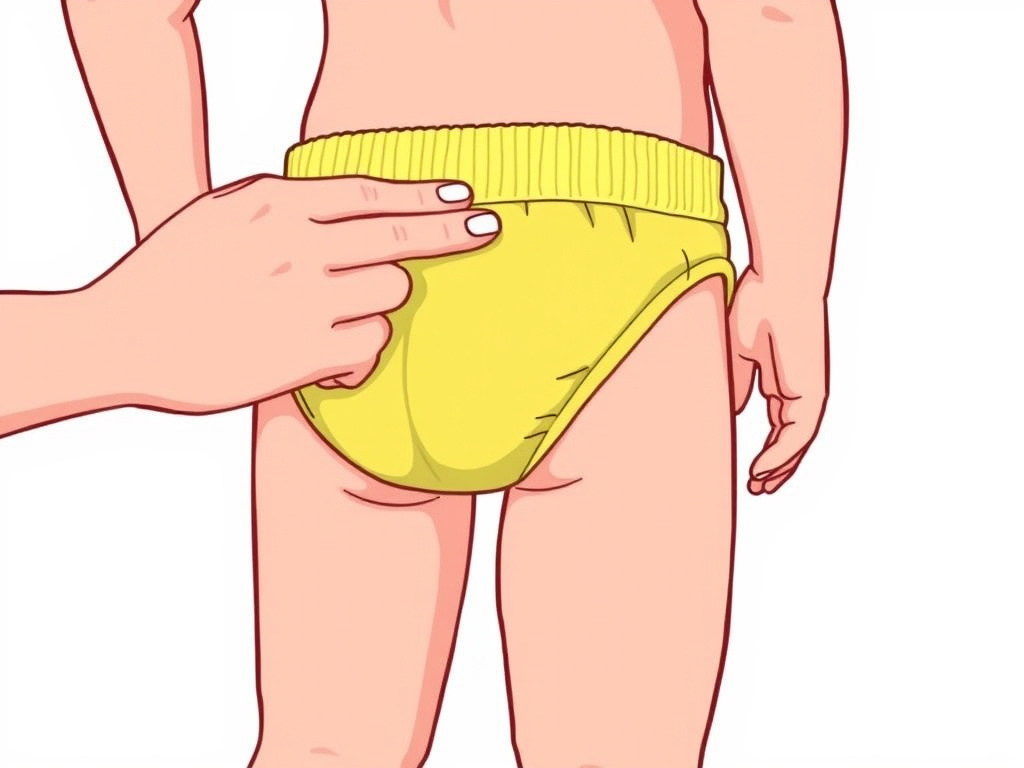
A swim diaper can only work if it fits like a second skin. Gaps at the thighs or waist are failure points.
Reusable vs. Disposable: A Clear Choice
Your decision here dictates cost, convenience, and often, effectiveness.
- Reusable Swim Diapers (e.g., Splash About Happy Nappy™): Made from snug-fitting, stretchy fabric with wide, tight elastics. They often look like cute swim bottoms. They are more economical for frequent use, provide a consistently tight fit, and are required by many swim schools. Brands like Happy Nappy™ use a specialist fabric cuff designed to seal against the skin.
- Disposable Swim Diapers: Resemble a regular diaper but with non-absorbent filling. They are convenient for travel or one-off use. However, their fit is often less secure, and the materials are less robust, the Anne Arundel County guidelines note they can leak around the seams, especially with loose stools.
For a child in weekly lessons, a reusable swim diaper is the default pick. The fit is superior, and the cost per use plummets after a handful of swims.
Common mistake: Selecting a size for growth. A swim diaper must fit the child’s current measurements snugly. You should be able to fit only two fingers under the waistband. Red marks from the elastic are expected and normal; broken skin is not.
The Layering Mandate
Many public pools and all regulated facilities require a second layer, snug-fitting swimwear or plastic pants, over the diaper. This isn’t about modesty. It’s a secondary containment policy. * The diaper is the primary seal. * The swimsuit is the backup catcher.
Never try to meet this rule by putting a regular diaper under a swim diaper. The regular diaper will swell, the combination will be bulky and uncomfortable, and it violates the core principle of using a proper swim diaper fit. The public pool diaper guidelines PDF from Anne Arundel County explicitly recommends a bathing suit over the diaper for this extra protection.
The Bottom Line
A swim diaper is a specialized piece of safety equipment, not just another diaper. It lets pee through by design so it can do its one job well: keeping solid poop out of the pool water.
Your routine is what makes it work. Buy a snug, well-fitting reusable model like the Happy Nappy™ for regular use. Check it every half hour. Change it immediately and away from the water if needed. And never, ever bring a child with diarrhea to the pool, swim diaper or not.
That’s the agreement. The diaper provides the seal. You provide the vigilance. Together, they keep the water safe for everyone.
Frequently Asked Questions
Do you put a regular diaper under a swim diaper?
No, never. A regular diaper worn under a swim diaper will absorb pool water, swell dramatically, and become heavy and dangerous. It also negates the swim diaper’s function. The swim diaper is worn alone, or under a separate swimsuit if the pool requires two layers.
How long can a child stay in a swim diaper?
The child should stay in the swim diaper only for the duration of the swim session, with checks every 30 to 60 minutes. It is not for all-day wear. As soon as you’re out of the water, change them into a dry, regular diaper or underwear.
Can a swim diaper be used as a regular diaper on land?
No. Swim diapers are not absorbent. They will not hold urine, leading to immediate leaks. They are only for use in water. For land, you need a standard absorbent diaper or training pants.
When can my child stop wearing a swim diaper?
When they are fully toilet-trained, meaning they reliably recognize the need to go, can communicate it, and have had no accidents for a significant period (often several months). Age is not the factor; bladder and bowel control is. The CDC recommends their use until the child is toilet-trained.
Are reusable or disposable swim diapers better?
For most families who swim regularly, reusable swim diapers are better. They offer a more secure, gap-free fit, are more cost-effective over time, and are often more environmentally friendly. Disposables are fine for occasional travel or beach trips where laundry isn’t possible.
