
Swim Diaper Guide: What It Is, How It Works, and Its Purpose
This post contains affiliate links. As an Amazon Associate, we learn from qualifying purchases
A swim diaper is a water-resistant or waterproof garment designed to contain solid fecal matter from non-toilet-trained children in a pool. It is not absorbent, does not hold urine, and is not leak-proof, studies show it delays diarrhea-causing germs like Cryptosporidium from entering the water for only a few minutes before contamination occurs.
That last clause is the one every parent needs to hear twice. Public health codes require these garments not for absolute containment, but as a first, fragile barrier in a system that relies on frequent checks, proper fit, and keeping sick kids on dry land.
What follows is the breakdown of materials, the science behind the “few-minute” delay, the specific fit rules that turn a cover into a functional seal, and the real-world consequences when that system fails.
Key Takeaways
- Swim diapers are containment devices, not absorbent diapers. They are designed to hold solid poop, not pee.
- No swim diaper is leak-proof for diarrhea. CDC-cited research confirms they only delay watery stool contamination for a few minutes.
- Health departments mandate a snug fit at the waist and legs, if you can fit a finger inside the leg opening, it’s too loose.
- You must check and change a swim diaper every 30 to 60 minutes, always in a bathroom, never poolside.
- If a child has had diarrhea, keep them out of any body of water for two full weeks after symptoms stop.
How Swim Diapers Actually Work (and Where They Fail)
A swim diaper works on a simple mechanical principle: a water-resistant shell with elasticized openings acts as a catch basin. It lets pool water flow through freely while aiming to trap solid waste inside. This is why they feel so different from a regular diaper, there’s no super-absorbent polymer inside to gel up liquid.
A 2004 study in the Journal of Environmental Health and a 2011 follow-up in the Journal of Water and Health, both cited by the CDC, tested disposable swim diapers with Cryptosporidium-sized particles. The finding was consistent: swim diapers can delay the leakage of diarrhea-causing germs for a few minutes, but they do not prevent contamination.
The “delay” is critical. It’s not a failure of the product; it’s the physical limit of a permeable barrier against a liquid. This is why no manufacturer claims these products prevent diarrhea leakage. The function is containment of formed stool, giving you a window to get the child out of the water before a breach.
This design creates a dangerous false sense of security. A parent sees a contained child and assumes the pool is protected. The public health guidance on this is blunt: a swim diaper is one part of a hygiene protocol, not a force field. Your job is to pair it with vigilant timing and to understand its absolute limits, which are documented in official resources like the CDC swim diaper tips.
Disposable vs. Reusable: The Two Main Types
You have two structural paths, and the choice changes your routine.
| Type | How It Works | Best For | The Catch |
|---|---|---|---|
| Disposable Swim Diaper | Single-use, with a water-resistant outer layer and elastic legs/waist. Often has tear-away sides. | Travel, one-off pool visits, or when laundry isn’t an option. | Can be deceptively loose. The fit is less adjustable than reusable options. |
| Reusable Swim Diaper | Washable cloth shell (often polyester) with adjustable snaps or hook-and-loop closures. | Regular swimmers, eco-conscious families, or babies with sensitive skin. | Requires post-swim rinsing and washing. Must be completely dry before next use to prevent mildew. |
For most families who hit the pool more than a few times a summer, a well-made reusable swim diapers is the practical choice. The upfront cost is higher, but the adjustable fit is superior and you’re not adding to the landfill after every swim. Brands like iPlay and Alva Baby make reliable ones.
The disposable version has its place. It’s the convenient grab-and-go option for a weekend at a hotel or a surprise splash pad trip. Just don’t confuse convenience with effectiveness, the fit rules still apply.
The Right Fit is a Health Rule, Not a Suggestion
A swim diaper that gaps at the legs is a decorative cover. It serves no public health purpose. The Utah Department of Health code is explicit: waterproof swimwear must have “waist and leg openings fitted such that they are in contact with the waist and leg around the entire circumference.”
Think of it like sealing a lid. The elastic must lay flat against the skin all the way around. Here’s how to get it right:
- Check the leg elastic first. After putting it on, run a finger around the inside of each leg opening. You should feel consistent pressure. If you can slide a finger underneath easily, size down.
- The waist should sit snugly at the natural waistline, not on the hips. There should be no gaping when the child bends or squats.
- Do the “lift test.” Gently pull upward on the diaper’s front. If the leg openings ride up significantly off the skin, it’s too big.
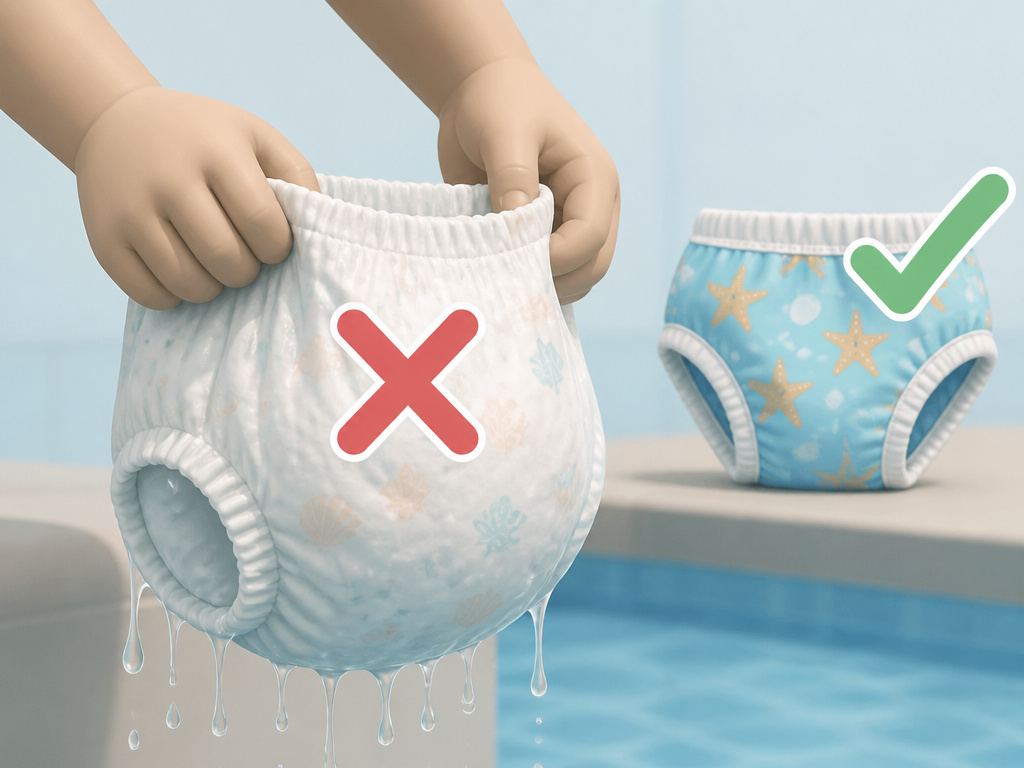
Where this goes sideways: Using a swim diaper over a regular diaper. A soaked regular diaper balloons with pool water, weighs down the swim diaper, and guarantees a gap at the legs. This defeats the entire containment system instantly. Never do it.
This proper swim diaper usage is what facility inspectors look for. A loose cover is often grounds for being asked to leave the pool, as it violates the local health standards outlined in documents like the Anne Arundel County public pool diaper use guidelines.
What Swim Diapers Do NOT Do
This is the short list that prevents big problems.
- They do not absorb urine. Pee passes directly through into the pool. This is by design, an absorbent diaper would swell with hundreds of times its weight in pool water, becoming a heavy, rupturing hazard.
- They are not leak-proof for diarrhea. As the research states, it’s a delay of minutes, not containment.
- They are not a regular diaper. The materials lack absorbency and are not designed for all-day wear. Trying to use a swim diaper as a regular diaper will lead to leaks and discomfort.
- They do not eliminate the need for bathroom breaks. The 30–60 minute check isn’t optional.
The consequence of misunderstanding these limits is a fecal incident in the pool. That triggers a mandatory clearing of the pool and a multi-hour closure for hyper-chlorination, a major disruption documented in every municipal pool operator’s handbook.
The Non-Negotiable Hygiene Protocol
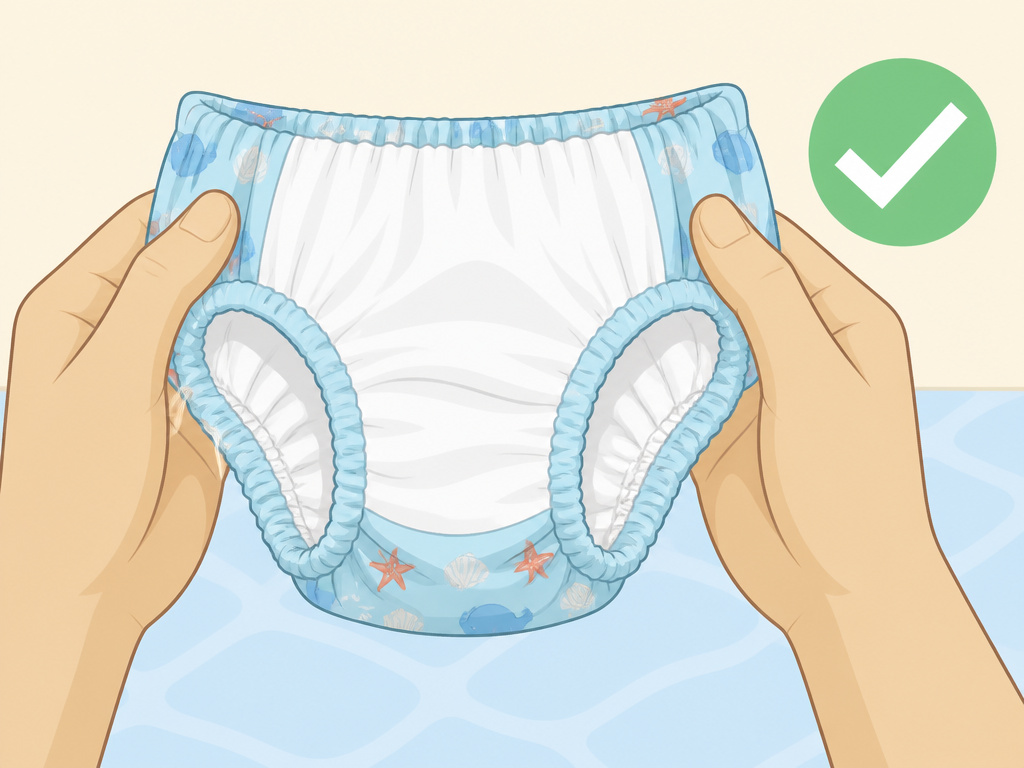
Using a swim diaper correctly is a timed procedure. The clock starts when the child enters the water.
| Action | Timeline / Frequency | Why You Can’t Skip It |
|---|---|---|
| Pre-swim check | Before entering water | Ensures the diaper is clean, dry, and fitted properly. A soiled diaper fails on contact. |
| In-water checks | Every 30–60 minutes | The CDC’s recommended window to prevent a containment failure before it happens. |
| Changing location | In a bathroom changing station | Prevents fecal germs from contaminating the pool deck where others walk barefoot. |
| Post-change handwashing | Immediately, with soap and water | Stops the transfer of germs like Crypto from your hands to surfaces, toys, or other people. |
The bathroom part is non-negotiable. Changing at poolside, even on a towel, spreads germs to the very area where people walk to exit the water. Modern facilities are built with this in mind, following the CDC pool hygiene standards document that mandates dedicated diaper-changing stations with adjacent sinks.
If you’re checking frequently, you’ll know the state of the diaper. If it’s soiled, the outing is over. You don’t just swap in a new one and send them back in. That’s how outbreaks start.
When to Keep Your Child Out of the Water Entirely
The swim diaper system has a hard off-switch: diarrhea. Crypto germs are incredibly chlorine-resistant and can survive in a properly treated pool for days. The rule is absolute.
If your child has had diarrhea, they must not go swimming for two full weeks after the last symptom. This is the Utah Department of Health’s standing guidance, and it’s echoed by health agencies nationwide. No exceptions, no “but they seem fine now.” The risk of contaminating a public water space is too high.
This also applies to other illnesses. A child with any contagious sickness, especially gastrointestinal, should stay on dry land. The swim diaper provides zero protection for a sick swimmer.
What About a “DIY” Solution?
Some parents ask about using a regular diaper with a plastic cover or trying to make a regular diaper a swim diaper. This is a bad idea.
A regular diaper is designed to absorb. Submerged, it will soak up pool water, becoming waterlogged, heavy, and prone to bursting. The resulting mess is worse than no containment at all. The specialized materials of a true swim diaper exist for a reason.
Frequently Asked Questions
Does a swim diaper hold pee?
No. Swim diapers are not designed to hold pee. They are permeable to allow water (and urine) to flow through freely. Their sole job is to contain solid fecal matter.
Do you need a swimsuit over a swim diaper?
Yes, and many pools require it. The swimsuit provides an extra layer of containment and ensures the swim diaper is completely covered, which is part of many health codes. It also keeps the diaper securely in place.
What’s the difference between a swim diaper and a diaper cover?
Swim diaper is a standalone containment garment for water. A diaper cover is a waterproof shell worn over a cloth diaper on land to prevent leaks onto clothing. They are not interchangeable.
Can I use a swim diaper for my newborn?
Yes, but you must find one that fits. Look specifically for infant swim diapers sized for newborns, which have smaller, more adjustable leg openings to achieve that crucial snug fit on tiny legs.
How do I choose the best swim diaper?
Focus on fit first. For infants, seek out newborn-sized options. For broader recommendations, consult a dedicated guide on the best swim diapers for babies that compares fit, durability, and value.
Before You Go
A swim diaper is a tool with a narrow, specific purpose: to buy you a few minutes to react. Its effectiveness hinges on a snug fit, a strict timer, and the wisdom to keep a sick child ashore. It is not a magic bubble.
Remember the three anchors: fit it tightly, check it hourly, change it in the bathroom. That’s the protocol that actually keeps pools safer. Everything else is just a swimsuit.
