
How to Tell If Your Baby’s Diaper Rash Is a Yeast Infection
This post contains affiliate links. As an Amazon Associate, we learn from qualifying purchases
You can tell if a diaper rash is yeast by looking for four specific signs: a deep red or purple rash with a sharp, raised border; small red bumps or pimples (satellite lesions) just outside the main rash; a shiny, sometimes cracked appearance; and location primarily in the deepest skin folds. A common irritant rash is drier, smoother, and centered on the buttocks. If a regular barrier cream hasn’t helped in 2-3 days, suspect yeast.
That border is the giveaway. It’s not a gentle fade from pink skin to red rash. It’s a defined line, like someone drew it with a marker. The yeast fungus, usually Candida albicans, grows outward from the warm, moist center of a rash, and its leading edge creates that visible frontier.
What follows is a visual checklist, the specific scenarios that make yeast likely, and the one at-home test a pediatrician might use to confirm it. You’ll know what to look for in the diaper area and when it’s time to skip the guesswork and call the doctor.
Key Takeaways
- The clearest sign is a defined red border with satellite lesions—small red bumps outside the main rash.
- Yeast thrives in skin folds (groin, thighs), while common irritation targets the convex buttocks.
- If a high-quality zinc oxide cream shows no improvement after 48–72 hours, yeast is a probable cause.
- Antibiotic use, either by the baby or a breastfeeding parent, significantly increases the risk.
- Always consult a pediatrician for diagnosis; they may perform a quick potassium hydroxide (KOH) slide test.
The 4 Visual Signs of a Yeast Diaper Rash
Forget vague redness. Yeast has a signature look. The Cleveland Clinic yeast diaper rash guide details the specific presentation that separates it from a standard diaper rash.
A candidal rash presents with a bright red, sharply demarcated border, often with satellite papules and pustules. It favors intertriginous areas (skin folds), and diagnosis is often clinical, supported by potassium hydroxide wet mount if needed.
1. The Defined Border. This isn’t a blush. It’s a stark, raised line where the red rash stops and normal skin begins. The color is often a deeper red or purple hue compared to the pink of irritation.
2. Satellite Lesions. Look just beyond the border. You’ll often find a scattering of smaller red bumps, tiny pimples, or even pus-filled spots. These “satellite” lesions are a classic hallmark of fungal spread.
3. Surface Texture. The rash itself can look shiny or glossy. The skin may be cracked or appear macerated (overly wet and soft). In severe cases, it can ooze clear fluid.
4. Location, Location, Location. Yeast loves deep, dark, moist folds. Check the creases between the groin and thigh, the folds of the genitals, and the area around the anus. A common causes of diaper rash like friction and moisture typically hits the convex, exposed areas of the buttocks and upper thighs first.
Where this goes sideways: Missing the border on dark skin. Erythema (redness) is harder to detect in deeper skin tones. Focus on the texture change—the shiny, raised border and satellite bumps will still be palpable and visible as a distinct texture shift, even if the red hue is subtle.
Yeast Rash vs. Common Diaper Rash: A Side-by-Side Guide
When you’re staring at a sore bottom, a comparison chart cuts through the worry. Use this table to match what you see.
| Sign | Yeast Diaper Rash | Common Irritant Diaper Rash |
|---|---|---|
| Color | Deep red, purple, with a sharp border. | Light pink to red, fading at edges. |
| Texture | Shiny, can be cracked or have tiny bumps (satellites). | Dry, scaly, or smooth. |
| Primary Location | Deep skin folds (groin, genitals, thigh creases). | Convex surfaces (buttocks, upper thighs, waistband). |
| Pattern | Several smaller patches or one large patch with satellites. | One large, continuous area. |
| Response to Cream | Barrier creams (zinc oxide) won’t improve it. | Improves significantly within 48–72 hours with barrier cream. |
The “response to cream” column is your practical home test. A robust yeast diaper rash treatment requires an antifungal, not just a barrier.
The Scenarios That Make Yeast Likely (The “Why” Behind the Rash)
A rash doesn’t appear in a vacuum. Certain conditions pave the way for Candida to overgrow. If one of these is present, your suspicion for yeast should be higher.
Recent Antibiotic Use. This is the biggest trigger. Antibiotics kill the good bacteria that keep yeast in check, allowing it to flourish. This includes antibiotics given directly to the baby or to a breastfeeding parent. The connection between antibiotics and diaper rash is direct and common.
Prolonged Wetness. Yeast is a fungus that thrives in warm, damp environments. A diaper that’s left on too long, especially overnight, creates the perfect incubator.
Pre-existing Irritation. A simple friction rash breaks down the skin’s protective barrier. Once the skin is compromised, yeast can easily invade and set up shop, turning a simple irritation into a secondary infection.
Co-existing Thrush. Candida albicans is the same organism that causes oral thrush. If your baby has white patches in their mouth that don’t wipe away easily, the yeast can travel through the digestive tract and emerge in the stool, seeding the diaper area. This often requires a systemic approach to antifungal treatment.
How a Pediatrician Diagnoses a Yeast Infection
You don’t have to guess. A pediatric visit provides a definitive answer, often in minutes. Here’s what to expect.
- Visual Examination. Most pediatricians can diagnose a classic yeast rash on sight, using the visual signs we’ve covered.
- Clinical History. They’ll ask about duration, antibiotic use, what creams you’ve tried, and whether there’s been oral thrush.
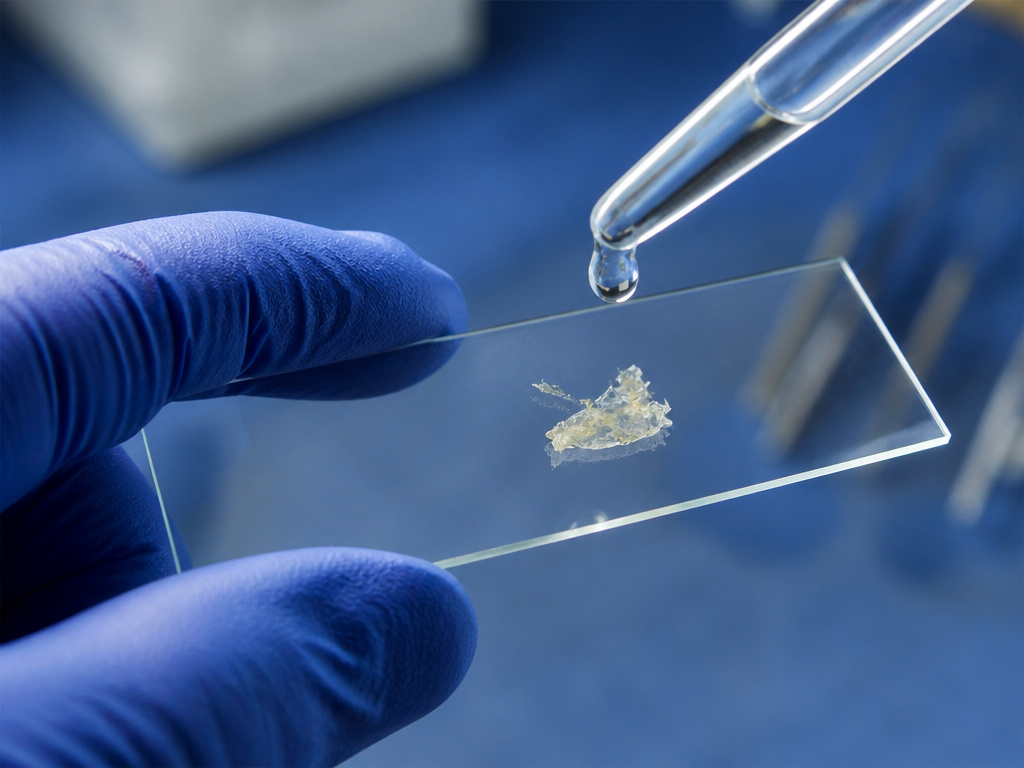
- The Potassium Hydroxide (KOH) Test. For uncertain or recurrent cases, the doctor may gently scrape a tiny bit of skin from the rash’s edge onto a slide. Adding a drop of KOH solution dissolves skin cells but leaves fungal cells intact, allowing them to see the characteristic yeast buds and hyphae under a microscope. It’s quick and confirms the clinical diagnosis of yeast rash.
This last step is crucial for stubborn rashes. It rules out other conditions like psoriasis or a bacterial infection, ensuring the treatment for severe rash is correctly targeted.
What to Do Next: Treatment and When to Call the Doctor
Once you suspect yeast, action changes. Continuing with only a barrier cream wastes time and prolongs discomfort.
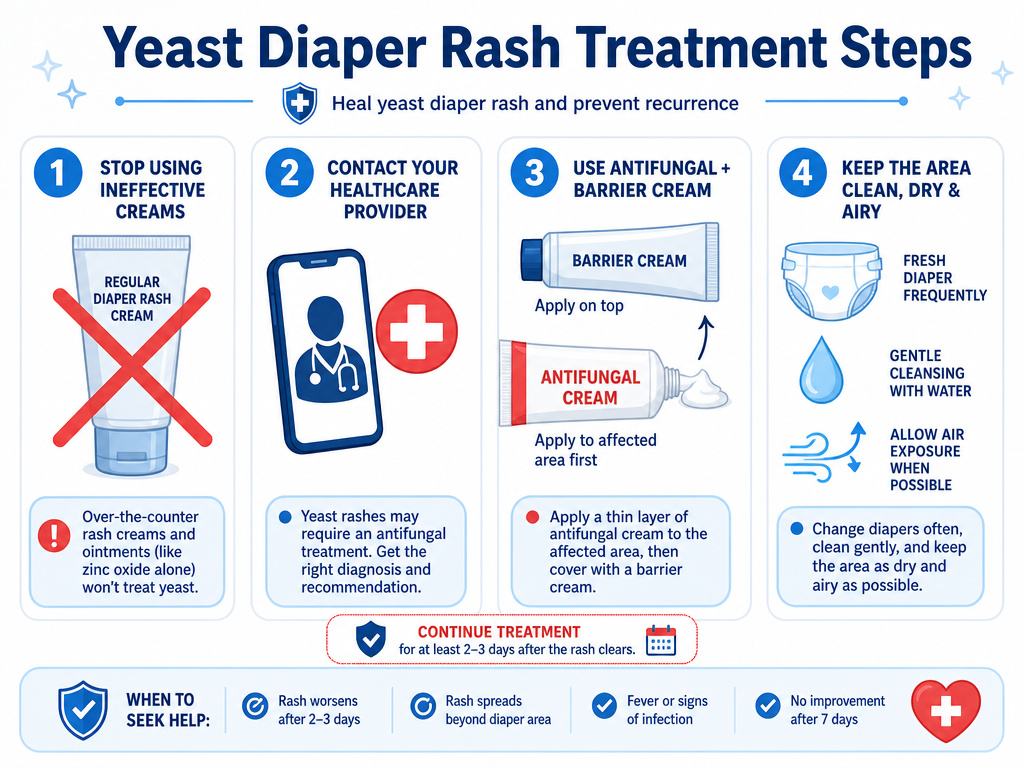
Step 1: Stop the Guesswork. Discontinue use of any cream not labeled as an antifungal. This includes plain zinc oxide or petroleum jelly. They’ll act as a barrier but won’t kill the fungus.
Step 2: Seek a Diagnosis. Contact your pediatrician. Describe the signs (border, satellites, location) and any risk factors (antibiotics). They will confirm if it’s yeast and prescribe or recommend the appropriate antifungal cream, typically an imidazole like clotrimazole applied twice daily.
Step 3: Treat Correctly. If an antifungal is prescribed: * Apply a thin layer to the entire affected area, including the satellite spots. * Continue use for the full course, even if the rash looks better in 3-4 days. Yeast can linger under the skin. * You can apply a barrier cream like a yeast diaper rash ointment containing zinc oxide over the antifungal once it has dried, to protect the skin.
Step 4: Adjust Care.
- Change diapers immediately when wet or soiled.
- During changes, gently cleanse with water and a soft cloth. Avoid fragrant wipes.
- Let the area air-dry completely before re-diapering.
- Keep diapers slightly loose to maximize airflow.
When to call immediately: The rash develops open sores, bleeds, oozes yellow pus, or is accompanied by a fever. Your baby is inconsolable. These signal a possible secondary bacterial infection or a more serious severe diaper rash requiring different medical care.
Frequently Asked Questions
Can a yeast diaper rash go away on its own?
It’s very unlikely. Yeast is an organism that feeds on the warm, moist environment. Without an antifungal agent to stop its growth, it will typically persist or worsen. Prompt antifungal treatment is needed to clear it.
How long does it take for a yeast diaper rash to clear up?
With proper antifungal cream, you should see noticeable improvement within 2-3 days. However, complete clearance of the rash and the underlying fungal overgrowth usually takes between two to three weeks. It’s critical to finish the entire course of medication to prevent recurrence.
Is a yeast diaper rash contagious?
Not in the way a cold is. You can’t “catch” it from another child’s rash. However, the yeast organism can spread on your baby’s own body—from the mouth (thrush) to the diaper area via the digestive tract, or from the diaper area to other warm folds like the armpits or neck if hygiene isn’t maintained.
Can I use an over-the-counter antifungal cream?
Yes, clotrimazole (Lotrimin AF) is a common OTC imidazole cream that is often effective. However, a pediatrician’s diagnosis is still best. They can confirm it’s yeast and not something else, and they can prescribe a stronger formulation if needed, especially for cases linked to the common causes of yeast diaper rash like concurrent thrush.
What if the rash comes back after treatment?
Recurrence points to an unresolved source. The most common reasons are not completing the full treatment course, an ongoing source of yeast (like untreated oral thrush), or a persistent trigger like frequent antibiotic use. Recurrent cases warrant another pediatric visit; they may do a culture to identify the yeast species or investigate underlying causes of yeast rash.
The Bottom Line
Identifying a yeast diaper rash comes down to a few non-negotiable visuals: the sharp border, the satellite spots, and the fold-centric location. When you see that pattern, especially after antibiotics or with thrush, move past standard barrier creams. Your next step is a pediatrician’s confirmation, followed by a targeted antifungal. The right yeast diaper rash treatment brings relief within days and clears the skin for good.
