
Is Coconut Oil Effective for Diaper Rash? Proven Benefits
This post contains affiliate links. As an Amazon Associate, we learn from qualifying purchases
Yes, pure coconut oil can be good for mild, everyday diaper rash. It provides a light, breathable barrier against moisture, soothes with its fatty acids, and contains lauric acid which has mild antimicrobial properties. Clinical research, including a study that saw diaper rash severity scores drop from an average of 2.20 to 1.33 after VCO application, supports its use for mild to moderate cases. However, for severe, broken, or infected rashes, a dedicated zinc oxide cream is the stronger, medically recommended choice.
The drop from a 2.20 to a 1.33 severity score is the kind of specific number that moves this from folk remedy to documented intervention. That figure comes from a 2025 study tracking 30 newborns, and it gives you a real benchmark for what to expect.
This guide breaks down the published science, the mechanics of how coconut oil works on skin, and the clear line where you should put the jar down and reach for a clinical-strength cream. You’ll see the data, understand the why, and leave with a confident protocol.
Key Takeaways
- Coconut oil’s lauric acid offers mild antibacterial and antifungal action, which can help prevent a simple rash from escalating.
- For mild to moderate rash, studies show improvement often within 24-48 hours with consistent application on clean, dry skin.
- It forms a lighter barrier than zinc oxide paste, making it better for prevention or early irritation, not for severe, broken skin.
- The Cosmetic Ingredient Review (CIR) Expert Panel has deemed it safe for topical use with minimal risk of irritation.
- If the rash is severe, blistered, bleeds, or doesn’t improve in 2-3 days, stop using coconut oil and switch to a zinc oxide-based cream or consult a pediatrician.
The Science Behind the Soothing
Coconut oil isn’t magic. It works through two straightforward mechanical actions and one biochemical one. First, its saturated fats create an occlusive layer on the skin. This isn’t a thick, plastic-like seal, but a light, breathable film. That film reduces friction from the diaper and limits direct contact between the skin and the wetness in a soiled diaper.
Second, it’s an emollient. It softens and smooths the skin by filling the spaces between skin cells, which helps repair the skin barrier. A baby’s skin is about 30% thinner than an adult’s, so this supportive hydration matters.
The fatty acids in coconut oil may also act as an effective barrier for skin irritants. Coconut oil has been shown to have a low risk of allergic reaction or adverse effects when applied topically. — The Use of Coconut Oil for the Prevention and Treatment of Diaper Dermatitis in the NICU population, ClinicalTrials.gov protocol
The third mechanism is where it gets interesting. Coconut oil is roughly 50% lauric acid. This medium-chain fatty acid has demonstrated antimicrobial properties in lab studies. When applied to skin, it may help limit the population of bacteria and fungi like candida that can thrive in the warm, moist diaper environment and turn a simple irritation into an infected rash.
This is why it’s more effective than just any greasy barrier. A 2025 study in the Jurnal Kebidanan Malahayati put a number on it. Researchers applied Virgin Coconut Oil (VCO) to newborns with diaper rash and tracked the severity. The average score dropped from 2.20 (moderate rash) to 1.33 (mild rash)—a statistically significant improvement. This is a concrete example of its potential, not just a theoretical benefit.
When Coconut Oil Works (And When It Doesn’t)
Your decision tree starts with visually grading the rash. Coconut oil has a specific job, and using it outside its scope wastes time and can prolong your baby’s discomfort.
Use coconut oil for:
- Prevention: A thin smear on clean, dry skin at each change, especially if your baby has sensitive skin or is prone to redness.
- Mild Redness: General pinkness or slight irritation without bumps, broken skin, or significant swelling.
- Dry Patches: Flaky or chapped skin in the diaper area from frequent wiping.
- Early-Stage Rash: The first signs of irritation where the skin is still intact.
Switch to zinc oxide immediately for:
- Severe Redness: Bright red, inflamed skin that looks painful.
- Broken Skin: Any areas where the skin surface is eroded, weepy, or bleeding.
- Blisters or Pustules: Signs of a possible bacterial or yeast (candida) infection, which often appears as bright red patches with distinct borders and satellite red dots.
- Rash That Spreads: Irritation that moves beyond the primary diaper area to the thighs or abdomen.
Where this goes sideways: Using coconut oil on a severe, weepy rash. The lighter barrier can’t protect damaged skin from urine, and the oil can trap moisture against the skin, potentially making maceration worse. You’ll see no improvement after two days.
The table below helps you match the rash to the remedy.
| Rash Appearance | Recommended Treatment | Why It’s the Better Fit |
|---|---|---|
| Pink, slight irritation | Coconut Oil | Provides a light, soothing barrier; antimicrobial lauric acid helps prevent progression. |
| Bright red, inflamed | Zinc Oxide Cream (e.g., Desitin) | Creates a thick, waterproof seal to protect severely irritated skin and allow healing. |
| Dry, flaky patches | Coconut Oil or Ointment (e.g., Aquaphor) | Excellent for moisturizing and repairing a compromised skin barrier. |
| Blisters, bleeding, or yeast-like spots | Pediatrician Visit + Medicated Cream | Requires diagnosis; may need an antifungal or prescription-strength steroid. |
If you’re considering other natural remedies, know that a 2024 study found Virgin Coconut Oil and Aloe Vera had “relatively similar effectiveness” for healing inflammatory diaper rash. So if you have aloe on hand, it’s a comparable option. This is different from using cornstarch, which is a drying agent and is not recommended for damp rashes as it can cake and promote fungal growth.
How to Use Coconut Oil Correctly
Getting results hinges on method. Slapping it on a damp bottom is a recipe for failure.
- Clean Thoroughly. Gently wash the diaper area with lukewarm water and a soft cloth or a gentle, fragrance-free wipe. Pat—don’t rub—the skin completely dry. Moisture trapped under any barrier is the enemy.
- Apply a Thin Layer. Scoop a pea-sized amount of oil and warm it between your fingers. Spread a thin, even layer over the entire diaper area that contacts the diaper: buttocks, genitals, inner thighs, and creases. You shouldn’t see a greasy glob.
- Let It Absorb Briefly. Give it 30-60 seconds to soak in and form its protective layer before putting on the fresh diaper.
- Repeat Every Change. Consistency is key for prevention or treatment. Use it at every diaper change while the rash is present.
- Incorporate Air Time. If possible, let your baby go diaper-free for 10-15 minutes after application before putting the new diaper on. Air exposure is a powerful healer.
Why the thin layer? A thick layer doesn’t add more protection. It just makes a mess, can clog diaper breathability, and may prevent the diaper’s absorbent core from pulling moisture away from the skin effectively.
Coconut Oil vs. Zinc Oxide: Choosing Your Barrier
This is the core choice for parents. They work differently, and understanding that difference stops the guesswork.
Coconut oil is a moisturizing, active barrier. It nourishes the skin while providing a light shield. Its lauric acid content gives it a mild proactive role against microbes. Think of it like a breathable, nourishing sweater.
Zinc oxide paste (the active ingredient in creams like Desitin or Triple Paste) is an inert, protective barrier. It sits on top of the skin like a waterproof plaster, sealing out wetness and irritants so the skin underneath can heal itself. It doesn’t moisturize or have antimicrobial properties; it’s pure, thick protection.
| Aspect | Coconut Oil | Zinc Oxide Cream |
|---|---|---|
| Barrier Type | Light, breathable, occlusive | Thick, waterproof, occlusive |
| Primary Action | Moisturizes, soothes, mild antimicrobial | Seals out moisture and irritants |
| Best For | Prevention, mild redness, dry skin | Moderate to severe rash, broken skin |
| Feel | Absorbs, leaves skin soft | Stays on surface, can be pasty |
| Clean-Up | Washes off with soap and water | Often requires an oil or wipe to remove |
The short version: Use coconut oil to keep skin healthy and calm early irritation. Use zinc oxide to put out a fire. Many parents successfully use coconut oil daily and switch to a zinc oxide cream at the first sign of a more serious flare-up.
Safety and What to Look For When Buying
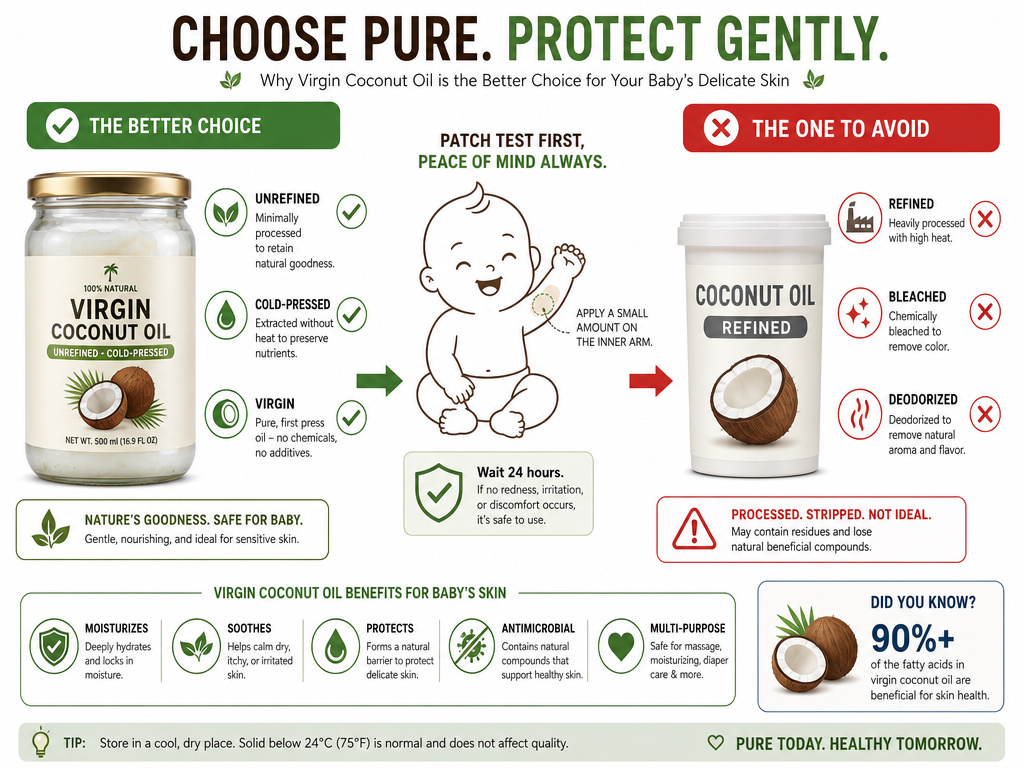
The CIR Safety Review concluded that coconut oil and its derivatives are safe for cosmetic use, noting “very minimal skin irritation reactions” in human testing. Allergic reactions are rare, but they can happen. Always do a patch test: apply a dime-sized amount to your baby’s inner arm, wait 24 hours, and check for redness.
When shopping, the label is everything.
- Look for: “Unrefined,” “Virgin,” or “Extra Virgin Coconut Oil.” “Cold-pressed” is a bonus. This means it’s been minimally processed, retaining more of its natural compounds.
- Avoid: “Refined,” “Bleached,” or “Deodorized” coconut oil. The refining process uses high heat and chemicals that strip beneficial components and may introduce residues you don’t want on delicate skin.
- Container: Choose oil in a glass jar or a BPA-free plastic container. Ensure the packaging is clean and sealed.
Brands like Garden of Life, Dr. Bronner’s, and Viva Naturals offer widely available, high-quality virgin coconut oil. You don’t need a “baby-specific” version; pure, food-grade oil is perfect.
Frequently Asked Questions
Can coconut oil make diaper rash worse?
It can if used incorrectly. Applying it to skin that isn’t perfectly dry traps moisture, which can worsen maceration. If the rash is caused by a yeast (candida) infection, the oils can potentially feed the yeast. If a rash doesn’t improve within 2-3 days of proper use, it’s time to try a zinc oxide cream or see a doctor.
How often should I apply coconut oil for diaper rash?
Apply a thin layer at every single diaper change for the duration of the rash. For prevention, you can apply it once or twice daily during changes, focusing on high-risk times (like overnight).
Is virgin coconut oil better than regular coconut oil for diaper rash?
Yes. Virgin Coconut Oil (VCO) is unrefined and processed without high heat or chemicals, preserving its natural lauric acid content and skin-friendly compounds. Regular “refined” coconut oil has these components diminished.
Can I use coconut oil and diaper rash cream together?
It’s not recommended. Layering products can create a greasy, ineffective barrier and make it hard to know which agent is working. Pick one appropriate for the rash severity. If you need to switch, gently clean off the previous product before applying the new one.
Are there babies who shouldn’t use coconut oil?
Babies with a known coconut allergy should avoid it. Also, babies with very severe, weeping, or infected rashes should not use it as a first-line treatment; they need the stronger protection of zinc oxide or medical evaluation.
Before You Go
Coconut oil is a versatile, research-supported tool for a parent’s diaper-changing kit. Its strength lies in gentle prevention and early intervention for mild irritation, backed by its unique blend of barrier protection and mild antimicrobial activity. The evidence, from clinical trial protocols to peer-reviewed studies showing measurable score reductions, confirms its place.
But its role has a boundary. For significant redness, broken skin, or any sign of infection, its light touch is insufficient. That’s when you confidently switch to a heavy-duty zinc oxide paste. Having both on hand, and knowing the visual cues that tell you which to use, is the real strategy for keeping your baby comfortable.
