
Will a Diaper Ruin a Washing Machine? | The Gel Truth
This post contains affiliate links. As an Amazon Associate, we learn from qualifying purchases
A single disposable diaper will not ruin a modern washing machine if you clean it correctly. The super-absorbent polymer (SAP) gel inside is not corrosive and won’t damage metal or plastic components. The real risk is from improper cleanup, forcing gel chunks into the drain pump or using the wrong cleaning chemicals afterward.
That distinction matters. A washer can handle a one-time gel invasion. What it can’t handle is owner panic leading to a rushed, destructive fix. Your machine’s drain pump, hoses, and sensors are the vulnerable points.
The rest of this guide walks through the cleanup that works, the manufacturer specs that explain why it works, and the three things that actually break a washer for good.
Key Takeaways
- The super-absorbent polymer gel is water-soluble when dry; running contaminated clothes through a hot dryer converts the gel into a powder that your lint trap catches.
- Never use undiluted fabric softener in the rinse cycle after a diaper incident, it can stain fabrics and, combined with residual gel, clog dispensers.
- Samsung and LG manuals recommend a monthly Tub Clean cycle; this is the best way to clear any leftover gel or detergent film after manual cleanup.
- Installing a washer in a humid space, like a basement bathroom, increases the risk of detergent residue buildup and mildew, a bigger long-term threat than a diaper.
- If gel gets past the lint trap and into the drain pump, you’ll hear a loud grinding noise during the spin cycle; that’s the only “ruined” scenario from a single diaper.
The Immediate 20-Minute Cleanup Process
Follow these steps in order. The goal is to move the gel from a wet, sticky state in the washer to a dry, manageable state in the dryer and trash.
Before you start: Unplug the washer. You’ll be reaching into the drum to remove clothes and gel chunks. Make sure the drum is completely stopped and the control panel is dead.
- Remove clothes and large gel chunks by hand. Pull everything out, shaking each item over the open drum. Toss any palm-sized gel blobs directly into the trash. Don’t worry about small beads or a sticky film on the clothes, that’s what the dryer is for. This is the most tactile, messy part.
- Place the damp, gel-speckled clothes in the dryer. Run them on the highest heat setting your fabrics allow. The heat crystallizes the SAP gel. After the cycle, you’ll find a fine, sand-like powder in the lint trap, not sticky blobs. Empty the trap thoroughly.
- Clean the washer drum. Wipe out any remaining big gel pieces with a dry paper towel. Then, run a cleaning cycle. If your machine has a Sanitary or Tub Clean cycle, use that with hot water. Add a washing machine cleaner like Affresh or ½ cup of liquid bleach to the empty drum. This sanitizes and flushes any dissolved gel residue down the drain.
Where this goes sideways: Skipping the dryer step and trying to rinse gel off in a second wash. The gel absorbs water and swells, potentially washing smaller pieces into the drain hose where they can rehydrate and cause a clog weeks later. Heat is the fix.
Why the Dryer is Your Best Tool
The chemistry is straightforward. Super-absorbent polymer is designed to absorb and hold liquid. When it’s wet, it’s a sticky hydrogel. Applying dry heat drives the moisture out, leaving behind a brittle, crystalline solid. That solid breaks into a powder that can’t reabsorb water in the same way, making it safe for the lint trap. It’s a physical change, not a chemical one.
What Actually Breaks a Washer (It’s Not Gel)
Diaper gel is a nuisance, not a solvent. The components that fail are usually stressed by owner habits that the diaper incident exposes or exacerbates.
| Component | Real Cause of Failure | How a Diaper Incident Can Trigger It |
|---|---|---|
| Drain Pump | Small, hard objects (coins, screws) or fibrous clogs (hair, sand) | Forcing large, wet gel chunks down the drain during cleanup instead of removing them by hand. |
| Pressure Sensor / Water Inlet Valve | Mineral scale (hard water) or detergent buildup | Using excessive detergent for years, then adding gel residue that mixes into a thicker sludge. |
| Door Seal / Gasket | Constant moisture and organic growth (mold, mildew) | Leaving the washer door closed after the cleanup cycle, trapping humidity and any residual sugar-based gel. |
| Motor Coupling | Overloading the drum or washing single heavy items (rugs, blankets) | Panicking and running a massive “cleanout” load with soaking-wet towels and gel, throwing the drum off balance. |
The manual for a Samsung WA55CG7100 top-loader explicitly warns against installing the unit in humid spaces to prevent electric shock and “minimize detergent residue buildup.” That’s a manufacturer-stated, long-term risk that outweighs a one-time gel spill. A damp basement laundry room fosters mildew in the seal and drum, that smell you blame on diapers is often just chronic humidity.
The part nobody mentions: Leaving the washer lid or door ajar after every cycle is the single most effective maintenance task. It lets the drum dry completely, preventing the musty odor that makes people think their machine is “ruined” after a diaper incident.
The Right Way to Clean and Maintain Afterward
Your washer just processed a foreign substance. Give it a reset with manufacturer-recommended procedures, not home remedies.
First, understand your machine’s built-in cleaning cycle. An LG Tub Clean cycle, run monthly, heats water to a specific temperature to dissolve residues. A Whirlpool Duet with a FanFresh option uses air to dry the drum interior. Use these functions. They exist because detergent and soil accumulation is a normal, gradual process.
Second, be precise with additives. * Detergent: Use only HE (High-Efficiency) detergent, and measure it. The Whirlpool manual states excessive suds from regular detergent “will likely result in longer cycle times and reduced rinsing performance.” That reduced rinsing leaves a film for gel or mold to stick to. * Fabric Softener: Always dilute it with ½ cup of warm water and add it only to the final rinse dispenser. An older general manual warns that “undiluted fabric softener can stain fabrics” and make towels less absorbent, a double-whammy if you’re also dealing with leftover diaper gel on towels. * Cleaners: Use a product designed for washing machines, like Affresh or Tide Washing Machine Cleaner. They are formulated to dissolve mineral and detergent buildup without harming seals or sensors. Vinegar works for mild deodorizing but is a weak acid that won’t remove significant buildup.
Cloth vs. Disposable: A Different Kind of “Ruin”
 Parents considering cloth diapers often worry about contaminating their washer. The concern is backwards.
A diaper blowout from a disposable can spray fecal matter onto clothes and the drum. Breastmilk poop is water-soluble, but formula or solid-food poop needs to be rinsed off before washing. That’s a bio-load issue. Cloth diapers, when washed on a proper sanitary cycle, subject the machine to high heat and heavy-duty cleaning routines more frequently. This can be good for the machine, it’s like running a self-clean cycle more often.
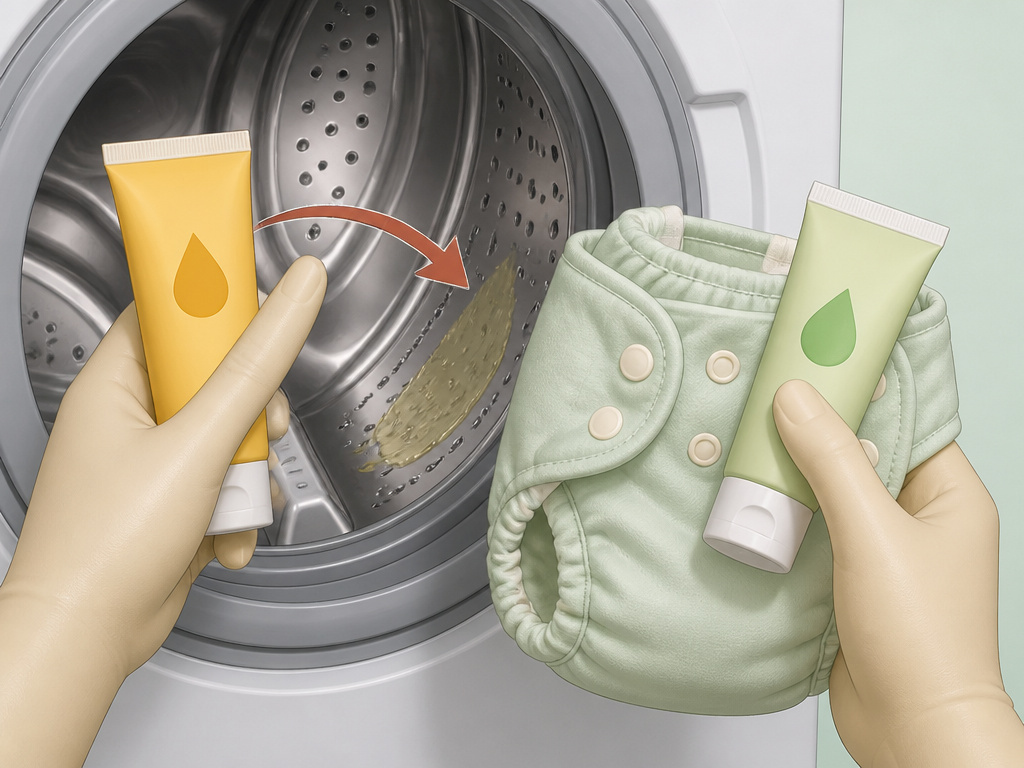
The real “ruin” risk with cloth diapers is using the wrong diaper rash cream. Oil-based creams containing petroleum or cod liver oil can coat the drum and transfer to other clothes, causing stains and reducing absorbency. You need a cloth-safe rash cream that washes out cleanly. The problem isn’t the diapers; it’s the accessories.
Easy to miss: If you switch to cloth diapers, you’ll likely run a “pre-wash” cycle. This short, cold cycle generates less suds. That’s a good practice for all laundry, it reduces total detergent residue in your machine, extending its life.
Frequently Asked Questions
Will the diaper gel melt and clog my dryer?
No. The gel dehydrates and turns to powder in the heat. Your lint trap will catch it. Always clean the lint trap after drying a load that had gel in it. The fine powder can reduce airflow if the screen is full.
Do I need to call a repair person?
Almost certainly not. If you complete the cleanup steps and your washer still runs through cycles normally, fills, agitates, drains, spins, it’s fine. The only sign of real damage would be a loud grinding from the drain pump or an error code related to drainage. That indicates a physical clog, not chemical corrosion.
Can I use bleach to clean the washer after a diaper?
Yes. Running a hot water cycle with ½ cup of liquid bleach is an effective way to sanitize the drum and break down any organic residues. This is a standard manufacturer recommendation for monthly maintenance. Just don’t mix bleach with other cleaners like vinegar or ammonia.
How do I prevent this from happening again?
Establish a laundry hamper rule: no disposable diapers. Use a dedicated, lidded trash can for them. For overnight diapers, which are easy to mistake for cloth, consider a small, separate hamper in the nursery. It’s a systems problem, not a vigilance problem.
Are some washers more susceptible to damage?
Front-loaders and high-efficiency top-loaders use less water. This means gel chunks are less diluted and could theoretically strain the drain pump more easily. The cleanup process is the same, but being thorough with manual removal is even more critical. The pump is the universal weak point.
Before You Go
A diaper in the wash is a messy, stressful mistake. It isn’t a death sentence for your appliance. The machine is designed to handle soil, detergent, and unexpected debris. Your job is to clean it with the right sequence: hand-remove, dry-heat, then sanitize.
Focus on the real threats: chronic over-detergenting, hard water scale, and a constantly humid drum. Those are the silent killers. Run your monthly Tub Clean cycle. Leave the lid open. Measure your soap. Do those things, and your washer will survive far worse than a stray diaper.
