
Will Breastmilk Help Diaper Rash? The Evidence-Backed Answer
This post contains affiliate links. As an Amazon Associate, we learn from qualifying purchases
Yes, breastmilk can help with mild diaper rash. A clinical trial found that after five days, applying breastmilk three times a day improved the rash in 88% of infants, compared to 48% in a group using only water and frequent diaper changes. It works as a gentle anti-inflammatory and moisturizer, but it is not a barrier cream. For moderate or severe rashes, or for prevention, a zinc oxide or petrolatum-based cream is the evidence-backed choice.
The “88% improvement” figure is from a real study. That’s the part most parenting blogs miss, they treat breastmilk as folk wisdom, but there’s a peer-reviewed number behind it. The catch is in the details: the study defined improvement as a reduction in rash severity score over five days. It didn’t claim a cure.
What follows is a breakdown of that evidence, four safe ways to apply breastmilk that won’t introduce new germs, and the clear line where you should reach for a commercial cream instead.
Key Takeaways
- Breastmilk showed a significant improvement rate in a clinical trial, but the study was small (30 infants) and focused on mild to moderate rashes.
- It lacks the occlusive barrier of zinc oxide or petrolatum, meaning it doesn’t seal out wetness, the primary cause of diaper rash.
- For prevention or a rash that’s more than faint pink, a 15% zinc oxide cream (like Mustela 1 2 3) or a lanolin-petrolatum ointment (like Lansinoh) is clinically proven to be more effective.
- Never mix breastmilk with other products in a container, as this can breed bacteria. Apply them separately.
- If a rash is bright red, has pustules, or doesn’t improve in 2-3 days, it may be a yeast diaper rash needing antifungal treatment.
The Science: What the Studies Actually Say
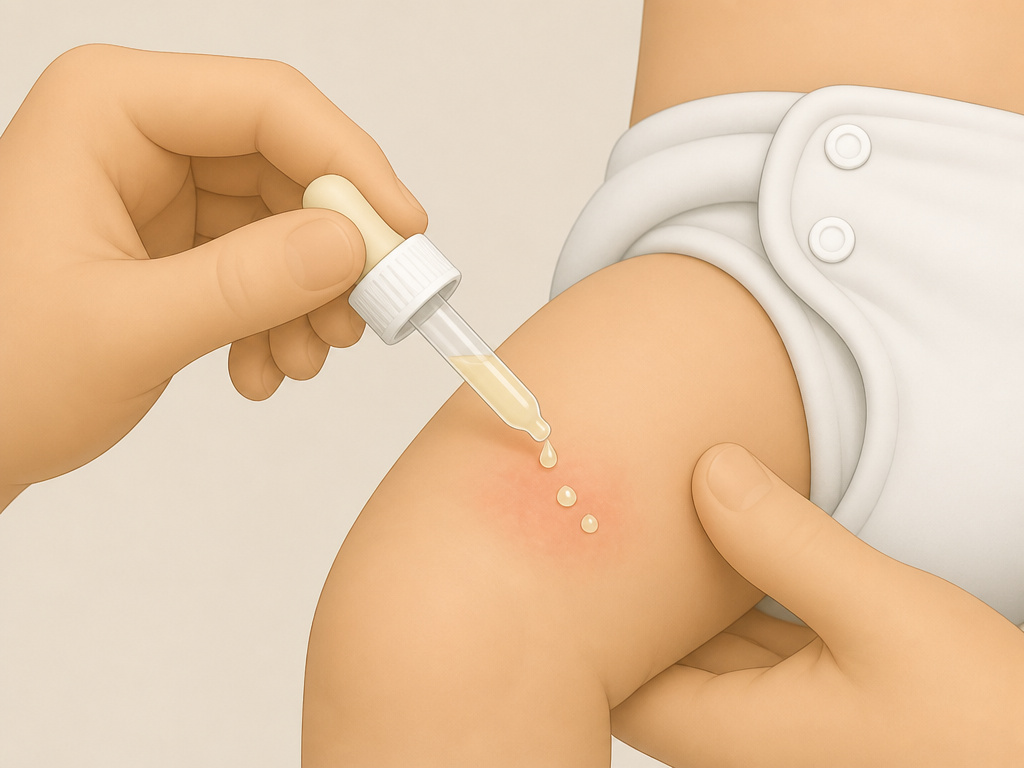
The idea isn’t just an old wives’ tale. A PMC study on breast milk for diaper dermatitis provides a clinical anchor. Researchers split 30 infants with diaper dermatitis into two groups. The control group used only water washes and frequent changes. The treatment group added breastmilk application three times daily.
After five days, 88% of the breastmilk group showed improvement in rash severity scores, versus 48% of the control group. The study’s methods are specific: they applied the milk, let it air-dry, and then diapered. They also used cloth diapers exclusively, which changes the moisture dynamics compared to modern disposables.
This 2017 clinical trial is the primary source for the efficacy claim. It’s a small study, but it’s the only one that directly tests breastmilk against a no-treatment control for diaper dermatitis. The improvement was measured by a standardized rash scoring system, not parent opinion.
Breastmilk contains anti-inflammatory compounds and antibodies like IgA. These can soothe irritated skin and may offer a mild protective effect against certain bacteria. However, it contains no oils or waxes to form a physical shield. This is the critical limitation. For a severe diaper rash or for prevention, you need a barrier that locks moisture out.
How Breastmilk Stacks Up Against Standard Creams
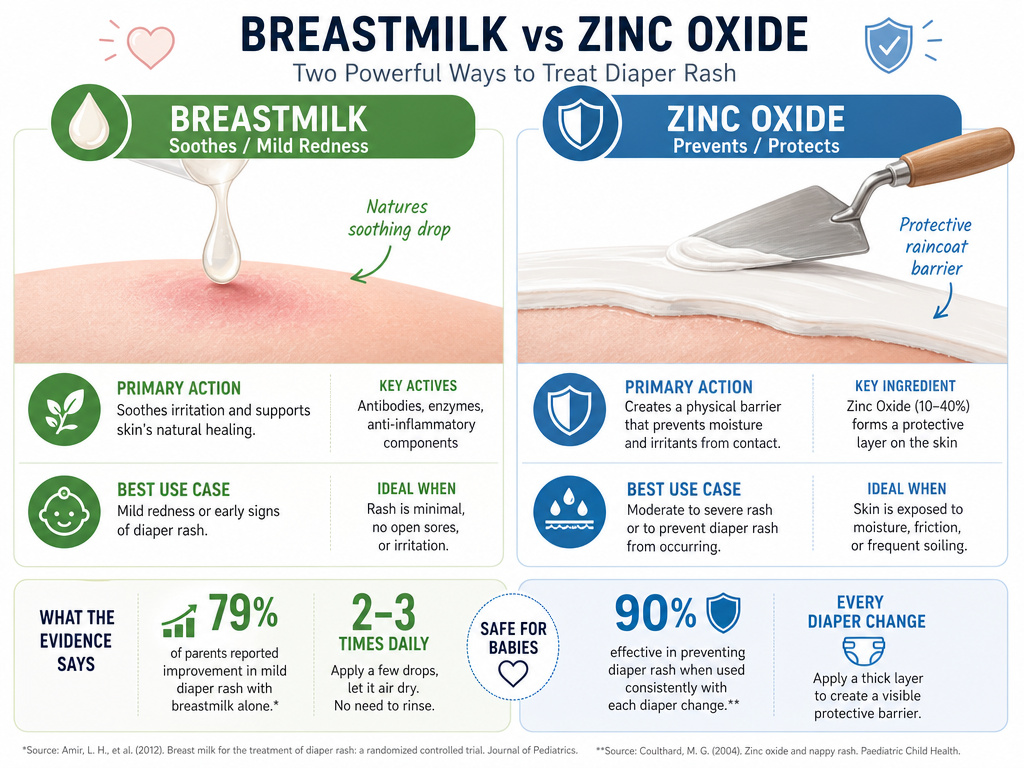
Think of breastmilk as a soothing rinse, not a raincoat. Commercial diaper creams are designed to be raincoats. Their active ingredients, zinc oxide, petrolatum, lanolin, work by sitting on top of the skin and repelling moisture, feces, and urine.
The PubMed comparative diaper dermatitis study compared zinc oxide cream to talcum powder for prevention. Infants using zinc oxide saw their first rash appear at a median of 39 days, versus 19 days for the talcum group. By week eight, the talcum group had a 5.3 times greater risk of rash. The data for zinc oxide as a preventative is strong.
| Agent | Primary Action | Best For | Limitation / Risk |
|---|---|---|---|
| Breastmilk | Soothes, mild anti-inflammatory | Mild, superficial redness | No moisture barrier; ineffective for prevention. |
| Zinc Oxide Cream (15%) | Forms a protective, occlusive barrier | Preventing rash; treating moderate redness | Can be pasty and difficult to wipe off completely. |
| Petrolatum/Lanolin Ointment | Forms a water-repellent seal | Protecting very sensitive skin; overnight | May feel greasy; lanolin can rarely cause allergy. |
The official government drug label for diaper rash for a lanolin-petrolatum ointment directs to “apply liberally to a clean and dry diaper area as needed… Especially at bedtime.” This is the standardized, regulator-reviewed protocol.
Bottom line: Use breastmilk for a mild flare-up you’re catching early. Use a barrier cream for prevention, overnight, or for any rash that looks more than just faint pink.
How to Apply Breastmilk Safely (and What to Avoid)
If you’re going to try it, do it right. The goal is to deliver the milk’s potential benefits without making things worse. You need clean hands, fresh milk, and a clear order of operations.
Common mistake: Applying breastmilk over a thick layer of barrier cream. The milk can’t contact the skin, and mixing products creates a sticky environment for bacteria. Apply milk first, let it dry, then add cream if needed.
Here is the safe sequence:
1. Clean & Pat Dry. Gently clean the diaper area with water and a soft cloth. Pat completely dry, don’t rub. Moisture trapped under any treatment is the enemy.
2. Apply a Small Amount of Breastmilk. Use one of these methods:
* Direct Drop: Express a few drops directly onto the rash.
* Cotton Ball: Soak a clean cotton ball in freshly expressed milk and dab it on.
* Milk Bath: Add an ounce or two to a shallow bath for generalized irritation.
3. Let it Air Dry. This is the non-negotiable step. Give it a full minute to evaporate. You should see no visible wetness.
4. Apply a Barrier Cream (If Needed). If the rash is more than trivial, follow with a thin layer of your preferred zinc oxide cream or petroleum jelly. Put the diaper on.
Never mix breastmilk with cream or ointment in a bowl to make a “paste.” This introduces bacteria from the container and your utensils into the milk, creating a perfect breeding ground. If you want to combine effects, layer them on the skin separately.
When to Skip Breastmilk and Use a Cream Immediately
Breastmilk is not a universal solution. Its role is narrow. You should reach for a dedicated cream first in these scenarios:
- Prevention. This is the biggest gap. Breastmilk evaporates. A study-backed zinc oxide cream or ointment provides lasting protection, which is the cornerstone of diaper rash prevention.
- Moderate to Severe Rash. If the skin is clearly inflamed, broken, or has bumps/pustules, you need the stronger protection and healing environment of a medicated cream. This is a severe case that needs more than a soothing agent.
- Overnight. Long stretches in a wet diaper demand a fortress, not a rinse. A thick layer of cream like Aquaphor or zinc oxide before bed is standard advice.
- Sensitive Skin or Known Allergies. If your baby reacts to many things, introducing a new variable, even breastmilk, during a flare-up isn’t wise. Stick with a proven, simple barrier.
The LactMed database entry on lanolin notes that even highly-purified lanolin can cause reactions in those allergic to wool. If you’re using a lanolin cream for the first time, patch-test on a small area of the thigh first.
A Realistic Comparison: Breastmilk vs. Other Natural Remedies
Parents often lump breastmilk together with coconut oil, aloe, and other home remedies. The difference is in the evidence. Coconut oil has antimicrobial properties and provides a light barrier, but no clinical trial has measured its effect on diaper rash. Aloe can be soothing but also allergenic.
Breastmilk has one small clinical trial showing benefit. That’s more than most natural alternatives can claim. However, “more evidence than coconut oil” is not the same as “as effective as zinc oxide.” The hierarchy is clear: for mild, superficial irritation, breastmilk is a plausible, gentle option. For anything involving real moisture protection or inflamed skin, the commercial creams with decades of formulation science win.
Your choice here isn’t between natural and chemical. It’s between a gentle soothing agent and an engineered protective barrier. They solve different problems.
Frequently Asked Questions
Can I use breastmilk and diaper cream together?
Yes, but layer them correctly. Apply the breastmilk first, let it air dry completely, then apply a thin layer of cream. Never mix them together in your hand or a container before applying.
How long does it take for breastmilk to work on diaper rash?
In the clinical study, improvements were measured over five days. For a mild rash, you might see some calming within a day. If there’s no improvement after 2-3 days, switch to a dedicated barrier cream.
Is expired or frozen breastmilk okay to use on a rash?
No. Use freshly expressed milk. Frozen and thawed milk is safe for drinking but its composition can change, and applying old milk to broken skin risks introducing bacteria. When in doubt, discard it.
Why might breastmilk not work on my baby’s rash?
The most common reason is that the rash is being driven by continuous moisture exposure, which breastmilk does not block. The rash may also be fungal (yeast diaper rash), which requires an antifungal, or it could be a reaction to a detergent or food that needs the source addressed.
What’s the best way to apply diaper cream in general?
For a thorough guide, see our article on the step-by-step application of diaper rash cream. The key is a clean, dry surface and a thick enough layer that you can still see a faint white coating after putting the diaper on.
Before You Go
The evidence says breastmilk can help a mild diaper rash. It’s a free, gentle option with some science behind it. But know its job: it’s a soother, not a shield.
For the daily grind of wet diapers, prevention is everything. That’s the undisputed domain of a good barrier cream. Keep a tube of 15% zinc oxide or a simple petrolatum ointment on the changing table. Use it at every change if your baby is prone to rash, or definitely at bedtime.
When a rash appears, assess it. Faint pink? A drop of breastmilk might be perfect. Anything redder, weepy, or persistent? Skip the experiment and use the cream. That’s how you clear it up fast and get back to a happy baby.
