
The Right Age to Start Potty Training a Girl | Your Guide
This post contains affiliate links. As an Amazon Associate, we learn from qualifying purchases
Start potty training a girl when she shows a cluster of developmental readiness signs, typically between 18 and 30 months old. The American Academy of Pediatrics and other major institutions advise a child-oriented approach beginning around 18 months, but the true start date is dictated by her physical control, communication skills, and interest, not the calendar.
That 18-month marker is significant because it is the developmental age where bladder and bowel control becomes physiologically possible for most children. Pushing before those systems are online is a recipe for frustration.The goal is to match your timeline to her body’s schedule.
What follows is a breakdown of the readiness signs that matter more than age, the evidence on starting too early or too late, and the practical steps that work when your daughter is actually ready.
Key Takeaways
- The core readiness window is 18 to 30 months, but watch for signs, not the date.
- Physical signs are non-negotiable: staying dry for 1-2 hours, regular bowel movements, and the ability to walk to the bathroom.
- Starting before 18 months is considered “assisted infant toileting” and has no long-term advantage in the research.
- Training after 32 months is associated in some studies with a higher incidence of daytime wetting issues.
- School policies, like Utah’s 2025 law, can create external deadlines, but exemptions exist for documented disabilities.
- For girls, teaching front-to-back wiping from the very first attempt prevents urinary tract infections.
What Does the Research Actually Say About Age?
Most pediatric guidelines converge on a broad window. The American Academy of Pediatrics resource emphasizes readiness over a specific birthday. A landmark peer-reviewed toilet training study in the NIH database notes that the child-oriented method popularized by Dr. Brazelton started at 18 months, with kids achieving daytime continence around 28.5 months on average.
The 1962 Brazelton method defined “readiness” as the child’s physiological capability for bladder/bowel control plus the emotional readiness of both parent and child. This child-focused, non-coercive approach reported a 1.4% incidence of long-term problems.
But here’s the nuance much of the web misses. That same review found evidence suggesting later training might correlate with more issues. One study cited indicated toilet training after 32 months was linked to a higher incidence of urge incontinence. Another found that training after 24 months was associated with higher odds of daytime wetting.
This is about understanding that waiting indefinitely for perfect readiness has a potential downside, rather than scaring you into starting early. The body expects to learn the skill within a certain developmental period.
| Training Start Age | Evidence-Based Note | Consideration for Parents |
|---|---|---|
| Before 18 months | “Assisted infant toileting.” No long-term studies confirm benefits. | High parental time investment. Focus on cueing, not independence. |
| 18–24 months | AAP-recommended start of child-oriented approach. Developmental sweet spot for many. | Ideal if child shows multiple readiness signs. Requires patience. |
| 24–32 months | Common range for achieving continence. Some studies show increased wetting risk past 24 months. | May involve more initial resistance if child is set in diaper routines. |
| After 32 months | Associated in some data with higher rates of daytime wetting issues. | Check for hidden constraints (fear, constipation, developmental delays). |
The right age to start potty training is therefore a balance. You’re aiming for the period when her body can cooperate and her mind is willing, which for most girls lands squarely in the toddler years.
The Physical and Cognitive Readiness Checklist (For Girls)
Forget the single magic sign. Readiness is a cluster of capabilities. If you’re seeing most of these, the initial steps will be smoother.
Physical Signs:
- Dry intervals: Her diaper stays dry for at least 1.5 to 2 hours during the day. This shows bladder capacity and muscle control.
- Predictable bowel movements: You can anticipate when she’ll poop. Regularity means you can schedule potty sits.
- Motor skills: She can walk to the bathroom steadily, pull her pants up and down (with help), and get on/off a potty chair.
- Awareness: She signals or notices when she is peeing or pooping. She might hide, grunt, or tell you.
Cognitive & Communication Signs:
- Follows simple commands: “Bring me the book,” “Sit down here.” If she can’t understand “sit on the potty,” she can’t comply.
- Shows interest: She follows you into the bathroom, asks about underwear, or wants to flush. Curiosity is fuel.
- Communicates needs: She can say “pee” or “poop,” use a sign, or lead you to the bathroom. This is critical for the transition from passive diapers to active signaling.
Where this goes sideways: Starting because she turned 2, without the physical control. She’ll have accidents every hour, you’ll both get frustrated, and she’ll learn that the potty is a place of failure. Wait for the dry intervals.
For a 2-year-old](https://nurserydreamer.com/are-2-year-olds-potty-trained/) showing these signs, the process is age-appropriate. For an 18 months old showing them, it’s worth a gentle introduction. The Kennedy Krieger Institute’s guide for children with developmental delays uses a helpful dual threshold: a developmental age of 18-24 months OR a chronological age of 4 years (with no medical issues) as a starting point.
Is There a Difference Between Boys and Girls?
The short answer is less than you think. The core readiness signs and timelines are essentially the same. The AAP and Mayo Clinic potty training guide do not split recommendations by gender for when to start.
The differences are in the mechanics and the cultural messaging, not the readiness. * Anatomy: Girls must learn to wipe front-to-back immediately to prevent moving bacteria from the rectum to the urethra. This is a non-negotiable hygiene lesson from day one. * Positioning: Sitting for both functions is standard for girls, which can simplify the process. There’s no need to teach standing to pee initially. * Social Observation: Little girls often have more opportunities to see a same-gender parent use the toilet, which can model behavior naturally.
While the potty training age for boys is similar, the journey for a 2-year-old boy might include learning to aim. For a girl, focus your girl-specific tips on wiping technique and using a potty chair that provides secure support.
External Deadlines: The Impact of Preschool and Kindergarten
Your timeline might not be entirely your own. An increasing number of preschools require children to be potty trained for enrollment. More consequentially, some states are enacting laws tying training to kindergarten entry.
Take Utah’s 2025 law (HB 331), which requires toilet training as a condition for public school enrollment. Their toolkit states children typically show readiness between 18 months and 3 years. The critical exception? Children with disabilities impacting toileting, as documented in an IEP or 504 plan, are exempt.
Common mistake: Panicking and forcing training at 4 because school starts in August. Coercion leads to withholding, constipation, and power struggles that set everyone back. If your child is nearing school age and not trained, the first step is a pediatrician visit to rule out physical or developmental reasons.
This external pressure makes identifying true readiness between 2 and 3 even more valuable. It’s the difference between a natural process and a high-stakes battle.
When to Pause or Seek Help
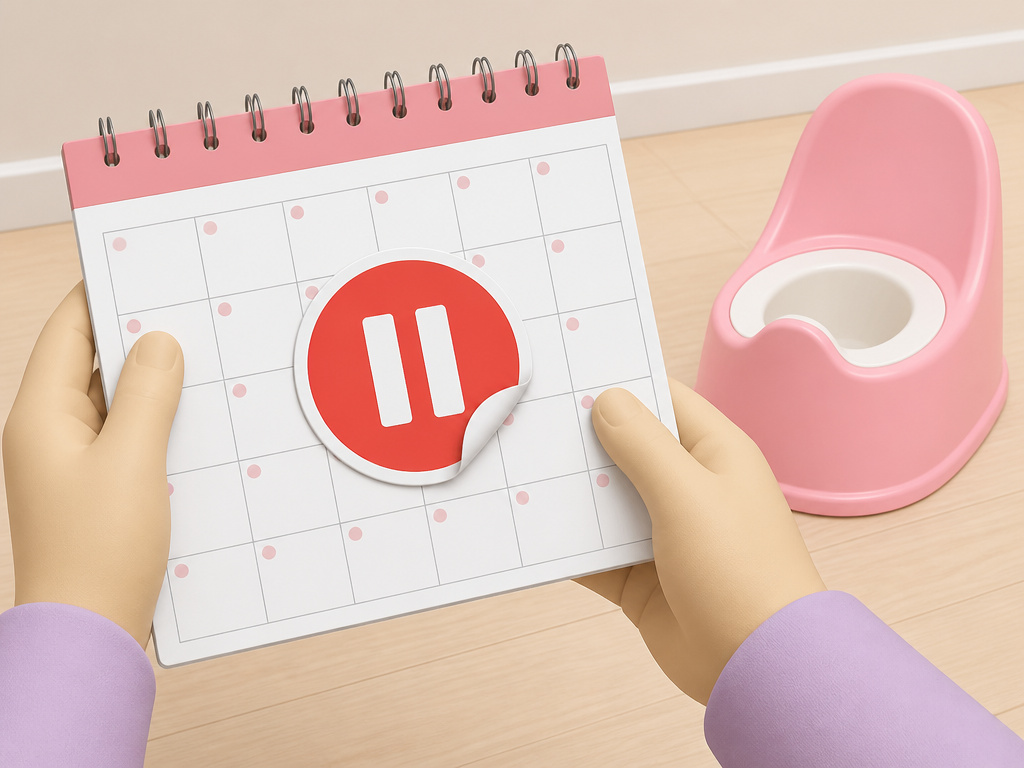
Sometimes, the right age is “not now.” Certain conditions mean you should hit pause or consult a professional.
Hit Pause If:
- Life is chaotic: A new baby, a move, a divorce, or starting daycare. Major changes overwhelm a toddler’s capacity to learn new skills.
- She’s constipated or has frequent loose stools: Bowel training on an upset system is impossible. Address the digestive issue first.
- There’s intense fear or resistance: If she screams at the sight of the potty, back off for a few weeks. Forcing it entrenches the fear.
Seek Help If:
- She’s over 4 years old with no medical diagnosis and shows no interest or success despite consistent, patient effort.
- She was trained and suddenly regresses for more than a few weeks, especially with life stressors ruled out.
- You suspect an underlying condition: Frequent UTIs, ongoing constipation, or signs of a developmental delay warrant a conversation with your pediatrician.
For a stubborn toddler or a [3-year-old](https://nurserydreamer.For a 3-year-old with entrenched resistance, the problem is often a control battle rather than a lack of ability. Your pediatrician or a child behavioral specialist can provide strategies to break the cycle.
A Realistic Timeline and First Steps
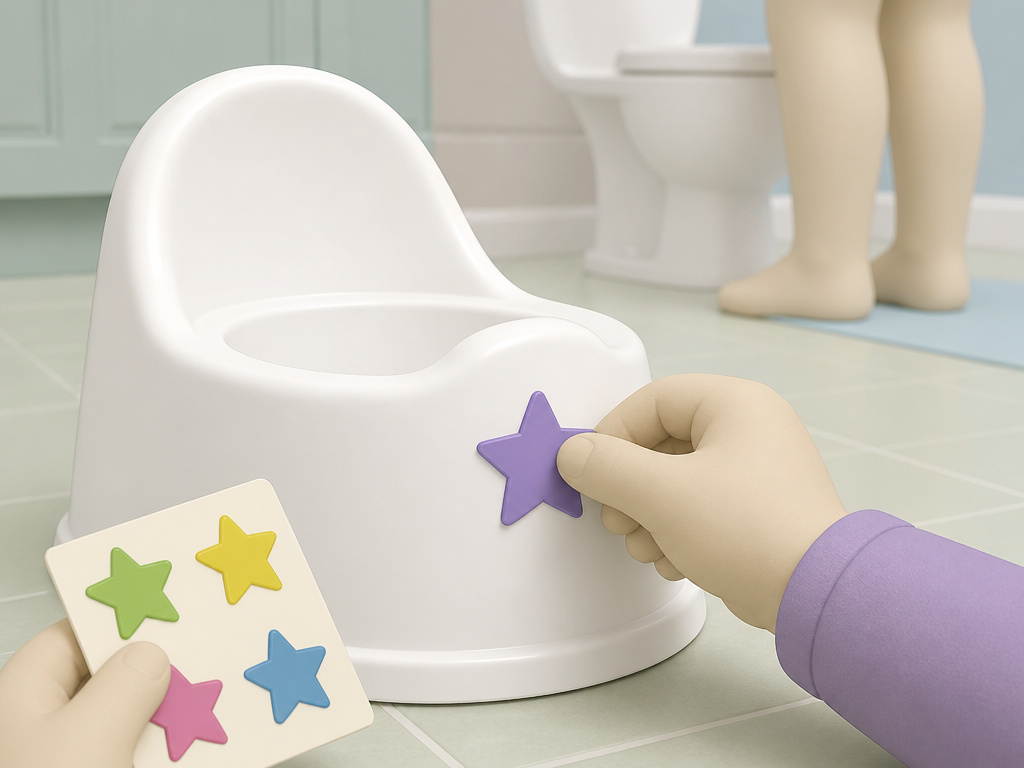
Once readiness is confirmed, what next? Ditch the “three-day miracle” expectation. The Johns Hopkins toilet training guide frames it as a process where daytime control is typically achieved by age 3 or 4.
Phase 1: Introduction (1-4 weeks)
- Get a potty chair. Let her decorate it with stickers.
- Place it in the bathroom. Have her sit on it, fully clothed, while you use the toilet.
- Read potty books. Use clear, simple words (“pee,” “poop,” “potty”).
- This phase is zero pressure. The goal is familiarity.
Phase 2: Active Training (Several weeks to months)
- Switch to underwear during the day. Let her feel the wetness.
- Establish a schedule: sits first thing in the morning, after meals, before bath.
- Use positive reinforcement—a sticker chart, a happy dance—for any success, even just sitting.
- Expect accidents. Respond calmly: “Oops, pee goes in the potty. Let’s clean up.”
Phase 3: Consolidation & Night Training (Months later)
- Daytime consistency comes first. Nighttime dryness is a separate hormonal milestone often not reached until age 5, 6, or later.
- Use waterproof mattress covers and pull-ups at night without shame.
The early introduction is about Phase 1. The active training of Phase 2 should wait for that full cluster of readiness signs.
Frequently Asked Questions
Is 18 months too early to start potty training a girl?
Not necessarily, if she shows strong readiness signs. At 18 months, it’s more about introduction and cueing than expectation of quick independence. The official AAP-recommended child-oriented approach begins at this age. True independent daytime training will likely take many more months.
What if my 3-year-old girl shows no interest in potty training?
First, rule out medical issues like constipation with your pediatrician. If she’s healthy, focus on motivation, not coercion. Let her pick special underwear. Use a reward chart for small steps. For a potty training a three-year-old, the key is often making her feel in control of the process.
Are girls easier to potty train than boys?
The data doesn’t show a significant difference in the ease or speed of training based on gender alone. Girls might have a slight social advantage due to easier observation and sitting for everything. However, individual temperament and readiness are far more important factors.
When should a girl be fully potty trained, day and night?
Most girls achieve reliable daytime dryness and bowel control between ages 3 and 4. Nighttime dryness is different; it depends on the brain’s production of a hormone that slows urine production at night. It’s normal for night wetting to continue until age 5, 6, or even older. They can’t be trained out of it.
How do I teach my daughter to wipe properly?
Teach front-to-back wiping every single time, starting with the first successful potty use. Use flushable wipes for easier cleaning initially. Demonstrate on a doll. Assist her until she has the coordination, usually around age 4 or 5. This habit is the best defense against urinary tract infections.
The Bottom Line
The best age to start potty training your daughter is when she tells you she’s ready—not with words, but with dry diapers, curiosity about the toilet, and the physical ability to participate. For most, that window opens between 18 and 30 months. Anchor your decision in her developmental signs, not the calendar or outside pressure. The goal is a positive, cooperative experience that teaches her a lifelong skill, not a race to the finish line. Watch her, trust the process, and remember that every accident is just data, not a failure.
