
Is Starting Potty Training at 18 Months Too Early? Evidence
This post contains affiliate links. As an Amazon Associate, we learn from qualifying purchases
No, 18 months is not too early to potty train. Leading pediatric continence charities and NHS trusts state children are ready for toilet training from 18 months onwards, with research linking a start after 24 months to an increased risk of daytime wetting later in childhood.
That 24-month line is where the stakes change. It’s not a vague suggestion, it’s a cited risk increase from multiple studies. The guidance shifts from a gentle “when you’re both ready” to a firmer “this is a health priority for a child not trained by four.” The goal isn’t to race. It’s to start the skill-building process within the window that supports long-term bladder health.
What follows: the exact policy statements from UK health bodies, the mechanics of why timing matters for bladder maturity, a breakdown of readiness signs that actually work, and the adapted approaches for children who might need a different path.
Key Takeaways
- Health authorities like ERIC, BBUK, and the UHD NHS state toilet training readiness begins at 18 months.
- Starting skills after 24 months is linked in multiple studies to a higher risk of urinary incontinence in later childhood.
- For children with developmental delays, assessment and skill-building should start in the second year, waiting for “awareness” often backfires.
- True readiness is less about a long checklist and more about a regular pattern, the ability to sit briefly, and your availability for a consistent three-day block.
- Constipation is the most common physical roadblock; address it before any intensive training begins.
The 18-Month Threshold: Health Authority Consensus
Forget the old “wait until they’re ready” adage. Modern guidance from major children’s health charities is specific and grounded in bladder development research. The ERIC potty training policy document states clearly: “Most children are ready to master potty independence and lead in many parts of the process from around 18 months.” It adds that research shows it’s better for bladder and bowel health to stop using nappies between 18 and 30 months.
This isn’t an outlier opinion. The University Hospitals Dorset NHS Foundation Trust patient leaflet opens with: “Children are ready for toilet training from 18 months onwards and it should become a priority for a child who is not toilet trained by the age of four.” The language is deliberate, “priority.”
Where this goes sideways: Waiting for a toddler to verbally announce they need to go. Many children master the physical act of using the potty long before they can articulate the need. Holding off for perfect communication can push you past the 24-month mark.
Why the push for the second year? Bladder maturity. Early, supported practice helps the bladder learn to hold and empty efficiently. The BBUK resource pack notes that parents often mistakenly delay training until a child shows awareness, but that “early training may support bladder maturity and reduce likelihood of continence problems later.”
| Authority | Recommended Start Window | Key Stated Reason |
|---|---|---|
| ERIC (Children’s Bowel & Bladder Charity) | From around 18 months | Supports bladder/bowel health; children are capable. |
| UHD NHS Foundation Trust | From 18 months onwards | A health priority if not trained by age four. |
| Bladder & Bowel UK (BBUK) | Skills development in second year | Promotes bladder maturity; reduces later continence risks. |
The consensus is a range, not a single day. But the lower bound of that range is consistently 18 months. Starting your potty training at 18 months aligns with this professional guidance, not with rushing.
Why Timing Matters: The Data on Later Starts
The most compelling argument for an 18-30 month window comes from outcome studies. It’s not just about convenience; it’s about correlating age with later problems.
The 2023 BBUK Best Practice Guidelines for professionals cite specific research: “Introduction of the skills for toilet training after 24 months of age is associated with increased risk of urinary incontinence later in childhood (Joinson et al 2018, Wang 2019, Joinson et al 2009).” This is a sourced, non-commodity insight you won’t find in most parent blogs. It transforms the question from “Is it easier?” to “Is there a measurable health trade-off?”
A pediatric toilet training guidelines review in the NIH database reinforces this. It summarizes multiple studies finding a higher incidence of incontinence and urinary tract infections when training began later (with “later” defined as after 18 months in one study, after 42 months in another). The mechanism isn’t fully proven, but the correlation in the data is strong enough to shape best practices.
“Introduction of the skills for toilet training after 24 months of age is associated with increased risk of urinary incontinence later in childhood.” . BBUK Best Practice Guidelines (2023), citing Joinson et al.
This doesn’t mean starting at 25 months guarantees problems. It means the statistical risk increases. For a parent weighing when to begin, this evidence shifts the calculus. The goal of early potty training isn’t bragging rights, it’s aligning with the developmental window that appears to be optimal for long-term bladder health.
Redefining “Readiness” for an 18-Month-Old
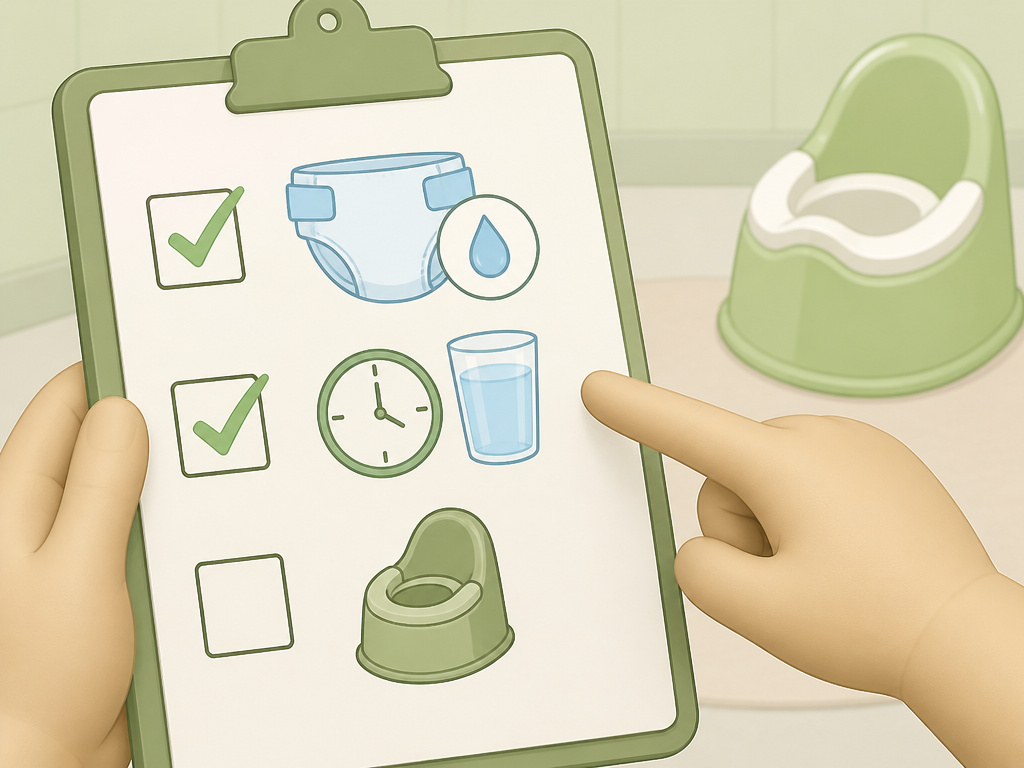
At 18 months, forget the classic ten-point readiness checklist. Your child likely won’t be pulling down their own pants or giving a five-minute warning. Readiness here is simpler and more pragmatic.
The Kennedy Krieger guide for children with delays offers a solid framework that works for all toddlers: a developmental age of 18-24 months or a chronological age of 4 with no medical concerns. Since we’re talking about 18-month-olds, we focus on developmental markers.
Focus on these five practical signs:
- Dry periods: A nappy stays dry for 1-2 hours during the day. This shows bladder capacity is increasing.
- Predictable patterns: You notice they tend to poop around the same time each day, or wet shortly after a big drink.
- Physical ability: They can walk to the bathroom (with help) and sit on a potty or toilet insert with support for 5-10 seconds without immediately fighting to get off.
- Basic comprehension: They can follow a simple one-step direction like “sit down” or “give me the cup.”
- Your readiness: You can block off at least 3 days to focus intensely, with minimal outings. This is the most overlooked sign. Your consistency is the engine.
If you see a few of these, you have a green light. You don’t need all of them. This is how you start potty training an 18-month-old toddler, by meeting them where they are developmentally.
How to Start at 18 Months: The Adapted Process
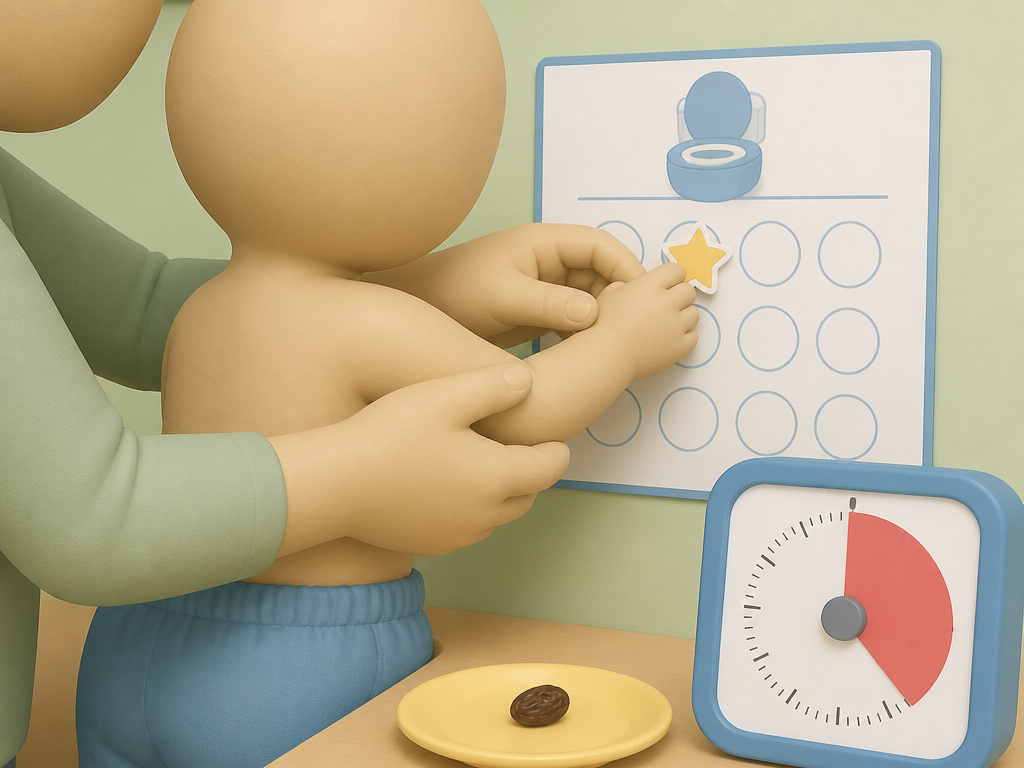
The process for a young toddler is more parent-led and routine-based than child-initiated. You’re building the habit for them.
Step 1: The Preparation Week.
Talk about the potty during diaper changes. Use simple, consistent words (“pee,” “poop,” “potty”). Let them watch you or a sibling use the toilet. Place a potty chair in the bathroom or living area and let them sit on it, fully clothed, for a moment at a time. This step lowers the novelty and fear.
Step 2: The Three-Day Intensive.
Clear your calendar. Switch to loose pants with elastic waists (no snaps, no overalls). Set a timer for every 60-90 minutes. When it goes off, say “It’s potty time,” and take them to sit. Do not ask. Use a visual timer for 30-60 seconds of sitting. Massive praise and a tiny, immediate reward (a sticker, a single raisin) for any success. Stay calm and neutral for accidents, just clean up and reset.
Step 3: Build the Routine.
After the intensive block, keep the timed sits but space them out gradually, linking them to natural transitions: after waking, before/after meals, before leaving the house. The goal is to move from you scheduling the trips to them beginning to sense the urge in that routine.
Common mistake: Using a reward that’s available at other times. If they get a chocolate chip for peeing in the potty, they cannot get chocolate chips any other way that day. The reward must be exclusive to the target behavior to have power.
This method is a simplified version of the structured, evidence-based approaches used in clinical settings. It’s why a specific three-day potty training method can work, it provides the dense, consistent repetition a young brain needs to build a new neural pathway.
Special Considerations: When the Path is Different
The “18-month” guidance has critical nuances for two groups: children with developmental delays, and those with hidden medical issues.
For Children with Suspected Delays or Diagnoses
The guidance is more urgent, not less. The BBUK pack states: “Toileting assessment should commence in the child’s second year, when there is an identified physical disability or learning difficulty, or as soon as it is identified that there is a delay.” Waiting for readiness signs that may never come in a typical fashion can mean missing the window for building these skills altogether.
The Kennedy Krieger toilet training guide is an essential resource here. It emphasizes using visual schedules, immediate and exclusive rewards, and “positive practice” for accidents. Research on conditions like Fragile X syndrome, cited in a PMC neurodevelopmental condition research paper, shows that while achievement may come later, the foundational skill-building must start early.
The Medical Roadblock: Constipation
This is the number one physical reason potty training is so hard. A child who is constipated or has painful bowel movements will actively withhold, creating a vicious cycle. They associate the potty with pain. Before any major push, ensure your child is passing soft, comfortable stools daily. This often requires a discussion with your pediatrician and possibly a temporary laxative regimen. You cannot train over constipation.
What If My Child Is Older Than 18 Months?
If your child is 2, 3, or older, the principles don’t change, only the tactics might. The core need for consistency, clear communication, and addressing medical issues first remains. The realistic expectations for a 2-year-old are that mastery is a process, not a switch. An older child may have stronger opinions and habits to unwind, which is why involving them in the process (choosing underwear, setting a timer) becomes more important.
The foundational potty training strategies are the same: create a routine, use positive reinforcement, and manage your own expectations. The main difference is that with an older child, the “why” behind the 24-month risk data is a reminder not to delay further, not a cause for alarm about a few months’ difference.
Frequently Asked Questions
Can you really potty train at 18 months?
Yes. While full independence (wiping, pulling pants up and down perfectly) will come later, the core skill of using the potty for eliminations can begin at 18 months. Many children can achieve daytime dryness with support in the 18-30 month window. It’s a learning process, not a single event.
What are the signs of readiness at 18 months?
Look for practical signs: dry nappies for 1-2 hour stretches, predictable bowel movement timing, the ability to sit still on a potty for a brief period, and the ability to follow a simple instruction like “sit down.” You do not need them to verbally tell you they need to go.
Is it bad to start potty training after 2?
“Bad” is too strong. The evidence suggests it is riskier in terms of statistical association with later daytime wetting. Starting after 2 often means working against more established diaper habits, which can make the process more challenging for parent and child. The key is to start when you can commit to being consistent, regardless of the exact month.
How long does it take to potty train an 18-month-old?
The initial intensive phase to grasp the concept often takes a dedicated 3-5 days. Achieving reliable, accident-free daytime dryness can take several weeks to a few months of consistent practice. The timeline is always longer than parents hope and shorter than they fear when looking back.
What if my 18-month-old refuses to sit on the potty?
Keep it pressure-free. Have them sit clothed for just 5 seconds while you read a single board book page or sing a short song. Use a visual timer they can watch. The goal is to make the potty a neutral or positive place, not a battleground. If refusal is extreme, take a two-week break and focus on casual potty talk and modeling instead.
Before You Go
The question isn’t really “Is 18 months too early?” The data from health authorities says it’s a recommended starting point. The better question is “What’s the cost of waiting much longer?” The cited link to increased incontinence risk is a real, non-commodity piece of information that should inform your decision.
Start with the practical readiness signs, block off time for consistency, and address constipation first if it’s present. For children on a different developmental path, seek early assessment and use tailored strategies from specialists. Whether you begin at 15 months, 16 months, or 20 months, the principles of routine, positive reinforcement, and patience remain your most effective tools.
