
How Early Can You Potty Train? What Research Says About Age
This post contains affiliate links. As an Amazon Associate, we learn from qualifying purchases
You can start potty training as early as infancy using elimination communication or begin a structured approach as soon as 18 months, but the timeline and goals shift dramatically with age. Medical research now suggests initiating training before a child’s second birthday is linked to better long-term urinary tract health, though starting this early often means a 13-14 month process versus 10 months for those who start after 27 months.
The clause about long-term health reframes the entire “when to start” question. It’s not just about convenience or developmental milestones anymore. A 2020 meta-analysis of 24,000 children found a clear trend.
What follows is a breakdown of the evidence: the medical argument for an early start, the realistic timeline you’re signing up for, the two major method families that work, and the specific readiness signs that matter more than any calendar.
Key Takeaways
- Starting potty training before 24 months is associated with a lower risk of developing urinary tract problems later in childhood, per a 2020 review of 10 studies.
- The trade-off is time: children who start intensive training between 18-24 months take an average of 13-14 months to complete, while those starting after 27 months finish in about 10 months.
- Readiness is less about a specific age and more about a cluster of skills: staying dry for 1-2 hours, following simple instructions, and demonstrating motor skills to pull pants down.
- State regulations, like Washington’s WAC 110-300-0220, require licensed childcare providers to have a plan and facilitate training, which can provide crucial consistency.
- For most families, the Brazelton child-oriented method offers a low-pressure start around 18 months, while the Azrin & Foxx method is a faster, structured option for toddlers closer to age two.
The Medical Case for Starting Before 24 Months
For decades, the conversation focused on a “sweet spot” between 27 and 32 months. Newer research adds a critical, non-negotiable layer: long-term health.
A 2020 meta-analysis in the journal BMC Urology (Li et al) reviewed data from over 24,000 children. The trend was unambiguous. Kids who began any form of toilet training, whether infant elimination communication or later potty-chair methods, before they turned 24 months old were less likely to have developed urinary tract problems. This finding is supported by large cohort studies in China, where early training is the norm, showing lower rates of bladder dysfunction.
Where this goes sideways: Waiting solely for the “easy” window after 27 months might forfeit a measurable health benefit. The older advice wasn’t wrong about ease, but it was incomplete on outcomes.
This doesn’t mean starting at 15 months is a magic bullet. It does mean the risk calculation has changed. The old fear that early training caused emotional or physical harm stemmed from mid-20th-century coercive techniques, not the gentle, cue-based methods used today.
The counter-evidence is thinner. One 2014 study (Hodges et al) noted children with voiding dysfunction were more likely to have been trained either very early (before 24 months) or very late (after 35 months). However, the weight of evidence across multiple large studies leans toward early initiation being protective.
Bottom line: If long-term urinary health is a priority, the goalpost shifts from “when is it easiest” to “how can we start thoughtfully before age two.”
The Timeline Trade-Off: Early Start, Longer Haul
You can start early, but you must calibrate your expectations. Earlier initiation typically means a longer road to full independence.
This isn’t a guess. Nathan Blum and his colleagues tracked over 400 children in a landmark 2003 study. They defined “intensive training” as asking a child to sit on the potty at least three times daily. Training was considered complete when the child wore underwear and had no more than three pee accidents and two poop accidents per week.
Their findings are the single best guide to setting a timeline:
| Training Start Age | Average Time to Completion | Key Takeaway |
|---|---|---|
| 18–24 months | 13–14 months | A marathon, not a sprint. Demands consistent, low-pressure daily engagement. |
| After 27 months | 10 months or less | The “sweet spot” for speed. Older toddlers have the motor and cognitive skills to accelerate. |
The study also found no difference in problems like stool refusal or hiding between the two groups. Starting earlier didn’t cause more resistance; it just required more time.
Children who began intensive potty training between 18 to 24 months took 13 to 14 months on average to complete. Children who started after 27 months took 10 months or less. The duration is the main variable, not the incidence of behavioral problems.
This timeline is why your starting age decision is so personal. A 14-month commitment that begins at 18 months means you’ll be actively training past the child’s third birthday. Are you prepared for that pace? If not, a later start may be the saner choice, even weighing the health research.
Readiness Signs That Matter More Than a Birthday
Forget the calendar. Look for this cluster of skills. A child who hits several is ready for a gentle introduction, even if they’re not yet two.
Physical & Awareness Signs:
- Stays dry for 1-2 hours during the day (nap time is a good indicator).
- Has predictable bowel movements.
- Shows awareness of peeing or pooping, might pause, hide, or tell you.
Cognitive & Motor Signs:
- Can follow simple one- or two-step instructions (“bring me the cup”).
- Demonstrates a desire for independence.
- Has the motor skills to walk to the bathroom, pull down loose pants, and sit down.
Interest & Communication Signs:
- Shows curiosity about the toilet or wearing underwear.
- Verbally or non-verbally communicates discomfort with a dirty diaper.
- Can sit still with attention for 3-5 minutes.
If you see these signs in a 15-month-old, you can begin. If you don’t see them in a 28-month-old, hold off. Pushing a child who lacks the necessary motor control or comprehension leads to power struggles, not progress.
For girls, these signs often appear around 24 months. For boys, it’s frequently closer to 26 months. That 2-3 month gap is biological, not behavioral.
Choosing Your Method: Two Roads Diverge
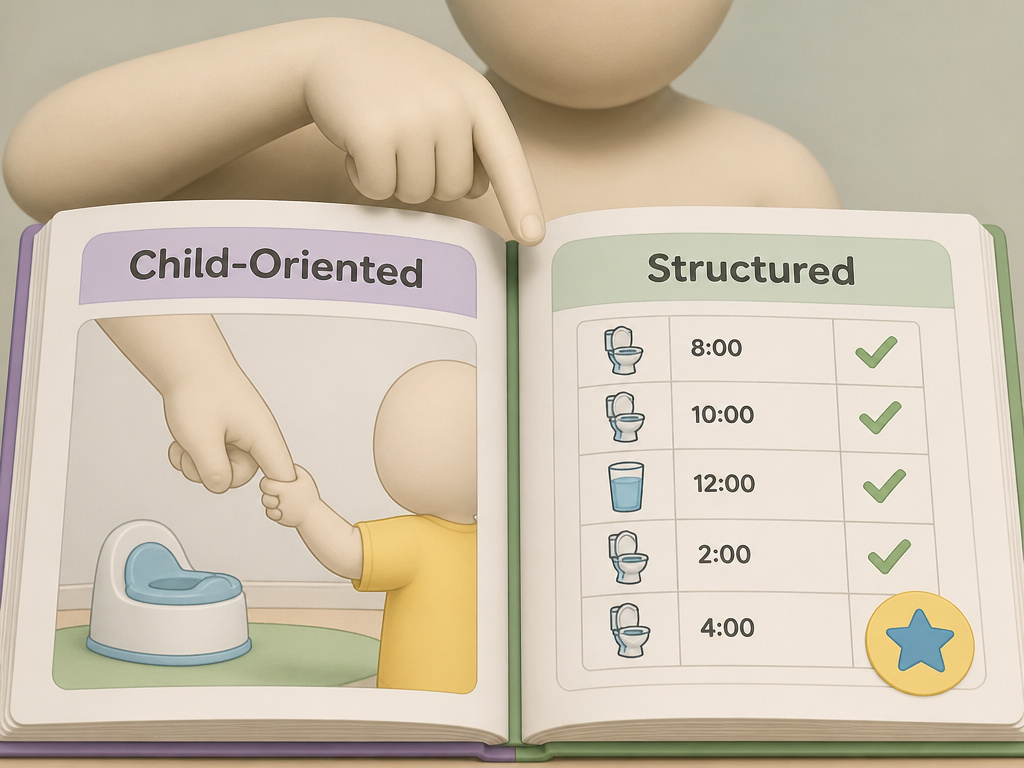
Your child’s age and temperament should guide your method choice. These are the two evidence-backed paths.
1. The Child-Oriented Method (Brazelton)
Best for: A gentle start with younger toddlers (18-24 months) or cautious children. This is the gradual, low-pressure approach. You introduce a potty, let the child sit on it clothed, and model its use. You follow the child’s lead, using praise rather than pressure. It’s the default method recommended by the American Academy of Pediatrics resource for a reason, it minimizes resistance. The downside? It can be slow. It’s perfect for aligning with a child’s natural development but requires immense parental patience.
2. The Structured Method (Azrin & Foxx)
Best for: Older, motivated toddlers (24+ months) who thrive on routine. This is a fast-track, parent-led approach. It involves a dedicated “training day,” scheduled potty sits, positive reinforcement, and increased fluid intake. When it works, it can achieve daytime dryness in a matter of days for a ready child. The risk? It can feel intense. If the child isn’t fully ready, it can backfire spectacularly. It’s a tool, not a guarantee.
There are hybrids, like using a daytime wetting alarm. The PMC toilet training review article confirms no single method is superior for all children. The critical factor is a positive, shame-free environment. One study found that simply avoiding negative words for feces (“stinky,” “gross”) and using praise sped up training time.
What Licensed Childcare Programs Require
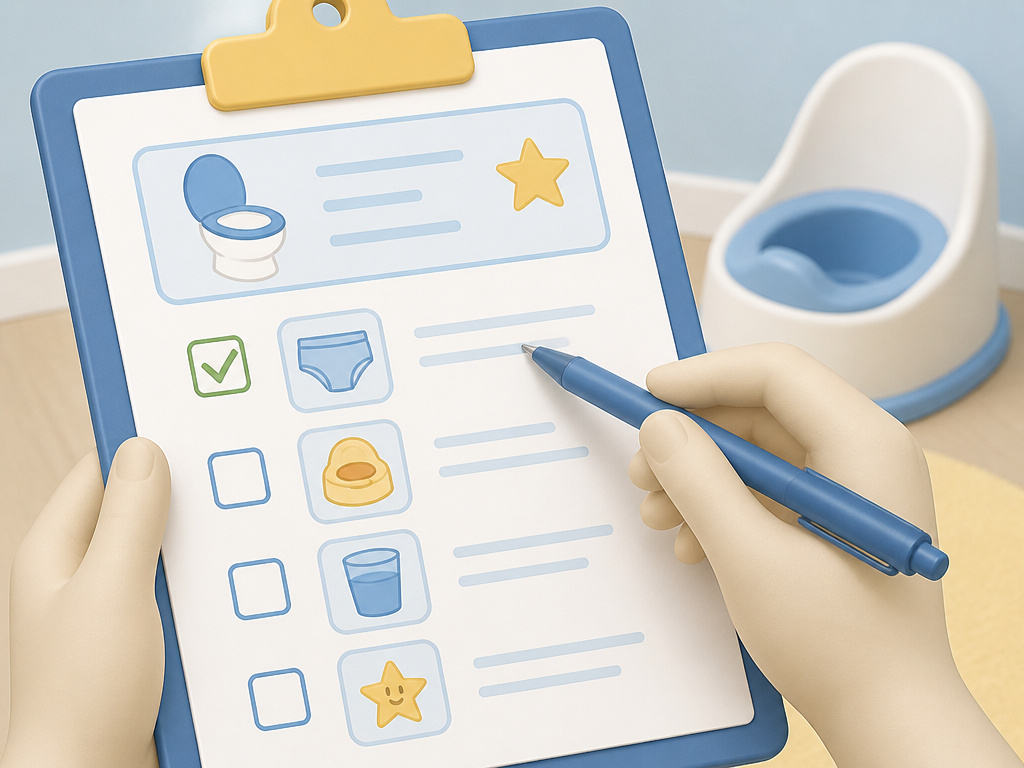
If your child is in daycare or preschool, their facility operates under state law. These rules create a framework that can help or hinder your plans.
Washington State’s WAC 110-300-0220 is a good example. It mandates that early learning providers must: * Discuss toilet training procedures with parents when a child is ready. * Facilitate training with positive reinforcement and a plan agreed upon with the parent. * Maintain a specific toilet-to-child ratio (one toilet for every 15 children who are training).
California’s Title 22 regulations go further, requiring a written toilet-training plan for any infant in care being trained, detailing equipment and procedures.
Before you start: Talk to your childcare provider. A disjointed approach, parents doing one thing at home, providers another at school, guarantees failure. Their potty training an 18-month-old plan must mirror yours.
This regulatory environment is a hidden asset. It means a qualified second set of adults is legally obligated to support your consistent routine. Use that.
Frequently Asked Questions
Can you really potty train a baby?
Yes, through infant potty training, also called elimination communication (EC). This involves learning your infant’s elimination cues and timing (like after feedings) and holding them over a potty. It’s less about independent toileting and more about communication and avoiding soiled diapers. It’s a significant commitment but practiced widely in many cultures.
What is the absolute earliest age to start?
Some cultures begin cue-based elimination communication from birth. For structured potty-chair training, 18 months is a common earliest baseline, as suggested by the Brazelton method. True independence, however, won’t come for many months after that.
My 2-year-old shows no interest. Should I worry?
Most two-year-olds are not fully potty trained. A lack of interest at 24-30 months is normal. Focus on building the prerequisite skills, teaching them to pull pants down, talking about body functions neutrally, and reading potty books. Pressure now creates resistance later.
Does early potty training cause bedwetting?
No. Nocturnal enuresis (bedwetting) is primarily linked to deep sleep patterns, bladder capacity, and hormone development, not the age of daytime training. The Johns Hopkins toilet training guide confirms this. Bedwetting alarms are the evidence-based treatment for persistent cases in older children.
How do I handle potty training regression?
Regression is common after illness, a new sibling, or disruption. The fix is to stay calm, drop back to basics, and offer more help. Never punish. Re-institute the initial potty training steps like scheduled sits and immediate praise. Consistency brings them back on track.
Before You Go
The question isn’t just “how early can you,” but “why would you, and what does it cost?” The medical incentive to start before 24 months is real, but the cost is measured in months of daily patience.
Look for the cluster of readiness skills, not a birthday. Pick a method that matches your child’s temperament. Brazelton’s patience or Azrin & Foxx’s structure. Most importantly, sync your plan with anyone else who cares for your child. Their consistency is your leverage.
You can start very early. Just know the path you’re choosing.
