
Hospital Diaper Bag: What to Pack for Mom, Baby & Partner
This post contains affiliate links. As an Amazon Associate, we learn from qualifying purchases
Pack your hospital diaper bag with two separate bags: a small labor grab-bag and a main recovery bag. Focus on comfort items for you, basics for baby, and your paperwork. Most U.S. Hospitals provide diapers, wipes, postpartum pads, mesh underwear, and a peri bottle, so you can pack lighter than you think.
The split isn’t just about organization. It’s about not hauling a giant suitcase into a delivery room where space is tight and you only need your ID, a charger, and lip balm for the first 12 hours. The main bag stays handy for after the birth, when you’ll want clean pajamas and those tiny baby clothes.
What follows is a stripped-down list built from hospital handouts and parent feedback. We’ll cover the non-negotiable documents, the comfort items worth their weight, the exact number of onesies and pads sources recommend, and the one item you must install weeks early.
Key Takeaways
- Pack by 36 weeks. Use a two-bag system: a small labor bag and a main postpartum bag.
- Hospitals supply core postpartum and baby items. Confirm your hospital’s policy, but you typically don’t need to pack diapers, wipes, mesh underwear, or pads.
- Your car seat must be installed and inspected before your due date. Many fire stations offer free checks.
- For baby, pack 2-3 outfits in different sizes (newborn and 0-3 month) and a going-home set. For you, pack high-waisted pants and front-opening tops.
- The most-forgotten items are extra-long phone chargers, snacks for your partner, and a waterproof bag for wet clothes.
The Two-Bag Hospital System (And Why It Works)
Most checklists tell you what to pack, not how to carry it. You’ll see advice for a single giant bag, which means digging for your birth plan under piles of baby blankets while timing contractions. The smarter move, endorsed by sources like the Israeli Ministry of Health childbirth guide, is to separate your supplies by timeline.
The Two-Bag Method: Prepare a small grab-bag for labor (documents, comfort items, snacks) and a larger main bag for your postpartum recovery stay. You can leave the main bag in the car until you’re moved to a recovery room.
Your labor bag should be small enough for your partner to carry one-handed. Its only job is to get you through admission and delivery. The main bag holds everything you’ll need for the potentially multi-day stay afterward. This system keeps the delivery room uncluttered and lets your partner find what you need without rummaging.
Where this goes sideways: Bringing the main bag into the delivery room. Hospital delivery rooms are functional, not spacious. A large bag becomes a tripping hazard for staff and a source of clutter when you need calm. Keep it simple until you’re settled in your postpartum room.
What Goes in the Labor Grab-Bag?
This bag stays with you from the moment you walk in. Use a small tote or backpack. * Documents: Photo ID, insurance card, hospital paperwork, and your birth plan (if you have one). * Electronics: Phone and an extra-long charging cable (outlets are never near the bed). A power bank is a good backup. * Comfort: Lip balm, hair ties, a portable fan or water spray, and any massage tools. * Sustenance: High-energy snacks (granola bars, dried fruit) and drinks for you and your partner. The hospital has food, but you might want specific favorites during a long labor. * Toiletries: Travel-sized toothpaste, toothbrush, and face wipes for a quick refresh.
What Hospitals Actually Provide (So You Don’t Overpack)
A major cause of overpacking is not knowing what the hospital will give you. Cleveland Clinic hospital bag checklist and other hospital sources are clear: they stock the basic medical and postpartum supplies.
Most U.S. Hospitals provide, at no extra cost: * For Mom: Mesh underwear, giant maternity pads, peri bottles (for gentle cleansing), and often pain relief sprays or witch hazel pads. * For Baby: Diapers, wipes, swaddling blankets, and knit hats. * General: Hospital gowns, towels, water pitchers, and cups.
| Item | Hospital Typically Provides? | Should You Pack It? |
|---|---|---|
| Mesh Underwear & Pads | Yes | No |
| Peri Bottle | Yes | No |
| Diapers & Wipes | Yes | Pack a few for the ride home |
| Swaddle Blankets | Yes | Bring one special one for photos |
| Nursing Pillow | No | Yes, if you use one |
| Toiletries | Basic soap only | Yes, your own preferred brands |
The part nobody mentions: The provided mesh underwear and pads are functional, not comfortable. Many parents prefer their own high-waisted postpartum underwear and overnight pads from home. Pack one pack of your preferred brand, but don’t bring five—you’ll likely go home with a hospital stash.
Your own comfort items are what transform a hospital stay. Your pillow, a familiar blanket, and your preferred shampoo make a sterile room feel more manageable. This is where your packing focus should shift.
Packing for Mom: Comfort is the Only Goal
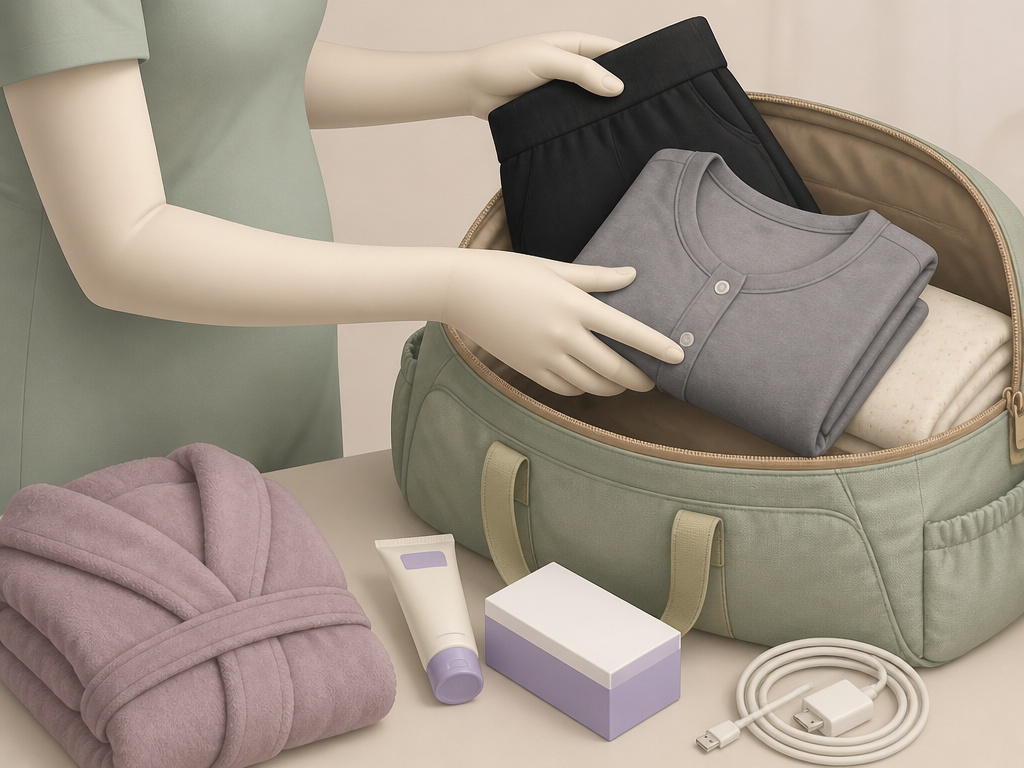
Forget cute outfits. Your postpartum body needs soft, loose, and accessible clothing. Every item should serve a clear comfort or function purpose.
Start with clothing that accommodates your body. This means high-waisted pants or loose pajama bottoms, front-opening nightgowns or shirts for easy breastfeeding, and a cozy robe. Pack at least three changes of comfortable clothes. You will sweat, and you may bleed; having a fresh set matters.
Common mistake: Packing only one nursing bra. Your breasts will change size and may leak. Bring 2-3 nursing bras in a flexible size and a box of disposable nursing pads.
Your toiletry kit deserves specific attention. Decant your products into travel bottles. Include a toothbrush, toothpaste, dry shampoo, face wipes, lip balm, nipple cream, and a hairbrush. A long phone charger is non-negotiable—outlets are famously far from hospital beds.
Don’t forget for your recovery:
- Nipple Cream: Even if you’re not planning to breastfeed, your breasts may become engorged and tender.
- Stool Softener: The first postpartum bowel movement can be daunting. Many doctors recommend starting a stool softener like Colace immediately after delivery.
- Going-Home Outfit: You will likely still look pregnant. Pack the same comfortable maternity clothes you wore in your third trimester.
Packing for Your Baby: Less is More
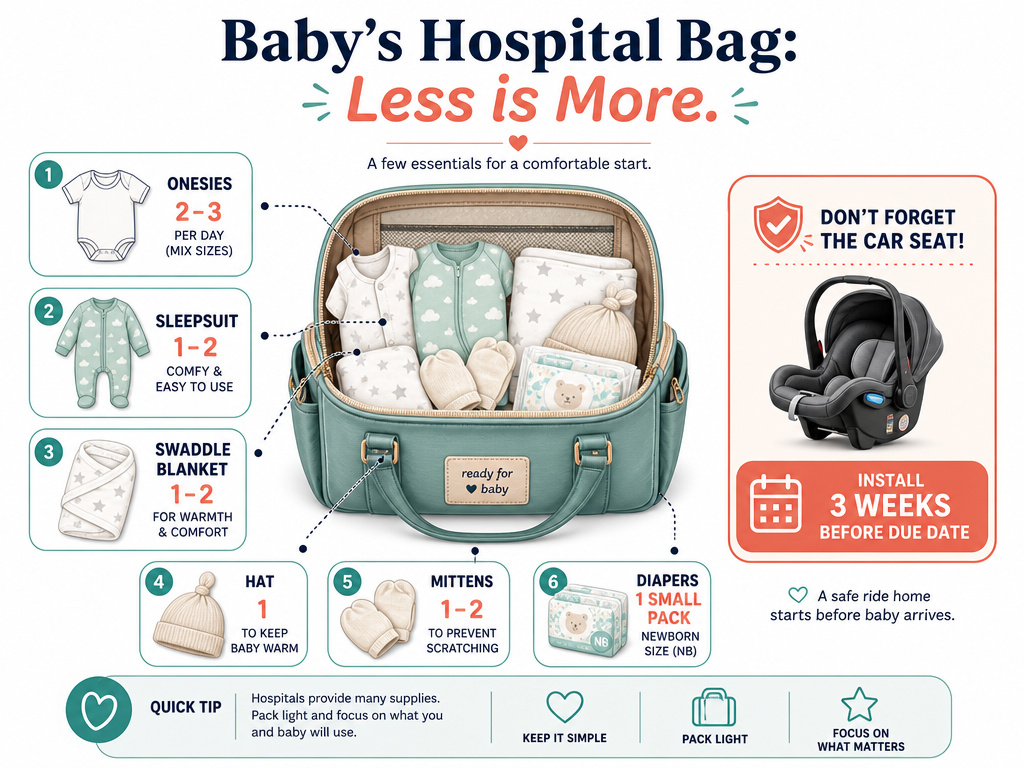
Newborns need shockingly little in the hospital. They’ll be swaddled most of the time. The hospital provides the essentials, so your job is to supply a few changes of clothes and the critical going-home kit.
The Mercy Perinatal patient handout gives exact numbers: pack four singlets, five nightgowns or grow suits, three wraps (including one thick one), two hats, and two pairs of mittens. This is a solid baseline for a 2-3 day stay.
Pack 2-3 onesies in two different sizes (newborn and 0-3 month). You don’t know how big your baby will be, and a too-tight newborn suit is frustrating at 2 a.m.
The non-negotiable item is the car seat. This is not something to figure out in the hospital parking lot. Install your infant car seat base in your vehicle at least 3 weeks before your due date. Most local fire stations or police departments offer free car seat safety checks—use this service.
Your baby’s going-home outfit should be simple: a soft onesie, footie pajamas, a hat, mittens, and a warm blanket or bunting bag for the car seat. Avoid complicated outfits with lots of buttons or snaps.
| Baby Item | Quantity | Notes |
|---|---|---|
| Bodysuits / Onesies | 2-3 per day | Mix of newborn & 0-3 month sizes |
| Sleepsuits / Gowns | 2-3 total | Gowns allow for easy diaper checks |
| Swaddling Blankets | 2-3 total | Muslin or cotton; hospital provides flannel |
| Hats | 2 total | One for warmth, one for photos |
| Mittens | 2 pairs | To prevent face scratching |
| Diapers & Wipes | Small pack | Hospital provides; pack for discharge |
The Partner’s Bag: The Support Crew’s Essentials
The person supporting you needs their own supplies. They’ll be running on adrenaline and hospital coffee, and their comfort directly impacts yours.
Their bag should include: * Clothing: A change of clothes, warm layers (hospitals are cold), and comfortable shoes. * Toiletries: Toothbrush, deodorant, and any personal medications. * Sustenance: Substantial snacks, a reusable water bottle, and cash for vending machines or cafeteria meals. * Entertainment: A book, tablet, headphones, and their own phone charger. * Important: A swimsuit if they plan to join you in a shower or tub for pain relief during labor.
Their most important job is to be the communicator and gatekeeper. They should have phone numbers for immediate family saved and be ready to manage visitors according to your wishes. A little preparation for your diaper bag packing for the trip home falls to them, too—making sure the car seat is ready and the main bag is brought up from the car.
Special Considerations: C-Section, NICU, & Multiples
Standard lists assume a straightforward vaginal birth. If your situation is different, your packing needs a pivot.
For a scheduled C-section: Recovery is about protecting your incision and managing limited mobility. * Pack very high-waisted, loose underwear that won’t rub the incision site. Think soft cotton briefs that sit above your belly button. * Bring slip-on shoes. You won’t want to bend over to tie laces. * A firm pillow for the ride home to place between your seatbelt and your abdomen is a game-changer for comfort.
If there’s a chance of NICU time: Your stay may be longer and more emotionally draining. * Pack more comfortable clothes and toiletries for yourself, as you’ll be spending long hours at the hospital. * Bring a notebook and pen for writing down questions for doctors. * Consider a small hand pump and storage bags if you plan to provide breast milk, even if you can’t nurse directly yet.
For twins or multiples: Double the baby clothing. The hospital will still provide diapers and wipes, but you’ll need two of every outfit for going home. Your packing for multiple kids strategy should include a larger main bag or a separate small bag just for the babies’ items.
Frequently Asked Questions
How many outfits should I pack for my newborn?
Pack 2-3 outfits per day of your expected stay, in two different sizes (newborn and 0-3 month). For a typical 2-day stay, that’s 4-6 total sleepers or onesies. The hospital provides swaddles, so focus on clothes that are easy for diaper changes.
Do I need to pack diapers and wipes?
Most hospitals in the U.S. Provide these for you during your stay. It’s wise to confirm with your specific hospital, but you only need to pack a small supply for the car ride home. Overpacking diapers is a common first-time parent mistake.
What is the most forgotten item for a hospital bag?
The extra-long phone charger (10 feet is ideal). Hospital outlets are rarely conveniently located. The second most forgotten item is snacks for your support person, who may be stuck with you through long shifts without easy cafeteria access.
When should I install the car seat?
Install your infant car seat base at 36 weeks. This gives you time to schedule a free inspection at a local fire station or police department to ensure it’s correctly and safely installed. Don’t leave this for the day you drive to the hospital.
Can I use a regular backpack as my hospital diaper bag?
Absolutely. A good diaper bag is defined by its organization, not its label. A sturdy backpack with multiple compartments works perfectly. The key is using packing cubes or zip-top bags to separate labor items, postpartum items, and baby clothes so you can find anything quickly.
The Bottom Line
Pack light, pack smart, and pack early. Your hospital bag isn’t about preparing for every scenario—it’s about bringing comfort and necessity into a place that will handle the medical details. Use the two-bag method to keep the delivery room calm. Trust that the hospital has the basics covered so you can focus on what really matters: those first moments with your baby.
Your best resource is your own hospital. Call the maternity ward and ask what they provide. Then, build your list around your personal comfort. A well-packed bag isn’t full; it’s thoughtful.
