
What Makes a Good Diaper Bag? 3 Critical Factors You Need
This post contains affiliate links. As an Amazon Associate, we learn from qualifying purchases
A good diaper bag is a comfortable, well-organized bag you can open with one hand, made from durable, easy-clean materials. It holds the essentials for your specific outing and fits your body and lifestyle, not a marketing checklist. The three non-negotiable features are one-handed access, a carrying style that doesn’t hurt your back, and fabric that survives spills and machine washing.
That definition leaves out a lot of features websites love to hype. Insulated bottle pockets, for instance, sound essential. Independent testing found they lose most of their cooling power after the first hour. By the third hour, that bottle is room temperature. A good bag solves the problems you actually have during a real day out, not the ones a product page invents.
What follows is a breakdown of the three core features, a head-to-head on bag styles, and the specific product specs that separate a recommendation from a regret. You’ll know which pockets matter, which warranties actually cover something, and how to spot a bag that will last past the first blowout.
Key Takeaways
- Prioritize one-handed openings, magnetic clasps or wide, smooth zippers, over a high pocket count. You will be holding a baby.
- Your carrying style (backpack, tote, messenger) is a physical comfort decision first. A messenger bag worn crossbody can strain one shoulder over a long day.
- Check the care label before you buy. A “machine-washable” bag is a genuine asset; “spot clean only” is a promise of future stains.
- The LIINI® NAPPY backpack’s 24-month warranty explicitly excludes stains, material wear, and damage from machine washing. Read the fine print.
- For most parents, a dedicated diaper bag backpack like the JuJuBe Classic or Ruvalino offers the best balance of organization and comfort.
The 3 Non-Negotiable Features of a Good Diaper Bag
You can ignore color, brand, and extra gadgets at first. If a bag fails on any of these three points, it will fail you on a sidewalk with a crying baby.
A 2020 Wirecutter test of insulated bottle pockets found they kept contents cool for about one hour. By the second and third hour, the pockets had “lost most of their effectiveness.” This turned it from a must-have feature into a neutral bonus.
One-Handed Access is Everything
The main closure must work with a single hand. This is not a convenience. It’s the difference between a smooth change and a frustrated scramble.
Magnetic clasps are the gold standard. They snap shut automatically and pop open with a thumb. Full-width zippers that open like a suitcase are a close second, they let you see everything inside without digging. Avoid small, fussy zippers that require two hands to align, or multiple buckles that need threading.
Where this goes sideways: Choosing a bag with a complicated closure. You’ll end up balancing the baby on your knee while you fight with a strap, or you’ll stop closing the bag properly and everything inside will tumble out the first time you tilt it.
A Carrying Style That Fits Your Body
How you carry the weight matters more than the weight itself. Your body is already handling postpartum changes or the constant lifting of a toddler.
- Backpack: Distributes weight evenly across both shoulders and keeps your hands free. The best choice if you walk a lot, use public transit, or often carry your child. Look for padded, adjustable straps.
- Tote: Easy to sling over a shoulder and grab things quickly. Can be heavy on one side if packed full. Some, like the Patagonia Terravia Tote Pack, convert to a backpack for flexibility.
- Messenger/Crossbody: Keeps the bag in front of you for security. The single strap can dig into your shoulder under heavy load. As noted in the Consumer Reports diaper bag buying guide, a doctor warns this style can be tough on your body, a key point for postpartum parents.
Your lifestyle dictates the winner. City-dwelling walkers need a backpack. Car-dependent parents who mostly haul the bag from trunk to stroller might prefer a tote’s easy access.
Durable, Easy-Clean Fabric
The fabric must survive. It will be wiped down, spilled on, and left in dirty cars. The care instructions are part of the product specs.
Machine-washable is a real feature, not a buzzword. The JuJuBe Classic Diaper Backpack unzips completely and can go in the washing machine. The Ruvalino bag specifies a cold, gentle cycle and line dry. “Spot clean only” or “wipe clean” means you’ll be scrubbing at a yogurt stain in a grocery store parking lot.
| Material & Care | Best For | Risk If Ignored |
|---|---|---|
| Machine-washable nylon/polyester | Parents of messy eaters, multiple kids | Stains set; bag looks grubby within months |
| Wipe-clean vegan leather (Itzy Ritzy) | Style-focused parents, light use | Scuffs and deep stains become permanent |
| Hand-wash only (LIINI® NAPPY) | High-end, multi-function gear | Machine washing voids the warranty |
Backpack vs. Tote vs. Messenger: A Style Showdown
Don’t pick a style because it’s cute. Pick it because it matches how you move.
The Backpack is the default for a reason. It’s the workhorse. Models like the Skip Hop Forma Next (29 liters, 1.3 pounds) and the Ruvalino (1.8 pounds) are built for capacity and comfort. Their straps are designed for weight distribution. The trade-off is that you have to take it off to get anything out, which is why the best diaper bag backpacks have quick-access side pockets for wipes and a phone.
The Tote is the quick-grab specialist. It’s ideal for shorter trips where the bag stays in the stroller basket or the car. A good tote has a wide opening so you can see everything at once. The Patagonia Terravia Tote Pack 24L wins here because it converts, it’s a tote when you need speed and a backpack when you need to walk a distance. If you prefer a dedicated tote, our list of tote diaper bags covers the best options.
The Messenger/Crossbody is the minimalist’s choice. It’s for the “diapers, wipes, one bottle” outing. As one tester said of the Itzy Ritzy Crossbody, “It is not the right choice for a full day’s supplies, but it could be good for a dinner out or brief errands.” It keeps your essentials secured on your body, but the single-strap carry gets painful with more than a few pounds.
The bottom line: backpacks for all-day capacity, totes for car-to-stroller convenience, messengers for ultra-light trips. Your choice here narrows the field of recommended diaper bags by half.
Decoding the Specs: Capacity, Pockets, and Warranty Fine Print
The numbers on a product page tell a story. You just need to know which chapters to read.
Capacity in liters is a starting point, not a truth. A 30-liter bag packed with bulky, inflexible items holds less than a 25-liter bag with smart, compressible organization. The LIINI® NAPPY backpack is a 29-liter bag, but a significant portion of that space is dedicated to its built-in travel crib. Its usable storage for daily diapering gear is less than a standard 29-liter backpack.
Pocket count is a marketing trap. What matters is pocket function. You need: 1. A dedicated, easy-access wipes pocket (preferably with a flip-top). 2. A few interior pockets for diapers, cream, and a change of clothes. 3. An exterior pocket for your phone and keys. Nineteen pockets, like on the Ruvalino, can lead to forgetting where you put the pacifier. Six well-designed pockets are better.
The part nobody mentions: The LIINI® NAPPY’s 24-month warranty excludes “stains caused by dirt,” “material wear and tear,” and “damage due to improper cleaning (e.g., in a washing machine).” For most parents, those are the defects. This is common in premium gear warranties, read them.
Weight matters more than you think. An empty bag that weighs 3.8 pounds (like the Itzy Ritzy Boss Plus) is a significant load before you add a single diaper. Compare that to the Skip Hop Forma Next at 1.3 pounds. Over a three-hour outing, you’ll feel every ounce.
| Spec | What It Means For You | Good Range |
|---|---|---|
| Weight (empty) | Fatigue over long carries | 1.3 – 2.5 lbs |
| Main Compartment Access | Speed of packing/unpacking | Full-clamshell zip or wide-mouth |
| Strap Padding | Comfort on shoulders | Padded, at least 1 inch wide |
| Warranty Length | Maker’s confidence in materials | 1+ year |
What to Actually Pack (And What to Leave Behind)
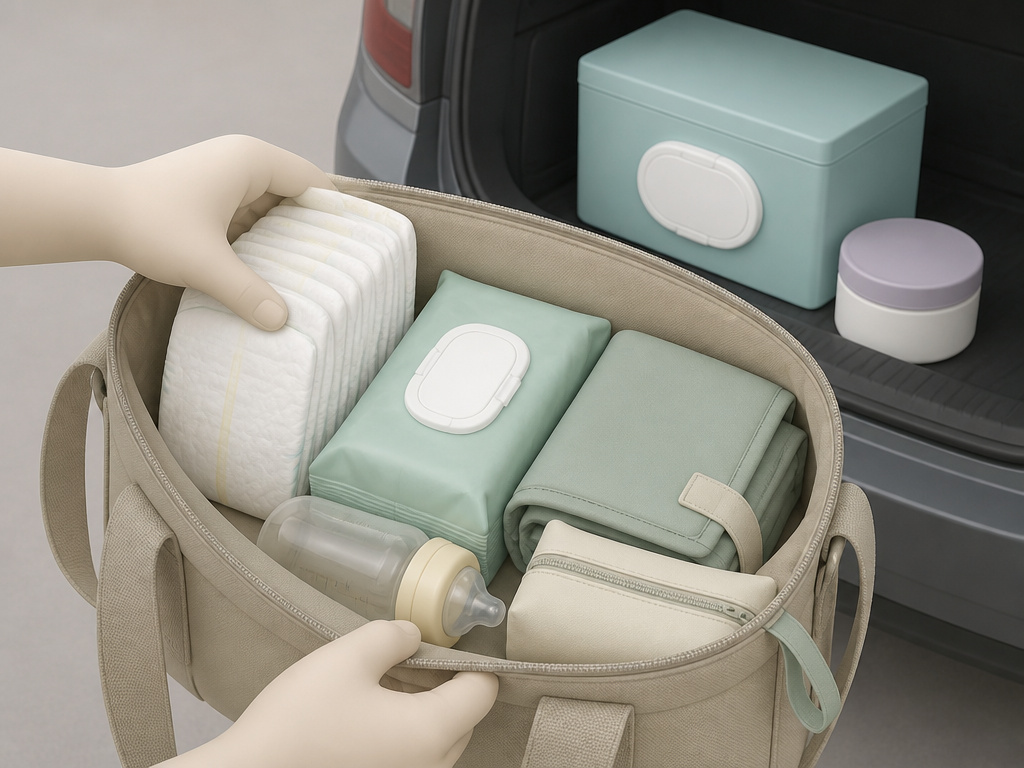 A good bag is useless if it’s packed wrong. Overpacking is the standard error. You do not need a full box of diapers for a trip to the park.
For a 2-3 hour outing:
- 4-6 diapers
- Travel pack of wipes
- Portable changing pad
- 1 bottle or snack
- 1 change of clothes
- Small wet/dry bag (for messes)
- Your personal items (wallet, phone, keys)
This kit fits comfortably in a compact diaper bag or a standard backpack. For a longer day or travel purposes, you’d add more clothes, snacks, and perhaps a toy.
Leave in the car: The giant box of wipes, the entire jar of diaper cream, extra blankets, and toys. Use the car as a base camp. Restock the bag from your car stash after a major change. This system keeps your carrying weight down and makes small diaper bags a viable option for most trips.
Recommended Diaper Bags for Specific Needs
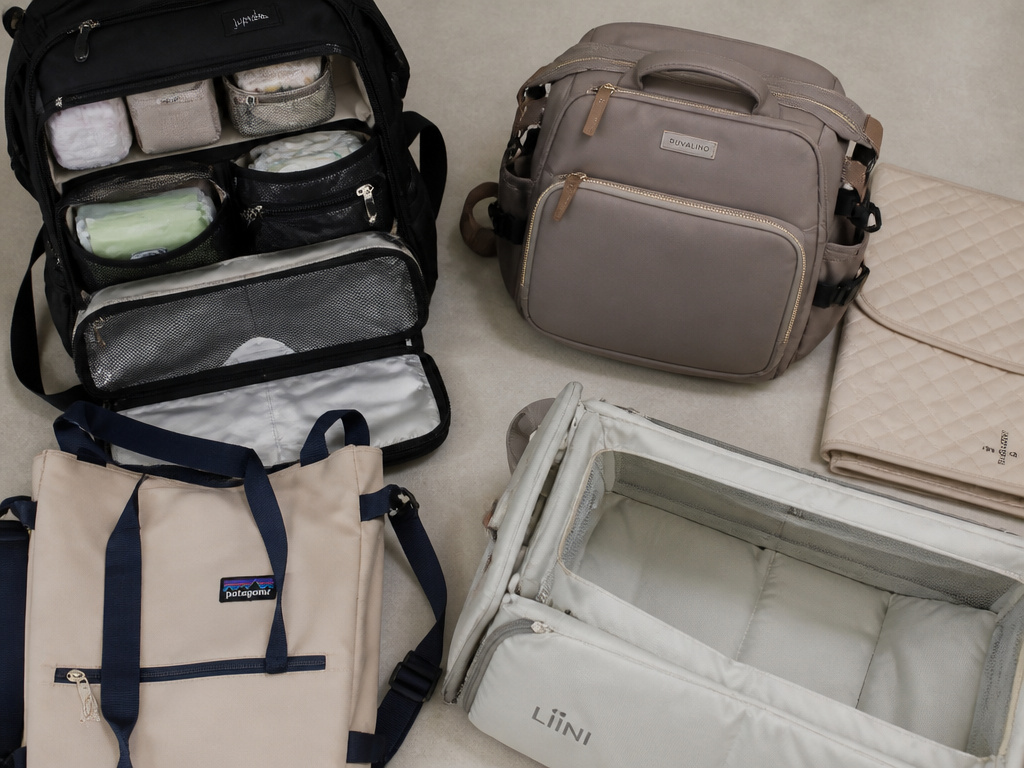 Here’s where opinion meets spec. These are the bags that consistently solve real problems.
The All-Rounder Backpack: JuJuBe Classic Diaper Backpack
It’s machine-washable, has 15 thoughtful pockets (including a dedicated wipes pocket), and opens flat like a suitcase for easy packing. The fabric is durable and the hardware feels solid. It’s the benchmark other bags are measured against in Wirecutter’s 2026 top picks.
The Lightweight Value Pick: Ruvalino Diaper Bag Backpack
At 1.8 pounds and often a fraction of the price, this is the bag you buy without overthinking. It has plenty of pockets, includes a changing pad, and is machine-washable. It’s a no-fuss, highly functional entry point.
The Convertible Hybrid: Patagonia Terravia Tote Pack 24L
This is the “life beyond diapers” bag. It works perfectly as a tote for quick access and converts to a backpack for hands-free carrying. The materials are tough, outdoor-grade nylon. It’s the choice if you want one bag that transitions from baby gear to weekend travel.
The Premium System: LIINI® NAPPY Changing Backpack
This is a different category. It’s a 29-liter backpack with a built-in travel crib and changing pad. It’s a system for parents who are truly on the go all day. The trade-offs are its hand-wash-only care and its weight (approx. 4.4 lbs with accessories). It’s not a quick errand bag; it’s an all-in-one travel solution.
For other specific scenarios, like bags for fathers who want a more neutral look or large capacity bags for twins, the principles remain the same: comfort, access, and cleanability.
Frequently Asked Questions
What is the most important feature in a diaper bag?
One-handed access. Whether it’s a magnetic clasp or a smooth, wide zipper, you must be able to open and close the main compartment while holding your child. Every other feature is secondary to this.
Are backpack diaper bags better than totes?
For most parents, yes. Backpacks distribute weight evenly, leave your hands free, and are more comfortable for extended wear. Totes are better for short, car-based trips where you value quick in-and-out access over carrying comfort.
How many pockets do I really need?
You need three functional pockets: a quick-grab exterior pocket for your phone, a dedicated wipes pocket (the Ruvalino has a clever feed-through design), and a main compartment with a few dividers for diapers, cream, and clothes. More pockets than that often lead to confusion.
Can I just use a regular backpack?
You can, but you’ll sacrifice organization. A dedicated diaper bag has pockets configured for baby gear and often includes a wipeable changing pad. A regular backpack means you’ll be digging for everything. For minimalists, it works. For organization, a purpose-built bag is superior.
What is the best brand of diaper bag?
There is no single “best” brand. Different brands excel in different areas: JuJuBe for organization and washability, Skip Hop for lightweight value, Itzy Ritzy for stylish vegan leather, and LIINI® for all-in-one travel systems. Check current reviews on Amazon for the specific model, not just the brand name.
The Bottom Line
A good diaper bag disappears into your routine. It doesn’t hurt your back, it opens when you need it to, and it cleans up after the messes. Ignore the feature bloat and focus on those three physical truths.
For a first bag, start with a machine-washable backpack in the 20-30 liter range. The JuJuBe Classic or the Ruvalino will cover 90% of outings without drama. Everything else, the style, the extra gadgets, the premium materials, is a refinement on that durable, comfortable, accessible core. Choose the bag that fits the parent you are, not the parent a catalog imagines.
