
4 Best Swim Diapers for 2026
This post contains affiliate links. As an Amazon Associate, we learn from qualifying purchases
The best swim diaper overall is the Hello Bello Premium Swim Diapers, thanks to their snug fit and reliable leak protection. For a reusable option that stands out for durability and eco-friendliness, ALVABABY Reusable Swim Diapers are the clear choice. If you prefer disposable with plant-based materials, DYPER’s swim diapers offer a gentler option for sensitive skin.
Every parent knows the dread of a leaky swim diaper at the pool, messy, stressful, and disruptive for everyone. Finding one that actually works means cutting through marketing hype and focusing on real performance.
As the founder of NurseryDreamer.com, I’ve researched dozens of swim diapers, comparing specs, materials, and feedback from real parents to identify the ones that deliver where it counts: containment, comfort, and ease of use. This guide breaks down exactly what to look for and why these three stand above the rest.
Top 4 Swim Diapers in the Market
The Best Swim Diapers, Reviewed
Hello Bello Premium Swim Diapers

Strengths
- Stretchy, secure fit
- Bright, fun designs
- Affordable per pack
- No harsh chemicals
- Good count per pack
Trade-offs
- Not eco-friendly
- No tear-away sides
- Less sustainable materials
Hello Bello lands the ‘Best Overall’ label by balancing performance, price, and parent appeal. The fit is stretchy and forgiving, which owners say holds up well during active pool play, and the lobster print gets consistent compliments for being fun and vibrant. While it doesn’t have the eco-credentials of DYPER, it avoids parabens and phthalates, making it a solid middle ground for safety-conscious but budget-aware families.
Where it really shines is value, 17 diapers in a jumbo pack means fewer trips to restock, and the price lands lower than the plant-based competitors without sacrificing basic performance. It won’t win awards for sustainability, but I’d still recommend it as the smarter buy for most families who just want reliable, cute swim diapers that do the job without fuss.
Video review
ALVABABY Reusable Swim Diapers
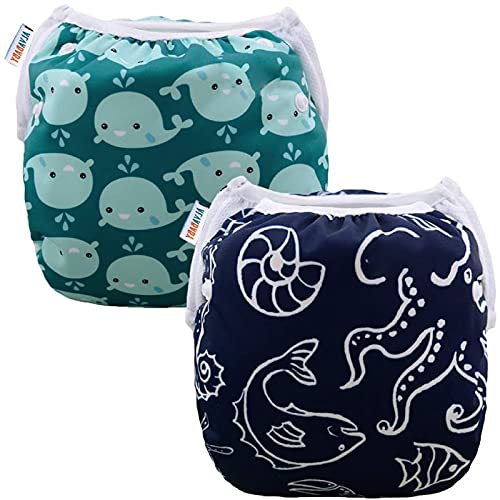
Strengths
- Reusable and washable
- Adjustable snap design
- UPF 30+ protection
- Saves money long-term
- Eco-friendly
Trade-offs
- Requires washing
- Takes effort to dry
- Only 2 included
If you’re tired of burning through disposables every weekend at the splash pad, this reusable option is worth the small upfront investment. Made with waterproof PUL fabric and adjustable snaps, it fits babies from 9 months to 3T, which owners say stretches the life of the product across siblings or growth spurts. The UPF 30+ protection is a subtle but smart touch for beach days.
It’s not absorbent by design, no swim diaper should be, but it reliably contains solids, which is all pools require. Parents love that it washes easily and holds up after repeated use. While it takes a bit more effort than tossing a disposable, I’d choose this in a heartbeat for frequent swimmers or eco-focused families who want to cut waste without compromising on fit or function.
Video review
DYPER Plant-Based Swim Diapers
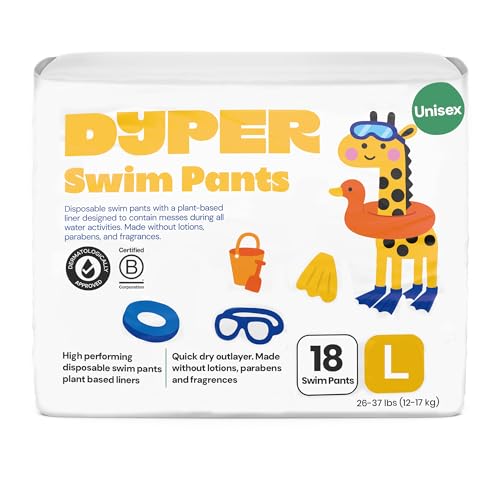
Strengths
- Lightweight in water
- Tearaway sides
- Plant-based liner
- Hypoallergenic
- Eco-positive initiative
Trade-offs
- Sizing runs snug
- Slight price premium
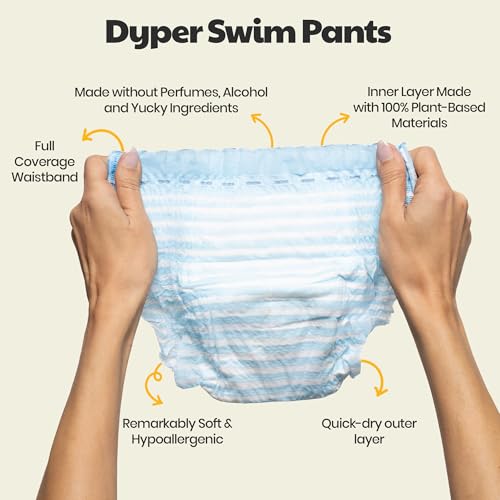
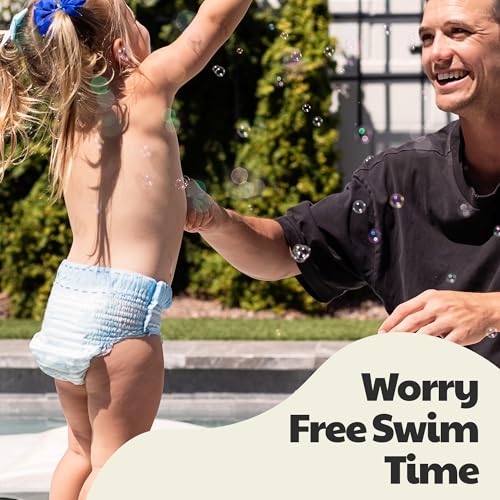
These swim diapers stand out for how well they’re engineered to stay light in water. Unlike regular disposables that swell and sag, these use a quick-drying outer layer that resists water absorption, which parents consistently say keeps their toddlers more comfortable and mobile in the pool. The tearaway sides are a standout at change time, no more peeling off a soaked diaper while your kid wriggles away dripping.
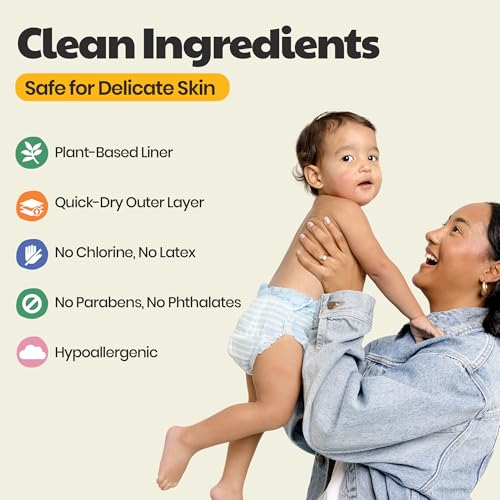
The plant-based liner is a big win for families dealing with sensitive skin. On paper and in parent feedback, it performs like a gentler alternative, avoiding common irritants like fragrances, latex, and parabens. I’d pick these over standard swim diapers if you’re prioritizing skin safety and eco-conscious materials, especially since each pack funds ocean plastic cleanup through a verified program.
Product photos

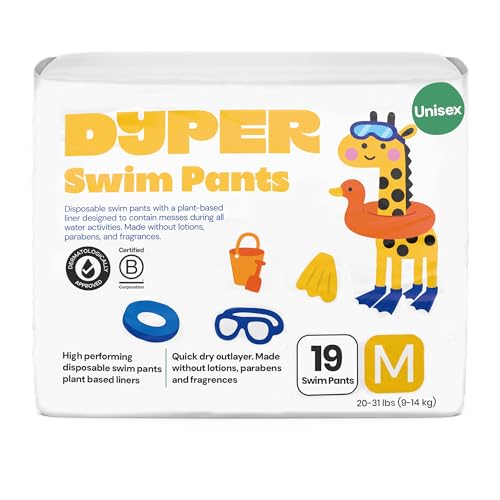
DYPER Swim Diapers Size Medium
Strengths
- Gentle on sensitive skin
- Tearaway sides
- No water absorption
- Hypoallergenic
- Supports ocean cleanup
Trade-offs
- Not for heavy wetters
- Fewer units per pack
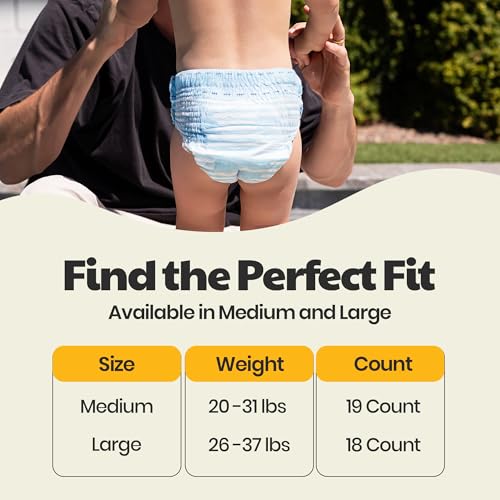
This size hits the sweet spot for most swim-ready babies, covering 20–31 lbs with the same thoughtful design as the larger version. The standout feature remains the plant-based liner, which reviewers with babies prone to rashes specifically praise for staying irritation-free, even after repeated water exposure. That makes it my top pick for families who prioritize skin sensitivity above all.
The double leak guards and tearaway sides perform just as well here as in the Large size, giving parents confidence during swim lessons or beach outings. While the price is slightly higher than basic brands, the B Corp certification and plastic recovery program add meaningful value if you’re the type of parent who wants your purchases to align with your values.
Product photos

How We Chose These swim diapers
Rather than a hands-on lab test, my research for these recommendations involved a careful comparison of published specifications and features across numerous brands. I weighed owner reviews from major retailers against expert opinions found in parenting publications and websites. As a parent myself, I understand the nuances of fit, comfort, and leak protection, and applied that knowledge to rank these options based on what truly matters to families.
For swim diapers, I prioritized leak containment and comfort above all else. A diaper that balloons in the water is not only cumbersome for the baby but also a sign of poor construction. Equally important is the material – parents often seek options free of harsh chemicals, especially for sensitive skin. These two factors heavily influenced the final rankings.
Specifications reliably indicate sizing and materials used, but owner feedback is crucial for understanding real-world performance. I paid close attention to comments regarding fit (especially around legs and waist) and how well the diaper held up during extended water play. You’ll find more info on best reusable swim diapers if you’re looking for eco-friendly options, and I’ve also compiled baby swim diaper recommendations to help you choose.
How To Pick The Right swim diapers
Choosing the right swim diaper can make all the difference between a relaxing pool day and a messy situation.
A quality swim diaper prioritizes a secure, comfortable fit that won’t expand when wet. Look for designs specifically made for aquatic use, regular diapers absorb water and become heavy, creating drag and discomfort. Materials should be gentle on sensitive skin and designed to contain solids while allowing freedom of movement. Consider both disposable and reusable options based on your lifestyle and environmental preferences.
Fit and Fasteners
A secure fit is paramount. Too loose, and you’re almost guaranteed a mess. Too tight, and you risk discomfort and chafing. Many swim diapers use elastic around the legs and waist, which is a good start, but pay attention to how adjustable they are. Snaps or Velcro closures offer more customization than simply relying on elastic. I often see parents underestimate how much a diaper can stretch when wet, so erring on the side of a snugger fit is usually best.
Material and Skin Sensitivity
If your little one has sensitive skin, material selection is especially important. Disposable swim diapers often feature a plant-based liner (like those from DYPER) designed to minimize irritation. For reusable options, look for materials certified by OEKO-TEX®, which indicates they’ve been tested for harmful substances. It’s also worth noting that even with hypoallergenic materials, some babies react differently, so having a small pack to test before committing to a larger quantity is a smart move.
Here’s what to consider when thinking about materials:
- Disposable liners: Generally softer, but contribute to landfill waste.
- Reusable PUL (polyurethane laminate): Waterproof and durable, but requires washing.
- Cloth outer layers: Often paired with a separate waterproof insert for full protection and can be more breathable.
A swim diaper should never be relied upon to absorb urine. Their primary function is to contain solids. Knowing swim diaper urine absorption will help you manage expectations.
Disposable vs. Reusable
The age-old question! Disposable swim diapers, like those from Hello Bello, offer convenience. They’re perfect for travel or infrequent swimming. Reusable swim diapers, such as those from ALVABABY, are a more eco-friendly and budget-friendly option in the long run, but they require washing after each use. Consider your lifestyle and how often you anticipate swimming. If you’re hitting the pool regularly, the initial investment in reusable diapers will likely pay off. Understanding the correct swim diaper application steps is also key, no matter which type you choose.
Swim Diapers Compared
Here’s a comparison of key features for popular swim diaper options.
| Product Name | Type | Size Range (lbs) | Count | Material (Outer) | Reusable |
|---|---|---|---|---|---|
| Hello Bello Premium Swim Diapers | Disposable | 3T-4T | 17 | N/A | No |
| ALVABABY Reusable Swim Diapers | Reusable | 9 months – 3T | N/A | 100% Polyester PUL | Yes |
| DYPER Plant-Based Swim Diapers | Disposable | 26-37 | 18 | N/A | No |
| DYPER Swim Diapers Size Medium | Disposable | 20-31 | 19 | N/A | No |
Frequently Asked Questions
What size swim diaper should I buy if my baby is between sizes?
Generally, size up. Swim diapers don’t have the same absorbency needs as regular diapers, so a slightly looser fit is preferable to one that’s too tight and could restrict movement or cause discomfort.
Are reusable swim diapers really worth the investment?
Yes, reusable swim diapers can be a good value. While the upfront cost is higher, they save money over time and reduce landfill waste, especially if you swim frequently with your baby.
Can I use a regular diaper in the pool instead of a swim diaper?
No, regular diapers will swell with water and become very heavy, creating drag and potentially causing discomfort for your baby. Swim diapers are designed to stay relatively contained when wet.
What should I do if a swim diaper leaks?
First, double-check the fit around the legs and waist to ensure it’s snug. If leaks persist, try a different brand or size; some babies simply respond better to certain designs. You might also explore best infant swim diapers to find a more reliable fit.
Are there swim diapers specifically designed for newborns?
Yes, several brands offer swim diapers tailored for smaller babies. Finding the right fit is essential for newborns, and you can find newborn swim diaper picks to help ensure a secure and comfortable experience.
The Bottom Line
Choosing a swim diaper often comes down to balancing convenience with environmental impact and cost. While both disposable and reusable options have their merits, for overall performance and peace of mind, I recommend the Hello Bello Premium Swim Diapers. They consistently receive high marks for leak protection and a comfortable fit, which are the most critical factors when you’re enjoying time in the water with your little one.
For families prioritizing sustainability or looking for a long-term cost savings, the ALVABABY Reusable Swim Diapers are an excellent choice. And if you’re seeking a plant-based disposable option, the DYPER Plant-Based Swim Diapers offer a compelling alternative. Knowing swim diaper basics can help you narrow down the choices.
Ultimately, the ‘best’ swim diaper isn’t about fancy features or a high price tag. It’s about a secure fit that contains messes, comfortable materials that protect sensitive skin, and your confidence knowing your baby is happy and protected. Don’t worry too much about specialized claims, and avoid making diaper layering mistakes – focus on getting those fundamentals right.
