
How Should a Diaper Fit | The Two Measurements That Matter
This post contains affiliate links. As an Amazon Associate, we learn from qualifying purchases
A diaper should fit snugly at the waist and thighs without gaps, but not so tight that it leaves deep red marks or restricts movement. The waistband should sit just below the belly button, and the leg cuffs should lay flat against the skin, creating a seal. A perfect fit prevents leaks by directing fluid into the core while keeping the baby’s skin dry and comfortable.
That definition is the goal, but the path there is mechanical. A diaper isn’t a static sack; it’s an engineered system that moves with a squirming, rolling, eventually standing human. The gap between a diaper lying flat on a changing table and one wrapped around a baby in motion is where leaks and rashes happen.
What follows: the two physical checks that matter more than the weight chart, how a baby’s posture rewrites the rules, and why the same diaper brand can fit differently from one box to the next. By the end, you’ll spot a bad fit from across the room.
Key Takeaways
- Check the waist and thigh fit with the two-finger rule: you should be able to slide two fingers snugly under the waistband and leg cuffs.
- A standing baby is in a different diaper than a lying one; the fit changes by nearly a full degree Celsius as they move, affecting leakage paths.
- Sizing up is not always the leak fix. A diaper that’s too large creates gaps at the legs, which are the primary leak zones for liquid.
- The industry’s own EDANA diaper testing protocol requires testing in multiple postures because lab results on a flat surface don’t match real life.
- For overnight, prioritize a diaper with a taller, more centered absorbent core and elastic that maintains its hold as the material swells.
The Two-Point Fit Check (Waist & Thighs)
Forget the cartoon of a perfectly wrapped parcel. A diaper’s job is to create two seals: one at the waist, one at each thigh. Everything else is secondary.
The waist seal should sit just below the belly button, not across it. Fasten the tabs so they are parallel to the ground, not angled down toward the hips. You should be able to slide two fingers snugly between the waistband and your baby’s skin. One finger is too tight; a whole hand’s width is too loose.
Common mistake: Fastening for a snug lying-down fit. A baby’s abdomen expands when they sit up or curl their legs. A diaper fastened too tightly on the changing table will dig in within minutes of them moving.
The thigh seal is the main event. The leg cuffs, those frilly-looking elastic gathers, must be pulled out from the diaper’s interior and laid flat against the skin. They should not be tucked inside the diaper’s main body. Run a finger around the inside of each cuff to ensure it’s not folded. A proper seal here means no gaps when the baby’s legs are apart, but also no pinching when they bring their knees to their chest.
| Checkpoint | Correct Fit | Sign of a Bad Fit | Likely Consequence |
|---|---|---|---|
| Waistband | Sits below navel, allows two fingers snugly. | Sits across navel or hips, leaves deep red marks. | Top-leak blowouts, restricted breathing. |
| Leg Cuffs | Elastic lays flat against skin, pulled out and unfolded. | Cuffs are tucked inside, or gaps are visible when legs are lifted. | Side-leg leaks, especially with runny poop. |
| Rise (Front to Back) | Fully covers the bum, comes up to the waistline in both front and back. | Material is taut or stretched thin over the bum, or the back is too low. | Back-leak blowouts during a nap or car seat session. |
If you see consistent overnight leaks from the legs, the size is probably wrong. But the direction of the leak tells you which way to go. Leaks out the top of the waistband often mean the diaper is too small. Leaks out the leg holes, where the material gaps away from the skin, usually mean the diaper is too large. Sizing up into a diaper that gaps at the legs will make preventing leaks harder, not easier.
How Posture Changes Everything
A diaper’s fit is not a constant. It’s a variable set by whether your baby is lying on their back, kicking on their tummy, or pulling to stand. Research into diaper microclimates shows a baby’s standing posture is about 0.9°C (1.6°F) cooler underneath the diaper than when they are lying down. That temperature shift changes how moisture moves and where pressure points land.
When a baby is supine, gravity pulls the absorbent core flat against their back and buttocks. The waistband takes most of the tension. When they stand, the entire diaper sags downward, transferring stress to the leg cuffs and the hip joints of the diaper. A fit that seemed snug while changing them now has slack at the thighs.
This is why pants-style diapers often get credited with a better fit for mobile babies. The all-around elastic is designed to move with them, maintaining a more consistent seal in multiple positions. The advantage of certain fits, according to studies, is most obvious when the baby is on their back, the position we most often check the fit in, but not the one they’re always in.
The Hidden Specs: What the Standards Say
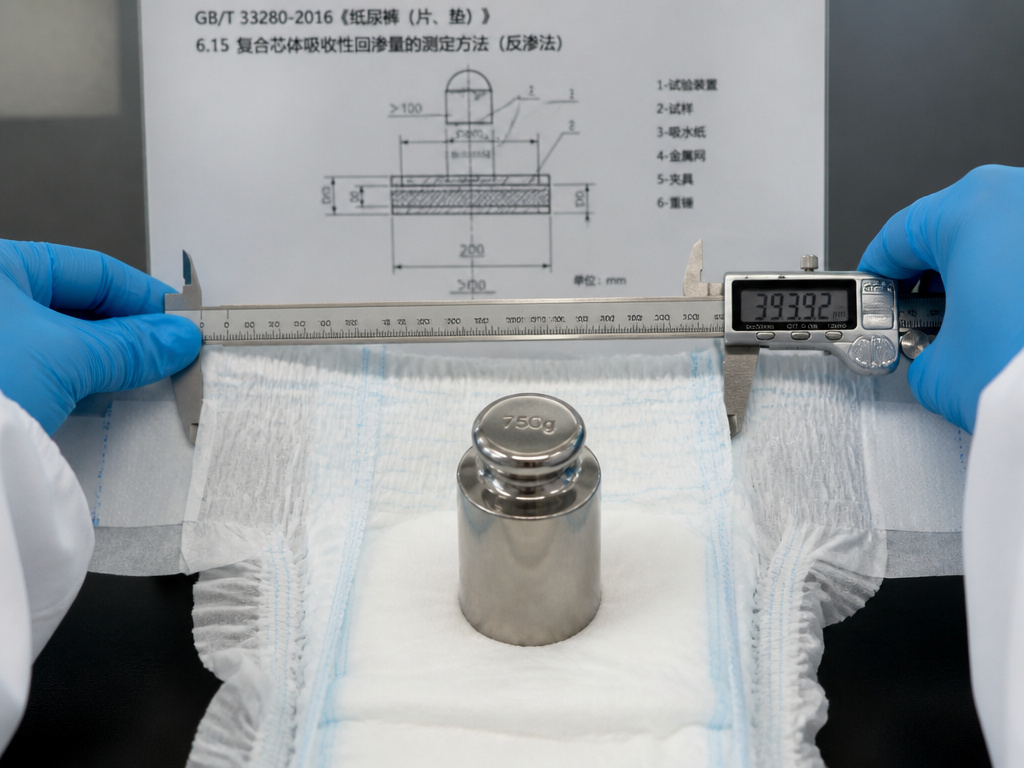
Manufacturer weight ranges are a starting guide, but they mask the real engineering. National and international standards define the tolerances that separate a good diaper from a defective one.
The Chinese standard GB/T 33280-2016 specifies that to measure a diaper’s waist size accurately, you must use a standard weight, 750 grams for waist-patch styles. Not using this weight can cause a measurement deviation of up to ±3 cm. That’s the difference between a Size 2 and a Size 3. If a diaper factory’s quality control skips this step, the diaper sizing printed on the box becomes a guess.
Patent literature introduces terms like Crotch Holding Force (CHF-6.5), a measure of how well the crotch region stays in contact with the body. The spec calls for less than 1.4 kgf, typically under 1.2 kgf. Too much holding force causes chafing; too little allows gapping and leaking. This is the unseen engineering behind a Swaddler diaper’s claimed “blanket-like” fit, it’s not just softness, it’s controlled elasticity.
Where this goes sideways: Assuming all diapers in the same box are identical. The EDANA guidelines note that products under the same brand can be made in different factories. Slight variations in elastic tension or adhesive can change the fit from one pack to the next. This is why a brand that worked last month might suddenly cause leaks.
These standards exist because a diaper is a performance textile, not just a container. Its absorbency, wetness distribution, and tensile strength are all quantifiable. The fit is what delivers that performance to the baby’s skin.
Cloth vs. Disposable: A Different Fit Philosophy
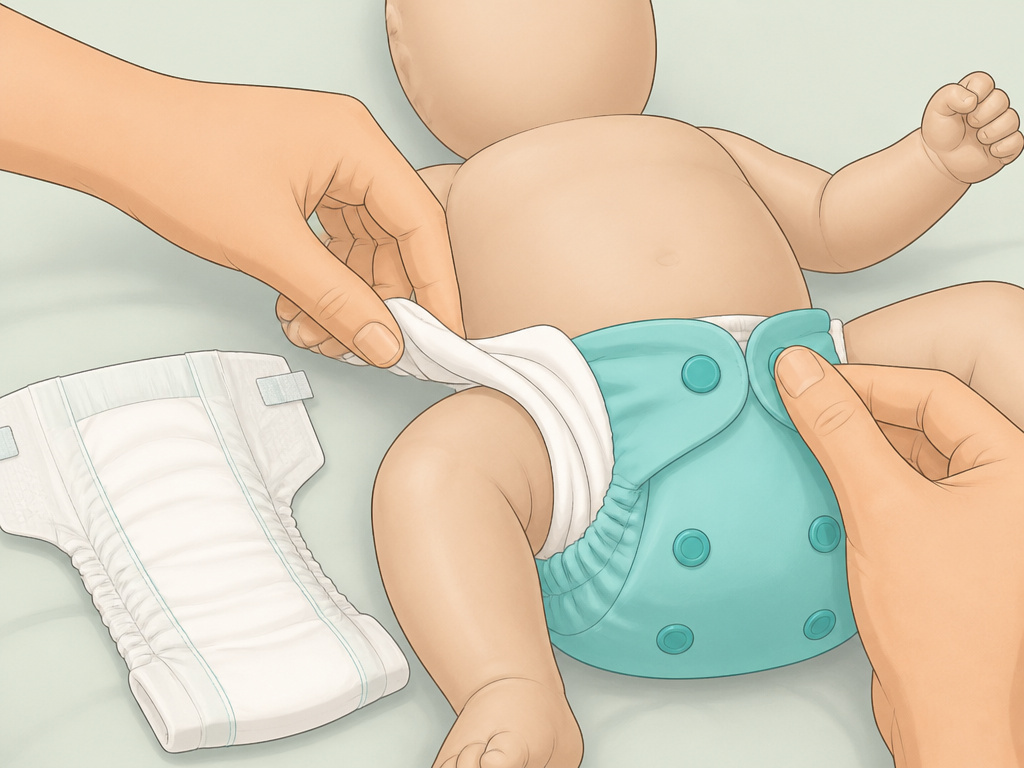
The fit conversation splits when you talk about cloth. A cloth diaper’s fit is adjustable by design, but it demands a different kind of precision.
A disposable diaper’s elastic is heat-bonded and pre-tensioned. A cloth diaper’s fit comes from your folds, snaps, and the separate diaper cover that goes over it. The leg seal on a well-fitted cloth system is often superior because the waterproof cover can be snapped snugly around the thigh independently of the absorbent insert’s bulk. This is why many parents find cloth diapers help with diaper rash, the fit can be kept secure without over-tightening the wet material against the skin.
Getting the folding technique right for a prefold is the difference between a trim fit that contains everything and a bulky mess that leaks at the seams. The “jelly roll” fold along the thighs is non-negotiable for newborns.
The trade-off is consistency. Putting on a disposable is a repeatable action. Putting on a cloth diaper is a skill that improves with practice. A perfect cloth fit is often better; an imperfect one is far worse. For a newborn, mastering the newborn diaper change with cloth adds several more variables to an already delicate process.
When to Size Up (And When Not To)
The standard advice is to size up when you see leaks or red marks. That’s only half right. You need a diagnostic.
Size up if:
- The waist fastening tabs are angled downward toward the hips or are close to meeting in the middle.
- The front of the diaper sits well below the belly button.
- Red marks appear at the waist or thighs after the diaper has been off for 10+ minutes (pressure marks, not just temporary lines).
Do not size up if:
- Leaks are primarily from the leg holes. A larger diaper will have a wider leg opening, creating a bigger gap.
- The diaper already looks baggy or bunches between the legs when the baby is standing.
- You’re trying to get longer overnight sleep. For that, you need a diaper designed for higher capacity, not just a bigger version of the daytime one.
The weight ranges on the box are useful, but body shape dictates fit. A long, lean baby might need the height of a larger size before they hit the weight limit. A chunky-thighed baby might max out the thigh elastic of a size while still well within its weight range. This is especially true when finding the correct newborn size, where a one-pound difference can be a whole body proportion change.
Frequently Asked Questions
How tight should a diaper be around the legs?
It should be snug enough that you cannot easily slide a finger sideways into the leg opening when the baby is relaxed. However, the elastic should lay flat against the skin without digging in. If the skin is spilling over the cuff, it’s too tight. If you can see a clear gap when you lift the baby’s leg, it’s too loose.
What are the signs of a diaper that is too small?
The waistband rests on or above the belly button. The fastening tabs are stretched far to the side or almost meeting in the center. Red, deep pressure marks are left on the waist or thighs after removing the diaper. The diaper looks strained and taut across the hips and bum.
Why does my baby leak only when standing or sleeping?
Posture changes the leakage paths. When standing, fluid pools in the front of the diaper. If the absorbent core is short or the leg seals gap, it leaks forward out the legs. When sleeping on their back, fluid pools in the back. If the back of the diaper is too low or lacks absorbency, it leaks out the back. You may need a different diaper style for overnight versus active daytime play.
Do diaper brands fit differently?
Absolutely. Brands have distinct “fit models.” Some are cut narrower through the crotch; others are wider in the thigh. Some have more aggressive leg elastic; others rely on a taller back to contain mess. A Pampers Swaddler, a Huggies Little Snugglers, and a store-brand diaper in the same nominal size will fit the same baby three different ways. Finding the right brand is as important as finding the right size.
How does a proper fit help prevent diaper rash?
Proper fit minimizes skin contact with wetness. It keeps the inner liner close to the skin to wick moisture away quickly, and it prevents chafing from loose material rubbing back and forth. A diaper that gaps allows pooled moisture to sit against the skin; a diaper that’s too tight creates friction and blocks airflow. Both cause rash.
The Bottom Line
A diaper’s fit is a dynamic seal, not a static wrap. Check it in the position your baby spends the most time in, if they’re a roller, check them on their tummy; if they’re a stander, check them upright. Use the two-finger rule at the waist and thighs as your baseline, but trust the evidence of leaks and marks over the numbers on the box.
The right fit is the one you don’t notice. It doesn’t leak, it doesn’t leave angry red lines, and it doesn’t restrict the wiggles, rolls, and crawls that are your baby’s full-time job. When you find that match of brand, size, and fastening technique, stock up. Then watch for the subtle signs that it’s time to change the formula all over again.
