
Essential Properties of Cloth Diapers: Layers, Fit & Function
This post contains affiliate links. As an Amazon Associate, we learn from qualifying purchases
The properties of a cloth diaper are defined by its layered construction: a stay-dry inner liner (microfleece or suede cloth), a customizable absorbent core (cotton, hemp, bamboo, or microfiber inserts), and a waterproof, breathable outer shell (PUL or TPU). These materials work together to manage moisture, contain leaks, and maintain skin health, with performance formally measured by standards like the EDANA test protocol for absorbency and leakage.
That breakdown is the spec sheet. It tells you what the diaper is, not how it behaves in your house at 3 a.m. The real properties you care about, does it leak, does it feel wet, how many times can my kid wear it before I wash it, are a negotiation between those materials and your baby’s unique output, your washing machine, and your patience.
What follows is the translation. We’ll walk through the three non-negotiable layers, the numbers that manufacturers actually test against, and the physical reality that changes the moment the diaper gets wet. You’ll know which property matters for a heavy wetter versus an overnight sleeper, and why some certified test results don’t always match your lived experience.
Key Takeaways
- The stay-dry inner liner is non-negotiable; it’s a permeable barrier that lets liquid pass through but feels dry to the touch, preventing the sensation of wetness that disrupts sleep.
- Absorbent core materials rank by performance: hemp and bamboo beat cotton for sheer capacity and compression, but microfiber absorbs fastest, mixing them in a “booster” is the pro move.
- A waterproof outer shell must be breathable; materials like PUL (polyurethane laminate) allow water vapor from sweat to escape while blocking liquid urine, which cuts diaper rash risk from trapped humidity.
- Leg movement increases diaper ventilation by about 20% compared to a static baby, a tested fact that changes how you judge “breathability” on a crawling infant versus a newborn.
- Formal performance tests, like the EDANA diaper testing protocol, use saline solution and measure results over a minimum of five samples, your one leaked diaper doesn’t invalidate the standard, but it might point to a fit issue.
The Core Properties: A Layer-by-Layer Breakdown
Forget “cloth diaper” as a single thing. It’s a mini-engineered system. Each layer has a specific job, and the material choices in each slot determine everything from leak rate to laundry routine.
The inner liner is your baby’s direct contact point. Its job isn’t to absorb, it’s to stay out of the way. Materials like microfleece or suede cloth are hydrophobic. They let urine pass through quickly to the absorbent core below while feeling virtually dry to the touch. A damp-feeling liner is a failure point; it means the transfer is too slow, and that lingering moisture is what leads to redness and fussing.
Common mistake: Using a flat cotton diaper or a towel as a liner. These absorb and hold moisture against the skin, creating a wet microenvironment that is the primary driver of irritant diaper dermatitis.
The absorbent core is the workhorse. This is where you have the most choice and control, especially in pocket-style or cover-and-insert systems.
| Core Material | Best Property | Trade-Off |
|---|---|---|
| Microfiber | Speed. Absorbs very fast. | Compression. Saturated, it presses liquid back out under baby’s weight. |
| Cotton | Natural & affordable. Reliable absorption. | Bulk. Requires more layers for equal capacity, creating a thicker diaper. |
| Bamboo | Capacity & sustainability. Holds more liquid per gram than cotton. | Slower absorption rate than microfiber. |
| Hemp | Ultimate capacity & trimness. Most absorbent natural fiber, resists compression. | Cost. The most expensive option, and absorption can be slower. |
The winning strategy for heavy wetters or overnight use is a blend. Start with a fast microfiber cloth diaper insert on top to grab the flood, backed by a hemp or bamboo layer below for long-term storage. This combo addresses the weakness of each single material.
The outer shell provides containment. Modern shells use a waterproof, breathable laminate like PUL (polyurethane) or TPU. Breathability is the critical spec here, it allows water vapor from sweat and heat to escape. A non-breathable plastic diaper cover traps all humidity inside, raising the skin’s temperature and moisture level, which softens the skin barrier and makes it more susceptible to rash from any irritants.
How Performance is Measured: The Lab vs. Your Laundry Room
Manufacturers and standards bodies don’t guess. They test under controlled, repeatable conditions. Knowing what they measure tells you which claims are marketing and which are engineering.
The EDANA diaper testing protocol is the international benchmark. It mandates specific procedures for tests like “absorption before leakage.” They don’t use water. The test solution is 0.9% saline, because its salt content mimics urine’s conductivity and interaction with super-absorbent polymers (less relevant for cloth) and fabrics. Every test runs on a minimum of five identical diaper samples, and results are reported as an average with a standard deviation.
Absorption rate, leakage volume, and skin wetness are the three pillars of diaper performance testing. A lab can tell you the exact milliliter volume a diaper will hold before leaking under a standardized pressure, and how many seconds it takes for the inner surface to feel wet.
Chinese standard GB/T 28004.1-2021 outlines similar rigor for product classification and testing. Specimens must be conditioned for at least four hours under set temperature and humidity before testing begins. This controls for environmental variables that could skew weight or absorption readings.
Your home is not a lab. Your test solution is variable, morning urine differs from afternoon, and a breastfed baby’s output is different from a toddler’s. The “pressure” applied is a wiggling, sitting, crawling baby, not a calibrated weight. This is why a diaper can ace lab tests and still leak on your child. The fit around the legs and waist, the placement of the absorbent materials, and the baby’s unique shape introduce variables no standard can fully capture.
Physical Properties That Change When Wet
A dry diaper and a wet diaper are two different objects. The materials themselves undergo measurable physical transformations that affect comfort and function.
Peer-reviewed studies have quantified this. When a diaper fabric is wetted with saline solution, its surface friction increases. The coefficient of friction (MIU) goes up. In plain terms, the wet material grips the skin more, which can contribute to chafing and irritation with movement. This is a key argument for that stay-dry liner, it remains a low-friction barrier.
Wetting also increases thermal conductance. The wet materials conduct heat away from the skin more efficiently. This is the “cold, wet feeling” a parent feels when touching a soaked disposable diaper from the outside. In a cloth system, a breathable outer shell helps mitigate the clammy sensation, but the wet insert itself will feel cool. This property is central to diaper thermal comfort research aiming to quantify the microclimate inside the diaper.
Finally, wet fabrics lose compressional resilience. They don’t spring back as well when pressure is removed. This is the “compression leak” scenario: a fully saturated insert, when squished by a sitting baby, can release liquid back toward the skin or the leg gaps. This is the core weakness of microfiber and why pairing it with a compression-resistant material like hemp is so effective.
The Rash Reality: Do Material Properties Actually Prevent It?
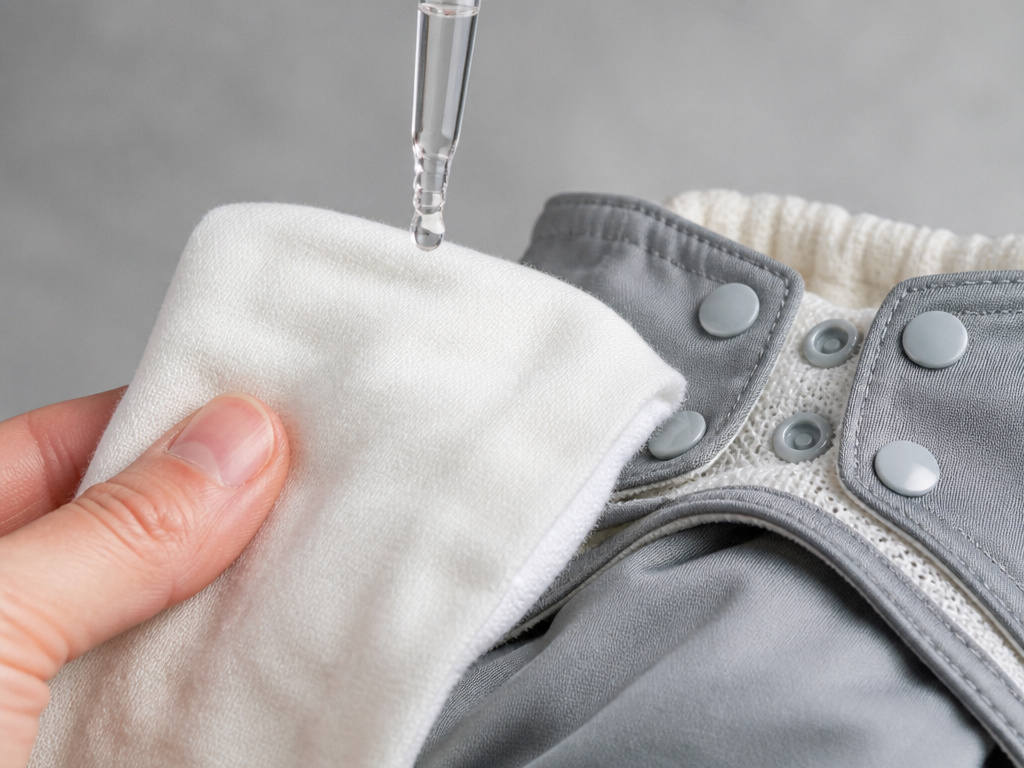 This is the million-dollar question. The clinical definition of diaper dermatitis is an irritant contact dermatitis caused by prolonged exposure to a wet, occluded environment. By that logic, any diaper that keeps skin drier and less occluded should reduce rash.
The data on modern cloth diapers is clarifying. A 2024 study in the Journal of Pediatrics compared dermatitis frequency. It found no significant difference. Diaper rash occurred “a few times a year” in 47% of disposable diaper users and 47.5% of cloth diaper users. The study specifically noted that earlier research showing cloth in a worse light often used old-style single-layer cotton flats, not the modern multi-layer organic cloth diapers or pocket systems common today.
The study highlighted a more impactful variable: cleaning method. Disposable diaper users in the study heavily favored commercial wet wipes, which can contain potential irritants like fragrance. Cloth diaper users more often used water with cotton or cloth. This suggests that the properties of your cleaning materials might influence skin health as much as the diaper’s own properties.
The ventilation property also plays a role. Research using tracer gas found that leg movement increases overall diaper ventilation by approximately 20%. A mobile baby in a breathable best diaper covers creates its own airflow, actively managing the microclimate. A sedentary newborn does not.
Cloth Diaper Properties in Action: Systems & Recommendations
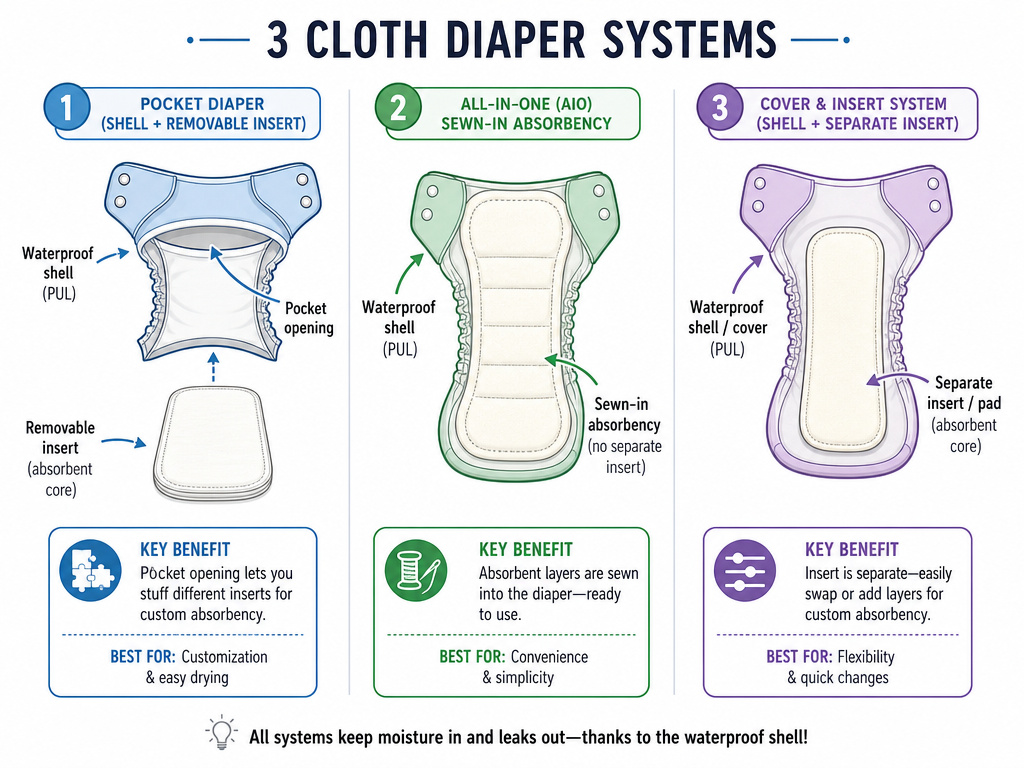 Properties don’t exist in a vacuum. They combine into systems, and each system makes different properties a priority.
Pocket Diapers (like Charlie Banana or Rumparooz) separate the shell from the absorbent core. This gives you maximum control over the absorbent core materials property. You can mix and match inserts for customization. The shell’s property of durable waterproofness is paramount, as it’s reused multiple times before washing.
All-in-One Diapers have the absorbent layer sewn directly into the shell. The key property here is convenience and consistent fit, but you sacrifice drying time (the thick, sewn-in core takes forever to air dry) and customization.
Covers with Inserts (or “All-in-Two”) systems use a separate absorbent pad that sits inside a reusable shell. The shell’s property of moisture repellency is critical, it must not wet out from inside. Brands like Thirsties or Blueberry emphasize this in their shell fabric technology.
For most families starting out, the flexibility of a pocket cloth diapers system is the smartest match. It lets you experiment with different insert materials to find what works for your baby’s unique output patterns. If you value ultimate simplicity and don’t mind longer dryer cycles, a set of all-in-ones from a brand like BumGenius or Nora’s Nursery works.
Where this goes sideways: Storing soaked diapers for more than three days before washing. Ammonia from urine breaks down and embeds in the fibers, causing a permanent smell no wash routine can fix and degrading the fabric’s absorbency property. Wash every two days.
Frequently Asked Questions
Do cloth diapers have absorbent polymer like disposables?
Almost never. The super-absorbent polymer (SAP) used in disposables is a gel that locks liquid away. Cloth diaper absorption relies on the natural wicking and holding capacity of textile fibers like cotton, hemp, and bamboo. Some hybrid disposable liners may contain SAP, but the reusable cloth components do not.
What is the most important property for overnight use?
Capacity, backed by compression resistance. You need an absorbent core that can hold a large volume of urine (a hemp/bamboo blend) and not release it when your baby rolls onto their stomach. A good stay-dry liner is also critical to prevent waking from the sensation of wetness.
How does the “breathability” property work with a waterproof layer?
It’s a matter of molecule size. Breathable membranes like PUL have microscopic pores large enough to allow water vapor (from sweat) to pass through, but too small to let liquid water (urine) through. This exchange reduces heat and humidity buildup inside the diaper.
Do cloth diaper properties change after many washes?
Yes, but usually for the better. Natural fibers like cotton, hemp, and bamboo reach peak absorbency after 5-10 washes as natural oils and residues are removed. The property that degrades is the water repellency of the outer shell’s laminate, which can delaminate or crack after years of use or high-heat drying.
Are the properties of organic materials different?
The core properties, absorbency, feel, drying time, are defined by the fiber (e.g., cotton), not its organic certification. The benefit of diapers made from organic materials is the absence of pesticide residues next to your baby’s skin and more sustainable farming practices, not a performance upgrade.
Before You Go
The properties of a cloth diaper are a checklist of solved problems: a dry feel, contained leaks, breathable containment. The materials science behind modern liners, hemp inserts, and PUL shells is genuinely effective. Your job isn’t to reinvent the system, but to match its properties to your life, prioritize customization if you have a heavy wetter, prioritize simplicity if you have twins. The test standards prove the concept works. Your laundry routine and your baby’s skin will prove which specific cloth diapers for babies work for you. Start with a pocket system and two different materials for diaper inserts. The rest is just tuning.
