
How to Potty Train in 3 Days: A Step-by-Step Guide & Schedule
This post contains affiliate links. As an Amazon Associate, we learn from qualifying purchases
To potty train in 3 days, you follow a hyper-structured, minute-by-minute protocol. The core schedule comes from a primary-source rapid training guide: prompt sits of 30 minutes, followed by a 5-minute reward break for success or a 2-minute break for no output, repeating all day with scheduled liquid intake. This method requires absolute commitment, a cleared calendar, and abandoning diapers cold turkey.
That 30-minute sitting interval is the operational spine of a documented rapid training protocol used by behavioral therapists. The schedule is relentless by design, it floods the child with opportunities to succeed and creates a clear, predictable pattern their body can learn.
What follows: the exact minute breakdown from that primary source, the non-negotiable supplies that make or break the three days, a direct comparison of the major 3-day methods, and the specific readiness signs that mean you should not attempt this at all. By the end, you’ll know whether this intense sprint fits your family or if a gentler ramp-up is the smarter play.
Key Takeaways
- The proven rapid protocol uses 30-minute sitting intervals with specific 5-minute or 2-minute breaks, not vague “frequent trips.”
- Abandon all diapers and pull-ups from the first minute, using them confuses the child and resets progress.
- Track liquid intake meticulously; offering 100mL of fluid every hour drives the predictable need to go.
- Readiness is non-negotiable; pushing a resistant child over 2.5 years old can create power struggles and extend training.
- Nighttime dryness is a separate milestone most kids don’t hit until age 5-7; expect to use overnight protection for years.
The Core 3-Day Schedule: A Minute-by-Minute Breakdown
Forget “take them often.” A real 3-day method works because it’s a rigid, repeating loop that removes guesswork. The most clearly documented schedule comes from the “Rapid Toilet Training Data Sheets” used by clinicians.
The loop is simple but exhausting. You prompt a sit for a set duration. The outcome dictates the next move.
Procedure: Prompt the trainee to sit on the toilet for 30 minutes. If the trainee pees or poops in toilet, give praise, a reward, and a 5 minute break, and then start the next sitting. If the trainee does not pee in the 30 minute sitting, give a 2 minute break (watch closely for accidents!!!) and then start the next sitting.
This is a conditioning schedule. The 30-minute window is long enough to almost guarantee the bladder will signal, teaching the child to recognize the feeling while already in place.The 2-minute break after a dry sit is critical, it’s not a play break. It’s a high-alert monitoring period where accidents are most likely, and if one happens, you clean up quietly and immediately return to the toilet to restart the 30-minute clock.
How to Handle Accidents and Successes Within the Schedule
Accidents are part of the data, not failures. The protocol treats them as learning moments with a specific script.
If an accident begins, try to interrupt it and rush the child to the toilet. If any amount finishes in the bowl, you treat it as a full success, reward and a 5-minute break. This reinforces the toilet as the correct endpoint. If you can’t interrupt it, clean up without drama, no scolding, no long lectures, and immediately return to the toilet for the next scheduled sitting. The message is mechanical: pee goes in the potty. We try again now.
Success gets immediate, enthusiastic praise and a tangible reward. The break is only 5 minutes. This keeps the day’s rhythm tight and prevents the child from disconnecting the reward from the action. A short, fun break then right back to the station. The reward must be instant and something they only get for potty success.
The Critical Role of Liquid Scheduling
You cannot run this protocol on a child’s normal fluid intake. The bladder needs predictable refill cycles to create predictable urges. The same data sheet includes a liquid consumption tracker, advising you to record the time whenever the child finishes 100mL of liquid.
Offer a drink every 60 minutes. Use a cup they like, a straw cup, a favorite character mug, and measure the 100mL. This consistent input creates a consistent output timeline, making the 30-minute sit window effective. Without this, you’re just having them sit dry for half an hour, which teaches nothing and breeds resistance.
| Time | Action | If Success | If No Output |
|---|---|---|---|
| 8:00 AM | 100mL drink | – | – |
| 8:02 AM | Start 30-min sit | Reward + 5-min break at 8:32 | 2-min break at 8:32 |
| 9:00 AM | 100mL drink | – | – |
| 9:02 AM | Start 30-min sit | Reward + 5-min break at 9:32 | 2-min break at 9:32 |
| Continues all day |
This table is the skeleton of your three days. The breaks are short. The sits are long. The drinks are scheduled. Deviating from this structure is why most 3-day attempts stretch into 3-week slogs.
What You Actually Need for a 3-Day Blitz
Your supplies list is short but specific. This is about having tools that support the military precision of the schedule.
- A Timer You Can Hear: Use a kitchen timer or phone timer with a distinct alarm. Not a silent vibration. The end of the 30-minute sit and the 2-minute break must be signaled clearly to you.
- A Measurement Cup: For the 100mL liquid increments. Guessing doesn’t work.
- The Right Potty: Use a standalone floor potty like the Baby Björn Potty Chair. The child’s feet must be flat on the floor for proper pushing posture. Avoid toilet seat inserts for these three days, the climb and dangling feet add fear and delay.
- High-Value Rewards: Stickers, a single M&M, a spin of a prize wheel, something small, immediate, and reserved solely for potty success. A generic “good job” isn’t enough for this intensity.
- A Massive Supply of Underwear and Cleaning Tools: Have at least 15 pairs of underwear ready. Keep a bucket with cleaning spray, rags, and a plastic bag for soiled clothes in the bathroom. Speed and neutrality during clean-up are vital.
Where this goes sideways: Using training pants or Pull-Ups during the three days. They feel too much like a diaper and absorb the accident, removing the immediate, uncomfortable consequence of peeing one’s pants. That feedback loop is essential. If you’re not ready to mop floors, you’re not ready for this method.
3-Day Method Showdown: Boot Camp vs. Readiness-Based
Not all 3-day frameworks are the same. The two most cited approaches sit on opposite ends of the philosophy spectrum.
The “Oh Crap” Method (Jamie Glowacki): This is the most popular boot camp. It divides training into blocks, naked, commando, clothed, and relies on parental vigilance to catch cues. It’s less about a strict timer and more about watching the child like a hawk for signs they’re about to go. The Oh Crap method is a mindset shift for the parent as much as the child. It works for many but requires incredible attentiveness.
The “3 Day Potty Training” Method (Lora Jensen): This is the origin of the “cold turkey in a weekend” idea. It advocates for ditching diapers completely, including for naps and night, and using positive reinforcement. Critics note it suggests using phrases like “yucky” for accidents, which can introduce shame. It’s the most intensive, all-or-nothing version.
The Rapid Protocol (Clinical Data Sheets): This is the timer-driven, behaviorist approach outlined earlier. It’s less discussed in parent circles but has the clearest, reproducible procedure. It doesn’t worry as much about subtle cues, it creates the opportunity through schedule and physics.
| Method | Core Tactic | Best For | Biggest Risk |
|---|---|---|---|
| Oh Crap | Block-based, cue watching | Parents who can be hyper-observant | Missing cues leads to repeated accidents and frustration. |
| Lora Jensen | Cold turkey, positive focus | Families who can commit 100% to no diapers | The “all-in” pressure can backfire on a slightly unready child. |
| Clinical Rapid Protocol | Timed 30-min sits, liquid scheduling | Parents who need a scripted, step-by-step plan | The rigid schedule is exhausting and can feel punitive if not lightened with rewards. |
The common thread is total commitment. Dabbling fails. If you choose a 3-day path, you must see the entire weekend as a sacrifice to this single goal. Your own starting potty training mindset needs to be one of focused patience, not frantic expectation.
The Readiness Checklist That Matters More Than Age
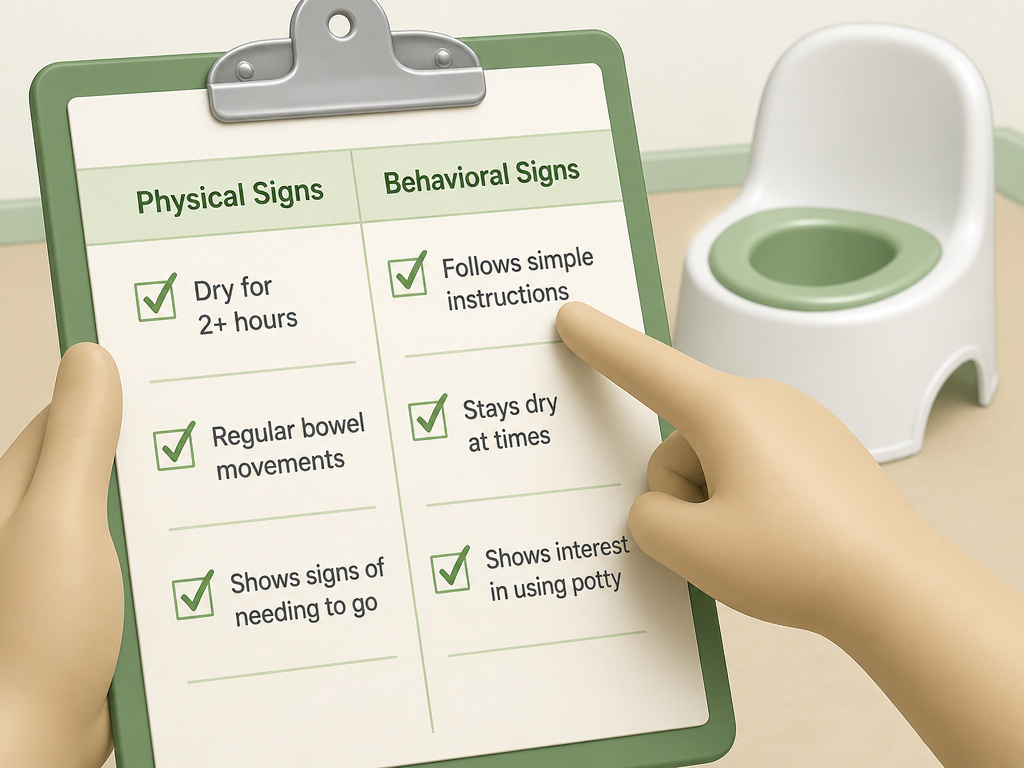 Chronological age is a terrible predictor. Readiness is a cluster of physical and behavioral signals. Attempting an intense quick potty training sprint without these signs is the number one reason for very public, very messy failure.
Physical Signs:
- Stays dry for at least 2 hours during the day.
- Has predictable bowel movements (you can roughly time when they’ll poop).
- Can pull pants up and down with minimal help.
- Shows discomfort with a soiled diaper and wants it changed.
Behavioral/Cognitive Signs:
- Can follow simple two-step instructions (“go to the potty and sit down”).
- Shows interest in the bathroom or others using it.
- Communicates the need to go, even if after the fact.
- Doesn’t violently resist sitting on the potty chair.
Skip this if: Your child is over 2.5 and shows active resistance, hiding to poop, screaming when placed on the potty, or holding urine for excessively long times. A 2010 study cited in school guidelines notes that up to 12% of children aged 6–12 still experience daytime wetting, often tracing back to negative early training experiences. Pushing a resistant child can plant the seed for long-term issues. Take a break for a month.
If your child checks most boxes, you have a green light. If they’re resisting, a gentler, fun potty training approach that builds positive associations is a better first step than a forced boot camp.
How to Use Rewards and Charts Without Bribing
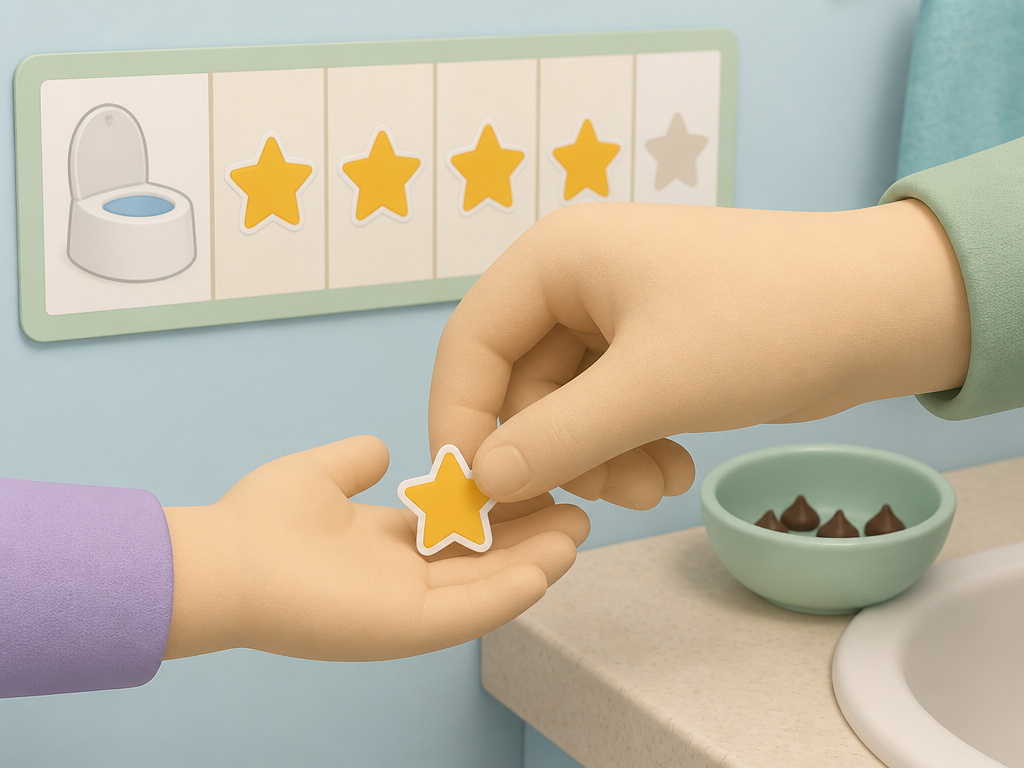 The reward is the fuel for the 3-day engine. It must be immediate, consistent, and faded out quickly after the initial push.
Instant and Small: The reward must happen within 3 seconds of the success. A single sticker placed on a hand, one chocolate chip, 30 seconds of a favorite song. The potty training rewards system should feel celebratory, not like a negotiation.
Use a Chart for Visual Momentum: A potty training chart is for you to show progress. “Look, you filled a row with stickers!” This visual proof helps during the inevitable mid-day slump on day two.
The Fade-Out Plan: By day four, shift from a tangible reward every time to intermittent rewards, “every other time,” then just for poops, then just verbal praise. If you don’t plan the fade-out, you’ll be handing out candy for months. The goal is to make using the toilet its own intrinsic reward.
Navigating Naps, Nights, and Leaving the House
The 3-day method assumes you are housebound. Here’s how to handle the unavoidable.
Naps: Put the child down on a waterproof pad or towel with a blanket over it. Use underwear, not a pull-up. Expect a wet bed. That’s part of the learning. The uncomfortable wetness upon waking reinforces the need to stay dry. If you absolutely cannot handle changing sheets twice a day, a single disposable potty training pant is a compromise, but know it may slow daytime progress.
Nighttime: Do not expect nighttime dryness. Most children achieve this between ages 5 and 7, long after daytime training is complete. Use a high-absorbency overnight pant or diaper. This is a physiological milestone, not a training failure.
Quick Trips: If you must go out on day two or three, go right after a successful void. Use the car seat protector, bring a portable potty in the trunk, and keep the trip under 30 minutes. The goal is to prove they can stay dry away from home, not to run errands.
When to Call It and Try a Different Approach
This method isn’t for every child. Watch for these red flags that signal a need to abort and reset.
- Absolute Refusal: The child screams, arches their back, and will not sit at all after multiple calm attempts.
- Holding for Dangerously Long Periods: Going 6+ hours without urinating to avoid the potty.
- Escalating Power Struggles: Every interaction becomes a battle, affecting your relationship.
- No Success After 36 Hours: If you’ve followed the schedule perfectly and have had zero successful catches in the toilet, the child is not ready.
If you hit a wall, stop gracefully. Put diapers back on without shame. Say, “We’ll try again when you’re a bit bigger.” Wait 4-6 weeks, then consider a more gradual potty training with Pull-Ups transition or a slower, potty schedule of trips every two hours without the intense pressure. For a particularly stubborn toddler, the pressure of a 3-day sprint often makes the resistance worse.
Frequently Asked Questions
Can you really potty train in 3 days?
Yes, but “train” means establishing the basic habit of using the toilet for daytime pees with high parental prompting. It does not mean full independence, reliable self-initiation, or nighttime dryness. The three days are an intensive foundation-laying boot camp.
What is the biggest mistake people make during the 3 days?
Going back to diapers or pull-ups for convenience. It completely confuses the child. If you use a diaper for a car ride, you’ve just taught them that sometimes peeing in pants is okay. Consistency is the only lever you have.
How do I handle poop during the 3-day method?
Follow the same protocol. The scheduled sits provide the opportunity. If they poop in their pants, clean it up neutrally and immediately return to the potty for the next sitting. The reward for pooping in the toilet should be extra special (a slightly bigger sticker, two M&Ms) because it’s a less frequent, often more intimidating event.
My child is trained at home but has accidents at daycare. What now?
This is normal. You need to hand off the protocol. Provide the daycare with a simple written potty training chart and the schedule (“Please offer the potty every 30 minutes after a drink”). Send a massive supply of underwear and clothes. Alignment between home and school is critical for the habit to generalize.
Is there scientific backing for these intense methods?
peer-reviewed toilet training guidelines article in the NIH database notes that structured, operant-conditioning-based methods (like the timed-sitting protocol) can be effective, but evidence on long-term outcomes is limited. The key takeaway is that a child’s readiness and a consistent, positive approach matter more than the specific technique.
The Bottom Line
A 3-day potty training sprint is a viable tool, but it’s a specific tool for a specific job. It works best on a child who is demonstrably ready, with a parent who can clear their schedule and embrace a rigid, minute-driven protocol for 72 exhausting hours. The core is the mechanical repetition of a 30-minute sit, a 2-minute watch, and a 5-minute reward, fueled by scheduled drinks.
If that sounds like a military operation, it is. For many families, a slower, less intense initial potty training steps that spreads over a few weeks is a saner, more sustainable path. But if you need quick results and your child is poised on the edge of readiness, the 3-day blueprint is on the table. Just know the exact schedule, stock the supplies, and commit. Half-measures guarantee a mess.
