
Does Diaper Rash Cream Help Eczema | What the Data Says
This post contains affiliate links. As an Amazon Associate, we learn from qualifying purchases
Diaper rash cream can help mild eczema as a supportive barrier treatment, but it is not a primary anti-inflammatory therapy. The success hinges on two ingredients: zinc oxide, which provides a physical shield, and petrolatum (petroleum jelly), which locks in moisture. Research shows zinc oxide cream can cut diaper dermatitis risk by 80% compared to talcum, and petrolatum helps 78% of eczema sufferers when applied to intact skin. For moderate to severe eczema, a cream with dedicated anti-inflammatory actives like 1% colloidal oatmeal is necessary.
The distinction is in the job. Diaper cream manages moisture and friction. Eczema involves a broken skin barrier and immune-driven inflammation. A basic barrier can soothe, but it won’t calm the underlying flare.
This guide walks through the peer-reviewed data on zinc oxide and petrolatum, explains why some common diaper cream ingredients backfire, and names the specific products and scenarios where a diaper cream is enough—or where you need to step up to a dedicated treatment.
Key Takeaways
- Zinc oxide is for barrier, not inflammation. It physically shields skin from irritants but does not treat the immune response driving eczema.
- Petrolatum works only on intact skin. Studies show it prevents rash but offers no benefit on broken, inflamed eczema patches.
- Colloidal oatmeal at 1% is the crossover ingredient. Found in products like CeraVe Baby Eczema Relief Cream, it provides both barrier protection and anti-itch relief.
- Avoid lanolin and strong fragrances. These are common in diaper creams and are frequent irritants for eczema-prone skin.
- Diaper cream is a bandage, not a cure. Use it for maintenance on clear skin or mild flares; for persistent redness and itching, switch to a doctor-recommended eczema treatment.
What the Science Says About Zinc Oxide and Petrolatum
The evidence for using diaper cream ingredients on eczema is not uniform. It splits sharply by mechanism.
Zinc oxide cream reduced the risk of irritant contact diaper dermatitis by about 80% compared to talcum powder in a controlled study of infants. The median time before a rash appeared was 39 days in the zinc oxide group versus 19 days in the talcum group.
Zinc oxide works by sitting on top of the skin. It doesn’t absorb. This creates a physical, waterproof barrier that protects against wetness, friction, and digestive enzymes in stool. For eczema, this is useful only when the primary problem is external irritation on otherwise resilient skin. It won’t repair the cracked barrier or calm the histamine response.
Petrolatum, the base of products like Aquaphor, has a more nuanced record. A systematic review in Cureus noted that petrolatum-based creams are recommended for preventing diaper dermatitis when skin is intact. Another source cites data showing it helps 78% of eczema sufferers. However, the same review pointed out a separate study that found no efficacy of petroleum jelly in reducing the severity of dermatitis symptoms.
The contradiction resolves when you check the skin’s condition. Petrolatum is an occlusive—it locks in whatever is underneath. On healthy, intact skin, it locks in moisture and prevents chafing. On broken, weeping eczema skin, it can trap irritants and bacteria, potentially worsening inflammation. This is a critical protective barrier cream distinction most product labels don’t make.
| Ingredient | Primary Mechanism | Best For Eczema? | Key Limitation |
|---|---|---|---|
| Zinc Oxide | Physical barrier, drying | Mild, irritation-led flares only | No anti-inflammatory action |
| Petrolatum | Occlusive moisture lock | Prevention on intact skin | Can worsen active, broken flares |
| Colloidal Oatmeal | Soothing, anti-itch, mild barrier | Temporary relief of minor itching | Often requires 1% concentration for labeled effect |
The PubMed comparative study on zinc oxide provides the hard numbers for prevention. The Cureus systematic review on barrier preparations frames the petrolatum paradox. These aren’t marketing claims. They are clinical endpoints.
Ingredients That Can Make Eczema Worse
Not all ingredients in diaper rash cream are benign. Some are notorious for triggering flares.
Lanolin is a common culprit. Derived from sheep’s wool, it’s a powerful emollient. It’s also a frequent allergen. Data suggests it causes reactions in up to 66% of children with eczema. If your child’s skin reddens or itches more after applying a cream containing lanolin, stop using it.
Fragrances and preservatives are the other major offenders. They serve no therapeutic purpose for skin repair. Their job is to make the product smell pleasant or last longer on the shelf. For eczema skin, they are pure irritants. Always choose fragrance-free formulations.
Common mistake: Using an antifungal diaper cream on eczema. Clotrimazole fights yeast, which can complicate diaper rash. On plain eczema, it does nothing for inflammation and can dry out the skin further, making the barrier worse.
Then there’s the “more is better” trap. Layering a thick paste of zinc oxide over active eczema can create a sealed environment where heat and moisture build up. This macerates the skin, weakening it further. For weepy flares, a lighter, breathable barrier is smarter.
When Diaper Rash Cream Is a Good Choice for Eczema
There are specific, narrow scenarios where reaching for the diaper cream tube is the right move.
First is prevention in known trigger zones. If your baby has mild, intermittent eczema in the diaper area where wetness is a constant threat, a thin layer of a simple zinc oxide or petrolatum cream at each change can act as a protective shield. It manages the environmental insult so the skin can focus on healing.
Second is managing very mild, superficial redness. If the skin is slightly pink but not itchy, cracked, or rough, a barrier cream may be all it needs. The line is visual: if the redness looks like chafing, try cream. If it looks like a rough, raised patch, it’s likely eczema needing more.
Third is cost and convenience. A tub of Aquaphor or a tube of Desitin is cheaper and more accessible than many prescription eczema creams. For maintenance on clear skin, it’s a practical choice.
The process matters as much as the product. Proper application technique is non-negotiable. Apply to completely dry skin. Use a gentle patting motion, don’t rub. And always do a patch test on a small area of the inner arm before slathering it on a large, sensitive zone.
When to Skip the Diaper Cream and Use an Eczema Cream
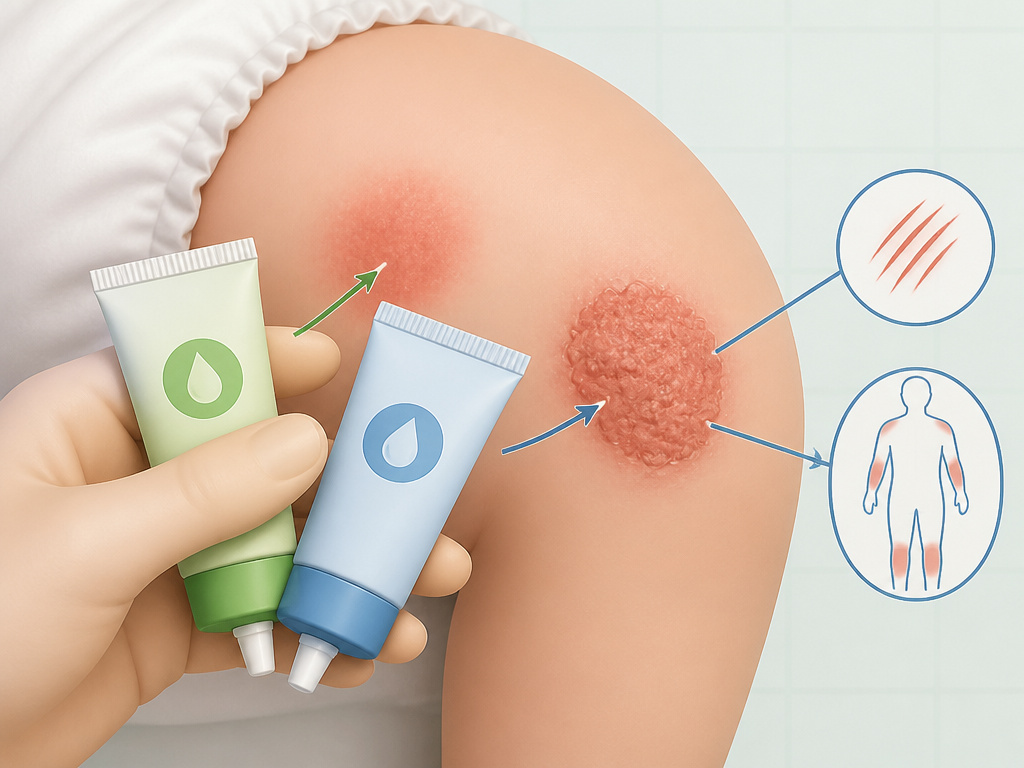
Barrier protection hits a wall when inflammation is the main driver. Here are the signs it’s time to switch.
- The itch is intense. Constant scratching is a hallmark of eczema, not simple irritation. Barrier creams do not contain anti-itch agents like pramoxine or colloidal oatmeal at effective levels.
- The skin is broken or weeping. Open skin needs an environment that promotes healing and fights infection, not a thick, occlusive paste. Petrolatum can trap bacteria.
- Redness is persistent and raised. Eczema patches are often thick, leathery (lichenified), and have defined edges. Irritation from a diaper is more diffuse and surface-level.
- It spreads beyond the diaper area. Eczema commonly appears on cheeks, elbows, and knees. If you see similar patches there, you’re dealing with a systemic condition, not a local irritant.
For these cases, you need a product formulated for eczema. Look for these specific, named actives:
- Colloidal Oatmeal (1%): This is the crossover superstar. The DailyMed entry for CeraVe eczema cream lists it as an active ingredient (10 mg per 1 g) for temporary protection and relief of minor irritation and itching. It soothes while providing a light barrier.
- Ceramides: These lipids are the building blocks of a healthy skin barrier. Eczema skin is deficient in them. Creams with ceramides (like CeraVe or Aveeno Baby Eczema Therapy) work to repair the barrier from the inside out.
- Hydrocortisone (1%): For short-term control of a bad flare, an over-the-counter hydrocortisone cream reduces inflammation directly. Use it sparingly and for no more than 7 days without consulting a doctor.
Where this goes sideways: Treating a yeast diaper rash with a standard eczema cream. Yeast needs an antifungal. Using a steroid-based eczema cream on a fungal infection can suppress the local immune response and allow the yeast to spread dramatically.
The guide to treating severe diaper rash outlines when home care fails. If the skin is bleeding, has pus-filled bumps, or the baby has a fever, it’s a medical issue, not a product choice issue. Stop experimenting and call the pediatrician.
Natural Alternatives and Home Remedies
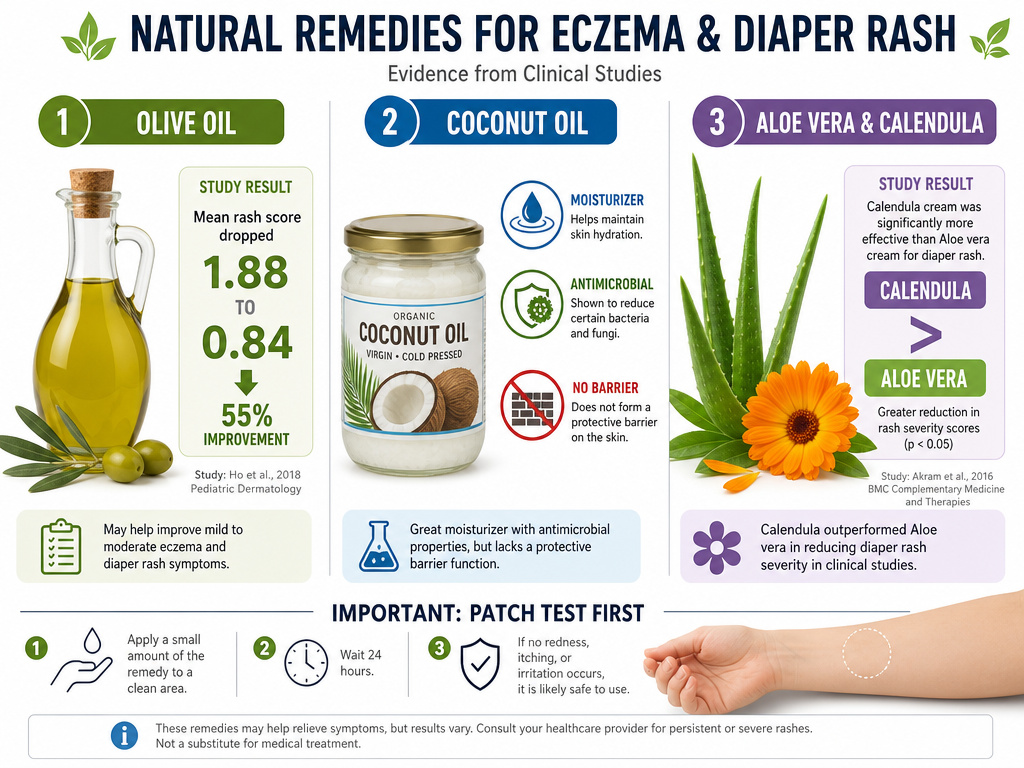
Some parents prefer to avoid commercial creams altogether. The research on natural options is thinner, but a few have data.
Olive oil has the strongest supporting study. Research in Indonesia found that applying olive oil for five days significantly reduced diaper rash severity in infants. The mean rash score dropped from 1.88 to 0.84. After the intervention, 37.5% of babies had no rash at all.
Coconut oil is a popular emollient with some antimicrobial properties. It’s generally safe and can be a good moisturizer for dry, eczema-prone skin. However, it’s not an effective barrier against prolonged wetness like zinc oxide.
Calendula and aloe vera are often cited for their soothing properties. A comparative study found calendula superior to aloe vera in reducing the severity of diaper dermatitis. These are gentle, but their effect on true atopic eczema is less documented.
The PMC article on novel diaper dermatitis agents reviews several botanical options, noting their use is often rooted in traditional medicine. The key with any home remedy is to ensure it’s pure, food-grade, and that you patch test first. Natural does not mean non-irritating.
Frequently Asked Questions
Can I use Desitin on my baby’s eczema?
You can use Desitin, a zinc oxide brand, on mild eczema in the diaper area for barrier protection. It will shield the skin from wetness and chafing. It will not reduce inflammation or itch from the eczema itself. If the skin is cracked or intensely itchy, Desitin is the wrong tool.
Is Aquaphor or Vaseline better for eczema?
For eczema prevention on intact skin, both are effective. Aquaphor contains additional soothing ingredients like lanolin and panthenol, which may provide extra benefit but also carry a slight risk of irritation from the lanolin. Pure Vaseline (petrolatum) is a simpler, less likely-to-irritate occlusive. For active, inflamed eczema, neither is a treatment—they are just moisturizing sealants.
How long does it take for diaper rash cream to work on eczema?
If a diaper rash cream is going to help mild eczema, you should see a reduction in superficial redness within 24-48 hours. This indicates it’s successfully shielding the skin from an irritant. If the redness, roughness, or itching persists or worsens after three days, the cream is not addressing the underlying eczema inflammation. Stop and reassess.
What’s the difference between hydrocortisone cream and diaper rash cream?
Hydrocortisone cream is a topical steroid that suppresses the immune system’s inflammatory response in the skin. It directly treats the cause of eczema redness and itch. Diaper rash cream is a barrier agent that protects the skin surface from external irritants like moisture. They work on different levels of the problem. Never use hydrocortisone for simple diaper rash prevention.
Can diaper rash cream make eczema worse?
Yes. If the cream contains an ingredient your child is sensitive to (like fragrance, lanolin, or a certain preservative), it can trigger a contact dermatitis flare, making the eczema worse. Additionally, thick, occlusive pastes on hot, weepy eczema can trap heat and bacteria, leading to infection. Always choose fragrance-free and patch test.
Before You Go
Diaper rash cream can be a helpful ally for mild eczema, but it’s a specialist, not a generalist. Its job is defense, not repair. Zinc oxide and petrolatum build a wall against wetness and friction. They do not fix a broken skin barrier or calm an overactive immune response.
The practical takeaway is this: use a simple zinc oxide or petrolatum cream for prevention and mild, irritation-based redness. Name-brand staples like Aquaphor or Desitin are fine for this. The moment you see persistent itch, rough patches, or spreading redness, graduate to a dedicated eczema treatment with actives like 1% colloidal oatmeal or ceramides.
The goal is to match the tool to the problem. A barrier for irritation. Medicine for inflammation. Knowing the difference saves your child’s skin weeks of discomfort and your cabinet a collection of half-used tubes that didn’t work.
