
Antifungal Diaper Rash Cream Guide: Ingredients That Matter
This post contains affiliate links. As an Amazon Associate, we learn from qualifying purchases
Most diaper rash cream is not antifungal. It becomes antifungal only when its active ingredient is a specific antifungal agent like clotrimazole, miconazole, or ciclopirox. The majority of creams use zinc oxide or petroleum as a barrier, which protects skin but does not kill the yeast that causes fungal diaper rash.
That distinction is the whole game. Getting it wrong means you’re using a bandage on an infection, and the rash will get brighter, rawer, and spread into the skin folds within three to five days.
What follows is the breakdown: the two ingredient categories, the exact antifungal agents backed by regulatory monographs, the treatment timelines where resistance shows up, and the one field observation that reframes when to reach for the antifungal tube first.
Key Takeaways
- Barrier creams (zinc oxide, petroleum) protect and soothe but are not antifungal. They create a physical shield against moisture and irritants.
- True antifungal creams must list an antifungal drug as the active ingredient, such as clotrimazole 1%, miconazole 2%, or ciclopirox olamine 0.77%.
- Suspect a yeast infection if a bright red, raw rash with satellite spots doesn’t improve with barrier cream in 3 days. This is the clinical cue to switch.
- Follow the labeled duration. Antifungals like clotrimazole require at least two weeks of treatment for candidal infections, per the official Rwanda FDA clotrimazole monograph.
- Never use combination steroid-antifungal creams on infants under 2 without explicit pediatrician instruction. The steroid component can cause systemic absorption and skin damage.
The One-Word Answer (And Why It’s Wrong)
The quick, search-engine-friendly answer is “sometimes.” It’s also misleading. A parent scanning the diaper cream aisle needs a faster filter.
A cream is antifungal if its active ingredient is an antifungal drug. If the active ingredient is zinc oxide, dimethicone, or white petrolatum, it is a skin protectant. It will not treat a yeast infection.
This is the first decision point. The purpose of rash cream is either to protect or to treat. Mixing them up wastes a week.
Why does this confusion happen? Many products marketed for “diaper rash” are barrier creams. Their job is to prevent the common diaper rash caused by wetness and chafing. When a simple irritation gets secondarily infected with yeast (Candida albicans), that barrier is no longer enough. You need a weapon, not just a shield.
The causes of diaper rash are multiple, but the treatment forks right here. One path leads to a tube of Desitin or Aquaphor. The other leads to Lotrimin or a prescription. Your clue is on the “Drug Facts” panel, not the marketing slogan.
Reading the Ingredient Label: The Active Ingredient Decides
Forget the brand name. Turn the tube over and find the “Active Ingredient” section. What you see there places the cream into one of two functional categories.
| Active Ingredient | Primary Function | Common Brand Examples | Is It Antifungal? |
|---|---|---|---|
| Zinc Oxide (10%-40%) | Skin Protectant / Barrier | Desitin, Boudreaux’s Butt Paste | No |
| White Petrolatum | Skin Protectant / Barrier | Vaseline, Aquaphor Baby Healing Ointment | No |
| Clotrimazole (1%) | Antifungal | Lotrimin AF, Candid Cream | Yes |
| Miconazole Nitrate (2%) | Antifungal | Micatin, Monistat | Yes |
| Ciclopirox Olamine (0.77%) | Antifungal | Prescription Loprox | Yes |
If your tube lists zinc oxide, you have a barrier cream. Its rash cream mechanism is physical: it sits on top of the skin like a sealant. This is perfect for preventing irritation and healing mild, pink redness from moisture. It does not penetrate to kill fungal cells.
If your tube lists clotrimazole, you have an antifungal diaper rash cream. Its job is chemical: to disrupt the cell wall of the Candida yeast. This is necessary when you see the telltale signs of infection.
Common mistake: Using a zinc oxide cream on a bright red, spotty yeast rash. The cream seals in the infection. The rash spreads toward the edges of the diaper area and into the folds within 48 hours.
The other critical line is the “Purpose” statement next to the active ingredient. “Skin Protectant” means barrier. “Antifungal” means treatment. This labeling is regulated, so it’s your most reliable guide.
When You Actually Need an Antifungal Cream
You don’t start with an antifungal. You escalate to one. Most diaper rash begins as irritation. The switch point is defined by specific visual cues and a clear timeline.
The 3-Day Rule: If a rash doesn’t start to improve with frequent diaper changes and a good barrier cream within three days, suspect yeast. This timeline is consistent across pediatric guidelines.
The yeast rash has a distinct look: * Bright red or dark red, almost beefy. * Clearly defined borders, often with a raised edge. * Satellite lesions. These are the giveaway: smaller red spots or pustules that appear around the main rash, like stars around a planet. * Involves the skin folds. Irritant rash often spares the deep folds; yeast loves the warm, moist creases of the groin and thighs.
When you see this pattern, a barrier cream alone is insufficient. This is when you reach for a dedicated treatment for yeast diaper rash.
The Specific Antifungal Ingredients That Work
Not all antifungals are the same. For diaper candidiasis, the first-line agents are the azoles.
- Clotrimazole 1%: Available over-the-counter. The official monograph for Candid Cream states application “2-3 times daily” for at least two weeks for candidal infections. A half-centimeter strip treats an area the size of an adult hand.
- Miconazole Nitrate 2%: Also over-the-counter. Often applied twice daily for 7 to 10 days. There’s some evidence it may interact with certain medications, which is less of a concern with topical use in infants but worth noting.
- Nystatin: A traditional prescription option. However, the peer-reviewed diaper rash article notes that if nystatin shows no improvement in 1 to 3 days, switching to an azole is recommended due to potential Candida resistance.
Where this goes sideways: Stopping the antifungal cream after three days because the rash looks better. Yeast is tenacious. Stopping early invites a rebound infection that’s harder to clear. Complete the full course on the label, even if the skin appears healed.
For severe or complicated cases, a doctor may prescribe something like ciclopirox olamine 0.77% cream. The FDA antifungal cream prescribing info for this agent advises a clinical re-evaluation if no improvement is seen after four weeks of twice-daily use.
What About Creams with Steroids or Combinations?
This is the high-risk zone. Some products combine an antifungal (like clotrimazole) with a steroid (like betamethasone). These are powerful drugs for specific adult skin conditions.
Never use combination steroid-antifungal creams on infants for diaper rash unless your pediatrician explicitly directs you to. The steroid can be absorbed through the thin, inflamed skin in the diaper area, potentially suppressing the adrenal system or causing skin thinning.
Even mild topical steroids like hydrocortisone 0.5% or 1% cream require caution. They can be useful for a short period (3-5 days) to reduce severe inflammation from a stubborn irritant rash, but they are not antifungal. Using hydrocortisone cream on a yeast rash will temporarily calm the redness while allowing the fungus to grow unchecked, making the infection worse.
The rule is simple: treat the cause first. If it’s yeast, use a pure antifungal. If it’s pure inflammation, a short course of hydrocortisone may be considered. Let your pediatrician make that call.
Step-by-Step: Choosing and Using the Right Cream
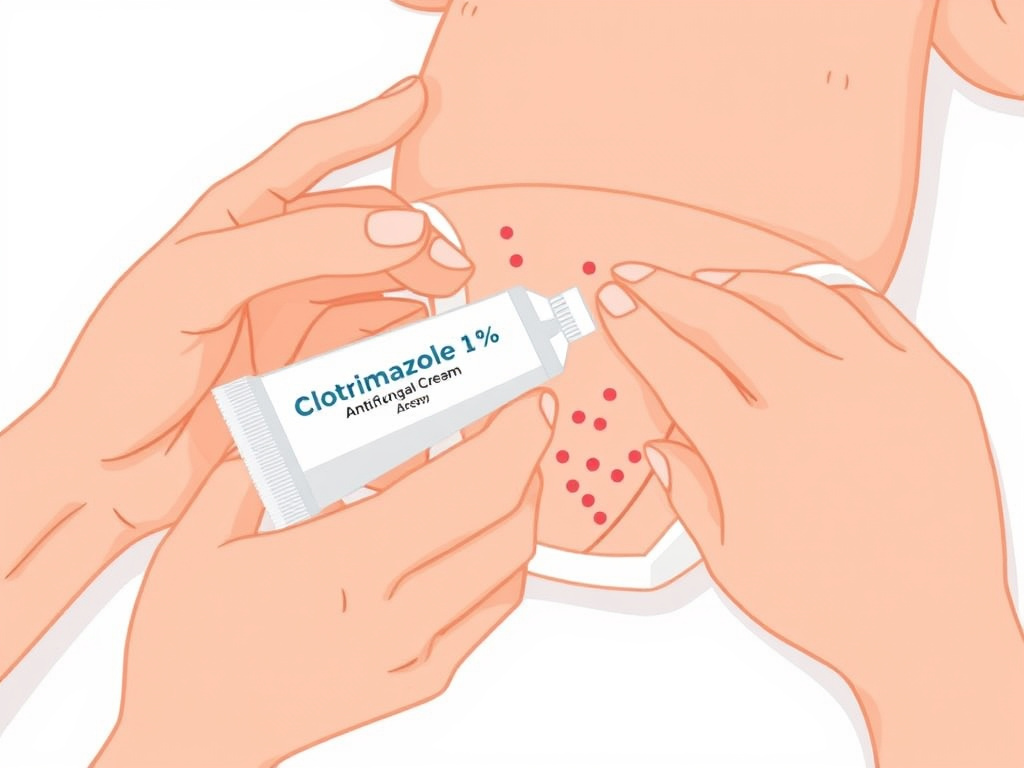
This is the field manual. Follow it in order.
- Assess the Rash. Is it mild pinkness on the buttocks? Or bright red with spots in the folds? Your eyes make the first diagnosis.
- Start with a Barrier. For any new rash, clean and dry the area thoroughly. Apply a thick layer of a zinc oxide or petrolatum-based best diaper rash cream like Desitin Maximum Strength or Aquaphor. Fasten the diaper loosely.
- Watch the Clock. Give the barrier cream 2-3 days of diligent use (applied with every change).
- The Decision Point (Day 3). If the rash is worse or unchanged—especially if it’s brighter and has satellites—switch to an antifungal.
- Apply the Antifungal Correctly.
- Wash your hands.
- Gently clean and pat the area completely dry. Yeast thrives in moisture.
- Apply a thin layer of the antifungal cream (e.g., clotrimazole 1%) to cover the entire rash and a bit of the surrounding skin.
- Do not layer a barrier cream on top. You want the antifungal in contact with the skin.
- Continue for the full duration listed on the box, typically at least 7 days and often two weeks.
- Call the Pediatrician If: The rash spreads rapidly, develops blisters, weeps pus, or if your baby develops a fever. Also call if there’s no improvement after 4-5 days of correct antifungal use.
Frequently Asked Questions
Can I use regular diaper cream and antifungal cream together?
Apply the antifungal cream first to clean, dry skin. Let it absorb for a few minutes. If you feel you must add a barrier, apply a very thin layer of zinc oxide or petroleum only on areas that are not actively infected, to prevent chafing. Never smother the antifungal.
How long does it take for antifungal cream to work on diaper rash?
You should see noticeable improvement within 2-3 days. The redness should start to fade and the satellite spots should begin to disappear. Complete clearance usually takes 7-14 days of consistent treatment.
What is the strongest antifungal cream for diaper rash?
For over-the-counter options, clotrimazole 1% and miconazole nitrate 2% are equally effective first-line treatments. “Strongest” isn’t as important as “correct and consistent.” Prescription options like ciclopirox olamine or ketoconazole are reserved for cases that don’t respond to OTC treatment.
Will antifungal cream hurt my baby?
When used as directed on intact skin, these creams are very safe. The most common risk is a localized reaction or irritation. If you see increased redness, swelling, or discomfort after application, stop using it and consult your pediatrician. Always keep diaper rash medications out of the mouth and eyes.
Is Desitin antifungal?
No. Desitin’s active ingredient is zinc oxide, a skin protectant. It is an excellent barrier cream for preventing and soothing irritant diaper rash, but it does not contain any medication to kill yeast.
Before You Go
The question “is diaper rash cream antifungal?” forces a binary that doesn’t exist on the shelf. The real question is: “What is the active ingredient in my cream?”
- Zinc Oxide/Petroleum = Barrier. Use it for prevention and mild, pink irritation.
- Clotrimazole/Miconazole = Antifungal. Use it for the bright red, spotty rash that lingers past three days.
Your best tool is observation, followed by a precise match between what you see and what you apply. When in doubt, the clinical care recommendations are clear: if a rash persists or worsens despite home care, it’s time to call your pediatrician. They can confirm if it’s yeast and ensure your cream for yeast rash is the right one for the job.
