
Learn How Often to Take a Toddler to the Potty for Success
This post contains affiliate links. As an Amazon Associate, we learn from qualifying purchases
Take a toddler to the potty every 30 to 60 minutes on the first day of training. If that goes well, extend the interval. The sustainable rule is to schedule sits more often than they usually wet, if they wet every 3 hours, take them every 2.5 hours. Never keep them seated for more than 5 minutes.
That 2.5-hour figure isn’t a guess. It comes from a pediatric clinic’s protocol for children who need structured training. The interval matters more than the clock time because it targets their body’s natural rhythm before an accident happens.
What follows is the breakdown of that schedule, the physiological reasons it works, and what to do when the standard plan hits a wall, including the signs that mean you should call your pediatrician instead of pushing forward.
Key Takeaways
- Start with sits every 30-60 minutes on day one, then lengthen the interval based on success.
- The golden rule: schedule potty sits more frequently than your child’s current wetting interval. If they wet every 3 hours, aim for every 2.5 hours.
- Cap sitting time at 5 minutes. Longer sits teach waiting, not voiding, and can trigger power struggles.
- Leverage the gastrocolic reflex by scheduling a 5-10 minute sit after every meal.
- Eighty percent of families experience setbacks. If progress stalls, stop for 1-3 months and retry.
The Core Schedule: From Every Hour to Every 2.5 Hours
Forget watching the clock aimlessly. An effective potty schedule is a deliberate, adjustable system built on two numbers: how often your child currently wets, and how long they can sit productively.
The UC Davis Health potty training guide recommends a common opening strategy: take your child to the potty every 30 or 60 minutes for the first couple of days. This high-frequency approach isn’t about catching every accident. It’s about building a muscle-memory routine and creating early wins. If they succeed, you extend the periods between tries.
The real pivot happens after those first days. You shift from a generic timer to a schedule tailored to your child’s bladder.
For children in early stages, toileting should occur every hour. For those avoiding accidents, no more than every two hours. (OSPI)
If you know your child’s current wetting pattern, you can predict and prevent. A clinic handout for potty training a 3-year-old states it directly: if a child wets every 3 hours, set a time to sit on the toilet every 2.5 hours. That 30-minute buffer is the whole game. It places the opportunity before the accident, training the body to release in the right place.
| Child’s Wetting Interval | Recommended Potty Schedule | Goal |
|---|---|---|
| Every 1-2 hours | Every 60 minutes | Build routine, ensure success |
| Every 3 hours | Every 2.5 hours | Pre-empt the accident |
| Variable / Unknown | After sleep, meals, & transitions | Use natural triggers |
Where this goes sideways: Waiting for your child to tell you they need to go. In early training, the signal often arrives too late. The schedule acts as their external bladder reminder until the internal connection forms.
Why the 5-Minute Sitting Cap is Non-Negotiable
The Merck Manuals professional edition is blunt: children should sit for 5 to 10 minutes after meals to use the gastrocolic reflex. For all other scheduled sits, the cap is 5 minutes. Johns Hopkins Medicine agrees: children should not sit for more than 5 minutes.
Exceeding this limit has three concrete consequences: 1. It teaches patience, not peeing. The productive urge to void often passes within the first minute or two. 2. It turns the potty into a punishment. A bored, restrained toddler will resist. 3. It can contribute to stool withholding if they feel pressured, a primary cause of functional constipation.
If nothing happens within 5 minutes, get up and move on. The schedule will bring you back.
Building Your Daily Potty Timetable
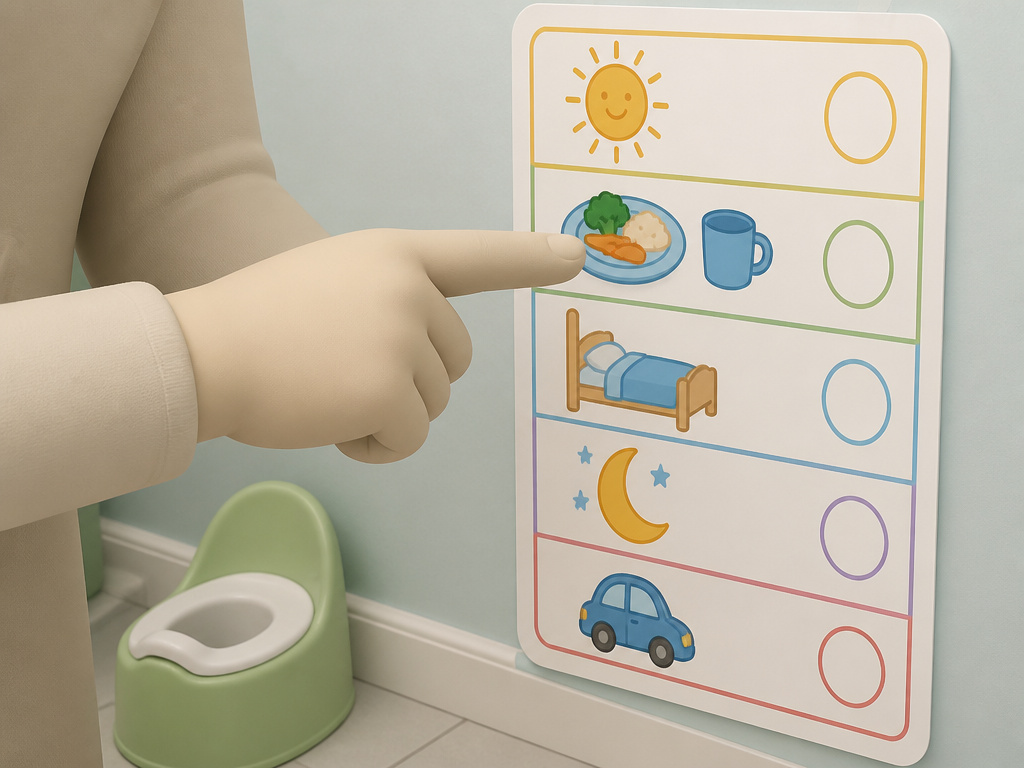 A random alarm is hard to follow. A timetable tied to existing daily rhythms is sustainable. These are the anchor points every expert source agrees on.
First thing in the morning. The bladder is full after a long sleep. This is often the easiest success of the day.
After every meal and snack. This isn’t just about fluid intake. The gastrocolic reflex is a natural wave of colon contraction triggered by eating. Scheduling a 5-10 minute sit post-meal capitalizes on this biological cue, making bowel movements more likely. It’s a cornerstone strategy in managing getting toddler to poop on the potty.
Before and after naps. A pre-nap sit empties the bladder for sleep. A post-nap check catches the inevitable refill.
Before bedtime. Make this part of the wind-down routine, like brushing teeth.
Before leaving the house. Always offer the potty before transitioning to the car or stroller.
A potty training chart placed in the bathroom can visualize this schedule for both you and your child. Checking off “morning potty” or “after lunch” turns duty into a game.
The “Why” Behind the Schedule: Physiology and Behavior
 The schedule works because it addresses two lagging systems in a toddler: physiological awareness and behavioral routine.
Bladder and bowel sensation is a learned skill. A young toddler may not recognize the feeling of fullness until it’s an emergency. Scheduled sits teach them to pay attention to those internal signals at predictable, low-pressure times. The PMC toilet training review article notes that training later (after 32 months) is associated with a higher incidence of urge incontinence, essentially, missing the signal. The schedule builds that awareness early.
On the behavioral side, consistency creates habit. The repetition of “after breakfast, we sit” wires the brain to link those events. This is especially crucial for potty training stubborn toddlers, where power struggles can derail everything. The schedule becomes a neutral fact of the day, not a negotiation.
Easy to miss: The schedule is for you, not just your child. It prevents you from forgetting offers during a busy day, which is a top cause of preventable accidents.
Troubleshooting and Setbacks: When the Schedule Fails
Eighty percent of families experience setbacks. The schedule is your baseline, but you must know how to adjust it when things stop working.
If accidents spike: Shorten the interval. If you were at 2.5 hours, go back to 2 hours or 90 minutes for a reset. Increase fluids slightly to create more opportunities for practice.
If your child starts refusing to sit: Check the sitting time. Are you pushing past 5 minutes? Scale back. Use creative strategies to transform potty training like books or songs reserved only for potty time. For a resistant child, even sitting for 10 seconds with a diaper on is a win to be rewarded.
If there’s no progress after 1-2 weeks: Stop. The Canadian Paediatric Society advises taking a break from training for 1 to 3 months if your child refuses. This isn’t failure. It means their readiness, physiological, cognitive, or emotional, isn’t complete. Revisit developmental signs for starting potty training and try again later.
Red Flags: When to Pause and Call the Pediatrician
Sometimes resistance is a medical signal. Constipation is a frequent saboteur. Hard stools hurt to pass, so a child learns to withhold, breaking the entire schedule.
Stop the schedule and consult your doctor if your child: – Shows signs of pain, cries, or has blood in the stool. – Withholds stool for days. – Develops a red rash or foul-smelling urine. – Was trained for 6+ months and suddenly regresses significantly.
These could indicate functional constipation or encopresis, where stretched rectal nerves lose sensitivity. The treatment isn’t more schedule; it’s medical management to clear impaction and retrain the bowel.
For children with an Individualized Education Program (IEP), the team must create a formal toileting plan. The schedule is part of that legal document, ensuring support across all environments.
Tools and Tricks to Make the Schedule Stick
A timer is your best friend. Use a visual kitchen timer your child can see, or a gentle alarm on your phone. The auditory cue removes you as the “nag” and makes the schedule an independent system.
Pair the schedule with effective reward strategies. Reward the sitting on schedule, not just the result. A sticker for every successful sit on time builds the habit. The result (pee or poop) can earn a small bonus.
Keep a simple log for 3 days. Note the times of wet diapers and BMs. This data reveals your child’s natural interval, letting you set a scientifically personalized schedule instead of guessing.
Frequently Asked Questions
Should I wake my toddler from naps to potty?
No. Sleep is sacred for growth and mood. The goal is to offer the potty immediately before and after the nap. Waking them interrupts sleep cycles and creates a negative association. Overnight dryness comes later, often between ages 3 and 6.
What if my toddler only goes at daycare?
This is common and actually a good sign. Peer modeling is powerful. Coordinate with your daycare providers to align on the schedule and foundational potty training strategies. Consistency between environments is key.
How long does this scheduled phase last?
The intense, clock-watching phase typically lasts 1-2 weeks. As accidents decrease and your child starts self-initiating, you can gradually drop the rigid timer and move to reminder-based offers (before outings, after meals). The full process from starting potty training to reliable independence averages six months.
Can I use pull-ups on the schedule?
You can, but know the trade-off. Pull-ups feel like diapers and can dampen the sensation of being wet, which is a natural cue. For schedule-focused training days, many experts recommend cotton underwear so the consequence of an accident is immediate and clear. Use pull-ups for naps, nighttime, and outings where accidents would be catastrophic.
My child holds it until the diaper goes back on.
This is stool toileting refusal, often linked to anxiety or constipation. Stick to the schedule, but never force. Let them have the diaper on in the bathroom for the BM if needed, to avoid withholding. Ensure they have foot support (a stool) so they feel secure. This is a scenario where strategies for pooping on the potty that reduce fear are more important than strict timing.
Before You Go
The right potty schedule is a scaffold, not a cage. It provides the predictable structure a toddler needs to learn an unpredictable bodily function. Start with frequent offers, then pivot to an interval just shorter than their wetting pattern. Use the day’s natural anchors, meals, sleep, transitions, as your guide rails.
Cap sitting time at five minutes to keep the potty from becoming a throne of resistance. When the schedule fails, shorten the interval or take a full break. Look for the red flags of constipation. Your consistency is the engine, but their physiology is the map. Watch the data, the wet diapers, the successful sits, and let it tell you when to push forward and when to pause.
