
Learn How to Get Toddler to Poop on Potty With Our Expert-Backed Methods
This post contains affiliate links. As an Amazon Associate, we learn from qualifying purchases
To get a toddler to poop on the potty, you match their body’s natural reflex with a predictable routine. Sit them on the potty 15-30 minutes after a meal for just 3-5 minutes, keep their feet supported, and never force it. The goal is self-initiation, where they recognize the urge and communicate it, but 80% of families hit setbacks, so consistency matters more than speed.
This isn’t about willpower. A toddler’s body has a gastrocolic reflex that triggers the urge to poop shortly after eating. Your job is to place them on the potty when that reflex fires, making the connection between the physical feeling and the location. Force the timing or the duration, and you teach resistance.
What follows is a breakdown of the mechanical why, why feet need support, why 3 minutes is the floor, why constipation blocks everything, and the step-by-step how. You’ll also get the red flags that mean stop and try again in a few months.
Key Takeaways
- Sit for 3-5 minutes only, based on pediatric bladder-emptying guidance. Longer sessions teach holding and create power struggles.
- Time sits for 15-30 minutes after a meal to harness the body’s natural gastrocolic reflex, when the urge to poop is strongest.
- Always use a footrest or step-stool. Unsupported feet tighten pelvic muscles and make passing a stool physically harder.
- Address constipation before serious potty training begins. Hard stools hurt, and a toddler will actively withhold to avoid pain.
- Track successes and misses for two weeks. Data shows if you’re catching the reflex or just guessing.
Why Poop is a Different Challenge Than Pee
Parents often master the pee on the potty routine first. Poop is a separate skill with its own set of physical and psychological hurdles. The muscle control needed for a bowel movement is more complex, and the sensation can be frightening or uncomfortable for a toddler.
A child’s body and mind need to be ready to learn to use the toilet. Babies cannot control the muscles that keep their bladder and rectum closed until about 18 months.
This readiness is non-negotiable. Before that age, they lack the neuromuscular control to voluntarily release a stool. Pushing before this point sets everyone up for frustration. The Seattle Children’s potty training guide frames readiness around specific signs, not just a calendar age.
The core difference is communication. For pee, you can schedule trips successfully. For poop, the ultimate goal is self-initiation, the child feeling the internal cue and telling you. Until they can do that, you’re relying on schedule-training, placing them on the potty at predictable times in hopes of catching the reflex.
Understanding the Poop-Specific Hold-Up
Common hurdles aren’t about defiance. They’re usually one of three things:
| Hold-Up | Physical Why | What It Looks Like |
|---|---|---|
| Constipation | Hard stools are painful to pass. The rectum stretches, dulling the “need to go” signal. | Toddler crouches, hides, grunts, but nothing comes out. Stools are small, hard pellets or infrequent. |
| Fear of the Process | The sensation of pooping feels like losing a part of themselves. The sound of the flush is overwhelming. | Crying, clamping legs shut, begging for a diaper, fleeing the bathroom. |
| Lack of Body Awareness | The child doesn’t yet connect the pre-poop sensations (stomach cramp, pressure) with the action needed. | Accidents happen without warning. The child seems surprised by the poop in their diaper. |
If your child is a stubborn toddler about the potty, look for these physical causes first. Behavior is often a symptom of a bodily discomfort they can’t articulate.
The 3-5 Minute Sitting Rule (And Why It Works)
This is the single most ignored piece of pediatric advice. The UC Davis Health potty training do’s and don’ts is clear: if nothing happens after a minute or two, move on. Seattle Children’s notes it can take 3 to 5 minutes to empty the bladder. The same clock applies to bowels.
Common mistake: Letting a toddler sit for 15+ minutes with a book or tablet. This teaches them to ignore their body’s signals. It turns the potty into a timeout chair.
Here’s the mechanism. The pelvic floor muscles must relax for a bowel movement. Sitting too long, especially while distracted, causes those muscles to fatigue and tense up. The window of opportunity from the gastrocolic reflex passes. You’re now training their body to clamp down, not release.
Your rule: Set a visual timer for 5 minutes. When it dings, if nothing has happened, cheerfully say “All done for now!” and help them off. This protects the potty as a positive, functional space. It’s how you build a sustainable potty schedule that doesn’t burn you both out.
Your Step-by-Step Plan for Poop on the Potty
This plan assumes your child shows basic readiness: they have some dry periods, can follow simple instructions, and are aware of when they’ve pooped in their diaper. If they’re younger than 2.5 with zero interest, revisit the right age to start.
Step 1: Gear Up for Physical Success
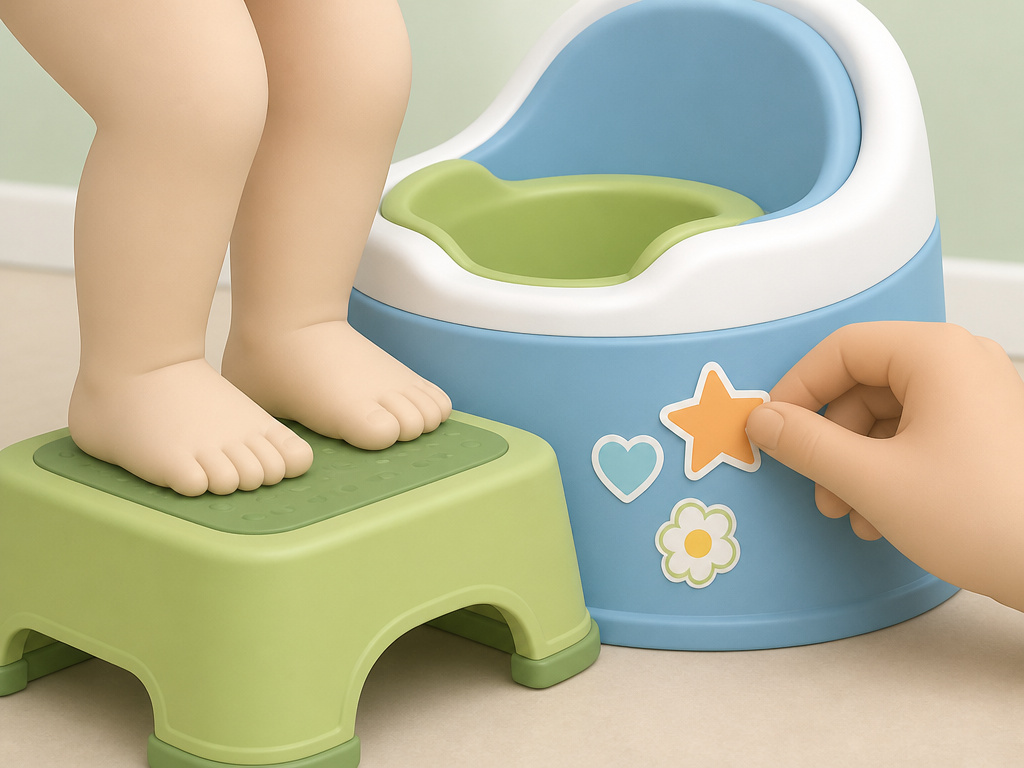
The right equipment removes physical barriers. – Potty Chair vs. Toilet Insert: A standalone potty chair (like the Baby Björn Smart Potty) offers stability and independence. A toilet insert (like the Summer Infant My Size) requires a step-stool. The stool is non-optional, feet must be flat to allow the pelvic muscles to relax properly. – Let Them Customize: Buy stickers. Let them pick the potty chair color. This builds ownership before the pressure is on.
Step 2: Ditch the Diaper for Training Pants
During your focused training blocks, switch to training pants or using Pull-Ups. The slight wetness discomfort helps teach the cause-and-effect connection diapers absorb away. For poop, the feeling is more distinct and motivating to get into the potty.
Step 3: Build the Natural Poop Reflex
This is the scheduling core. The body’s reflex is most reliable 15-30 minutes after a meal. 1. About 20 minutes after breakfast or lunch, say “It’s potty time to see if our body is ready to poop.” 2. Have them sit, feet supported, for no more than 5 minutes. 3. Use a quiet, distracting activity like a special potty book or singing a song. Don’t make intense eye contact or ask “Is it coming?”. 4. If they go, celebrate calmly. If not, say “We’ll try again later,” and clean up.
This routine is the antithesis of waiting for them to tell you. You are creating predictable opportunities for success, which is the foundation of all initial steps.
Where this goes sideways: Forcing a sit during a tantrum. If they are crying and fighting, abort the mission. One forced sit can create a week of resistance. The negative association sticks.
Step 4: Communicate and Celebrate
Use simple, consistent words your family agrees on (“poop,” “potty,” “all done”). When they succeed, tie the reward directly to the action. A small, immediate treat or a sticker on a potty chart works. The reward isn’t a bribe; it’s a clear, positive consequence that helps their brain cement the new habit.
The goal is to make it fun, not a high-stakes test. A reward system that focuses on effort (sitting nicely) as much as outcome (actual poop) keeps motivation high during the inevitable dry runs.
The Constipation Problem: Solve This First
If your child is constipated, potty training for poop will fail. Hard stools hurt. A toddler’s logical response is to hold everything in to avoid the pain, which makes the constipation worse, a cycle called stool withholding.
Signs of constipation:
- Poops less than every other day
- Stools are hard, pebble-like, or large and painful to pass
- Streaks of liquid stool in the underwear (overflow leakage around a blockage)
- Belly pain, crankiness, and decreased appetite
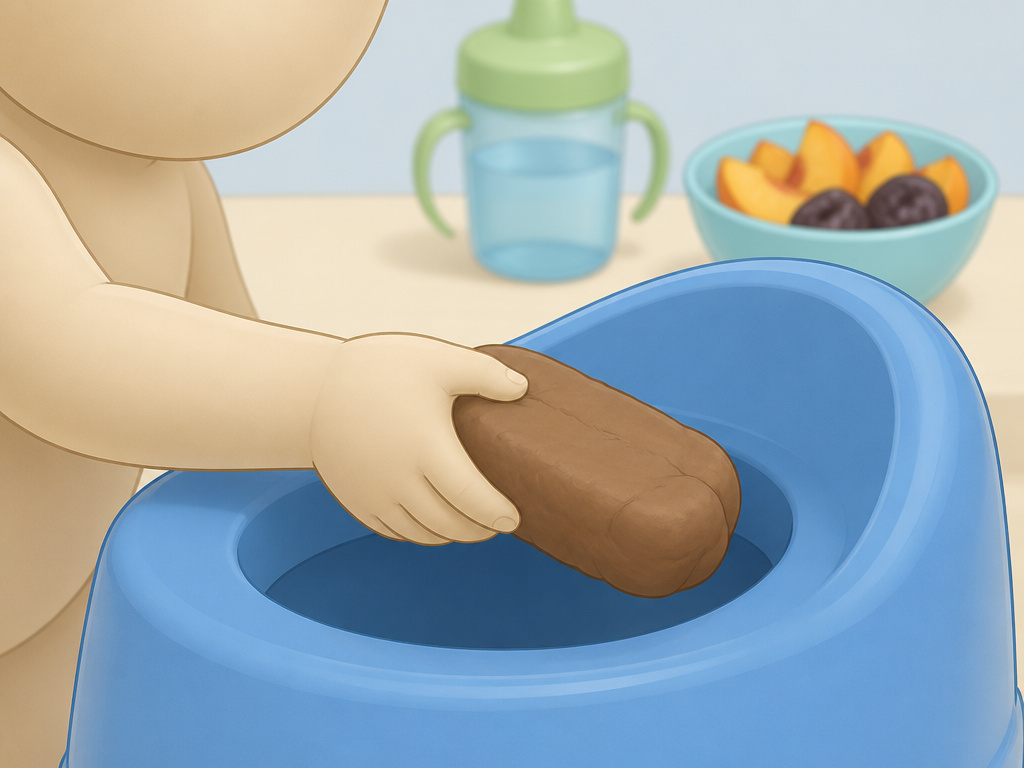
Before you start: If you see these signs, talk to your pediatrician. They may recommend a gentle laxative or dietary changes (more water, “P” fruits like prunes, pears, peaches) to soften stools for several weeks before you seriously attempt potty training. Training on soft, painless stools is a different game.
What to Do When They Withhold or Regress
Withholding is an active, often panicked, clenching to prevent a poop from coming out. You might see them cross their legs, stiffen, hide behind furniture, or cry when they feel the urge.
- Stop the pressure. Immediately back off from potty talks and demands.
- Return to diapers or pull-ups temporarily. Say, “It’s okay to go in your diaper right now.” Remove the performance anxiety.
- Focus on softening stools with diet and, if advised by a doctor, medication.
- Wait 2-3 months, then reintroduce the potty as a neutral, option.
Regression, going back to pooping in diapers after success, is infuriating but normal. The UC Davis Health potty training guide states 80% of families experience setbacks. A new sibling, a house move, an illness, or even a change in daycare can trigger it. Respond to regression the same way: reduce pressure, reinforce the routine gently, and trust the skill is still in there.
Understanding these common challenges is what keeps you from personalizing the struggle. It’s not about you.
When to Pause and Seek Help
The Mayo Clinic potty training guide flags specific signs that standard approaches may not be working. Take a break and consult your pediatrician if: – Your child is over 3 years old and shows no interest in daytime training. – They absolutely refuse to sit on the potty chair. – You see signs of painful constipation or stool withholding. – They are holding back stool to the point of physical discomfort.
There is no trophy for finishing early. A pause of 2-3 months can reset the entire dynamic. Use that time to read potty books, talk about bodies, and let them observe you using the toilet without any expectation.
Frequently Asked Questions
How long should I let my toddler sit on the potty to poop?
Follow the 3-5 minute rule. If nothing happens within that time, help them off. Longer sits are counterproductive and teach muscle tension. The pediatric guidance is based on how long it physically takes to empty the bladder and bowels.
What if my toddler is scared to poop on the potty?
Fear usually stems from the unknown sensation, fear of falling in, or a bad past experience (constipation pain). Go back to basics: let them sit fully clothed, use a secure insert with a step-stool, and never flush while they’re sitting. Read stories about pooping and use playful language to demystify it.
Why does my toddler pee on the potty but not poop?
This is extremely common. Pooping requires a greater sense of bodily security and release of control. The child may feel vulnerable or fear the specific sensation. It also often ties to a history of harder stools. Celebrate the pee success, maintain a low-pressure routine for poop after meals, and ensure their diet keeps stools soft.
Should I use rewards for pooping on the potty?
Yes, but strategically. An immediate, small reward (a single M&M, a special sticker) helps create a positive neural pathway. Pair it with specific praise (“You listened to your body and put the poop in the potty!”). Over time, phase out the tangible reward and shift to social praise and the intrinsic pride of wearing big-kid underwear.
Before You Go
Getting a toddler to poop on the potty is a mechanical process wrapped in a patience game. The levers you control are timing (after meals), duration (3-5 minutes), and physical setup (foot support). The lever they control is communication, and that comes only after repeated, pressure-free successes.
Watch for constipation, it’s the arch-nemesis of potty training. If you hit resistance, a full stop is a more powerful tool than pushing forward. The average timeline is six months, with girls often finishing a couple of months before boys. Your job isn’t to hurry the clock. It’s to set the stage so their body can learn the cue.
