
How to Potty Train a Boy Successfully: A 3-6 Month Reality
This post contains affiliate links. As an Amazon Associate, we learn from qualifying purchases
To potty train a boy, match his developmental readiness, not a calendar. Most boys show signs between 22 and 30 months. The process averages 3 to 6 months for reliable daytime dryness, with some finishing in weeks and others taking close to a year. Start with sitting for both functions, use clear modeling, and treat accidents as neutral events.
The timeline is a matter of physiology. A boy’s bladder control and the neural wiring for ‘I need to go’ develop on their own schedule, and pushing before the signs appear almost always extends the total training duration.The studies are clear on this.
What follows is the method that works when the three-day boot camp fails: a readiness checklist drawn from pediatric guidelines, the evidence on sitting versus standing, the specific script for accidents that prevents stool withholding, and the real-world adjustments for regressions. This is how you get from diapers to underwear without turning the bathroom into a battlefield.
Key Takeaways
- Readiness signs, staying dry for 2 hours, showing interest, following simple commands, matter more than age. Starting before they appear lengthens the process.
- Daytime training takes 3 to 6 months on average. Nighttime dryness is a separate biological milestone that often trails by months or years.
- Always start with sitting for both pee and poop. Mastering urination sitting down first prevents aim issues and makes the initial learning curve simpler.
- The single biggest medical complication is stool withholding after one painful bowel movement. Address constipation immediately with pediatric guidance.
- Modeling by a male family member is the highest-yield strategy. Boys often refuse to sit until they see the process.
The Readiness Checklist That Matters
Forget the birthday. The calendar is the worst guide to when your son is ready. The real signals are behavioral and physical, and they cluster between 22 and 30 months for most boys.
He needs to be able to communicate the need, even if it’s with a sign or a single word. He should show curiosity about the bathroom, following you in, watching you flush. Physically, look for a diaper that stays dry for two-hour stretches and predictable bowel movements. Can he pull his pants up and down with help? Does he understand and follow simple, one-step commands?
Common mistake: Starting based on a parent’s schedule or an arbitrary age. A 2003 study by Blum et al. Found that intensive training initiated before 27 months did not shorten the overall duration. It often lengthened it.
If you check more than half these boxes, you have a green light. If not, you’re buying frustration. Introduce the potty chair, read books about it, but hold the pressure. The average U.S. Start age is 2 to 3, and that’s a range for a reason.
To Sit or to Stand? The Evidence on Boys
The advice here is unanimous at the start: boys should learn to urinate sitting down. This is about focus.
When a boy stands too early, the new challenge of aiming becomes a distraction from the core task of recognizing the urge and releasing. He’s thinking about the stream, not the sensation. Sitting eliminates that. It also positions him correctly for bowel movements from day one, creating one consistent routine.
The American Academy of Pediatrics states boys can urinate sitting first and stand when better at it. There’s no mandated age for the switch. The transition usually happens naturally after daytime dryness is reliable, often six months into the process. Let him watch dad or an older brother. A fun target in the toilet, like a floating cereal piece, can make the new skill a game.
| Stage | Posture | Why It Works | When to Move On |
|---|---|---|---|
| Initial Learning | Sit for everything | Focuses on urge recognition, not aim. Builds one routine. | After 1-2 months of consistent daytime success. |
| Transition | Sit for poop, optional stand for pee | Introduces standing without pressure. Maintains poop routine. | When he shows interest and has good sitting control. |
| Mastery | Stand for pee, sit for poop | The goal. Efficient and hygienic. | When he reliably stands without mess. |
The sitting-first rule is practical convention, not a strict developmental law. But skipping it is how you end up mopping the baseboards weekly.
The Core 3-6 Month Method
This is the daily reality most quick-guides gloss over. Potty training is a marathon of consistency, not a sprint.
First, ditch the diapers during waking hours. Go straight to underwear or commando. Pull-Ups feel like diapers and send a mixed signal; save them for naps, night, and outings once he’s got the basics. Choose a potty chair like the Baby Björn Smart Potty or a seat reducer like the Summer Infant My Size Potty that lets his feet sit flat. Stability is key.
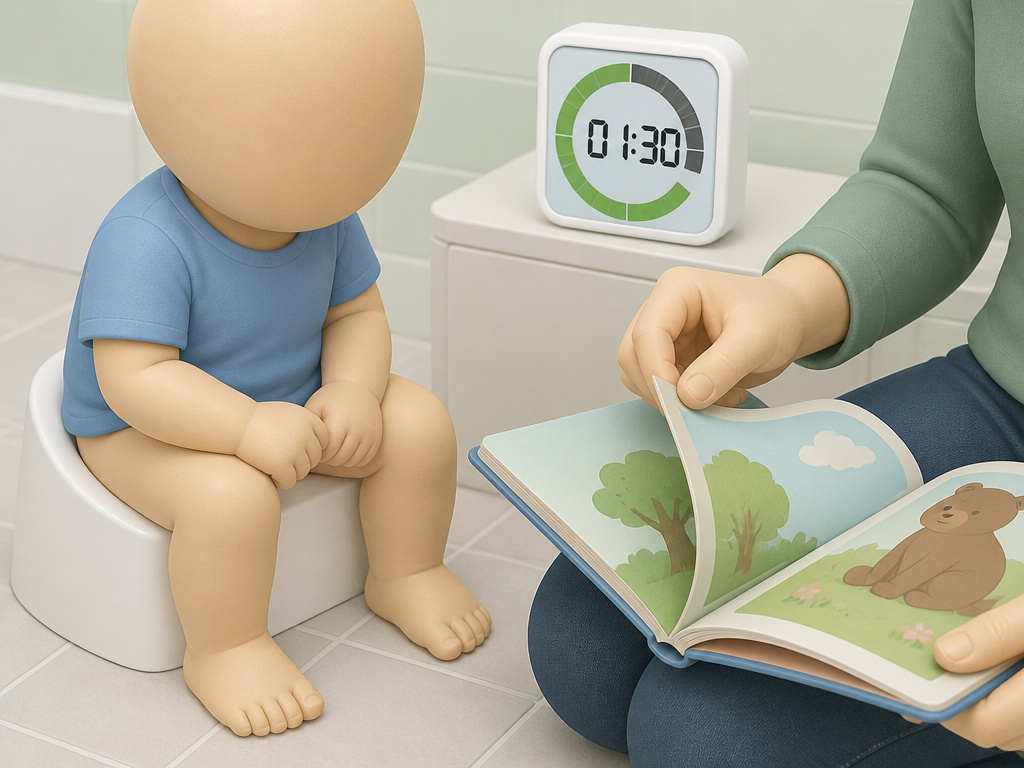
Your daily rhythm is simple, relentless, and kind. Schedule practice sits first thing in the morning, after meals, and every two hours. Keep sits to five minutes max. Use a timer. Make this time low-pressure, read a book, sing a song. The goal is building the habit of sitting, not producing every time.
I won’t recommend the three-day method for most boys. The visual feedback is honest, but the pressure cooker environment amplifies resistance. New parents overcorrect on every accident and chase ghosts. Found that out after a long weekend that strained everyone.
Positive reinforcement is specific, not generic. “You peed in the potty! Great job!” lands better than “Good boy.” Small, immediate rewards like a sticker or a high-five work. Avoid elaborate charts that tie his worth to successes early on; they can backfire into performance anxiety and withholding.
This rhythm, repeated daily, is what yields progress across weeks, not days. Some boys click in a month. Many take the full three to six. A few need closer to a year. They’re all normal.
Handling Accidents and the Withholding Trap
Accidents are data. They mean the signal didn’t reach the brain in time, or he was too engrossed in play.Your reaction dictates everything.
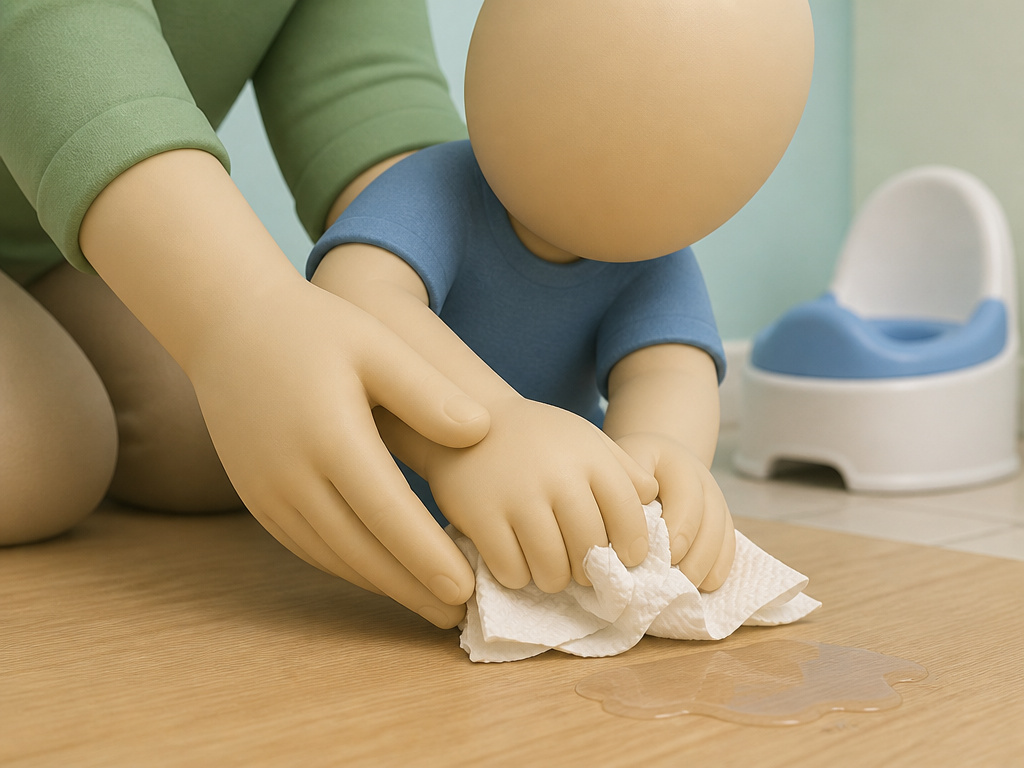
The script is three sentences, delivered calmly: “Oops, pee goes in the potty. That’s okay. Let’s clean up.” No scolding, no visible frustration, no “big boy” shame. Have him help in a matter-of-fact way, carrying wet clothes to the hamper, wiping the floor with a paper towel. This teaches cause and effect, not punishment.
Where this goes sideways: Scolding after an accident. It’s consistently linked to stool withholding and longer overall training. Fear shuts down the body’s natural signals.
The single biggest medical derailment is stool withholding. One painful, hard stool creates a memory. The child associates pushing with pain and clenches to avoid it. The next stool gets bigger and drier, hurting more. This cycle is how about one in five children refuse to poop on the potty at some point.
If you see signs, crossing legs, hiding, red face without result, hard pebbly stools, act immediately. Don’t pause training. Increase water intake, add prune or pear juice, and talk to your pediatrician about a gentle laxative. Softening the stool breaks the pain memory. This is non-negotiable.
Navigating Regressions and When to Pause
Progress isn’t linear. A week of dry days followed by three days of accidents is standard, not a setback.
Common regression triggers are changes in routine: starting preschool, a new sibling, moving houses, a family vacation, or even a mild cold. His brain is managing stress, and potty skills are a cognitive load it sheds temporarily. The 2022 Dreher et al. Study on Down syndrome noted regression after hospitalizations or life transitions, and the principle holds for all children.
When regression hits, double down on the routine. More scheduled sits, more fluids, more patience. Do not revert to diapers full-time unless he’s ill, that rewards the regression. If accidents cluster for more than a week after established dryness, rule out a urinary tract infection or renewed constipation.
Sometimes, you need a full pause. If every bathroom trip is a power struggle filled with tears, or if he’s holding urine for dangerously long stretches, stop. Put the diapers back on for two to four weeks. Don’t mention the potty. Let the negative association fade. Then, re-assess readiness and try again with a different potty chair or a sticker chart for sits only.
Special Considerations and When to Call the Doctor
Most potty training hurdles are behavioral. A few are medical.
A weak, dribbling, or sideways-pointing urine stream needs a pediatrician’s evaluation. So does straining to start urination. These can indicate physical issues. Daytime wetting past age 4 or nighttime wetting (enuresis) past age 7 for boys also warrants a check-up, it’s often treatable.
For children with developmental differences like autism or Down syndrome, the framework shifts. The Dreher et al. 2022 survey found parents of children with Down syndrome initiated training around 3.4 years and completed it around 6.6 years on average. Strategies like sitting every 20-30 minutes, using visual schedules, and focusing on one step at a time (e.g., sitting, then sitting with pants down) are evidence-backed. The Autism Speaks Toilet Training Guide recommends starting with a goal of six short toilet sits per day.
Your pediatrician is a resource for these specific paths. Don’t guess.
Frequently Asked Questions
What’s the fastest way to potty train a boy?
The fastest reliable way is to wait for clear readiness signs, then commit to a consistent daily method for 3-6 months. Intensive “boot camp” methods like potty training in 3 days work for some but often lead to quick regressions if the child wasn’t fully ready. Speed is less important than durability.
Should I use rewards or sticker charts?
Use specific, immediate praise as your primary reward. A simple sticker for successful sits or voids can be a helpful motivator, but avoid elaborate charts that make him feel he’s failed if he doesn’t earn one. The goal is building internal motivation.
How do I handle naptime and nighttime?
Keep him in a diaper or Pull-Up for sleep until he’s consistently waking up dry. Nighttime dryness is governed by biology, bladder capacity and a hormone called vasopressin, not training. Most boys achieve it between ages 5 and 7. Treat day and night as separate goals.
My son is scared of the potty. What now?
Fear often stems from a bad experience or the toilet’s noise. Go back to basics. Let the potty chair sit in the living room for a week. Have a stuffed animal “use” it. Use a quiet, seat reducer with a step stool so his feet are supported. Never force a sit. If fear persists, consult your pediatrician to rule out sensory issues.
The Bottom Line
Potty training a boy is a test of parental patience, not a race. The 3 to 6 month average is the honest timeline. Your job is to watch for his readiness signals, provide clear modeling, and react to accidents and withholding without drama. The equipment is simple: a stable potty chair, underwear, and a bottle of carpet cleaner.
If you take one thing, let it be this: his timeline is his own. A boy who finishes at 4 isn’t behind one who finished at 2.5. The goal is a child who feels confident in his body, not just a child who is out of diapers. When in doubt, follow his lead, keep the pediatrician’s number handy, and know that every child gets there.
