
How to Get Your Toddler to Pee on the Potty Successfully
This post contains affiliate links. As an Amazon Associate, we learn from qualifying purchases
To get your toddler to pee on the potty, you match three things: their body’s natural readiness clock, a scheduled practice routine that beats their bladder’s reflex, and a reinforcement system that rewards the attempt, not just the result. The average age for daytime training is 36 months, but for children on the autism spectrum, a 2017 study found only 35% were trained by that age. Starting before the body can physically cooperate guarantees months of pushback.
That gap between biological readiness and parent-led timing is where most resistance builds. A child’s bladder and rectal muscles gain voluntary control around 18 months, but the neural wiring to recognize the urge and communicate it lags. Pushing the ritual before the wiring is live trains frustration, not continence.
What follows: how to spot the difference between “not ready” and “scared,” the exact schedule that preempts accidents, and the reinforcement shift that makes sitting worthwhile for a toddler with a two-minute attention span. This is the method that works after the “three-day boot camps” fail.
Key Takeaways
- Biological readiness trumps calendar age. Look for dry periods stretching two hours, not just the “right” birthday.
- Schedule practice sits for 15–30 minutes after meals to hijack the body’s natural gastro-colic reflex.
- Reward the attempt with immediate, tangible reinforcement, a sticker the moment they sit, not just for producing urine.
- Children with autism or ADHD often need a task-analyzed, step-by-step approach and may train years later than neurotypical peers.
- Never force a sit beyond five minutes. A timed, positive exit preserves willingness for next time.
The #1 Rule: Match Your Pace to Their Body’s Clock
Forget the birthday. The real countdown starts with bladder maturity. A baby cannot voluntarily clench those sphincter muscles until about 18 months, which is why earlier “elimination communication” methods rely on parental timing, not toddler control. The goal is to begin when your child’s body can partner in the process.
The readiness signs are physical, not just cooperative. The Maine AAP lists dry intervals of two hours, regular bowel movements, and the motor skills to pull pants down. If your toddler is still soaking a diaper every 60 minutes, their bladder capacity isn’t there yet. Forcing sits then is like asking them to hold a breath they can’t feel.
A 2004 study in a private pediatric practice found the average age of daytime training was 36 months. For children on the autism spectrum, a 2017 study of 500 kids found only 35% were trained by 36 months, and 5% still had accidents at 12 years.
Cultural pressure says start earlier. Pediatric reality says watch the child, not the calendar. In some cultures near the equator, training begins under a year using classical conditioning, parents cue the child based on timing, not the child’s own sensation. That’s a different skill entirely, and it doesn’t translate to a toddler learning self-initiation in a preschool that expects it.
Where this goes sideways: Starting because a grandparent said they were trained at 24 months. If your child isn’t showing the physical signs, you’re building a resistance narrative that can take months to undo. The first rule of any potty schedule is that it must follow the body’s lead, not lead the body.
The Readiness Checklist You Haven’t Seen
Most lists include “shows interest.” That’s vague. A toddler might be curious about flushing but terrified of sitting. Break readiness into observable, physical yes/no boxes.
| Sign | What to Look For | Why It Matters |
|---|---|---|
| Dry Intervals | Diaper stays dry for 2+ hours during awake time. | Proves bladder capacity and muscle control are developing. |
| Predictable Bowel Movements | Poops around the same time each day (e.g., after breakfast). | Allows you to schedule successful potty sits, building confidence. |
| Communication Attempt | Points to diaper, says “pee,” or uses a sign for wet/dirty. | Shows they recognize the sensation and can link it to a signal. |
| Motor Skills | Can pull loose pants up and down with minimal help. | Independence is key; if they can’t undress, every trip requires you. |
| Sits Briefly | Will sit on potty chair (with clothes on) for 2-3 minutes without panic. | Rules out a fear of the seat itself, which is a separate hurdle. |
If you check three of these five, you have a green light. Missing the dry-interval and motor skills boxes means you should delay how to start potty training and work on those first. Pants with elastic waists and verbal labeling of wet diapers are better prep than a forced sit.
How to Set Up a Fail-Proof Potty Practice Routine
The routine isn’t about rigidity. It’s about predictability, which lowers anxiety. A toddler’s brain craves patterns; a known sequence of “pants down, sit, book, sticker, all done” feels safe. The magic happens when you slot that sequence into their body’s natural rhythms.
Start with clothed practice. The Seattle Children’s potty training guide recommends having your child sit on the potty chair first with clothes on, then a diaper, then bare-bottomed. This desensitizes the experience. The goal is the posture, not production. Do this for a week as part of the morning routine, after breakfast, before play.
Then, harness biology. Schedule sits for 15–30 minutes after meals. Eating triggers the gastro-colic reflex, which stimulates the colon. A full stomach also puts gentle pressure on the bladder. You’re not guessing; you’re stacking the odds.
Common mistake: Waiting for your child to announce they need to go. Toddlers often don’t recognize the urge until it’s urgent, leading to panicked runs and accidents. Schedule the trips to beat the reflex.
The sitting clock is non-negotiable. Both the Mayo Clinic and Johns Hopkins advise five minutes maximum. Use a visual timer, a sand timer or a kitchen timer with a picture. When it dings, the sit is over, success or not. Extending the sit teaches them that the potty is a place of confinement, not a quick pit stop. This is especially critical for kids with ADHD, whose attention span may be even shorter.
The Tools That Make or Break the Routine
Your equipment choices directly impact comfort and independence. A fearful, unstable child won’t relax enough to let urine flow.
Potty Chair vs. Toilet Seat: A standalone potty chair wins for beginners. The child’s feet touch the floor, providing stability and the leverage needed to push during a bowel movement. The best potty chair models are simple, easy to clean, and portable. A toilet seat insert is fine later, but you must add a sturdy footstool, dangling feet create a fear of falling and physically prevent relaxation.
The Distraction Kit: Keep a small basket of “potty-only” books or toys. The association helps: potty time means special truck book time. Rotate the items weekly to maintain novelty.
Clothing Logistics: This is the most overlooked step. Outfits matter. During training blocks, use pants with elastic waists, no overalls, no tights, no complicated snaps. If undressing is a struggle, the whole system fails. Independence hinges on them being able to manage their own clothes.
The short version: Practice clothed first. Schedule sits after meals. Use a timer. Choose a chair that provides foot support. Simplify clothing.
The Reinforcement Shift: Reward the Attempt, Not the Outcome
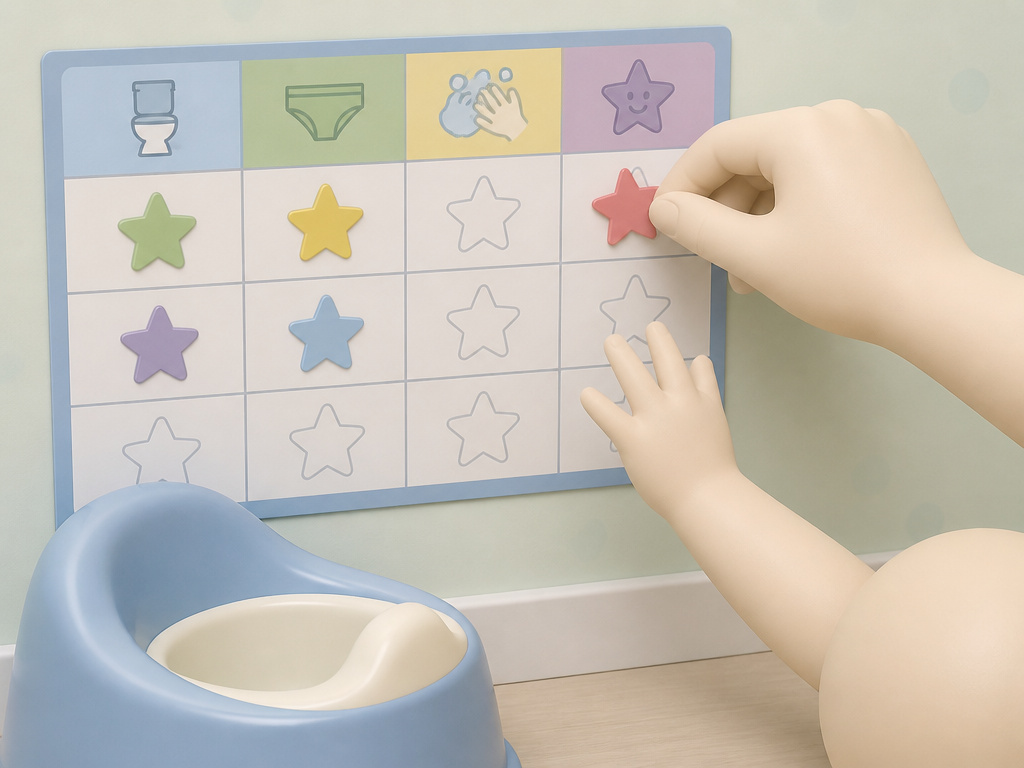
Positive reinforcement is the engine, but most parents fuel it wrong. They celebrate the golden pee in the potty. The toddler who sits patiently but doesn’t go gets a muted “maybe next time.” That’s backward. You need to reward the behavior you want to see repeated: the voluntary sit.
The instant sticker rule works because it’s immediate and tangible. The moment their bottom hits the seat, hand over a sticker for a potty chart on the wall. The pee is a bonus, maybe worth a second sticker or a small treat. This separates performance anxiety from cooperation. They learn that sitting is always worthwhile.
I’ve seen sticker charts fail because they only tracked successes. The child with a shy bladder would have a blank chart for days, lose motivation, and refuse to sit. The chart should have a column for “I tried!” that gets filled every single time.
Tangible rewards need to be immediate and small. A sticker, a single M&M, a stamp on the hand. Later, you can build toward a larger reward for a certain number of tries or successes. The Johns Hopkins toilet training guide emphasizes praise, but for some kids, praise is too abstract. A physical token is concrete.
For a stubborn toddler, you might need to break it down further. Reward them for walking into the bathroom, then for touching the potty, then for sitting with the lid down. This “task analysis” is a standard technique recommended by Board Certified Behavior Analysts (BCBAs) for children with autism or strong resistance. The principle is the same: reinforce the step toward the goal, not just the goal itself.
What to Do When Rewards Aren’t Enough
Some kids are not motivated by stickers or treats. Their currency is attention or control. For them, the reward might be a special one-minute song with a parent after the sit, or the privilege of flushing the toilet. You have to find their currency.
Power struggles mean you’ve turned it into a control battle. Drop the demand. Go back to clothed sits with no expectation. Let them lead. The goal is to keep the potty a neutral or positive place, not a battlefield. Sometimes, taking a two-week break from all pressure resets the dynamic more effectively than any reward.
Problem-Solving: When They Just Won’t Go
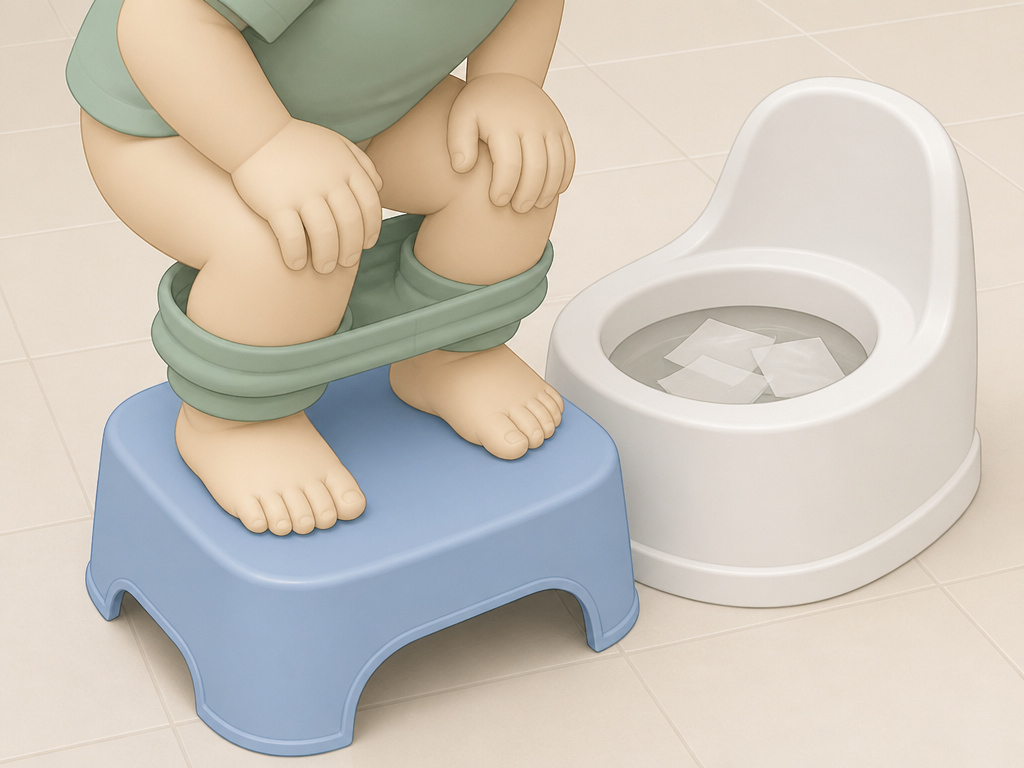
You have the schedule. The rewards are ready. They sit willingly. But they clamp up and nothing comes out, then pee on the floor five minutes later. This is about mechanics and anxiety, not defiance.
First, check the physical setup. Are their feet supported? A dangling child cannot relax their pelvic floor. Are they leaning forward slightly, elbows on knees? This position opens the urethra. For boys, teach sitting first, standing is for later aim practice. The Seattle Children’s parenting health page suggests putting cereal pieces in the toilet for boys to aim at once they graduate to standing.
Second, consider sensory overload. The sound of their own urine hitting the water can be startling. Try putting a few layers of toilet paper in the bowl first to muffle the splash. The feel of the seat, the cool air, the echo in the bathroom, any of these can be a sensory barrier.
Third, rule out medical issues. Straining, crying, or obvious discomfort could signal a urinary tract infection or constipation. The latter is a major roadblock; hard stools make passing urine painful, so the child subconsciously holds everything. Talk to your pediatrician. A clean-out may be necessary before training can proceed, especially if you’re dealing with bowel movements resistance too.
| Symptom | Possible Cause | Immediate Action |
|---|---|---|
| Sits but never pees on potty, always in diaper afterward. | Performance anxiety or hasn’t learned to release on cue. | Practice “peeing” with a doll on the potty. Use a “ssss” sound cue. Keep sits ultra-short (2 min). |
| Cries, arches back when placed on seat. | Fear of falling or sensory aversion. | Revert to clothed sits. Ensure foot support. Try a different chair model. |
| Has accidents within 10 minutes of a dry sit. | Doesn’t recognize the “full” signal until it’s too late. | Shorten the interval between scheduled trips to 90 minutes. Use a timer. |
| Only goes for one parent, not the other. | Association with a specific routine or lower pressure. | Have the “successful” parent write down their exact script and have the other copy it. |
TL;DR: If they sit but don’t go, troubleshoot comfort and sound. If they fight the sit, troubleshoot fear and control. If accidents are frequent, shorten the schedule interval.
Tailoring the Approach for Neurodivergent Children
The standard timeline does not apply here, and applying it causes undue stress. The Maine AAP resource is explicit: factors like language delay, sensory processing differences, and a need for sameness can significantly delay training. The average age for children with autism is 3.3 years, and a significant minority struggle for years.
Their strengths can become your tools. A child who loves visual schedules will thrive with a picture-based potty chart. A rule-oriented child will follow a clear, consistent sequence. Break every step into a visual card: pull down pants, sit, try, wipe, pull up pants, wash hands, get sticker.
Easy to miss: The need for foot support is amplified for children with low muscle tone or proprioceptive challenges. A wobbly seat feels terrifying. A solid, wide-based potty chair is not a luxury; it’s a prerequisite.
Seek professional guidance early. An Occupational Therapist (OT) can address sensory barriers and motor planning. A Board Certified Behavior Analyst (BCBA) can design a systematic, data-driven training program. Don’t wait until you’ve hit a year of failed attempts, a few consultations can give you a tailored framework. Their expertise is especially crucial for tackling daytime training for bowel movements, which often lags further behind.
Patience isn’t just a virtue here; it’s the strategy. What looks like stubbornness is often a neurological disconnect between the feeling of a full bladder and the cognitive sequence of “walk to bathroom.” You are building neural pathways, not just habits.
Frequently Asked Questions
How long should a potty training session last?
Scheduled potty sit should last no more than five minutes. Use a visual timer. The goal is a positive, brief association. Forcing a longer sit creates resistance and teaches holding, not releasing.
What if my toddler is afraid of the potty chair?
Go back to basics. Let them decorate the chair with stickers. Have them sit on it fully clothed while watching a video. Put a favorite doll or stuffed animal on it. The fear usually stems from instability or the unknown, remove the pressure and let them explore.
How many times a day should I take my toddler to the potty?
Start with a potty schedule of every two hours, plus first thing in the morning, after naps, and 15-30 minutes after meals. That’s roughly 6-8 trips per day. As they succeed and stay dry, you can gradually lengthen the intervals.
My toddler holds their pee all day until they get a diaper. What now?
This is a control battle. Offer a diaper in the bathroom, right next to the potty. Let them put it on, then encourage them to sit on the potty with the diaper on. The next step is cutting a hole in the diaper so they feel the release while still wearing it. It’s a transitional trick that bridges the gap.
Are some potty chairs better than others?
Yes. The best potty seats provide secure back support, a wide stable base, and are easy to clean. A removable bowl is essential. For many kids, a simple, non-mechanical chair is less intimidating than one with sounds or lights.
Before You Go
Getting a toddler to pee on the potty is a puzzle with three pieces: a body ready to cooperate, a routine that preempts accidents, and a reward system that values the try. The biggest mistake is starting the clock based on age instead of physical signs. The second biggest is turning sits into a power struggle.
When it stalls, and it will, go backward one step. Simplify the clothing. Shorten the timer. Increase the reward for mere participation. The goal is not a dry day this week. It’s a child who feels competent and in control of their own body. That takes the time it takes. Your job is to set the stage, not force the act.
