
Pediatric Guide: Does Baking Soda Help Diaper Rash Safely?
This post contains affiliate links. As an Amazon Associate, we learn from qualifying purchases
Baking soda can help soothe a diaper rash when used correctly in a bath, but it is not a cure. The effective, safe method is a short soak in warm water with a specific dose: 2 tablespoons for an infant tub, 4 tablespoons for a toddler bath, for 5-10 minutes once or twice daily. It works by neutralizing acidic irritants in urine and stool on the skin’s surface. However, baking soda is a temporary comfort measure, not a replacement for a proper barrier cream containing zinc oxide, which is clinically proven to protect and heal irritated skin.
The catch is in the word “correctly.” Baking soda is an alkaline powder. Applied excessively or to broken skin, it can absorb into the bloodstream and disrupt the body’s acid-base balance, a condition documented in a 1981 case of an infant who developed metabolic alkalosis. So the benefit hinges entirely on matching the right amount to the right situation for the right amount of time.
What follows is the breakdown: the pediatrician-backed protocol, the exact mechanism of how it soothes, the documented risks that make other parents skip it entirely, and how it stacks up against the barrier creams that should be your first line of defense.
Key Takeaways
- Baking soda baths offer temporary relief by neutralizing skin acidity; use 2 tablespoons for an infant tub or 4 tablespoons for a toddler bath, soaking for 5-10 minutes only.
- It is a comfort measure, not a treatment. For healing, a thick layer of a zinc oxide barrier cream (like Aquaphor Baby Healing Ointment or Desitin) is non-negotiable.
- Never apply baking soda paste directly to a raw, broken rash. This significantly increases the risk of systemic absorption and metabolic alkalosis.
- If a rash doesn’t improve within 3 days of consistent care, or if it shows bright red dots, spreads into skin folds, or has white patches, stop home remedies and see a pediatrician—it’s likely a yeast or bacterial infection.
- The safest, most effective prevention strategy is still frequent diaper changes, gentle cleansing with water, and consistent use of a barrier ointment at every change.
How Baking Soda Works on Skin (And When It Doesn’t)
A diaper rash is essentially a chemical burn. Urine breaks down into ammonia, and stool contains digestive enzymes; both are acidic and irritate the skin. Prolonged wetness softens the skin’s protective outer layer, making it more susceptible to this damage. This is the most common type of diaper rash.
Baking soda, or sodium bicarbonate, is a mild alkali. In a bath, it dissolves and creates a slightly alkaline solution.
When added to bathwater, baking soda neutralizes residual acidic irritants left on the skin’s surface from urine and stool. This temporary pH shift can reduce the stinging sensation and provide short-term comfort. It does not create a protective barrier or actively heal damaged skin.
The relief is real, but it’s superficial and washes off as soon as you towel the baby dry. Think of it like rinsing acid off a counter—it stops the active burning, but it doesn’t fix the etched surface.
The mechanism also explains its limits. If the rash is caused by a fungal infection (like candida, or yeast diaper rash), which thrives in warm, moist environments, a baking soda bath does nothing to kill the yeast. In fact, if the skin is badly broken or denuded, the baking soda can be absorbed. A 1981 case report in the journal Pediatrics documented an infant who developed hypokalemic metabolic alkalosis after “excessive and protracted application” of sodium bicarbonate to a severe rash.
The skin it was applied to was described as “diffusely erythematous with denuded areas.” The condition resolved when the baking soda was stopped. This is the primary risk that leads authorities like the Mayo Clinic to advise against its use for babies.
So the rule is simple: baking soda is for intact, irritated skin. The moment you see open sores, raw patches, or bleeding, skip it.
The Right Way to Use a Baking Soda Bath
If the rash is red but the skin is intact, a baking soda bath can be a helpful part of your routine. The key is precision. “A little bit” is not a measurement when dealing with an infant’s sensitive skin and a compound that can affect systemic pH.
Parkside Pediatrics provides the clearest, most specific guidance available. Follow this table to match the dose to your child’s bathing setup:
| Child’s Age & Bath Setup | Baking Soda Amount | Water Coverage | Soak Time | Frequency |
|---|---|---|---|---|
| Infant (using a small infant tub) | 2 tablespoons | Enough to cover the bottom | 5-10 minutes | Once or twice daily |
| Toddler (sitting in a regular tub) | 4 tablespoons | Enough to just cover the bottom while sitting | 10 minutes | Once or twice daily |
Steps:
- Fill the tub with warm (not hot) water.
- Measure the baking soda precisely using a tablespoon. Sprinkle it into the water and swish with your hand to dissolve completely.
- Place your child in the bath and let them soak for the allotted time. This is a calm soak, not a play bath. Keep a hand on them at all times.
- Pat dry, don’t rub. Gently lift them out (the baking soda makes the skin and tub very slippery) and pat the diaper area completely dry with a soft towel.
- Apply barrier cream immediately. While the skin is still slightly damp, apply a thick layer of your preferred zinc oxide cream. The bath prepared the skin; the cream does the healing.
Where this goes sideways: Guessing the amount or making a paste. A paste concentrates the baking soda against the skin, dramatically increasing the surface area for potential absorption, especially if the skin barrier is compromised. Stick to the diluted bath.
This protocol is for short-term use only. If you’re reaching for the baking soda box every day for a week, the rash isn’t getting better—it’s time to reassess the causes of diaper rash and likely call your doctor.
Baking Soda vs. Barrier Creams: What Actually Heals
This is the core decision. Baking soda offers temporary symptom relief. Barrier creams like those containing zinc oxide or petroleum jelly provide active protection and create an environment for healing. They are not interchangeable.
| Aspect | Baking Soda Bath | Zinc Oxide Barrier Cream |
|---|---|---|
| Primary Action | Neutralizes surface acids; soothes sting. | Forms a physical, water-repellent barrier on the skin. |
| Healing Role | None. Provides comfort only. | Actively protects damaged skin from wetness and friction, allowing it to heal. |
| Duration | Effect lasts minutes to an hour after the bath. | Effect lasts until the next diaper change (6+ hours). |
| Clinical Support | Anecdotal comfort; case reports of risk with misuse. | Supported by clinical studies; the PMC barrier preparation study found zinc oxide paste effective in managing diaper dermatitis. |
| Best For | Supplementing care for a mild, superficial rash. | Treating and preventing nearly all types of common diaper rash. |
The FDA sodium bicarbonate labeling for Arm & Hammer baking soda lists it as a “skin protectant” for minor irritation. But compare that to the mandate for diaper rash products from Health Canada and the FDA: they must “help protect from wetness that causes diaper rash.” A rinse doesn’t protect. A cream that sits on the skin does.
This is why pediatricians universally recommend a thick “frosting” of zinc oxide cream at every change for an active rash. Brands like Desitin (with 40% zinc oxide) or Triple Paste are the heavy lifters. For prevention or very mild pinkness, a simpler ointment like Aquaphor or Vaseline provides that essential moisture barrier.
Bottom line: Use a baking soda bath for comfort if you want. Then, without fail, apply the barrier cream. The bath is the prep; the cream is the treatment.
Documented Risks and When to Absolutely Avoid It
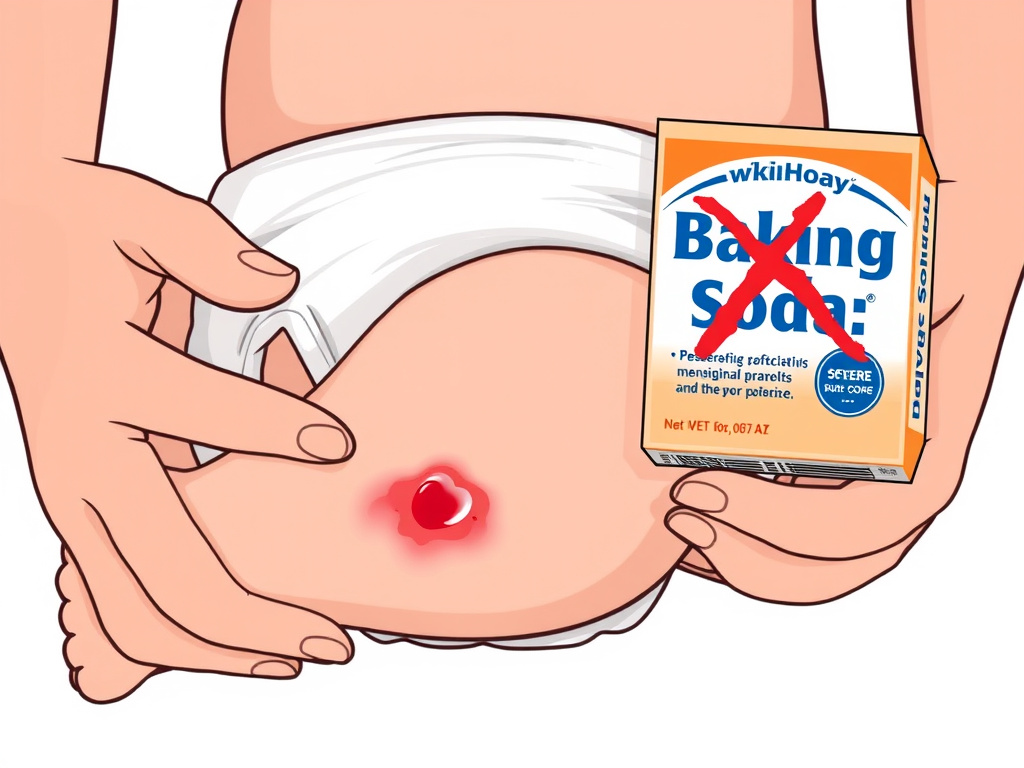
The Journal of Integrative Dermatology review on baking soda’s skin effects is clear: while diluted baths have little risk, “harmful effects… Have been described in case reports.” The danger is metabolic alkalosis, where the body’s pH becomes too basic, disrupting electrolyte balance and organ function.
The risk factors are specific: 1. Excessive Amount: Using more than the recommended 2-4 tablespoons. 2. Prolonged Use: Applying it repeatedly over many days. 3. Broken Skin: Using it on a rash that is denuded, ulcerated, or bleeding.
The 1981 infant case hit all three: excessive, protracted application to denuded skin. The two adult cases in the review involved applying baking soda daily to an open breast wound and an open foot ulcer.
Before you start: If your baby’s rash has open sores, blisters, or is bleeding, do not use baking soda. If the rash is bright red with satellite lesions (small red dots around the edges) or has white patches, it is likely a yeast infection—baking soda is ineffective and a waste of time. See your pediatrician.
Here is a quick diagnostic table to help you decide when to stop home care:
| Symptom | Likely Cause | Action |
|---|---|---|
| Pink, flat rash on convex skin | Mild irritant dermatitis | Step up barrier cream; a baking soda bath is optional. |
| Shiny, raw skin or open sores | Severe irritant dermatitis | Avoid baking soda. Use barrier cream; see doctor if severe. |
| Bright red rash with defined edges, dots around it | Yeast infection | Avoid baking soda. Requires antifungal cream (e.g., clotrimazole). |
| Pimples, blisters, or yellow crusts | Bacterial infection (impetigo) | Avoid baking soda. Requires antibiotics; see doctor immediately. |
| Rash persists >3 days with good care | Unknown/Complex | Stop home remedies. Schedule a visit to rule out infection or allergy. |
If you’re ever unsure, the safest path is to skip the baking soda and rely on the known safety of a simple barrier ointment while you call your doctor. This is especially critical when dealing with a severe diaper rash.
Safer Home Remedies and What to Use Instead
Many parents look to baking soda because it feels natural and sits in the pantry. But other common “natural” remedies carry their own risks or simply don’t work.
- Cornstarch: This is a firm no. Cornstarch is a carbohydrate. If a yeast infection is present (and yeast loves warm, moist, starchy environments), applying cornstarch is like feeding the enemy. It can worsen a fungal rash dramatically.
- Baby Powder (Talc): Traditional baby powder is a inhalation risk and doesn’t provide an effective moisture barrier. Cornstarch-based powders have the same issue as plain cornstarch. Powders are outdated for rash treatment.
- Coconut Oil: Coconut oil has some antimicrobial properties and is an excellent moisturizer. It can be a good preventative barrier for very mild irritation. However, for an active rash, it is not as effective as zinc oxide at repelling moisture and stool enzymes. It’s a conditioner, not a shield.
- Breastmilk: Some studies suggest breastmilk has antibacterial properties. A few drops on a mild rash won’t hurt and may help, but it is not a reliable treatment for an established rash. It lacks the occlusive power needed for healing.
The verdict? For a true home remedy that is both safe and effective, you already have it: air time. Letting your baby go diaper-free for 10-15 minutes several times a day is more therapeutic than any substance you can apply. It dries the skin completely, eliminates friction, and is zero-risk.
Combine air time with a proper barrier cream, and you have a protocol that actually works. Baking soda is an optional, occasional add-on at best.
The Pediatrician’s Protocol for a Stubborn Rash
When a rash won’t quit, a systematic approach beats random experimentation. Here is the step-by-step escalation most pediatricians recommend, which incorporates baking soda’s limited role appropriately.
- Increase Barrier Cream. At every single diaper change, apply a thick layer of zinc oxide cream (40% is ideal). Don’t wipe it all off at the next change—just pat away soiled cream and reapply.
- Maximize Air Exposure. Schedule 3-4 diaper-free sessions per day. Use a waterproof pad on the floor.
- Consider a Comfort Soak. If the rash looks inflamed but intact, add one baking soda bath per day for 2-3 days, following the dosage table exactly. Monitor closely.
- Re-evaluate at 72 Hours. If no improvement is visible, stop the baths. The rash is likely not a simple irritant dermatitis.
- Consult the Mayo Clinic diaper rash guide or your pediatrician. This is the point where you need a professional diagnosis for a yeast or bacterial infection, which requires prescription antifungal or antibiotic cream.
The goal of rash prevention is to never reach step 5. Most rashes resolve with aggressive step 1 and step 2 alone. Baking soda is a tiny tool in step 3, useful only in a specific context.
Frequently Asked Questions
Can I make a baking soda paste for diaper rash?
No. Do not make a paste. Applying a concentrated paste directly to the skin, especially broken skin, significantly increases the risk of absorption and systemic side effects like metabolic alkalosis. The only safe method is the diluted bath.
How often can I give my baby a baking soda bath?
For an active rash, once or twice daily for a maximum of 3-4 days. If the rash isn’t improving within that timeframe, the baking soda isn’t helping, and continuing it serves no purpose. For maintenance or prevention, it is not necessary.
Does baking soda kill yeast in diaper rash?
There is no clinical evidence that baking soda kills the candida yeast that causes yeast diaper rash. In vitro studies show sodium bicarbonate can inhibit some fungal growth, but this does not translate to an effective treatment on skin. If you suspect a yeast rash (bright red, defined edges, satellite spots), you need an antifungal cream like clotrimazole.
Is baking soda or oatmeal bath better for diaper rash?
Colloidal oatmeal is generally considered a safer, more soothing option for inflamed skin. It has anti-inflammatory properties and helps repair the skin barrier. Baking soda only alters pH. For a raw, itchy rash, an oatmeal bath is the better choice for comfort without the absorption risk.
Can baking soda make diaper rash worse?
Yes, in two ways. First, if used on a yeast rash, it does nothing to treat the cause, allowing the infection to worsen. Second, if used in excessive amounts or on broken skin, it can cause chemical irritation or be absorbed, leading to systemic complications. When in doubt, skip it.
Before You Go
Baking soda has a place in the diaper rash toolkit, but it’s in the back corner. Its job is narrow: provide brief, topical comfort for a mild, superficial rash when used in a precise, diluted bath. It is not a healer. The real work is done by zinc oxide barrier creams, air time, and frequent diaper changes.
The 1981 case of metabolic alkalosis isn’t a scare story—it’s a boundary marker. It tells us exactly where this common household product stops being helpful and starts becoming a hazard: at the intersection of excessive use and broken skin. Respect that boundary.
Your default should always be a thick layer of a trusted barrier ointment. If you choose to add a baking soda bath, measure it, time it, and never use it on raw skin. And if the rash lingers beyond a few days, put the box away and pick up the phone. Your pediatrician has better tools.
