
A Practical Guide on How to Start Potty Training a Girl
This post contains affiliate links. As an Amazon Associate, we learn from qualifying purchases
To start potty training a girl, watch for physical and emotional readiness signs, set up a consistent routine with a potty chair, and keep each sitting attempt to five minutes or less. Nighttime dryness is a separate skill that often follows a year or more after daytime control, so expect pull-ups at night until age 4 or 5 for many children.
The five-minute ceiling isn’t arbitrary. It’s the threshold where sitting shifts from a neutral task to a perceived punishment, which is the fastest route to a power struggle. That struggle can manifest as a child physically withholding bowel movements, which leads directly to constipation.
What follows is a breakdown of the signs that matter, the setup that works, the routine that sticks, and the specific mistakes that turn a three-week process into a three-month battle. You’ll also get a clear picture of what “success” actually looks like across day and night.
Key Takeaways
- Limit potty sits to five minutes maximum to prevent the session from feeling like a punishment.
- Night dryness is developmental, not trained; most girls aren’t consistently dry overnight until age 4 or 5, sometimes later.
- If you hit strong resistance or a power struggle, stop entirely for 2–4 weeks—pushing can cause withholding and constipation.
- Never begin training during major family stress like a move, new sibling, or change in childcare.
- Use a simple, immediate reward system (like a sticker chart) paired with verbal praise, not just treats.
Readiness: The Signs That Actually Matter
Forget the calendar. The single best predictor for how to start potty training a girl isn’t her age, but a cluster of physical and cognitive signals she sends you. The classic potty training age guides mention 18 to 30 months, but that’s a wide window because the brain and body need to sync up.
She needs the physical ability to control the muscles involved (often present by 18 months) and the mental awareness to connect the sensation with the action. One without the other leads to frustration.
Look for these specific signs together: * Physical cues: Staying dry for at least 2 hours during the day or waking up dry from a nap. She can walk to the potty, pull her pants up and down with minimal help, and get on and off the seat. * Cognitive/communication cues: She tells you she has a wet or dirty diaper, or she hides when having a bowel movement. She can follow simple two-step instructions (“get the book, then sit down”). * Behavioral cues: She shows curiosity about the toilet, follows you into the bathroom, or asks to wear “big girl” underwear. She may dislike the feeling of a soiled diaper.
A 2008 randomized trial published in the Journal of Developmental & Behavioral Pediatrics compared methods and underscored that success hinges on this readiness. The study’s takeaway, echoed in the NIH toilet training review, is that a positive approach is unlikely to cause harm, but starting before these signals are clear often does.
Where this goes sideways: Starting because of external pressure (grandparents, preschool deadlines) when your child shows zero curiosity. You end up doing all the work, she feels pressured, and accidents become the norm instead of the exception.
When Not to Start: The Stress Test
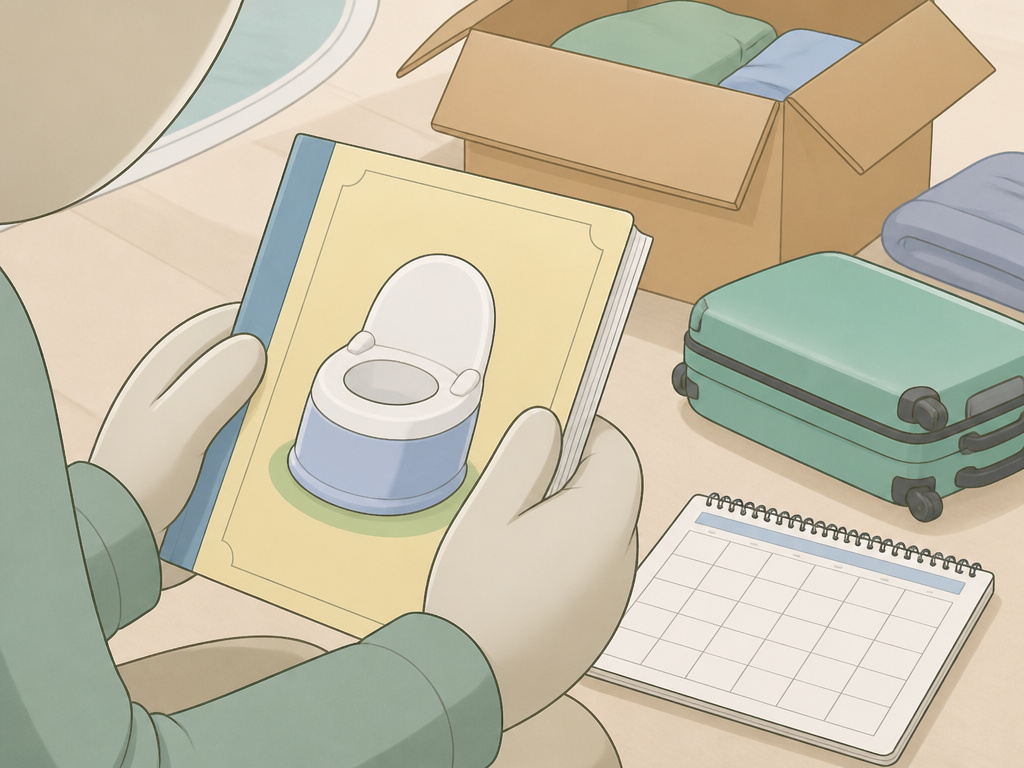
Knowing when to pause is as critical as spotting readiness. Toilet training is a learning skill, and children under stress often regress in newly acquired skills or fail to learn them at all.
The Johns Hopkins toilet training guide is explicit: if a major life change is imminent, do not start. If you’re in the middle of training and a crisis hits, expect accidents and consider pausing. Major stressors include: * A recent or upcoming family move. * Starting a new daycare or changing caregivers. * Transitioning from a crib to a bed. * The arrival of a new sibling (either expected or recent). * Major illness, family loss, or any significant disruption to routine.
Your job is to control the environment for learning. If the household is in flux, your child’s capacity for this new, demanding task is near zero. It’s not a failure to wait a month.
Setting Up for Success: Gear & Mindset
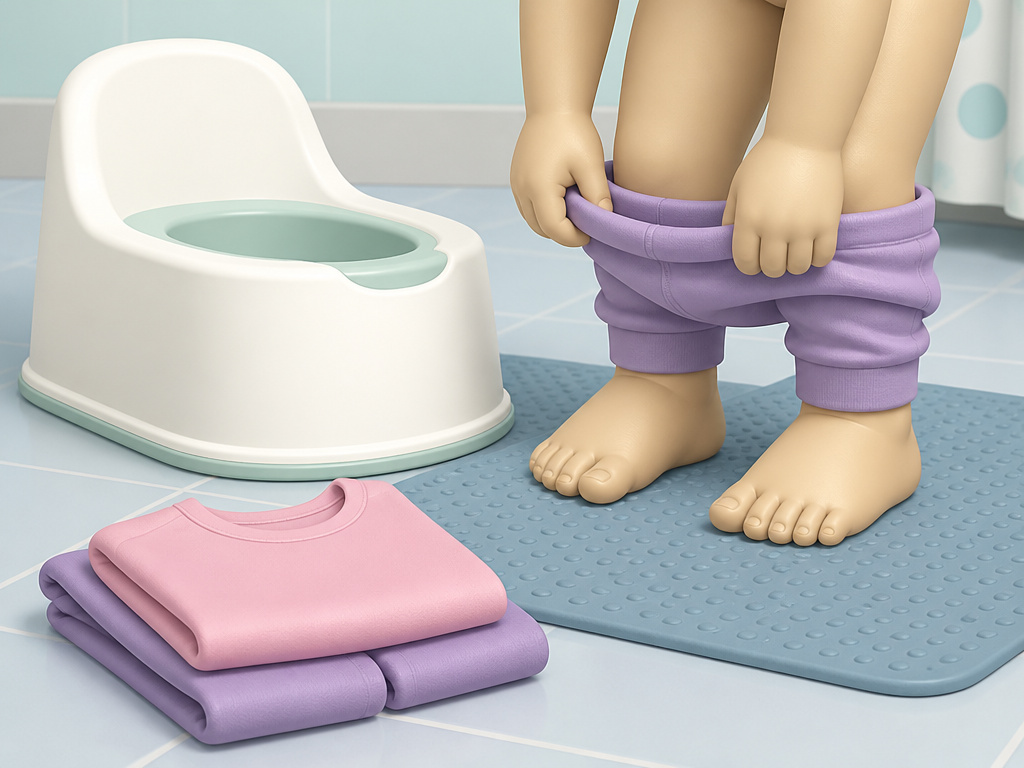
You don’t need much gear, but the right tools remove barriers. Your goal is to make the process as easy and predictable as possible for her.
The Potty Chair vs. Toilet Seat: This is the first real choice. A standalone potty chair is often best for starting potty training. It’s stable, not intimidating, and lets her plant her feet firmly on the floor—this helps with pushing. Place it in a room she uses often, like a playroom or bathroom, not tucked away in a corner.
A toilet seat insert is fine if she’s shown no fear of the big toilet, but have a solid step stool ready so she isn’t dangling. Our recommendations for the best potty seats cover models that ease both transitions.
Clothing: Ditch the complicated outfits. For the first few days of focused training, let her run around bottom-free or in just a long t-shirt at home. This eliminates the step of pulling clothes down, which is a huge hurdle when the urge strikes. When you go out, use easy-up/down pants like leggings or sweatpants—no buttons, snaps, or overalls.
Your Mindset: This is not a performance. Your tone should be matter-of-fact, like you’re teaching her how to wash her hands. As the Zero to Three resource notes, if you show overwhelming joy at success or frustration at accidents, you signal how much emotional weight you’ve placed on this. That gives her a powerful button to push: refusal.
| Gear | Best For | Potential Pitfall |
|---|---|---|
| Standalone Potty Chair | First-timers, wary toddlers, easy cleanup | Needs emptying/cleaning after each use |
| Toilet Seat Insert + Stool | Older toddlers, small bathrooms, direct transition | Fear of flushing sound or falling in |
| Training Pants | Outings, nap time, light backup | Can feel too much like a diaper, delaying the sensation connection |
| Sticker Chart | Visual learners, creating a positive routine | Can become the sole focus, losing intrinsic motivation |
The First Three Days: Building the Routine
The initial phase is about creating a predictable rhythm and demystifying the potty. Don’t expect results yet—you’re building a habit.
- Introduce the Chair. Let her decorate it with stickers. Have her sit on it fully clothed while you read a short book, just to get used to it.
- Model the Behavior. Let her come into the bathroom with you. Use simple language: “Mommy’s going pee on the toilet. Now I wipe, flush, and wash hands.”
- Start the Clock. After she drinks something, wait 20-30 minutes, then suggest a try. “Let’s go sit on the potty and see if any pee comes out.” Keep it light.
- The Dump & Show. When you change a wet or dirty diaper, dump the contents into her potty chair. Explain, “Pee and poop go in the potty.” This creates a clear visual connection.
The goal here isn’t catches. It’s normalizing the potty as the place where business happens. If she happens to go while sitting, celebrate calmly. If not, say “Good try! We’ll try again later.”
The 5-Minute Rule & Avoiding Power Struggles
This is the core operational rule. Once you move from casual sits to actual attempts, set a timer.
Limit time on the potty chair to five minutes. Sitting longer can feel like punishment.
Why five minutes? If nothing has happened in that time, the urge likely isn’t there. Prolonging the sit turns it into a boring, confining task she’ll want to avoid. You’re teaching her to listen to her body, not to sit until something falls out.
If she goes, great. If not, help her off and say, “All done for now.” This prevents the dynamic where she learns to hold it until she gets off the potty, which is a common cause of accidents five minutes later.
Handling Resistance: If she flat-out refuses to sit, or screams when you suggest it, you have a clear signal. Do not force her. Forcing a child onto the potty is the single fastest way to create a power struggle that can lead to physical problems. As noted in several expert guides, a child trying to regain control may begin withholding urine or stool, which can cause painful constipation and urinary tract infections.
The fix is simple but counterintuitive: stop. Put the diapers back on. Take a complete break from all potty talk for two to four weeks. Then, watch quietly for readiness signs to re-emerge. This isn’t failing—it’s respecting her timeline. For more on this, see our strategies for potty training a stubborn toddler.
Motivation: Rewards, Praise, & Making It Fun
Positive reinforcement works, but its delivery matters. The reward must be immediate, consistent, and paired with specific praise.
Skip the vague “good job.” Say, “You peed in the potty! That’s so clever of you to listen to your body.” The praise attaches to the action, not just the child.
A tangible reward system can kickstart motivation. The key is simplicity: * Immediate: A sticker for the chart the moment she succeeds. * Consistent: The same reward for every successful potty use initially. * Small: A sticker, a stamp on the hand, a single M&M. You’re not buying a new toy for each pee. * Visual: A potty chart on the wall lets her see her progress build.
After a week of consistent success, you can shift to a “bigger reward for staying dry all day” model. But the primary driver should become the intrinsic pride of wearing big-kid pants and staying dry. For a deeper dive, our guide on effective reward strategies for potty training breaks down what works long-term.
Remember, the goal is to make it fun, not transactional. Sing a silly song while washing hands, read a special potty book, or let her put a sticker on the chair itself.
Nighttime Training: Setting Realistic Expectations
Day and night dryness are controlled by different systems. Daytime control is a learned skill. Nighttime control is a developmental milestone tied to bladder capacity, sleep depth, and a hormone that reduces urine production at night.
Don’t expect a child to be dry at night for up to a year after they are dry during the day.
The NHS guideline is practical: continue using nighttime nappies or pull-ups without comment. Check them in the morning. When they are consistently dry for a week or two, you can try a night without them. Have a waterproof mattress cover ready.
Most children achieve reliable night dryness between ages 4 and 5. Some perfectly normal kids take longer. Pushing nighttime training before her body is ready is futile and leads to wet beds and shame. Keep her in training pants at night until her body gives the green light.
Troubleshooting Common Setbacks
Accidents are data, not failure. They tell you what part of the process is breaking down.
- Frequent Accidents: The interval between potty trips is too long. Go back to prompting every 60-90 minutes.
- “I don’t need to go” followed by an accident 5 minutes later: She’s not yet recognizing the physical sensation. Use the five-minute rule strictly and prompt more often.
- Poop withholding/fear: This often stems from a previous painful bowel movement or pressure around pottying. Stop all pressure. Increase water, fiber (P fruits, whole grains), and maybe a doctor-approved stool softener. Let her poop in a pull-up in private if needed, to relieve the immediate physical issue.
- Regression after success: This is almost always triggered by stress or change (see the “When Not to Start” section). Revert to a more supportive routine, increase prompts, and double down on calm patience. She’ll bounce back.
If you’ve tried a consistent approach for several weeks and see only resistance, it’s worth exploring a different structured method, like the Oh Crap potty training method, which uses a distinct, pants-free block of time to build awareness.
Frequently Asked Questions
What is the best age to potty train a girl?
There is no single best age. While most girls show readiness between 18 and 30 months, the right age is when your child shows the physical, cognitive, and behavioral signs of readiness. Some are ready at 18 months, others at 3 years.
How long does potty training a girl take?
For daytime pee control, with a ready child and consistent parents, the intensive learning phase often takes 3 to 7 days. Full reliability (few to no accidents) can take 3 to 6 months. Bowel control and nighttime dryness are separate processes that often take longer.
Should I use a potty chair or a toilet seat insert?
Start with a standalone potty chair for most toddlers. It’s less intimidating, provides stability with feet on the floor, and is portable. You can switch to a seat insert later as she gains confidence and wants to emulate older family members.
My daughter is scared of the potty. What should I do?
Remove all pressure. Let the potty chair sit in the living room as a toy seat for a week. Decorate it together. Read books about pottying. Never force her to sit. If fear persists, consider if she’s truly ready, or if the fear is of the flush (use an insert and flush only after she leaves the room).
How do I handle potty training when we’re out of the house?
Plan ahead. Use the potty right before leaving. Pack a portable foldable potty seat or a travel insert. Keep a change of clothes (two of everything) in the car. Use pull-ups for long car trips or stressful outings until she’s very reliable. The goal is to make it work, not to test her limits.
Are the steps different for potty training a boy?
The core principles of readiness, routine, and positive reinforcement are identical. The main practical difference is teaching aim for standing pee, which usually comes after mastering sitting for bowel movements. You can adapt many of the same foundational strategies for starting potty training for any child.
Before You Go
Potty training is a partnership, not a performance review. Your job is to read her signals, set up the environment for success, and respond to accidents as neutral cleanup events. Her job is to learn the connection between her body’s sensations and the potty.
Commit to the five-minute limit. Remember that night dryness follows its own calendar. And if you hit a wall of resistance, have the confidence to pause. A break is not a failure—it’s a strategic retreat that preserves the relationship and sets you up for a smoother attempt in a few weeks. Stay matter-of-fact, keep the stickers handy, and trust that her body will figure it out.
