
Practical Steps for How to Potty Train a 2 Year Old Boy
This post contains affiliate links. As an Amazon Associate, we learn from qualifying purchases
Potty training a 2 year old boy starts by introducing a routine around age two, not by waiting for perfect readiness signs. Most boys show readiness cues between 22 and 30 months, and the process from first real attempt to reliable daytime dryness typically takes 3 to 6 months. Master urination sitting down before introducing standing up, and treat bedwetting as a separate, slower biological milestone.
That 3 to 6 month window is the part most guides gloss over. They give you an age range for starting but rarely tell you how long the middle stretch lasts once you commit. This gap between the first sit and the last accident is where parents second-guess their entire approach.
What follows breaks down that timeline with the specific hurdles you’ll hit: the difference between a readiness sign and a routine, the sit-then-stand sequence that prevents mess, and the one medical issue, stool withholding, that derails more boys than any behavioral quirk. By the end, you’ll have a framework, not just a list of tips.
Key Takeaways
- Start forming a toileting routine around age two, even if classic “readiness” signs aren’t all present. Waiting for a perfect checklist can unnecessarily delay the process.
- The journey from first attempt to reliable daytime dryness takes most boys 3 to 6 months. Some finish in weeks; others take nearly a year. Readiness, not calendar age, predicts speed.
- Master peeing sitting down first. Introduce standing only after bowel training is solid to avoid confusion and mess.
- Stool withholding is the biggest medical hurdle. One painful bowel movement can start a cycle of fear and constipation that extends training by months.
- Nighttime dryness is biological, not behavioral. Expect daytime control to come months or even years before consistent dry nights.
Readiness is a Range, Not a Checklist
Forget the idea of a magic switch. Readiness for potty training a two-year-old is a cluster of developing abilities, not a pass/fail test. The Massachusetts General Hospital notes that children often show signs between 22 and 30 months. That’s a wide window for a reason.
The NHS Western Isles guidance states a key shift in thinking: “It is now known that we should not depend on these [readiness] signs, as many will not show these signs, so early routine forming is key to success.”
This is your permission to start. Look for a trend, not a full house. Is he staying dry for longer stretches, maybe two hours? Does he seem aware of when he’s going, perhaps pausing play or hiding? Can he follow simple two-step commands like “pick up the toy and bring it here”? If you see two or three of these signals, you have enough to begin a gentle, low-pressure routine. Holding out for a verbal announcement is how you end up starting at three-and-a-half.
The 3-6 Month Timeline and What ‘Readiness’ Actually Means
Most boys take 3 to 6 months from the first committed attempt to reliable daytime dryness. This figure, from pediatric guides, is your anchor. It means a week of accidents isn’t a failure; it’s the first mile of a long hike.
Why does it take that long? Readiness involves the slow wiring of cause and effect, the memory to stop what he’s doing, and the motor planning to get pants down in time, beyond just physical control. A 24-month-old with strong signals might wrap up faster than a 30-month-old who started without them.The data is clear: starting before readiness cues emerge almost always extends the total time.
| Stage | What It Looks Like | Common Parent Mistake |
|---|---|---|
| Introduction (Weeks 1-2) | Casual sits, no pressure, lots of modeling. | Expecting immediate results. Skipping the “just sit” phase. |
| Active Training (Months 1-3) | Scheduled sits, first successes, frequent accidents. | Punishing accidents. This directly links to longer training and stool withholding. |
| Consolidation (Months 3-6+) | Self-initiating most times, occasional accidents when distracted. | Treating occasional accidents as regression. This is normal, especially when excited or upset. |
The goal is to match your pace to his wiring, rather than to beat the average. If you’re four months in and still changing multiple wet pants a day, look for a physical snag like constipation or a urinary tract infection.Otherwise, stay the course.
Your Pre-Training Setup: Tools and Mindset
You need fewer gadgets than the baby store suggests. The essentials are a potty chair or a sturdy toilet seat reducer, underwear, and a waterproof mattress cover for naps. The potty should live in the main bathroom, not be trotted out like a special event.
Your mindset matters more. This is a skill he learns, not a performance he gives you. Your job is to create the conditions and react neutrally to outcomes. This NIH toilet training research review underscores that methods heavy on punishment correlate with later problems. Your tone is part of the curriculum.
Before you start, sync with all caregivers. A mismatch between home and daycare on vocabulary, schedule, or clothing is a top reason training stalls. “Potty” versus “toilet,” timed sits versus child-led, pants versus pull-ups, get everyone on the same page for a week before day one.
The Step-by-Step Routine That Builds the Habit
Throw out the idea of a single “potty training weekend.” For a two-year-old, you’re building a habit through consistent, low-stakes repetition.
- Start with observation and modeling. Let him watch a parent or older sibling. For boys, watching dad or an older brother is the highest-yield strategy. This demystifies the process. Keep the commentary matter-of-fact: “I’m going to use the toilet now.”
- Introduce scheduled sits. Pair potty time with predictable transitions: first thing in the morning, 30 minutes after meals, and before naps or outings. Keep sits short, 3 to 5 minutes max. If nothing happens, say “Good try” and let him get up. Forcing a sit teaches resistance.
- Move to prompted tries. As he gets the rhythm, prompt him at those key times. “Let’s try the potty before we go to the park.” This bridges scheduled sits to self-initiation.
- Praise the effort, not just the result. “You sat on the potty, great job!” lands better than only cheering for a pee. It separates his worth from his output.
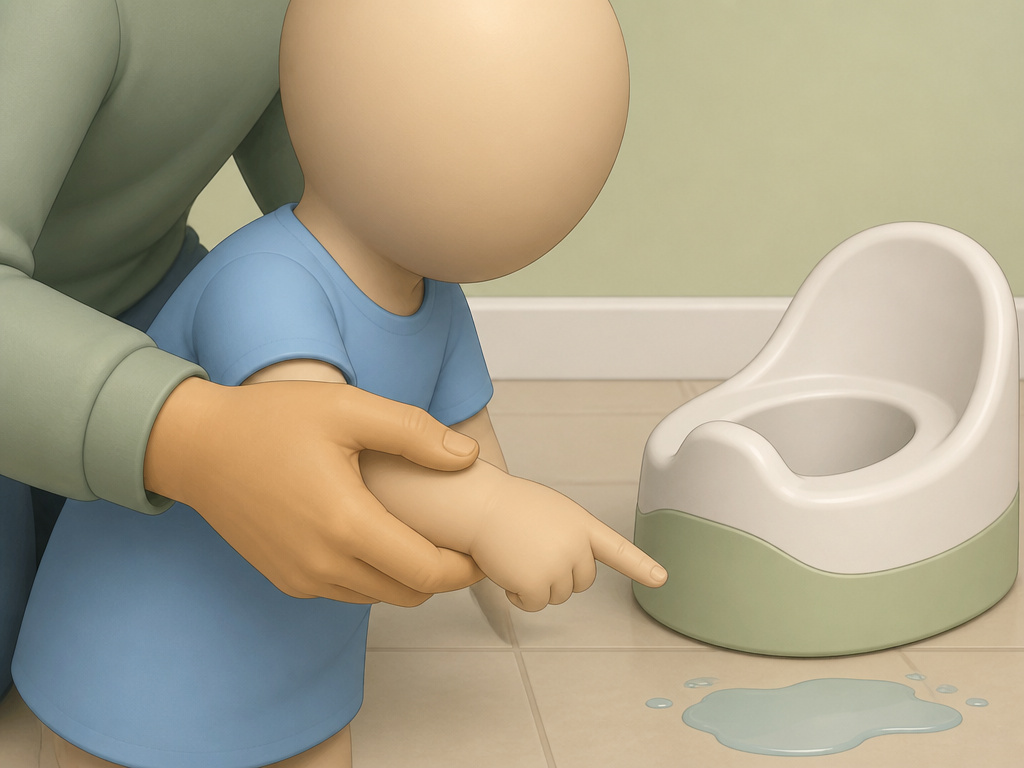
- Handle accidents with zero drama. The script is: “Oops, your pants are wet. That’s okay. Let’s get clean ones.” Have him help clean up (carrying wet clothes to the hamper) as a natural consequence, not a punishment. Scolding feeds anxiety, and anxiety feeds accidents.
This routine is the engine of successful potty training for a 2-year-old. Consistency turns the unfamiliar into the automatic.
The Sit vs. Stand Question (And Why Order Matters)
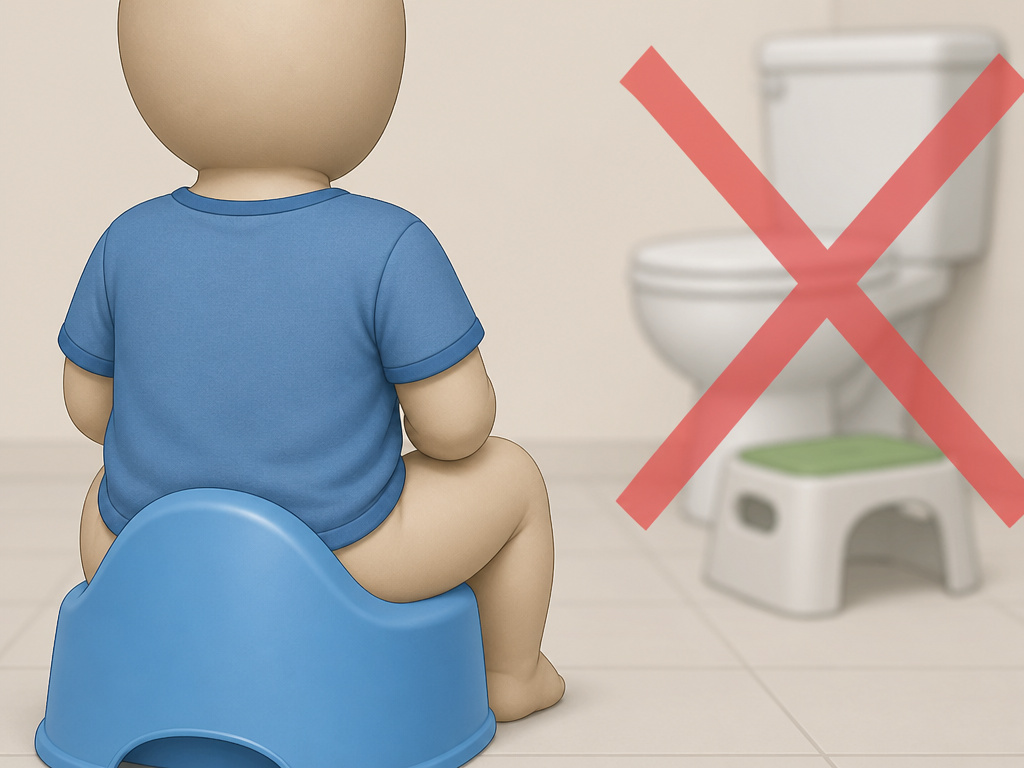
The standing-to-pee milestone can wait. The standard advice from pediatric resources is clear: have boys master urination sitting down first. There are two mechanical reasons.
Sitting is less cognitively demanding. He only has to relax one muscle group. Standing requires aim, balance, and a different posture, which can distract from the core task of release. Second, bowel movements happen sitting down. If you introduce standing too early, he may resist sitting for poops, which is the fast track to stool withholding.
Common mistake: Letting him stand to pee before he’s reliably pooping on the potty. He’ll associate standing with urination only and may hold his bowel movements, waiting for a standing opportunity that never comes.
Introduce standing as a fun “big kid” skill only after he’s fully comfortable with both functions sitting down. Even then, practice with something floatable in the toilet, like a cheerio, for aim. This complete guide to potty training a boy covers this transition in detail.
Navigating the Two Biggest Hurdles: Poop Resistance and Accidents
Stool withholding is the single most disruptive medical issue in potty training. About one in five children refuse to poop on the potty at some point. It usually starts with one painful, hard stool. The memory of that pain causes him to clench to avoid a repeat. The held stool gets drier and harder, making the next attempt even more painful.
If you see signs, crossing legs, hiding, obvious discomfort, treat it as constipation first. Increase water intake, add prune juice or p-fruit, and talk to your pediatrician about a mild stool softener. Do not force sits or show frustration. Back off to pull-ups temporarily if the anxiety is severe, to break the pain-fear cycle. Our article on strategies for toddler bowel movements on the potty dives deeper into solutions.
Accidents are data points, not setbacks. A cluster of accidents after dry spells often means he’s engrossed in play, anxious about a change, or coming down with an illness.Your reaction sets the tone. A neutral cleanup keeps the skill-building on track, while shame teaches him to hide accidents from you.
Day vs. Night: Understanding the Biological Divide
This is the most important concept to internalize: daytime dryness is a learned skill. Nighttime dryness is a biological milestone. They are controlled by different systems.
Daytime control is about recognizing the sensation, making a decision, and getting to the potty. Nighttime control depends on overnight bladder capacity and the brain’s release of vasopressin, a hormone that reduces urine production while sleeping. This system matures on its own timeline, often between ages 4 and 6.
Where this goes sideways: Treating nighttime wetting as a training failure. It’s biology. Putting a child in night pull-ups is not a setback; it’s respecting a physiological reality.
Use pull-ups at night without comment until he starts waking up dry consistently for a week or two. Then, you can try underwear. Even then, a waterproof pad is essential. The Mayo Clinic potty training guide and other medical institutions reinforce this separation.
When to Pause or Call the Pediatrician
Most bumps smooth out. You should pause and possibly call a doctor if you see: * Active refusal: He screams, fights, or shows intense fear about sitting on the potty for over a week. * Signs of constipation or UTI: Hard stools, crying with urination, belly pain, or foul-smelling urine. * No progress after 3 months: If, after three months of consistent, pressure-free effort, he shows no understanding of the process and has zero self-initiated successes. * Regression with other symptoms: Loss of other skills, extreme mood changes, or appetite loss alongside potty problems.
A pediatrician can rule out physical causes like constipation or a urinary tract infection, which can mimic behavioral refusal. This Mass General two-year visit guide includes developmental milestones that provide useful context for your visit.
Frequently Asked Questions
Is 2 years old too early to start potty training a boy?
No. Around two years old is recognized as a good time to begin a toileting routine. While some boys won’t finish until closer to three or four, starting the routine early, introducing the potty, modeling, and casual sits, lays the foundation. Waiting for all “perfect” readiness signs can unnecessarily delay the process.
How do I get my 2 year old boy to actually pee in the potty?
Start with modeling and scheduled, pressure-free sits. Encourage sits 30 minutes after drinks and upon waking. Use clear, simple language (“Let’s try to make a pee in the potty”). If he goes, offer calm, specific praise (“You peed in the potty!”). If he doesn’t, say “Good try” and move on. For persistent resistance, check out our focused tips for getting toddler to pee.
Why is my son afraid to poop on the potty?
This is almost always rooted in a single painful experience. He associates the potty with that pain and now withholds stool to avoid it. This creates a cycle of constipation and more pain. Address the constipation medically first with your pediatrician’s help. Reduce pressure, consider a temporary return to pull-ups for poops to relieve anxiety, and use positive reinforcement for any attempt.
What’s a good potty schedule for a 2 year old?
Aim for sits at key transitions: upon waking, 30 minutes after meals, before leaving the house, and before naps/bed. This potty schedule aligns with natural bodily rhythms. Don’t ask “Do you need to go?” every 30 minutes; a toddler’s default answer is “no.” Use the scheduled prompt instead.
Should I use rewards for potty training?
Small, immediate rewards can be a useful tool for marking a success, not a bribe for future performance. A sticker, a special dance, or a single M&M right after the act creates a positive link. Avoid elaborate charts that tie his worth to cumulative successes, as they can create pressure. For balanced strategies, see our guide to effective reward strategies for potty training.
The Bottom Line
Potty training a two-year-old boy is a marathon with a 3 to 6 month middle. Your compass is routine, not readiness perfection. Start the habit around age two, master sitting for everything first, and decouple nighttime wetting from your definition of success.
The child who hides to poop isn’t being stubborn. He’s scared. The one who has three accidents after a dry week isn’t regressing. He’s tired. Your steady, neutral presence is the most effective tool you have. Keep the foundational potty training strategies simple, sync with caregivers, and trust the timeline. He’ll get there.
