
The Link Between Hand Foot and Mouth Disease and Diaper Rash
This post contains affiliate links. As an Amazon Associate, we learn from qualifying purchases
Yes, hand, foot, and mouth disease (HFMD) can cause a rash in the diaper area. This is a documented part of the viral infection, not a separate diaper rash. The virus causes small blisters (vesicles) that can appear on the buttocks, groin, and perianal skin, often alongside the classic rash on hands and feet.
This fact reframes the entire approach. You are not dealing with a simple moisture or friction rash. You are managing a contagious viral lesion in a sensitive zone where hygiene is critical for preventing spread.
What follows: a breakdown of how to spot this specific rash, the exact hygiene steps that contain the virus (straight from infection control manuals), and how to keep your child comfortable while it runs its course. By the end, you will know the difference between a viral flare and a standard irritation, and the one cleaning mistake that extends the contagious window.
Key Takeaways
- HFMD frequently causes a vesicular rash (small, fluid-filled blisters 3–7 mm in size) on the buttocks, groin, and perianal area, not just hands and feet.
- This rash is directly caused by the virus, not by secondary irritation from diarrhea. Treating it like a standard diaper rash with cream alone misses the contagion risk.
- Meticulous hygiene is non-negotiable. The virus sheds heavily in stool for up to 6 weeks. The NICD’s 2025 IPC protocol mandates gloves and post-change disinfection to stop household spread.
- The lesions are usually painless once they ulcerate, unlike the raw pain of a severe yeast diaper rash. Discomfort peaks during the blistering phase.
- Keeping a child home is advised while they have a fever and open blisters, but exclusion until every spot vanishes is excessive and not supported by most guidelines.
How HFMD Causes a Rash (It’s Not Just Irritation)
The rash from hand, foot, and mouth disease is a direct invasion, not a side effect. After the virus is ingested, it replicates in the intestinal tract and pharynx before spreading through the bloodstream. This systemic spread allows it to reach the skin, causing the characteristic eruption.
Think of it as the virus announcing its presence on the surface. The lesions you see are the body’s immune response playing out in the dermis. This is fundamentally different from the causes of diaper rash like prolonged moisture, friction, or yeast overgrowth. One is an internal viral signpost; the others are external assaults on the skin barrier.
Where this goes sideways: Assuming the diaper-area rash is from acidic stool or new wipes. If your child has a fever or mouth sores alongside a new bum rash, HFMD is the likely culprit, not a product reaction. Treating it solely as a contact rash ignores the contagion you need to manage.
The medical literature is clear. The MSD Manual Professional Edition, reviewed in September 2024, states vesicles are distributed “over the buccal mucosa and tongue, the palms of the hands and soles of the feet, and, occasionally, the perianal/perineal diaper area.” The keyword is occasionally. It is a common enough presentation that it’s listed as a standard site, not a rare oddity.
The HFMD Rash on the Diaper Area: What It Looks Like
Identifying this rash correctly saves you a lot of guesswork and misdirected treatment. You are looking for specific markers.
First, the lesions are typically vesicles. These are small, raised blisters filled with clear fluid, usually 3 to 7 millimeters across—about the size of a pencil tip. They sit on a base of reddened skin. Over a day or two, these blisters rupture, leaving shallow, painless ulcers with a greyish base and a red rim. These ulcers do not scar.
| Feature | HFMD Diaper-Area Rash | Common Irritant Diaper Rash |
|---|---|---|
| Primary Lesion | Small fluid-filled blisters (vesicles) that ulcerate | Red, flat, or slightly raised patches of inflamed skin |
| Pain Level | Blisters may be tender; ulcers are typically painless | Raw, burning pain, especially during wiping |
| Pattern | Can be scattered; not necessarily confined to convex skin | Concentrated on buttocks, thigh folds, genitalia—areas of most contact |
| Other Symptoms | Almost always accompanies fever, mouth sores, rash on hands/feet | Usually isolated to the diaper area |
The rash can appear on the buttocks, the groin folds, and directly around the anus (the perianal area). It might be scattered, not a solid patch. This distribution is a key clue. A blistering diaper rash from other causes is unusual; blisters in that zone point strongly to HFMD or another viral agent.
The skin rash develops over 1 to 2 days. You might see the spots on the hands and feet first, or they may all appear together. The entire course, from fresh blister to healed skin, lasts about 10 days.
Contagion and Hygiene: The Critical Difference in Management
This is the most important practical shift. A standard diaper rash prevention routine focuses on keeping skin dry and protected. An HFMD diaper-area rash routine must focus on containing a live virus.
The virus is shed abundantly in stool and from the fluid inside the blisters. According to the StatPearls HFMD clinical review, the virus can be detected in stool for about 6 weeks after infection. Shedding from the mouth and respiratory secretions is shorter, generally less than 4 weeks.
That six-week stool-shedding window is the silent hazard. A child can seem perfectly well, back to normal play, and still be shedding virus in their diapers for over a month. This is why hygiene protocols are not optional.
Before you start: The virus lives on surfaces. Wear disposable gloves during every diaper change. Clean the changing pad with a disinfectant after each use. Wash your hands with soap and water—hand sanitizer is not enough if hands are soiled.
The Infection Prevention and Control (IPC) Protocol for HFMD published by South Africa’s NICD in 2025 lays out the exact standard: – Gloves should be worn when handling body fluids or changing diapers. – Diaper-changing stations should be disinfected after each use. – Caregivers should wash hands before and after diaper changes.
Skip these steps, and you risk passing the virus to yourself, other caregivers, or other children in the home. The virus spreads through the fecal-oral route—a tiny amount of contaminated matter on a hand that touches a mouth is all it takes.
How to Care for the Rash and Your Child
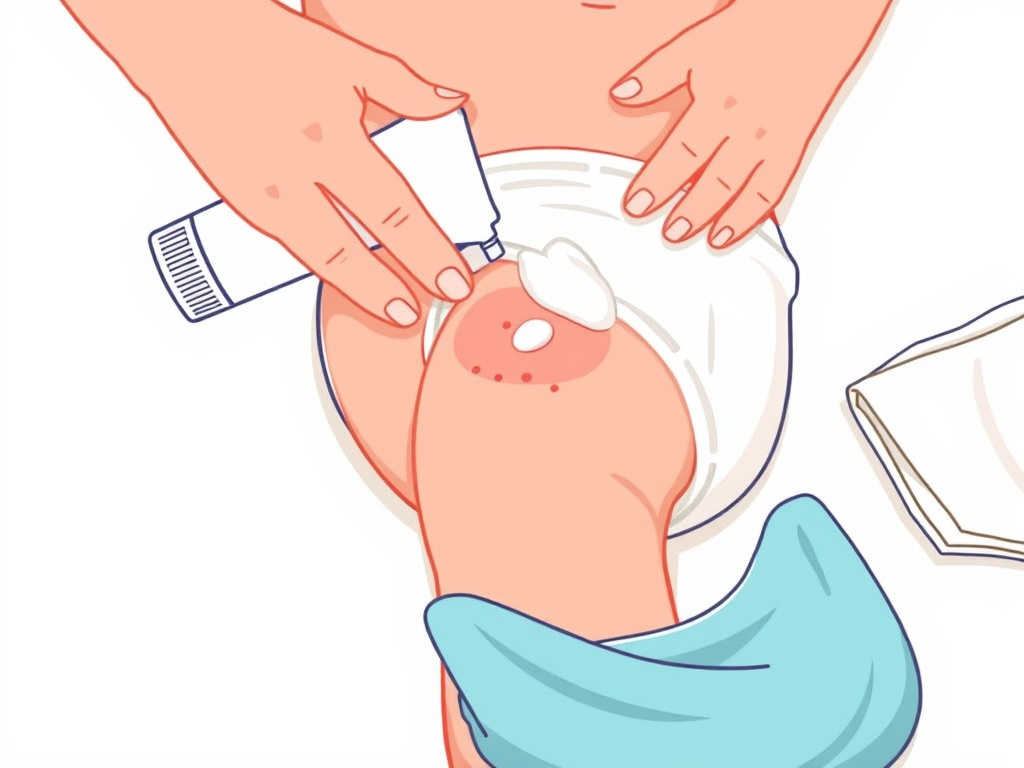
Treatment is supportive. You cannot cure the virus; you help the body ride it out comfortably and prevent secondary skin issues.
Keep the area clean and dry. Gently pat the area clean with lukewarm water and a soft cloth during changes. Avoid vigorous rubbing, which can rupture blisters prematurely. Let the area air-dry completely before putting on a fresh diaper.
Use a barrier cream strategically. A simple zinc oxide paste (like Desitin Maximum Strength or Aquaphor Baby Healing Ointment) creates a protective layer over the ulcerated spots. It shields the raw skin from the irritating enzymes in stool and urine. Do not use anti-fungal creams (like those for yeast rash signs) unless a secondary yeast infection is diagnosed by a doctor.
Manage discomfort. The mouth sores are often the main source of pain, leading to poor hydration. For a fussy baby in clear discomfort, pediatrician-approved pain relievers like acetaminophen or ibuprofen (for infants over 6 months) can help. Cool, soft foods and fluids are essential.
Diaper choice: Consider slightly more absorbent diapers or changing a bit more frequently to minimize wetness against the skin. The goal is to maintain the skin barrier while the underlying viral rash heals.
If the ulcerated areas become deeply raw, weepy, or show signs of a bacterial infection (increasing redness, warmth, pus), consult a doctor. This could indicate a secondary infection needing different treatment.
When to See a Doctor
HFMD is usually mild. Watch for signs that suggest a more severe course or complications.
- Dehydration: Fewer wet diapers, dry mouth, no tears when crying, or unusual lethargy. Difficulty drinking due to mouth pain is the common cause.
- Signs of a severe diaper rash complication: The skin becomes deeply broken, bleeds easily, or develops honey-colored crusting (impetigo).
- Neurological symptoms: This is rare but serious. Be alert for a stiff neck, persistent vomiting, extreme irritability or lethargy, or any jerking movements. Enterovirus A71 strains are more associated with these complications.
- Fever that persists beyond 3 or 4 days, or a fever that returns after going away for a day.
For most families, the main reason to call is confirmation and comfort. If you are unsure whether the rash is HFMD, a yeast infection rash, or something else, a pediatrician can provide a diagnosis.
Frequently Asked Questions
Is the HFMD rash on the bottom painful?
The blisters can be tender, but once they rupture into shallow ulcers, they are typically painless. The significant pain of HFMD usually comes from the mouth sores, not the skin rash. This contrasts with a painful diaper rash from irritation, which hurts to the touch.
How long is my child contagious if the rash is in the diaper area?
They are most contagious in the first week of illness, especially while feverish and with active blisters. However, viral shedding in stool can continue for up to 6 weeks. Rigorous handwashing after diaper changes is crucial long after the child feels better to prevent household spread.
Can adults get the rash in the diaper area from HFMD?
Yes, adults can contract HFMD, though it’s less common. The presentation, including a potential rash on the hands, feet, mouth, and buttocks/groin, is similar. Adult cases are often mistaken for other conditions.
Should I use a special wipe or cleanser on the rash?
Use plain water and a soft cloth or the mildest, fragrance-free baby wipes. Avoid wipes with alcohol, fragrance, or essential oils, which can sting broken skin. The goal is gentle cleaning without introducing new irritants.
Does this mean my child will always get a rash there with HFMD?
No. The perianal/perineal rash is a common but not universal feature. Some children have a very mild skin presentation, while others have a widespread, dramatic rash. The presence or absence of a diaper-area rash doesn’t change the core diagnosis or management.
The Bottom Line
Hand, foot, and mouth disease absolutely can cause a distinct rash in the diaper area. It is a viral signature, not a coincidence. Recognizing those small blisters changes your game plan from simple skincare to infection control.
Your priority shifts to containment: gloves, disinfecting changing stations, and relentless handwashing. Comfort care with barrier creams and pain management for mouth sores still matters, but hygiene is the main event. It is what protects the rest of the family and shortens the outbreak’s shadow in your home.
Remember, the rash itself is temporary and benign. The vigilance it requires is the real task. Get that right, and you manage the illness effectively, even when it shows up in the most inconvenient place.
