
Can Diaper Rash Cause Blisters? The Answer and What to Do
This post contains affiliate links. As an Amazon Associate, we learn from qualifying purchases
Yes, diaper rash can cause blisters, and when it does, it’s usually a sign of a secondary infection, most often from bacteria like Staphylococcus aureus or a yeast like Candida albicans. These aren’t part of a simple irritation rash; they signal the skin barrier has broken down and needs targeted treatment, not just a thicker layer of cream.
That distinction between irritation and infection is where most home care plans fail. A basic red patch from wetness might clear in three days with air and barrier cream. A blistering rash won’t. It needs an antifungal or, in the case of bacterial impetigo, a prescription antibiotic. Getting this wrong means a week of pain for your baby and a trip to the pediatrician you could have avoided.
What follows: how to spot the difference between infection blisters and other bumps, the step-by-step protocol for a blistering rash (including the one soak that actually helps), and the exact symptoms that mean you should call the doctor today, not tomorrow.
Key Takeaways
- Blisters from diaper rash are almost always a sign of infection, either bacterial (like staph) or fungal (yeast), and require specific medication beyond standard barrier creams.
- Bacterial blisters (Staphylococcus aureus) often appear as fragile, fluid-filled bullae that rupture into honey-colored crusts, while yeast (Candida albicans) causes a fiery red rash with distinct “satellite” papules or pustules at the edges.
- The single most effective thing you can do for a blistering rash is to keep the area meticulously clean and dry, pat, don’t rub, and allow for extended air-dry time before applying any treatment.
- If blisters are present with fever, if the rash spreads outside the diaper area, or if there’s no improvement within 48-72 hours of starting antifungal cream, stop home treatment and contact your pediatrician.
- Prevention hinges on reducing prolonged moisture; using super-absorbent diapers changed promptly, and applying a zinc oxide or petroleum jelly barrier with every change are more effective than treating a full-blown infection.
What Do Diaper Rash Blisters Look Like?
You won’t see blisters in a simple irritant diaper rash. That type shows up as a pink or red, warm, flat rash on the convex surfaces, the buttocks, thighs, and belly, while sparing the deeper skin folds. Blisters mean the situation has escalated.
The clinical presentation hinges on which pathogen has taken hold. According to the StatPearls medical reference on diaper dermatitis, the two main culprits have distinct signatures.
Bacterial infection from Staphylococcus aureus can present as bullous impetigo. This starts with small red spots that rapidly evolve into larger, fragile blisters filled with clear or cloudy fluid. These blisters rupture easily, leaving behind a moist, red base that quickly forms a characteristic honey-colored or brownish crust. The surrounding skin is often red and inflamed.
Yeast infection from Candida albicans typically creates a bright red, shiny rash with sharp borders. The hallmark is the presence of “satellite lesions”, small red papules or pustules that appear just beyond the main border of the rash. While these satellite lesions can look like tiny blisters, they are often more solid. The rash frequently involves the skin folds (the groin creases and between the buttocks), which irritant rashes usually spare.
Here’s a quick reference to separate the two:
| Feature | Bacterial Infection (e.g., Staph) | Yeast Infection (Candida) |
|---|---|---|
| Primary Lesion | Fragile blisters (bullae) that rupture and crust | Intense red, flat plaque with satellite papules/pustules |
| Crust | Honey-colored, sticky, and common | Not typical; skin may be shiny or have a scaly texture |
| Involves Skin Folds? | Can, but not always | Almost always, and often most severe in folds |
| Associated Symptoms | May be accompanied by fever or general fussiness | Often intensely itchy, causing significant discomfort |
A severe diaper rash from any cause can also lead to raw, weeping skin that might look blistered. The difference is the presence of discrete, raised fluid-filled pockets versus generalized wet, eroded skin.
What Causes Blisters to Form?
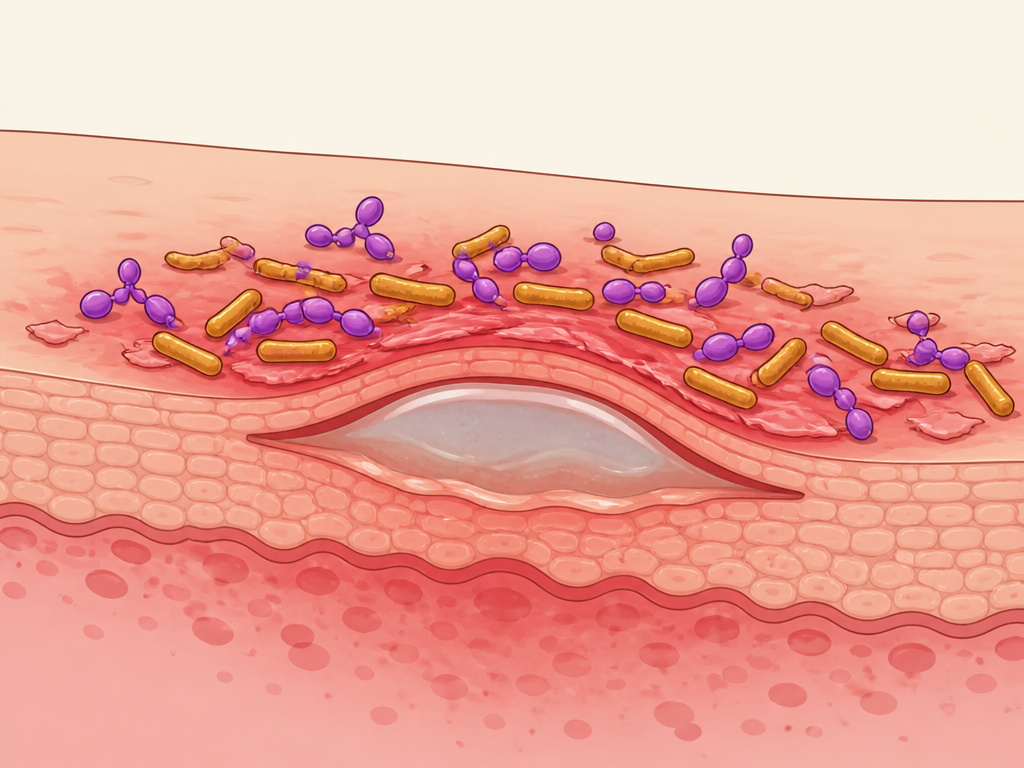
Blisters don’t form from a little extra moisture. They are a breakdown of the skin’s integrity. The process follows a predictable sequence.
First, prolonged wetness from urine and stool raises the skin’s pH, making it more alkaline. This disrupts the skin’s protective barrier and activates digestive enzymes in stool that are highly irritating. The skin becomes macerated, soft, swollen, and more permeable. This is the stage of simple irritant contact dermatitis, the most common diaper rash cause.
Once the skin barrier is compromised, it’s an open door. Candida albicans, a yeast that naturally lives in the gut, finds the warm, moist, sugary environment perfect and overgrows. It releases enzymes that further break down skin, leading to that classic beefy-red rash. The satellite lesions are a sign of the yeast spreading.
Bacteria like Staphylococcus aureus seize the same opportunity. They produce toxins that cause a separation between layers of skin, literally creating a pocket that fills with fluid, a blister. This is why a bleeding diaper rash or one with open sores is at high risk for a bacterial takeover.
One major accelerator is diarrhea. A 2023 study in The Open Dermatology Journal concluded that “the longer the duration of diarrhea, more severe is the diaper dermatitis.” Frequent, acidic stool overwhelms even the most diligent changing schedule, rapidly leading to the broken skin that infections need.
Step-by-Step Care for a Blistering Diaper Rash
If you see blisters, your protocol changes. The goal is to treat the infection while promoting healing of the damaged skin. Gentleness is non-negotiable.
Before you start: Wash your hands thoroughly. Have all supplies, clean washcloths, warm water, treatment creams, a fresh diaper, within reach before you begin. Never pop or peel a blister; you’re introducing more bacteria to an open wound.
Step 1: Clean with lukewarm water, no wipes.
Use a soft cloth or even a gentle squeeze bottle of water to rinse the area. If stool is present, a fragrance-free, soap-free cleanser like Cetaphil can be used sparingly. The Seattle Children’s diaper rash guide explicitly advises against standard wipes during an active, severe rash, as they can leave a film and cause stinging. Pat the area dry with a clean, soft towel. Do not rub.
Step 2: Soak for severe raw skin (optional but effective).
If the skin is extensively raw, weepy, or blistered, a 10-minute soak can soothe and cleanse. Add 2 tablespoons of baking soda to a shallow tub of warm water. Let your baby sit and play. This helps neutralize acidity and gently cleanses without abrasion. Pat dry completely afterward.
Step 3: Apply medication first, then barrier.
This is the critical order. If you suspect a yeast infection (red with satellites), apply an over-the-counter antifungal cream like Lotrimin AF (clotrimazole) or Monistat (miconazole) to the affected area. Use it twice a day for 7-10 days, even if the rash looks better sooner. If a bacterial infection is confirmed by a doctor, use the prescribed topical or oral antibiotic as directed. After the medication, apply a thick layer of a barrier cream like Desitin Maximum Strength (40% zinc oxide) or plain petroleum jelly. This protects the skin from the next wet diaper and creates a healing environment.
Step 4: Maximize air exposure.
Lay your baby on a towel without a diaper for 10-15 minutes after each change. Attach the clean diaper loosely to allow airflow. This single step does more to kill yeast and dry out blisters than almost anything else.
Step 5: Change diapers obsessively.
Check the diaper hourly. The moment it’s wet or soiled, change it. Overnight, consider setting one alarm to change a wet diaper. A super-absorbent disposable diaper is clinically shown to keep skin drier than cloth during this healing phase.
What most people get wrong: They apply the barrier cream directly over the infected skin, trapping the yeast or bacteria against it. Medication must contact the skin directly to work. The barrier goes on top.
When to Stop Home Treatment and Call the Doctor
Home treatment has clear limits. The NCBI Bookshelf medical reference notes that infections require specific antimicrobials, and guessing wrong wastes time. These symptoms are your stop signs.
- Fever with the rash. This indicates a systemic infection that needs immediate assessment.
- Blisters filled with pus, or widespread honey-colored crusting. This points strongly to bacterial impetigo, which often requires prescription antibiotic ointment or oral medication.
- No improvement after 2-3 days of consistent antifungal cream. This suggests the infection may be bacterial, resistant, or something else entirely.
- The rash spreads rapidly to the abdomen, back, arms, or face.
- Your baby is under 1 month old and has any blistering rash. A newborn’s immune system is too immature to fight infection without help.
- Your baby seems lethargic, isn’t feeding well, or is in extreme pain.
If you see any of these, pick up the phone. A quick visit or telemedicine appointment can get you the right prescription and end the ordeal faster.
How to Prevent Rash from Escalating to Blisters
Prevention is always less stressful than treatment. The strategy is to break the cycle of wetness and irritation before the skin barrier fails.
Choose the right barrier cream and use it proactively. For babies prone to rash, use a zinc oxide cream (like Balmex or Desitin) with every single diaper change, not just when you see pink skin. The US FDA monograph for diaper rash products lists zinc oxide and petrolatum as approved protective ingredients that “help protect from wetness that causes diaper rash.” Apply it liberally.
Change diapers with strategic timing. Don’t wait for a diaper to feel full. Change immediately after a poop, and check for wetness every 2 hours during the day. After a bath or soak, ensure the skin is completely dry before diapering.
Manage diarrhea aggressively. Since we know diarrhea severity correlates directly with rash severity, focus on hydration and contact your pediatrician about managing the underlying cause. During a bout of diarrhea, increase the frequency of changes and consider using a pure petroleum jelly barrier (like Vaseline) at every change to block contact with stool.
Be vigilant with antibiotics. If your baby is on antibiotics, the medication can wipe out good bacteria and allow yeast to flourish. Start using an antifungal cream at the first sign of redness during the course of antibiotics.
The core idea is to never let the skin stay wet. Dry skin is healthy skin. All the best tips to prevent rash flow from that single rule.
Frequently Asked Questions
Are diaper rash blisters contagious?
The blisters themselves can be contagious if they are caused by a bacterial infection like impetigo. The fluid inside the blisters contains bacteria that can spread to other parts of your baby’s body or to other people through direct contact. Yeast rash blisters are less contagious person-to-person but can easily spread over your baby’s own skin. Good hand hygiene is essential.
Can I use hydrocortisone cream on blistering diaper rash?
Do not use hydrocortisone or any steroid cream unless specifically directed by your pediatrician. Steroids suppress inflammation and can make a fungal or bacterial infection much, much worse by suppressing the local immune response. They are sometimes used in combination with an antifungal for severe inflammation, but this is a doctor’s decision.
How long does it take for diaper rash blisters to heal?
With correct treatment, you should see improvement within 2-3 days. Significant healing of blisters and raw skin usually takes 5-7 days. Complete resolution can take up to 10-14 days, especially if the rash was severe. If you see no improvement in the first 72 hours, reassess with your doctor.
What’s the difference between a blister and a pustule from yeast?
Blister is a fluid-filled sac beneath the top layer of skin. A pustule from a yeast diaper rash is a small, raised bump that contains pus (dead white blood cells and bacteria) and is within the skin layer. Yeast typically causes pustules or solid red papules, not true blisters. Bacterial infections are the classic cause of fragile, fluid-filled blisters.
Should I stop using wipes if there are blisters?
Yes, temporarily stop using commercial wipes. The fragrances, preservatives, and rubbing motion can irritate broken skin and hinder healing. Use soft cloths and lukewarm water only, patting the area clean. You can resume gentle, fragrance-free wipes once the skin is fully healed and intact.
Before You Go
Blisters transform a common diaper rash into a medical signal. They tell you the skin’s defense is down and an infection has moved in. Your response must shift from prevention to targeted treatment: identify the likely culprit, apply the correct medication first, and shield the raw skin with a thick barrier.
Remember the timeline. If a diligent home approach, antifungal cream, air time, obsessive changing, doesn’t show clear progress in two to three days, call your pediatrician. Waiting longer just prolongs your baby’s discomfort and risks the infection spreading. Your best tools are observation, the right over-the-counter antifungal, and knowing when your home toolkit is outmatched.
