
Using Epsom Salt for Diaper Rash: Does It Help Soothe Skin?
This post contains affiliate links. As an Amazon Associate, we learn from qualifying purchases
Epsom salt can help diaper rash as a short-term topical soak to soothe inflammation, but it is not a barrier treatment. The US FDA and Health Canada define approved diaper rash treatments as barrier creams like zinc oxide or petroleum jelly applied to a clean, dry area. For a magnesium sulfate soak, the DailyMed label specifies 2 cupfuls per gallon of water for 30 minutes, up to three times daily. This addresses symptoms, not the root cause of moisture and friction.
That distinction between a soothing soak and a protective barrier is the whole game. A soak can calm angry skin during a bad flare-up. It does not stop the next wet diaper from restarting the cycle.
What follows is the breakdown: the two types of rash you’re actually dealing with, the FDA’s exact language on barrier creams, the step-by-step for an Epsom salt bath, and the three scenarios where you should skip it entirely and call the pediatrician.
Key Takeaways
- Epsom salt is a topical treatment, not a barrier. It can soothe inflammation in a bath but provides zero protection against the wetness that causes most diaper rash.
- The only FDA and Health Canada-approved claims for diaper rash products involve creating a barrier. Think zinc oxide paste or petroleum jelly.
- For a soak, use the official ratio: 2 cupfuls of Epsom salt per gallon of warm (not hot) water, for no more than 30 minutes, up to three times a day.
- Never use an Epsom salt soak if the rash shows signs of a yeast infection (bright red with satellite spots) or if your child has diabetes and you’re using hot water.
- If a rash doesn’t improve within 2 to 3 days of consistent barrier cream use, it’s time to consult a doctor. They may prescribe a short course of hydrocortisone 0.5%.
The Two Types of Diaper Rash You’re Actually Dealing With
Not all red bottoms are the same. The treatment that works for one can make the other worse. You need to know which is which before you reach for any remedy, Epsom salt included.
The first and most common is irritant contact dermatitis. This is the straightforward red, sore skin caused by prolonged wetness, friction, and the chemical irritation from urine and stool. The skin looks inflamed but generally smooth, and it often spares the deep skin folds. This is the rash that barrier creams are designed to prevent and treat.
The second is a yeast diaper rash, caused by Candida albicans. This one looks different. It’s often a brighter, beefier red with a sharply defined border and what doctors call “satellite lesions”, small red pimples or pustules that appear around the main rash area. Critically, it loves warm, moist crevices, so it thrives in the deep skin folds that irritant rash often misses.
Applying a thick barrier cream over a full-blown yeast rash is like sealing a damp basement. You trap the moisture the yeast needs and can make the infection spread.
Why does this matter for Epsom salt? A soak might temporarily soothe the inflammation of an irritant rash. For a yeast rash, however, the temporary relief is a distraction from the real need: an antifungal cream like nystatin or clotrimazole. Soaking won’t kill the yeast.
What the Regulators Actually Say About Diaper Rash Treatment
The language here is precise for a reason. The US FDA and Health Canada, which govern over-the-counter drug claims, have a specific monograph for diaper rash products. It doesn’t mention Epsom salt.
The permitted claims for a market-authorized diaper rash product are: * Helps prevent diaper rash. * Protects chafed skin/minor skin irritation due to diaper rash. * Helps protect from wetness that causes diaper rash. * Temporarily helps relieve minor skin irritation due to diaper rash.
The mandated direction for use is always the same: “Apply liberally to a clean and dry diaper area as needed.”
This framework makes the official stance clear: the cornerstone of treatment is a barrier. The product must sit on the skin to shield it from moisture and irritants. This is why the gold-standard products are ointments like zinc oxide paste (Desitin, Triple Paste) or plain petroleum jelly (Vaseline). They are occlusive. They stay put.
Epsom salt, as a water-soluble compound used in a bath or compress, cannot form this barrier. It is not classified under this monograph. Its use is based on its general topical properties as an osmotic agent, which can theoretically draw out fluid and reduce swelling, a different mechanism entirely.
How Should You Use Epsom Salt for Diaper Rash?
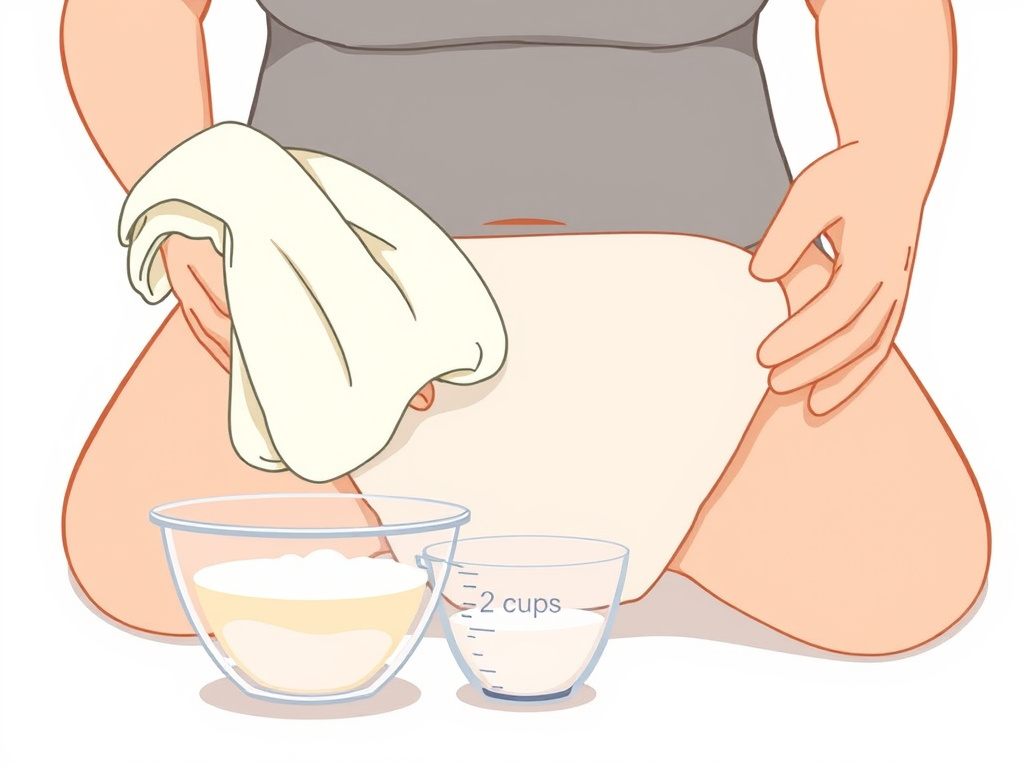
If you decide to try it, follow the drug facts. Don’t just pour a handful in the tub. The DailyMed Epsom Salt label, the official NIH medication database, provides the exact specifications for topical use of magnesium sulfate.
For topical use as a soak or compress, dissolve 2 cupfuls of this product per gallon of water. Apply with bandages or toweling for 30 minutes, up to three times a day.
The 30-minute limit is important. Prolonged soaking can macerate already-sensitive skin, breaking down the skin’s barrier further and making the problem worse. This is a short-term soothing intervention, not a marathon soak.
| Step | Action | Why It Matters |
|---|---|---|
| 1. Prepare Solution | Dissolve 2 cupfuls of Epsom salt in 1 gallon of WARM water. | Ensures proper concentration; hot water can burn and is contraindicated for some. |
| 2. Choose Method | Use a small basin for a sitz bath or soak a soft washcloth for a compress. | A compress allows you to target the rash area without a full bath. |
| 3. Apply & Time | Gently apply compress or soak area for 30 minutes max. | Prevents skin maceration. Do not scrub. |
| 4. Dry Thoroughly | Pat the area completely dry with a soft, clean towel. | Any leftover moisture under a barrier cream creates a swamp. |
| 5. Apply Barrier | Immediately apply a thick layer of zinc oxide or petroleum jelly. | The soak addressed inflammation; the barrier prevents the next flare-up. |
Never substitute an Epsom salt soak for a proper cleaning. If there’s stool, you still need to gently clean the area with a mild, fragrance-free cleanser and water first. The soak comes after cleaning, before the barrier cream.
When You Must Avoid Epsom Salt for Diaper Rash
This isn’t scare talk. It’s matching the remedy to the problem, and sometimes the match is wrong. Here are the hard stops.
Where this goes sideways: Using a warm Epsom salt soak on a child with diabetes. The DailyMed label explicitly states “Hot or warm soaks should not be used by individuals with diabetes except on the advice of a physician.” Diabetes can impair circulation and nerve sensation, raising the risk of burns.
Second, if you suspect a yeast infection. Those bright red, spotty rashes need an antifungal, not just a soak. Using Epsom salt might offer a few minutes of relief but delays effective treatment. The yeast will continue to grow.
Third, if the skin is broken, bleeding, or ulcerated. Putting any solution, including Epsom salt, on open wounds introduces stinging and a risk of infection. This is beyond home care.
Finally, if the rash is severe and widespread. A severe diaper rash that covers large areas, has blisters, or is accompanied by a fever requires a pediatrician’s diagnosis. It could be a bacterial infection like impetigo, which needs prescription antibiotics.
The Barrier Creams That Actually Match the FDA Guidelines
This is where you should spend your confidence. These products do exactly what the regulators say a diaper rash treatment should do: they protect.
Zinc Oxide Paste (like Desitin Maximum Strength or Triple Paste) is the workhorse. The zinc oxide is a mild astringent and provides a thick, water-repellent layer. You apply it like you’re frosting a cake, thick enough that you can’t see the skin beneath it. There’s no need to wipe it all off at the next change unless it’s soiled with stool; just clean the stool and apply more cream on top.
Petroleum Jelly (Vaseline) is a pure occlusive. It’s inert, incredibly unlikely to cause a reaction, and locks moisture out effectively. It’s often the best choice for very sensitive skin or for daily prevention, especially during bouts of diarrhea.
Dimethicone-based creams are another option. Dimethicone is a silicone-based barrier that also feels lighter on the skin. Some parents prefer it for everyday use.
The common thread? They all stay on the skin. They don’t rinse off. This is the fundamental difference from an Epsom salt soak, and it’s why they are the first-line recommendation in every credible diaper rash clinical overview.
Common mistake: Applying barrier cream to damp skin. This traps moisture against the skin, creating the perfect environment for rash. Pat, don’t rub, until the skin is completely dry, then apply the cream.
What to Do If the Rash Isn’t Getting Better
You’ve been diligent. Frequent changes, gentle cleansing, a thick barrier cream. But after 2 to 3 days, the rash is the same or worse. Now what?
The StatPearls diaper dermatitis entry provides the clinical next step: “For cases of diaper dermatitis that do not improve within 2 to 3 days… A short course of low-potency corticosteroids can be used. Hydrocortisone 0.5% twice a day for one week.”
This is a specific, medically-reviewed recommendation. Hydrocortisone 0.5% (not the 1% strength often found on shelves) is an anti-inflammatory that calms the immune response in the skin. It’s crucial to understand this is a short-term tool to break the inflammation cycle, not a daily moisturizer. You use it for a week, then stop.
If the rash has the hallmarks of yeast, those satellite spots, involvement in the folds, then an antifungal is needed. You might even get a combination cream that contains both a low-potency steroid and an antifungal agent.
This is the point to move from home care to professional advice. A persistent rash needs a diagnosis to rule out less common causes like allergic reactions or other skin conditions.
Frequently Asked Questions
Can I put dry Epsom salt on diaper rash?
No. Never apply dry Epsom salt crystals directly to a baby’s skin. They are abrasive and will cause micro-tears, significantly worsening irritation and pain. Epsom salt must always be fully dissolved in water for use as a soak or compress.
Is an Epsom salt bath better than a regular bath for diaper rash?
It can offer additional soothing for inflammation due to its osmotic properties. However, a regular lukewarm bath with a mild, fragrance-free cleanser is equally effective for the essential tasks of gentle cleaning and soaking. The real healing happens after the bath, when you pat dry and apply a barrier cream.
How does Epsom salt compare to a baking soda bath?
Both are alkaline soaks that can soothe skin. A baking soda bath is often recommended for its mild antiseptic properties. There’s no strong evidence that one is superior to the other for diaper rash. The choice is less important than the follow-up: thorough drying and barrier application. The key benefit of any bathing is the gentle cleaning it provides.
Can Epsom salt cure a yeast diaper rash?
No. Epsom salt has no antifungal properties. A yeast diaper rash requires an antifungal medication like nystatin, clotrimazole, or miconazole to kill the Candida fungus. Using only Epsom salt will allow the infection to persist and likely worsen.
What’s the safest way to try Epsom salt for my baby?
Do a patch test first. Dissolve a small amount in water, apply a soaked cloth to a small, unaffected area of skin (like the thigh), and wait 24 hours. If no redness or irritation appears, it’s likely safe for a short-term soak. Always consult your pediatrician before trying new remedies, especially on inflamed skin.
Before You Go
Epsom salt has a place in the cabinet, as a short-term, topical soak for the inflammation of a standard irritant rash. It is not a prevention strategy and it is not a treatment for yeast. Its mechanism is temporary relief, not protection.
The regimen that works is less exciting: super-absorbent diapers, changes at the first hint of wetness, gentle pat-drying, and a gloppy layer of a true barrier cream like zinc oxide. That’s the process that matches the FDA’s definition of treatment. If that fails after a few days, the conversation shifts to your pediatrician and the potential for hydrocortisone 0.5% or an antifungal.
Focus on the barrier. Everything else is just a temporary comfort on the way there.
