
Diaper Rash: Is Cornstarch Good? Official FDA Advice & Risks
This post contains affiliate links. As an Amazon Associate, we learn from qualifying purchases
Cornstarch is good for diaper rash caused solely by moisture and friction, according to the US FDA and Health Canada, which approve it in concentrations from 10% to 98% in over-the-counter products. Its job is to absorb wetness and reduce skin rubbing. It is not good, and is explicitly warned against, for rashes on broken skin or suspected yeast infections, where it can worsen the problem or cause dangerous inhalation pneumonia.
That regulatory line, effective for wetness, dangerous for wounds, is where most parent guides stop. They miss the specifics: the 10-98% concentration range that defines a real product, the documented hospital case of cornstarch pneumonitis in a one-month-old, and the ongoing professional fight over whether it feeds yeast. Your choice isn’t between cornstarch and nothing. It’s between a drying powder and a sealing ointment, with the baby’s specific rash type as the deciding factor.
What follows: the verbatim regulatory language, the two absolute “do not use” scenarios with their physical consequences, a head-to-head against barrier creams, and the single sentence that tells you which to reach for.
Key Takeaways
- The US FDA/Health Canada classifies cornstarch as an approved OTC drug for diaper rash, effective at absorbing moisture and reducing friction.
- Never use cornstarch on broken skin. Powders can impede healing and are explicitly warned against in official monographs.
- Always keep powder away from the baby’s face to avoid inhalation, which can cause a serious lung condition called cornstarch pneumonitis.
- For yeast-related rashes (candidal infections), evidence is conflicting: some medical sources warn it may worsen the infection, while others cite studies showing it does not encourage yeast.
- For most rashes, a barrier ointment like Vaseline or a zinc oxide cream creates a more reliable protective seal against wetness and irritants than a drying powder.
The Official Verdict: What Regulators Actually Say
Forget home remedy debates. Cornstarch’s role in diaper care is defined by drug regulators. The US FDA and Health Canada joint monograph for diaper rash products lists “Zea mays (corn starch)” as an approved active ingredient.
Corn starch (Zea mays) is indicated to “help prevent diaper rash,” “protect chafed skin/minor skin irritation due to diaper rash,” and “help protect from wetness that causes diaper rash.” For products containing it, the concentration ranges from 10% to 98%.
This isn’t a suggestion. It’s the specification for getting a Drug Identification Number (DIN). Products like “Medicated Cornstarch Baby Powder” on DailyMed list corn starch at 79%. Caldesene Medicated Protecting Powder lists it at 81%, often combined with zinc oxide. Their directed use is clear: “apply powder liberally as often as necessary, with each diaper change, especially at bedtime.”
The mechanism is simple physics. Cornstarch granules absorb moisture, keeping the skin surface drier. They also reduce the coefficient of friction between the diaper and the skin, and between skin folds. This directly addresses the two primary causes of diaper rash: prolonged wetness and chafing.
So, for a simple, mild irritant rash, the red, irritated skin from a wet diaper, the official answer is yes. It has a defined job and it does that job.
The Two Hard Stops: When Cornstarch Becomes a Hazard
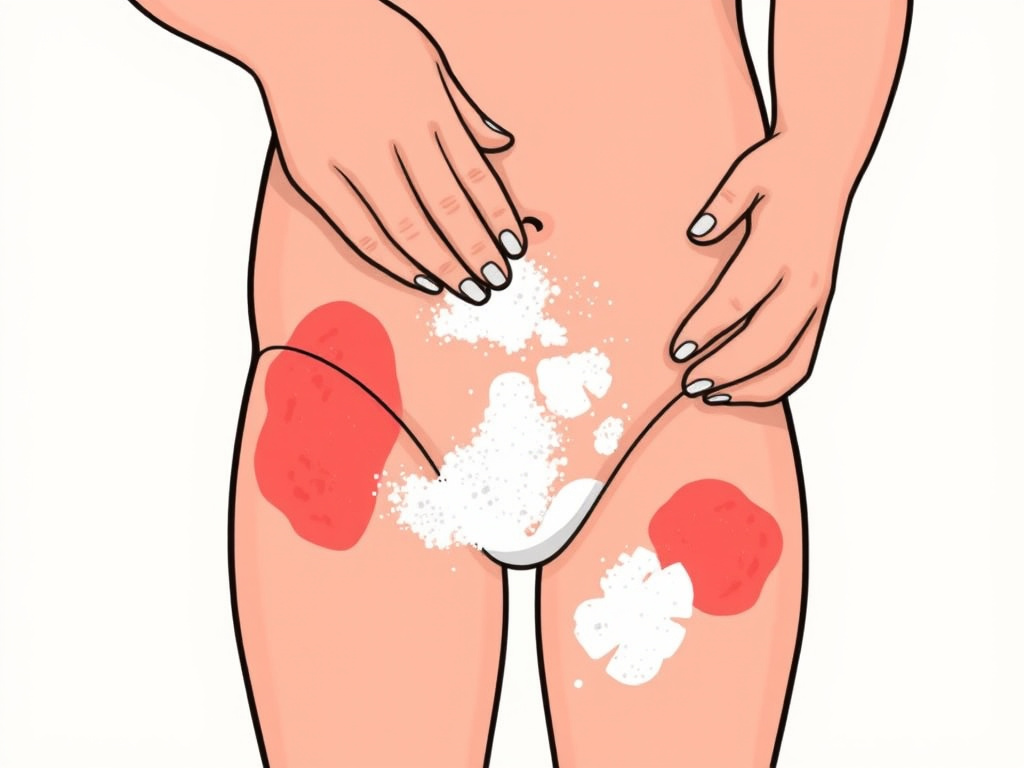 The regulatory approval comes with non-negotiable limits. Ignoring these turns a helpful powder into a genuine risk.
1. Broken Skin: The Powder-in-a-Wound Problem
The monograph and every cited drug label contain the same directive: “Do not use on broken skin.”
This is not a gentle recommendation. When skin is raw, cracked, or bleeding, it is an open wound. Introducing a fine, absorbent powder into that environment is counterproductive. The particles can adhere to the exudate, forming a crust that traps moisture and bacteria against the skin, impeding the healing process. It provides no protective barrier against urine and stool, which will then sting and further irritate the open tissue.
Where this goes sideways: Applying cornstarch to a raw, weeping rash. The powder mixes with moisture to form a gritty paste that grinds into broken skin with every diaper movement, delaying healing by days and significantly increasing discomfort.
For any rash that has progressed beyond simple redness into broken skin, you have moved into severe diaper rash territory. Treatment shifts to gentle cleansing, air drying, and a thick, protective barrier ointment, not a drying powder.
2. Inhalation Risk: The Silent Lung Danger
This is the most severe and under-discussed risk. The labels warn: “Keep powder away from child’s face to avoid inhalation, which can cause breathing problems.”
This warning exists because of documented, serious harm. A case report published in U.S. Pharmacist describes a one-month-old infant admitted to the emergency room with poor feeding and impaired breathing. A chest X-ray showed diffuse lung opacities, and microscopic examination revealed dark-blue polygon-shaped crystals, cornstarch. The diagnosis was cornstarch pneumonitis, attributed to accidental aspiration during diaper changes.
The physics are unforgiving. A cloud of fine powder, shaken from a container, hangs in the air. An infant’s face is right there. They inhale. The starch granules deposit deep in the lungs, causing inflammation and a chemical pneumonia that can lead to permanent respiratory damage.
| Risk Factor | How It Happens | Prevention Must-Do |
|---|---|---|
| Direct Shaking | Powdering directly over the baby creates a cloud. | Shake powder into your own hand, away from the baby, then apply. |
| Loose Containers | An open tub can be spilled or kicked. | Use containers with shaker lids that control dispersion. Keep lid secured. |
| Proximity | The baby’s face is naturally close during changes. | Position the baby so their head is turned away from the powder source. |
This risk alone is why many pediatricians and the Mayo Clinic diaper rash guide often recommend creams and ointments over powders. A tube of Vaseline presents zero inhalation risk.
The Yeast Infection Debate: Fuel or Foe?
This is the professional grey zone. If a diaper rash is caused by Candida albicans (a yeast infection), it presents differently: bright red, often with satellite pustules, and commonly in the deep skin folds. Antifungal medication is required.
The debate is whether cornstarch makes a yeast diaper rash worse. * The Warning Side: The U.S. Pharmacist article states, “The National Institutes of Health (NIH) recommends against use of cornstarch at any time as it can worsen a diaper rash with candidal infection.” The theory is that cornstarch, as an organic carbohydrate, could serve as a culture medium for the yeast. * The Contradicting Side: A pediatric group’s guidelines note, “Recent studies showed that cornstarch does not encourage yeast infections.”
What does a parent do with conflicting expert advice? The conservative, safest path is to avoid cornstarch when a yeast infection is suspected or diagnosed. Since cornstarch does not treat yeast, and its potential benefit (drying) is outweighed by even a theoretical risk of feeding the infection, it’s an easy swap. Use an antifungal cream as directed by a doctor or pharmacist, and rely on a barrier ointment for protection.
The Cornstarch vs. Cream Showdown
Choosing between cornstarch and a barrier cream isn’t about good vs. Bad. It’s about matching the tool to the task. Here’s how they stack up for different scenarios.
| Scenario | Cornstarch Powder | Barrier Cream/Ointment (e.g., Vaseline, Zinc Oxide) | Which Wins |
|---|---|---|---|
| Mild, Red Irritation | Absorbs moisture, reduces friction. Effective for prevention. | Creates a water-repellent seal. Also effective. | Draw. Both work; powder may feel less greasy. |
| Broken or Weeping Skin | Contraindicated. Can impede healing. | Ideal. Protects raw skin from irritants. | Cream. The only safe choice. |
| Yeast Infection Suspected | Theoretical risk of worsening. No therapeutic benefit. | Can be used over antifungal cream as a protective layer. | Cream. Zero risk, adds protection. |
| High Inhalation Risk (e.g., wiggly baby) | High risk. Powder clouds are dangerous. | No risk. Applied directly by hand. | Cream. Eliminates the hazard. |
| Deep Skin Folds | Can clump with moisture, causing irritation. | Can be applied sparingly to protect folds. | Cream. More controlled application. |
The winning choice often comes down to this sentence: If the skin is intact and your primary goal is to keep a dry baby dry, cornstarch is a regulator-approved option. If the skin is compromised, or you need a guaranteed shield against wetness, a barrier is the superior tool.
This is why products like Aquaphor or plain petroleum jelly are default recommendations for treating diaper rash. Their protective barrier is foolproof against moisture, they are inert and safe on broken skin, and they carry no respiratory risk. They are the multitool.
How to Use Cornstarch Safely (If You Do)
If you choose to use cornstarch for a mild, intact rash, this protocol minimizes risk.
- Check the Skin. Confirm the skin is only red, not broken, bleeding, or showing signs of yeast (bright red with bumps).
- Prepare Away from Baby. Take the container to a counter away from the changing area. Shake the desired amount into your own palm or a tissue. This prevents a powder cloud near the baby’s face.
- Apply by Hand. Gently pat the powder from your hand onto the baby’s dry skin. Never shake or puff powder directly from the container onto the baby.
- Focus on the Target. Apply only to areas needing protection. Avoid excessive use that can lead to caking.
- Secure the Container. Close the lid tightly and store it well out of reach of children to prevent spills or play.
- Monitor and Switch. If the rash doesn’t improve within 2-3 days, or worsens, stop using cornstarch. You are likely dealing with a rash type it cannot address, and you should switch to a barrier cream or consult a doctor.
For prevention, some parents find a light dusting of cornstarch after a bath helps keep skin folds dry. Again, the rule holds: intact skin only, applied from your hand.
Frequently Asked Questions
Can cornstarch cure diaper rash?
No, cornstarch does not cure diaper rash. It manages one contributing factor: moisture. It absorbs wetness to help prevent rashes and can soothe minor irritation from chafing. A rash caused by yeast, bacteria, or severe irritation requires targeted treatment.
Is cornstarch or baby powder better for diaper rash?
Modern, talc-free baby powder is often just cornstarch with added fragrance. Pure cornstarch is preferable to historical talc-based powders due to talc’s asbestos contamination risks. However, from a safety and efficacy standpoint, a barrier ointment is generally better than any powder because it poses no inhalation risk and is safe on broken skin.
What are natural alternatives to cornstarch for diaper rash?
Several alternatives focus on creating a barrier rather than just absorbing moisture. Coconut oil has natural antimicrobial properties and can be soothing. Shea butter is an emollient. The most effective and studied natural barrier is plain zinc oxide cream, which both protects and soothes skin. The simplest alternative is pure petroleum jelly (Vaseline).
How does cornstarch compare to zinc oxide?
They work differently. Cornstarch is a drying agent. Zinc oxide is a skin protectant that sits on top of the skin, forming a physical barrier against wetness and irritants while also having mild soothing properties. For treatment and prevention of most rashes, zinc oxide cream (like Desitin or Triple Paste) is a more comprehensive and safer choice.
Why do some doctors tell you not to use cornstarch?
Many doctors discourage cornstarch primarily due to the inhalation risk of any powder, which can lead to serious lung issues. They also know it is ineffective and contraindicated for broken skin or yeast infections, which are common complications. Recommending a cream or ointment eliminates these risks and covers more clinical scenarios safely.
Before You Go
Cornstarch sits in a defined, narrow box. It’s a regulator-approved drying agent for intact skin battling simple wetness. Step outside that box, onto broken skin, near a baby’s airways, or into a fight with yeast, and its utility vanishes, replaced by real hazards.
The safer, broader path is the barrier method. A dab of Vaseline, a smear of zinc oxide, or a layer of Aquaphor provides a fortress against irritants with none of the powder’s risks. It works for prevention, it works on raw skin, and it doesn’t hang in the air. For most parents, that’s the one-tube solution that ends the debate.
