
What Does Pooping in a Diaper Feel Like? Physical Sensations
This post contains affiliate links. As an Amazon Associate, we learn from qualifying purchases
Pooping in a diaper creates a heavy, warm, and sticky mass against the skin, which triggers a cascade of physical changes that damage skin health. The sensation is defined by weight, occlusive warmth, and a slick, uncomfortable texture, but the real consequence is the rapid onset of skin irritation and potential infection if the diaper isn’t changed promptly.
The physical experience is a direct result of material science and human skin physiology. A diaper is an engineered system that can fail, and when it does, the wearer feels every part of that failure.
What follows is a breakdown of the exact sensations, the science behind why they’re harmful, how diaper design tries to mitigate them, and the documented health stakes of leaving a soiled diaper on too long.
Key Takeaways
- The primary feeling is increased weight and bulk, followed by a trapped, occlusive warmth that raises skin temperature and humidity.
- Wet skin has a significantly higher frictional coefficient, making every movement against the diaper liner feel abrasive and increasing the risk of chafing.
- Sodium polyacrylate, the superabsorbent polymer in disposables, can absorb over 300 times its weight in water but struggles with the thicker consistency of stool, leading to poor containment.
- Prolonged exposure to stool alters the skin’s pH, breaks down its protective barrier, and can lead to severe diaper rash within hours, not days.
- Independent lab tests, like those referenced in the EDANA diaper testing protocol, show that some diapers transfer significant wetness back to the skin immediately, making the “baby dry” claim a physical impossibility in many cases.
The Immediate Physical Sensations (Weight, Warmth, Texture)
The moment stool enters the diaper, the wearer feels three distinct changes: added mass, a spike in localized temperature, and an unpleasant shift in texture. This isn’t about comfort; it’s about the skin’s environment shifting into a danger zone.
First comes the sudden increase in weight and bulk. The diaper sags, pulls away from the body at the waist, and creates a distinct feeling of being weighed down in the pelvic area. For an infant, this can alter their center of gravity and may briefly disrupt their movement or crawling rhythm.
Next is the trapped, occlusive warmth. A diaper is designed to be impermeable to liquids, which also means it traps body heat. The introduction of warm stool raises the temperature inside the diaper significantly. This isn’t a gentle warmth, it’s the feeling of a localized microclimate that has become hot and humid.
The part nobody mentions: This occlusive warmth isn’t just uncomfortable. It directly increases skin hydration (wetness) and raises the local pH, creating the perfect environment for the skin’s natural enzymes to become more active and start breaking down the skin’s own protective barrier.
Finally, there’s the texture. Descriptions from firsthand accounts consistently use words like “sticky,” “smeary,” and “slick.” The stool doesn’t magically vanish into the core; it initially forms a viscous layer against the skin. Every slight movement, a leg kick, a shift in sitting position, creates a dragging, smearing sensation. This is where skin damage begins in earnest.
Wet skin is more vulnerable to mechanical interaction. A key finding from dermatology research is that hydrated skin has a significantly higher frictional coefficient than dry skin. That slick, sticky feeling isn’t just gross; it means the skin’s surface is now more prone to abrasive damage from the diaper liner itself with even the gentlest friction.
| Sensation | Immediate Cause | Secondary Skin Consequence |
|---|---|---|
| Increased Weight & Bulk | Mass of stool in the diaper core | Sagging fit increases friction points at legs and waist. |
| Occlusive Warmth | Trapped body heat + warm stool | Raises skin temperature & humidity, accelerating enzyme activity that breaks down skin. |
| Sticky, Smeary Texture | Stool viscosity against the liner | Hydrates skin surface, dramatically increasing its frictional coefficient and risk of chafing. |
How Diaper Design Tries (and Sometimes Fails) to Manage It
Diaper engineering is a battle against these sensations. Brands use a combination of chemistry, materials science, and design to pull moisture away, contain mess, and signal when a change is needed. Understanding these features shows you why the experience varies so much between a high-performance diaper and a cheap one.
The star ingredient is sodium polyacrylate, a superabsorbent polymer (SAP). This powder, found in the diaper’s core, can absorb over 300 times its weight in water. Its job is to rapidly pull urine away from the skin and lock it into a gel. With stool, especially runny stool like diarrhea, the SAP tries to absorb the liquid components, leaving behind a thicker residue. This is why even after a bowel movement, the diaper can feel damp but not necessarily saturated with free liquid.
The top layer against the skin, the liner, is engineered for quick intake. Brands like Huggies use what they call a GentleAbsorb® Liner, designed to “wick” moisture away. The liner’s effectiveness is the difference between a momentary wet feeling and prolonged skin contact. A wetness indicator is another tool, a line that changes from yellow to blue/green when wet. It’s a visual cue designed to prompt a change before the wearer’s discomfort becomes acute.
Where this goes sideways: These features can fail. The superabsorbent polymer is great with water but less effective with the complex chemistry of stool. The liner can become overwhelmed, especially with a large volume, leading to what’s known as “rewet”, where moisture is pulled away but then released back onto the skin.
This failure isn’t theoretical. Independent testing puts diapers through protocols like the EDANA diaper testing protocol, which uses saline solution to measure absorption and skin wetting. Reviews of specific models give us hard data. For example, the Pampers Baby Dry diaper scored “well below-average” in absorption tests, transferring “a significant amount of wetness on the test paper.” If the test paper gets wet, so does the baby’s skin. A diaper that fails to keep the skin dry makes every unpleasant sensation worse and every health risk higher.
The Health Stakes: From Rash to Infection
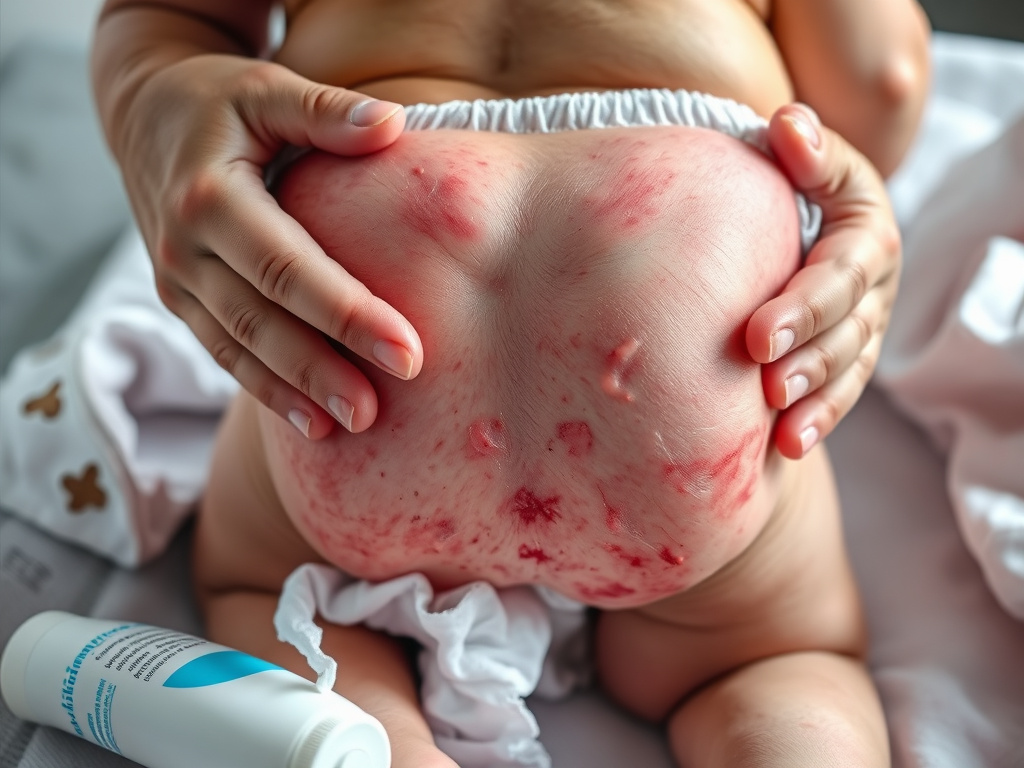
The sensations are a warning system. The real cost of pooping in a diaper is measured in skin health. Ignoring the feeling, or being unable to communicate it, leads directly to a progression of damage: irritation, rash, and in severe cases, infection.
The process follows a predictable timeline. Within hours, the combination of moisture, elevated pH, and enzymatic activity begins to break down the skin’s stratum corneum, its outer protective layer. This is the start of diaper dermatitis, or diaper rash. The skin becomes red, inflamed, and tender to the touch. This initial rash is an open invitation for secondary problems.
Never leave a soiled diaper on for a “little while longer.” Complete and prolonged occlusion of skin results in higher humidity, pH, and microbial growth in the covered area. This environment can encourage a bacterial or yeast infection on top of the initial rash, turning simple redness into a painful, blistering, or pustular condition that requires medicated cream.
The risks escalate with specific scenarios. Diarrhea is particularly dangerous because its high water content and digestive enzymes are intensely irritating. There are firsthand accounts of infants with diarrhea so rapid that re-soiling occurred immediately after cleaning, necessitating back-to-back diaper changes to prevent skin breakdown. For adults or children with conditions leading to fecal incontinence, the management challenge is continuous, making a robust diaper rash prevention strategy non-negotiable.
The goal is to break the cycle of exposure. This means: 1. Changing immediately after soiling. 2. Cleaning gently but thoroughly, water and a soft cloth are often better than perfumed wipes on already compromised skin. 3. Allowing air-dry time before putting on a new diaper. 4. Applying a barrier cream like zinc oxide paste to protect the healthy skin.
If a rash does develop, knowing how to treat diaper rash effectively, and when to see a doctor, is critical. Severe, persistent, or blistering rashes are not a normal part of wearing diapers and need professional assessment.
Frequently Asked Questions
How long can a baby stay in a poopy diaper?
Change a poopy diaper immediately, ideally within a few minutes. Stool is far more irritating to skin than urine. Prolonged contact is the primary cause of severe diaper rash. The clock starts ticking the moment the diaper is soiled.
Does it hurt a baby to poop in a diaper?
The act of pooping itself doesn’t hurt, but the aftermath can cause significant discomfort and pain. The resulting wetness, chemical irritation, and eventual rash make the skin sore, tender, and painful, especially during wiping and when exposed to further moisture.
Why do some diapers handle poop better than others?
Performance hinges on core absorbency and liner design. A high-quality diaper uses a superabsorbent polymer that locks away liquid efficiently and a liner that quickly pulls moisture from the skin. A poor-performing diaper allows “rewet,” where moisture sits against the skin or leaks out entirely, leading to more discomfort and a higher chance of a diaper blowout.
What should you do to prevent problems after a bowel movement?
The routine is non-negotiable: remove the soiled diaper promptly, clean the area thoroughly front-to-back with a gentle wipe or damp cloth, pat the skin completely dry, apply a thick layer of barrier ointment, and secure a clean, well-fitting diaper. A proper diaper fit is essential, too tight and it traps moisture; too loose and it leaks.
Can pooping in a diaper cause a urinary tract infection (UTI)?
Yes, it is a risk factor, especially for baby girls. Stool contains bacteria like E. Coli. If fecal matter is pushed toward the urethra during wiping or due to a poor diaper fit, bacteria can enter the urinary tract. This is why proper cleaning after pooping, wiping front to back, is a critical hygiene practice.
Before You Go
Pooping in a diaper isn’t about a single gross sensation. It’s a physiological event that changes the entire environment of the skin. The feeling of warmth, weight, and stickiness is your direct signal that the diaper’s protective system is overwhelmed.
The best diaper is the one that gets changed the fastest. While features like sodium polyacrylate cores and wetness indicators help, they are not a substitute for timely intervention. Listen to the cues, the bulk, the smell, the restlessness, and act. Your immediate response is the most effective tool for preventing diaper rash and keeping skin healthy.
When shopping, prioritize diapers with proven absorption scores over marketing claims. And remember, a perfect changing a diaper after a bowel movement routine is the ultimate form of comfort you can provide.
