
Answer: Do You Put a Regular Diaper Under a Swim Diaper?
This post contains affiliate links. As an Amazon Associate, we learn from qualifying purchases
No, you never put a regular diaper under a swim diaper. A regular diaper contains super-absorbent polymers that soak up pool water, causing it to swell into a heavy, waterlogged mass that can compromise the swim diaper’s seal and restrict your baby’s movement. The only layering some pools require is a disposable swim diaper worn underneath a reusable swim diaper, two swim diapers, never a regular one.
That distinction concerns a specific physical failure. The sodium polyacrylate in a regular diaper is designed to trap liquid, and in a pool, it doesn’t discriminate between urine and chlorinated water.The result is a diaper that can weigh several pounds within minutes.
What follows is the mechanics of that failure, the one exception facilities actually mandate, and how to navigate any pool’s policy without the parking-lot panic. You’ll learn the fit check that matters more than the brand and the health rule that overrides everything else.
Key Takeaways
- A waterlogged regular diaper becomes a safety hazard, not just a hygiene issue. It can drag down a swim diaper’s leg seals, rendering containment useless.
- Some pools enforce a “double-diaper” policy, but this means a disposable swim diaper under a reusable swim diaper, never a regular diaper.
- Use the two-finger rule for fit: you should be able to slide only two fingers under the waistband and leg cuffs. Gaps mean leaks.
- If your child has had diarrhea, keep them out of the water for at least two weeks after symptoms stop. No swim diaper can contain liquid stool effectively.
- Swim diapers don’t absorb urine. Pee passes straight through, which is by design so the diaper doesn’t swell.
The Core Rule (And Why It’s Non-Negotiable)
Putting a [regular diaper](https://nurserydreamer.Using a regular diaper under a swim diaper is a failure of the entire system. A swim diaper works through snug elastic seals at the legs and waist.Its job is singular: act as a physical barrier to contain solid waste.
A regular diaper hidden under a swim diaper would soak up pool water, swell to several times its size, and become the waterlogged sag this whole comparison is meant to help you avoid.
When the regular diaper underneath balloons with water, it pulls the overlying swim diaper down. This destroys the critical snug fit at the thighs. Once that seal is broken, the containment function is gone. You now have a heavy, sagging, ineffective mess that offers zero protection against a fecal accident.
The risk isn’t just a messy cleanup. Pathogens like Cryptosporidium and E. Coli in fecal matter can survive in chlorinated water for days. A single incident can force a pool to close for hyperchlorination for 12 to 24 hours. Your choice in the changing room directly impacts public health and safety.
This is why understanding what a swim diaper is is the first step. It’s a container, not an absorber. Treating it like a regular diaper is how you end up with a problem.
How to Layer Correctly for Any Pool Policy
The layering order is simple: skin, then swim diaper, then swimsuit. That’s it for most situations. However, a significant edge case exists that causes most of the confusion.
Some high-traffic public pools, YMCAs, community centers, and specific swim schools like Big Blue Swim School mandate a “double-diaper” or two-layer system. This policy is a redundancy strategy to guard against Recreational Water Illness outbreaks.
| Pool Policy Type | Required Layers | Purpose | Common In |
|---|---|---|---|
| Standard | 1. Swim Diaper | Basic solid waste containment. | Most public pools, beaches, backyard pools. |
| Double-Diaper | 1. Disposable Swim Diaper 2. Reusable Swim Diaper |
Extra barrier against blowouts; easier cleanup. | Swim schools, municipal pools, high-traffic facilities. |
| Prohibited | Regular Diaper + Anything | Creates a safety hazard and defeats containment. | All aquatic environments. |
Where this goes sideways: Assuming “double-diaper” means a regular diaper under a swim diaper. That misreading will get you turned away at the gate. The policy always specifies two swim diapers.
If your facility requires it, the correct order is a disposable swim diaper (like Pampers Splashers) directly against the skin, covered by a snug reusable swim diaper (like the Green Sprouts Eco Snap or ALVABABY). The disposable inner layer makes post-accident cleanup trivial, just toss it. The reusable outer layer gets washed.
Always call ahead. Don’t guess. A five-minute call is cheaper than a wasted trip and a frustrated toddler.
The Fit That Actually Contains
A swim diaper is useless if it’s baggy. The containment happens at the elastic seals. The industry standard for checking this is the two-finger rule.
After putting the diaper on, try to slide your fingers under the waistband and leg cuffs. You should be able to fit two fingers snugly, but not three or a whole hand. If you see visible gaps around the legs when you lift the baby, the diaper is too large.
A loose fit means water, and anything else, flows freely in and out. This issue is the difference between a functional piece of safety equipment and a decorative swim bottom.
Reusable diapers can lose elasticity over time. Check the waistband and leg gathers for slackness. If the material is stretched out and won’t spring back, it’s time to replace it. A failing seal is as bad as no seal at all.
What Swim Diapers Don’t Do (And When to Skip the Pool)
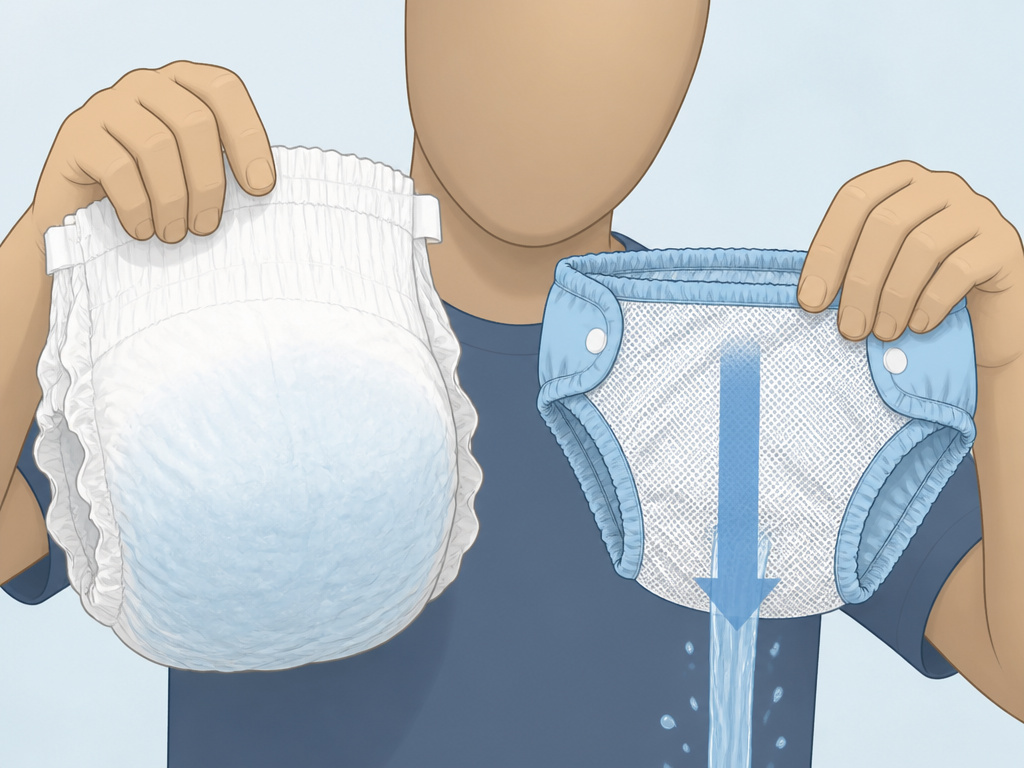
Parents are often shocked to learn that swim diaper and pee have no relationship. Urine passes straight through the mesh or non-absorbent liner. This is intentional. If a swim diaper absorbed liquid, it would waterlog and fail just like a regular diaper. Chlorine in the pool handles the sanitation of urine.
The real limitation is liquid stool. No swim diaper, single or double-layered, can contain diarrhea.
Common mistake: Taking a child to the pool shortly after a stomach bug. Most health departments require a two-week wait after diarrhea symptoms resolve before returning to the water.
Cryptosporidium, a parasite common in diarrheal incidents, is notoriously chlorine-resistant. This rule isn’t pool bureaucracy; it’s a CDC-informed public health measure. Ignoring it risks an outbreak.
Step-by-Step: Using a Swim Diaper Correctly
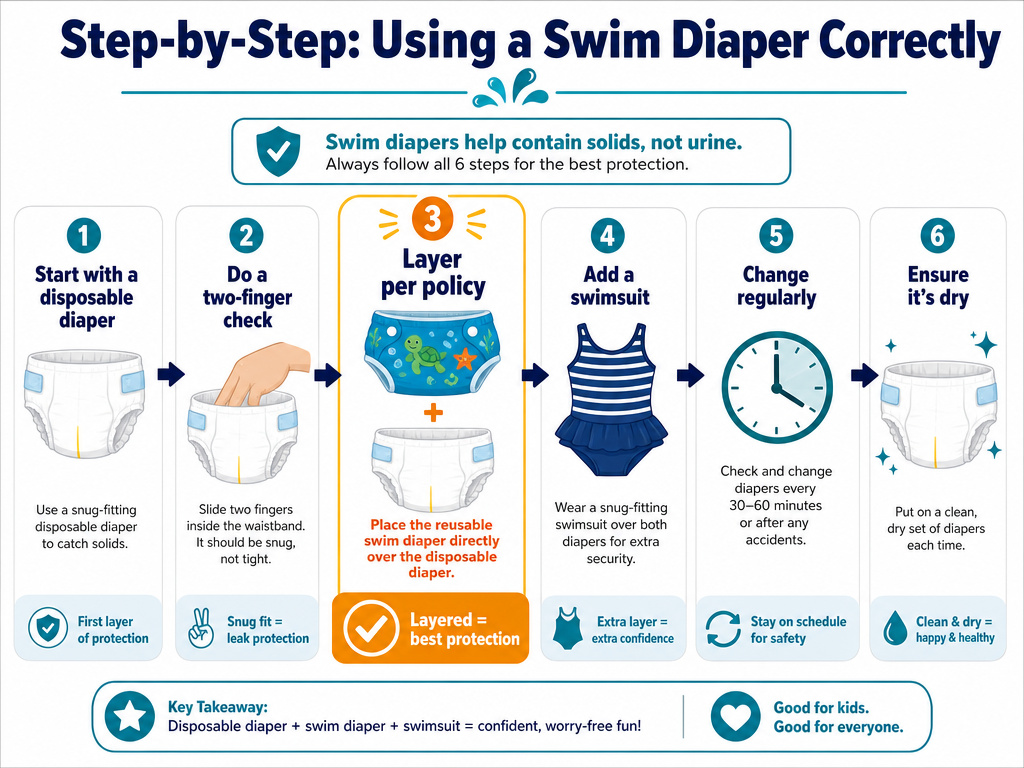
Follow this sequence to ensure you’re covered from arrival to departure.
- Dress at the last minute. Put the swim diaper on in the changing room, not at home or in the car. A proper swim diaper use timeline minimizes the chance of an accident before you even hit the water.
- Execute the two-finger check. Confirm the fit at the waist and legs. Adjust snaps or choose a different size if needed.
- Layer per policy. If your pool requires a double-layer, put on the disposable, then the reusable. Otherwise, just the swim diaper.
- Add the swimsuit. Pull the swimsuit or trunks on over everything.
- Check every 30–60 minutes. Take a bathroom break. Feel the back of the diaper for any solid waste. If there’s an accident, exit the pool immediately.
- Change promptly after. Once swimming is done, remove the wet swim diaper. Rinse reusable ones in cold water. Dry your baby thoroughly and put on a clean diaper for the trip home.
Never try to dry out and reuse a disposable swim diaper another day. The elastic relaxes, and the fit will be compromised.
Disposable vs. Reusable: Which to Buy?
Your choice here often depends on your swimming frequency and the pool’s rules.
Disposable swim diapers (Pampers Splashers, Huggies Little Swimmers) are about convenience. They’re perfect for vacations, occasional visits, or as the inner layer for a double-diaper policy. You use them once and toss them.
Reusable swim diapers (like the iPlay Snap Swim Diaper) are an investment for weekly swim lessons or a home pool. They cost more upfront but break even after about 5 uses compared to buying disposables. They often come in fun prints and sizes adjust with snaps.
For many families, the answer is both. Keep a pack of disposables in the diaper bag for backup and use reusables for planned swim time. If you’re looking for specific picks, our guides on the best reusable swim diapers and best swim diapers for babies break down the top options.
Remember, a swim diaper as regular diaper doesn’t work. It won’t absorb urine on land, leading to leaks in the car seat.
Frequently Asked Questions
Can you put a swim diaper over a regular diaper?
No. This is the core mistake. The regular diaper will absorb pool water, swell, and break the swim diaper’s seal. It becomes a heavy, waterlogged hazard that doesn’t contain anything.
What is the double-diaper rule?
It’s a specific pool policy that requires two layers of containment: a disposable swim diaper worn directly against the skin, covered by a snug-fitting reusable swim diaper. It is never a regular diaper under a swim diaper.
How long can a baby stay in a swim diaper?
Swim diaper can be worn for the duration of a swim session if it’s not soiled. However, you should check it every 30 to 60 minutes. Once out of the water, switch to a dry, absorbent regular diaper promptly to avoid skin irritation.
What if my baby pees in the pool?
This is expected and by design. Swim diapers let urine pass through to be neutralized by pool chlorine. They are only meant to contain solid waste. This is a key difference in the swim diaper vs regular diaper function.
The Bottom Line
The rule is absolute: never layer a regular diaper under a swim diaper. The physics of water absorption guarantee it will fail. Your only task is to confirm whether your pool wants a single swim diaper or the specific double-swim-diaper combo.
Focus on the fit, snug legs, snug waist. Respect the two-week diarrhea rule. And understand that a swim diaper has one job: to be a physical barrier for solids. Once you get that, you can stop worrying about layers and start enjoying the splash.
