
Why Do You Want to Slide a Clean Diaper Underneath? A Key Step
This post contains affiliate links. As an Amazon Associate, we learn from qualifying purchases
You slide a clean diaper underneath the baby before removing the soiled one to create an immediate physical barrier. This single move prevents the changing surface from getting dirty, stops the baby from soiling a fresh diaper you’ve just laid out, and, most critically, minimizes the infant’s skin contact with any residual mess during the swap, which is a key step in preventing Diaper Dermatitis.
That last point emphasizes the first operational guardrail in the ABCDE approach to diaper rash prevention: the ‘Dry diaper’ step starts immediately after removing the old one. Modern super-absorbent diapers can handle longer wear, but the mechanics of the change itself remain unchanged.A gap of even a few seconds without a barrier is where contamination happens.
What follows is the breakdown of that one motion: the infection-control logic it serves, the two specific mess scenarios it contains, and the data on why skipping it correlates with a higher incidence of skin irritation. We’ll also cover when this rule bends and the single piece of gear that makes it obsolete.
Key Takeaways
- The primary function is infection control: it physically blocks transfer of fecal bacteria to the changing surface and the baby’s back/sides during the critical swap window.
- It directly supports the ‘Dry diaper’ tenet of the medical ABCDE approach for preventing Diaper Dermatitis by minimizing skin contact with irritants.
- This step is most critical during a diaper blowout or messy stool, where contamination risk is highest.
- The technique is less about the diaper’s absorbency and more about creating a sterile field, a principle drawn from public health diaper hygiene guides.
- You can skip it if using a dedicated, washable changing pad you plan to clean immediately after, but the habit costs nothing and adds a layer of safety.
The Core Reason: It’s a Physical Barrier
Look at the sequence without the slide-under step. You unfasten the dirty diaper. You lift the baby’s legs. For a moment, their entire bottom is exposed directly to the pad, and anything on that pad. If there’s liquid stool, it transfers. If the pad isn’t perfectly clean, whatever is on it transfers back. The clean changing pad you prepared is now a vector.
Sliding the fresh diaper underneath first changes the equation. The clean inner lining becomes the only surface that contacts the baby’s skin during the transition. It’s a disposable, sterile field. This isn’t parental overkill; it’s basic barrier nursing technique adapted for the nursery. A 2019 clinical review in the Journal of the American Academy of Dermatology explicitly ties minimizing irritant contact time to preventing Diaper Dermatitis, noting that “diaper changes should be done as soon as the diaper is soiled.” The swap moment is part of that contact timeline.
Where this goes sideways: Skipping the slide-under step during a loose stool. The mess smears onto the changing pad cover. You don’t see the thin bacterial layer left behind after a quick wipe-down. Next change, the baby’s skin presses into it. That’s how a minor irritation turns into a rash that needs diaper rash cream within 48 hours.
The logic holds even for wet diapers. Urine isn’t sterile once it leaves the body; it can harbor bacteria that, when mixed with the warm, occluded diaper environment, contribute to skin breakdown. The barrier prevents any residual droplets from the old diaper’s exterior from touching the skin.
How This Step Fits Into Medical Diaper Hygiene
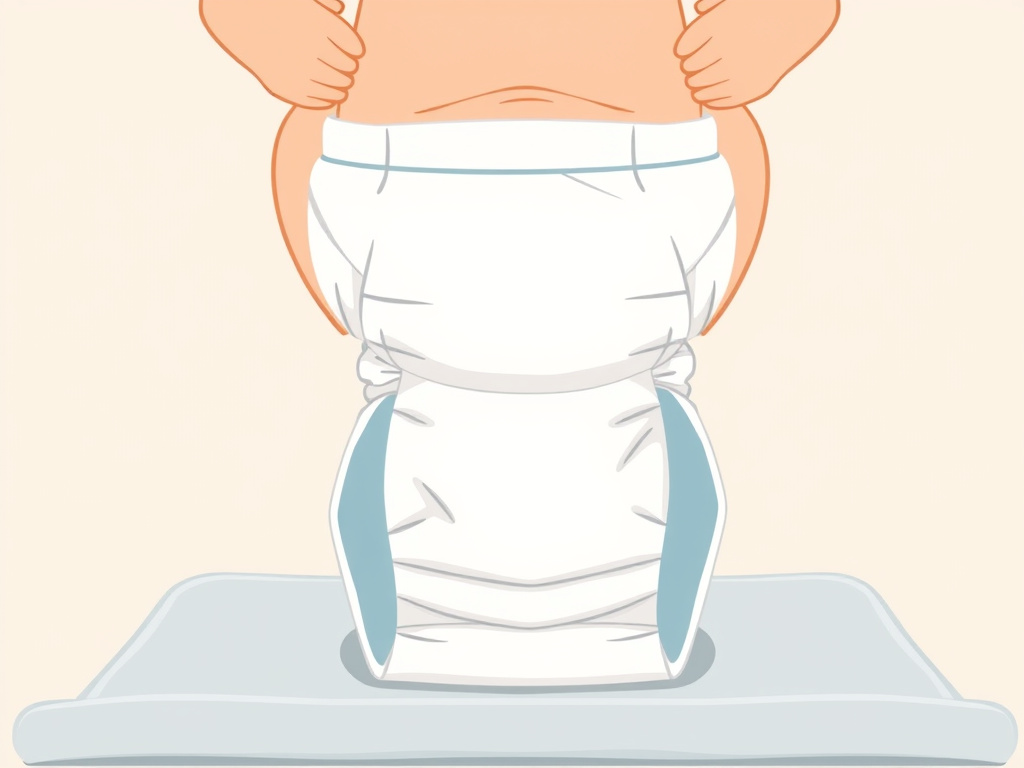 Pediatric dermatology frames diaper care as a prevention protocol. The slide-under maneuver is the practical execution of two letters in the ABCDE approach: ‘B’ for Barrier and ‘D’ for Dry diaper.
The ‘Dry diaper’ tenet focuses on maintaining a dry, clean skin environment throughout the entire diaper changing process. The moment of greatest vulnerability is the transition.By having the clean diaper already in place, you eliminate the fumbling delay of trying to unfold and position it one-handed while holding a wiggling, potentially messy baby aloft. Speed matters. A study cited in the proper diapering practices study from PubMed Central identifies prolonged exposure to urine and fecal enzymes as the initiating event for skin damage.
Diaper changes should be done as soon as the diaper is soiled. Therefore, newborns should be changed approximately every 2 hours during the day, but older infants may only need a diaper change every 3 to 4 hours.
This recommended frequency from clinical literature assumes an efficient, contained change. The slide-under step is what makes that efficiency hygienically safe. It’s the difference between a controlled procedure and a contamination event.
The Two Mess Scenarios It Contains
This step addresses two distinct cleanup failures.
1. The Mid-Air Accident.
Baby boys are famous for this. You open the diaper, the cool air hits, and a surprise arc appears. If the clean diaper is already underneath, the mess is contained on its waterproof outer layer. Without it, the stream hits the changing pad, the wall, or you. The clean diaper becomes your first line of defense against a much larger cleanup.
2. The Smear Transfer.
This is the silent, more common issue. As you lift the baby’s legs to remove the soiled diaper, any residual stool on the buttocks or thighs can graze the changing surface. Even a tiny, invisible transfer matters. That surface then contaminates the back of the fresh diaper when you lay it down, or the baby’s skin during the next change. The pre-positioned diaper catches this smear directly on its disposable surface.
| Scenario | Without Pre-Slided Diaper | With Pre-Slided Diaper |
|---|---|---|
| Mid-air accident | Liquid soils changing pad, requires full pad cleaning. | Liquid hits back of clean diaper; wipe and continue. |
| Smear transfer | Residue transfers to pad, creating a contamination reservoir. | Residue transfers to diaper lining, which is discarded. |
| Wiggly baby delay | Baby’s bottom touches pad while you fumble with new diaper. | Baby’s bottom rests on clean liner during entire swap. |
When the “Rule” Isn’t a Rule (And What to Use Instead)
The slide-under technique is a best-practice default. But it’s not a religious edict. There are two valid exceptions.
Exception 1: You’re using a dedicated, wipe-clean surface.
If your change station has a seamless, non-absorbent changing pad designed to be disinfected after every use, like a Skip Hop wipe-clean pad, you can place the baby directly on it. The key is that you must clean it immediately after the dirty diaper is removed and before the baby is set back down. Most parents, in the rush of the moment, don’t. The slide-under habit removes that requirement and the risk of forgetting.
Exception 2: You’re doing a “top-only” change.
For a diaper that’s only wet in the front (common for boys), some parents practice a quick swap without fully undressing or lifting the baby. They’ll unfasten the front, slide the wet diaper out, and slide the dry one in from the front. This only works for very minor wets and isn’t recommended for stools, but it’s a real-world time-saver where the full slide-under isn’t practical.
The gear that truly makes the debate moot is a portable changing pad with a removable, washable liner. You place the whole pad down, perform the slide-under on top of its liner, and when done, you simply roll the liner and the dirty diaper together into the pad for disposal. The baby never touches the pad’s core material.
The Connection to Diaper Rash and Skin Health
Every article on diaper rash prevention talks about frequent changes and barrier creams. Few drill into the mechanical moment where rash-causing bacteria actually spread. The slide-under step is that mechanical intervention.
Diaper Dermatitis (DD) is primarily an irritant contact dermatitis. The irritants are urine, feces, and the enzymes they contain. The problem involves both the diaper being full and the re-contamination of skin during the change, which extends exposure. Think of it as a two-part process: first exposure in the dirty diaper, then a second, preventable exposure on the changing table.
Common mistake: Wiping thoroughly but then placing the baby down on a pad that had a previous messy diaper changed on it 30 minutes ago. The pad looked clean, but standard wipes don’t disinfect. The slide-under step bypasses this risk entirely.
This is also where the choice between cloth diapers and disposables intersects with technique. Cloth diapers, while breathable, often lack the stay-dry liner technology of premium disposables. If you’re using prefolds and a diaper cover, creating that dry barrier during the change is even more critical. The slide-under method works perfectly with a pre-folded cloth diaper waiting on the pad.
How to Slide a Diaper Underneath Correctly (It’s Not Just Shoving It Under)
There’s a method that maximizes the barrier and minimizes fuss. Getting it wrong can cause leaks.
- Unfold the clean diaper completely. Flatten the backsheet and ensure the leg cuffs are pulled out.
- Lift the baby by the ankles, not the waist. Use one hand to gently grasp both ankles, lifting just enough to clear the changing surface. This keeps their spine in a natural position.
- Slide the diaper under, waistband to the back. Position the diaper so the top edge (the part with the tabs) aligns with the baby’s waistline at the back. The diaper should be centered left-to-right.
- Lower the baby onto the center of the diaper. Their bottom should land squarely on the absorbent core. Now you can unfasten and remove the dirty diaper from underneath.
What happens if you do it wrong? If you slide it under too low, the waistband will sit at the mid-back, leaving the upper back exposed to mess. If it’s off-center, the leg cuffs won’t seal properly, guaranteeing a leak within the hour. If you don’t pull the cuffs out, they get trapped under the baby and become useless.
For newborns, the process is identical, but you’ll be using a diaper with a umbilical cord notch. Make sure that notch is positioned correctly under their belly.
Frequently Asked Questions
Does the slide-under technique work with all diaper types?
Yes. The technique is universal for disposable diapers, whether they’re tape-style or pull-up pants. For cloth diaper systems like prefolds or fitteds, you slide the pre-assembled diaper (liner + cover) underneath in the same way. The principle of creating a ready barrier is the same.
What if my baby won’t stay still for this?
This is where the diaper changing pad with raised edges or a contoured shape is invaluable. It provides a slight physical boundary. Use your non-dominant hand to hold their legs up (the “ankle hold”) while your dominant hand slides the diaper under. For extreme wigglers, a small, engaging toy reserved only for changes can buy you the 10 seconds you need.
Is this step in the official CDC guidelines?
While the CDC diaper changing steps for childcare settings emphasize handwashing and proper disposal, the specific action of “sliding a fresh diaper under the child” is listed as part of their recommended sequence to maintain cleanliness and prevent the spread of germs. It’s considered a foundational hygiene practice in group care environments.
Can I just put the new diaper on top of the old one?
No. This defeats the entire purpose. You need to clean the baby’s skin. The old diaper must be removed to allow for proper cleansing from front to back. The new diaper goes underneath to receive the baby after they are cleaned, not before.
How does this help with a diaper blowout?
During a diaper blowout, containment is the first priority. The soiled diaper is often overwhelmed. By having the clean diaper already positioned underneath, you create a catchment area for any mess that escapes the soiled diaper’s confines as you remove it. It contains the disaster zone, making the subsequent cleanup far more manageable and preventing the blowout from spreading to the baby’s clothing or your own.
The Bottom Line
Sliding a clean diaper underneath is the tactical application of a sterile field principle to a daily task. It exists because babies are messy, surfaces aren’t perfectly clean, and skin is delicate.The habit takes half a second and pays off in fewer outfit changes, less disinfecting of your changing table, and, most importantly, a lower chance of introducing the irritants that lead to a red, sore bottom.
Make it your default. The one time you’ll be genuinely grateful for it is the time you’d most regret not doing it.
