
Learn How to Make a Regular Diaper a Swim Diaper Properly
This post contains affiliate links. As an Amazon Associate, we learn from qualifying purchases
You cannot directly use a regular diaper as a swim diaper. A swim diaper’s job is to contain solid waste with a snug, water-resistant seal, not to absorb liquid. A regular diaper will absorb pool water, become dangerously heavy, and sag open, defeating its purpose. The only conversion method involves surgically removing the super-absorbent polymer core from a disposable diaper, a messy and unreliable hack that most parents abandon after one attempt.
That core is the whole problem. Inside a regular diaper, tiny sodium polyacrylate beads can soak up hundreds of times their weight in water. Submerged, they swell into a gel-heavy brick that pulls the diaper away from the baby’s skin, creating gaps where solids escape. A real swim diaper uses materials like neoprene or PUL (polyurethane laminate) to form a mechanical barrier, letting water pass through while catching solids.
What follows is a breakdown of the physics behind swim diapers, the two documented conversion methods (including one from a Procter & Gamble patent), and the non-negotiable public health rules from the CDC that apply whether you use a store-bought swim diaper or a homemade version. The goal isn’t just to keep the pool clean—it’s to prevent a waterlogged diaper from becoming a drowning risk.
Key Takeaways
- A regular diaper absorbs water, gains over a pound in weight, and sags away from the body, creating leak paths. It is a physical hazard, not a swim aid.
- The CDC mandates checking swim diapers every 30 to 60 minutes and changing them away from the poolside, a rule based on 2004 and 2011 studies of fecal containment.
- Swim diapers do not contain urine or diarrhea. They are only for solid waste, and germs like Cryptosporidium leak into the water within minutes.
- The only semi-plausible conversion is removing the absorbent core from a disposable diaper, a process detailed in US Patent 7824386. It’s messy and often results in a poor fit.
- For light bladder leaks only, a snug-fitting cloth diaper cover (like a Thirsties Duo Wrap) over a regular swimsuit can work, but pools often prohibit this.
Why You Can’t Just Use a Regular Diaper in Water
The difference is in the job description. A regular diaper is an absorption engine. A swim diaper is a containment system.
A regular disposable diaper uses sodium polyacrylate super-absorbent polymer (SAP) in its core. This material can absorb 200-300 times its weight in water, swelling into a gel that locks moisture away from skin. In a pool, it acts like a sponge, pulling water in until the diaper becomes a saturated, heavy mass that can weigh over a pound.
That weight has two direct consequences. First, it pulls the diaper downward, breaking the snug seal around the legs and waist. Once that seal is gone, nothing stops solid waste from escaping directly into the water. Second, a waterlogged diaper becomes a genuine safety issue. The added drag and weight can impede a toddler’s movement, and if a baby is in a floatation device, the sagging bulk can shift their balance.
This isn’t a minor design flaw—it’s a fundamental mismatch. The 2010 Procter & Gamble patent (US 7824386) that describes methods for using disposable articles as swim pants explicitly names this problem: “Such high-absorbency articles are not well-suited for use as a swim pant, since they may absorb and retain a large amount of water, thereby becoming heavy and uncomfortable.”
Swim diapers work on the opposite principle. Brands like the Splash About Happy Nappy use thin, water-resistant neoprene. Others use a PUL outer shell with a mesh inner layer. Both designs allow water to flow through freely, so the diaper doesn’t balloon. The containment comes from a precise, gasket-like fit at the legs and waist that creates a physical barrier. It’s about fit and fabric, not absorbency.
The Two Conversion Methods (And Why They’re Risky)
If you’re determined to try a conversion, there are exactly two paths documented by manufacturers and a patent. Both come with significant caveats that make a purpose-built swim diaper the better choice every time.
1. The Core-Removal Method (The Patent Hack)
This method is literally outlined in US Patent 7824386. The idea is to convert a high-absorbency diaper into a low-absorbency swim pant by removing the absorbent core component.
The Process:
- Take a clean, dry disposable diaper.
- Carefully tear open the inner liner along the back or sides.
- Pull out the fluffy pulp and the packet of super-absorbent polymer beads. This is messy. The beads stick to everything.
- Attempt to reseal the liner with waterproof tape, or simply use the now-empty shell.
Where This Goes Sideways: You are left with a flimsy, misshapen shell. The structural integrity of the diaper is built around that core. Without it, the leg cuffs lose their shape, and the waistband often curls. The fit is almost always looser and less secure than a proper swim diaper, which defeats the entire purpose. You’ve also created a diaper that cannot handle any accident once you’re out of the water.
2. The Diaper-Cover Method (For Cloth Users)
Some cloth diaper enthusiasts modify a trim-fitting cover to function as a swim diaper. This works only if the cover is made of a fully waterproof material like PUL or rubber and has a very snug fit.
| Cover Type | Suitable for Swimming? | Why or Why Not |
|---|---|---|
| Standard PUL Cover (e.g., Thirsties Duo Wrap) | Maybe, if very trim. | Must have excellent leg elastic seal. Adding any absorbent insert inside will cause sagging and failure. |
| Wool or Fleece Cover | No. | These are water-resistant, not waterproof. They will eventually soak through and become heavy. |
| Rubber/Latex Pants | Yes, theoretically. | Provides a complete waterproof barrier. The fit must be extremely snug to act as a gasket. Uncommon and can be hot. |
Common mistake: Putting a regular cloth diaper with inserts under a cover. The inserts will absorb a gallon of pool water, and the whole assembly will sag and leak within minutes. For swimming, the cover must be empty.
This method is best suited for managing light bladder leaks before and after swimming, not for containing solid waste during pool time. Many public pools have specific rules for using swim diapers and may not allow a modified cover.
What a Real Swim Diaper Does (And Doesn’t Do)
Understanding the limits of even a professional product is crucial. The CDC’s swim diaper recommendations are built on a clear-eyed assessment of their capabilities, which are often overstated by manufacturers.
A proper swim diaper has one primary function: to contain formed fecal matter long enough for you to get your child out of the pool. It is not a forcefield.
What it DOES:
- Contains Solids: It uses tight elastic seals (like the neoprene cuffs on a Happy Nappy or silicone seals on swim jammers) to create a physical barrier.
- Allows Water Flow: The materials (mesh, thin neoprene) don’t absorb water, so the diaper doesn’t become waterlogged.
- Provides a Safety Margin: It can buy you a few minutes in the event of a bowel accident, which is why they are required at most pools.
What it does NOT do:
- Hold Urine: Water flows freely in and out. A swim diaper does not hold pee.
- Contain Diarrhea: This is the critical public health point. Loose stool contains germs like Cryptosporidium, which is highly chlorine-resistant. Studies, including a 2011 study by Amburgey & Anderson cited by the CDC, show that swim diapers only delay the leakage of these germs for “a few minutes.” They do not prevent contamination.
- Substitute for Vigilance: This is the CDC’s 30–60 minute rule. You must check and change swim diapers frequently, away from the poolside. It’s not just about accidents; it also reduces the amount of urine in the pool that mixes with chlorine to create irritants.
The CDC’s stance clarifies a direct disagreement with marketing. Manufacturers may claim containment, but the public health research shows a leak-proof swim diaper does not exist. This is why the rule for any child with diarrhea is simple: keep them out of the water.
Choosing a Real Swim Diaper: Your Practical Options
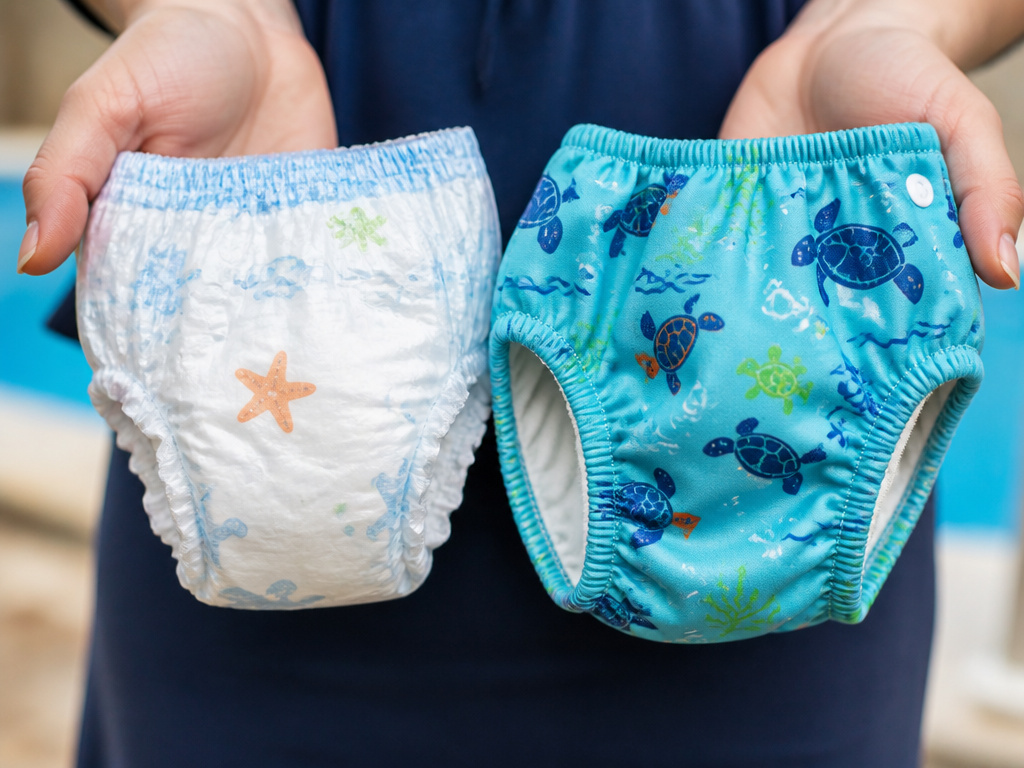
Given the risks and hassles of conversion, buying a designed product is the only reliable path. Your choice boils down to disposable versus reusable, with fit as the non-negotiable priority.
Disposable Swim Diapers
These are single-use and often sold in small packs near pool supplies. They look like a slim, plastic-like diaper with minimal absorbent material inside.
- Pros: Convenient, hygienic for travel, widely available. Most public pools accept them.
- Cons: Less environmentally friendly, can be expensive per use, and the fit is often less secure than a good reusable option. The seams can fail with loose stools.
- A Default Pick: For a one-time beach trip or a forgetful grandparent’s house, Huggies Little Swimmers or Pampers Splashers are fine. They are the bare minimum that meets pool requirements.
Reusable Swim Diapers (The Expert Choice)
These are the workhorses for regular swimming families. They are made from materials like neoprene or feature a PUL outer with a mesh liner.
- Pros: Better fit and containment (especially brands with gussets), cost-effective over time, more environmentally friendly.
- Cons: You have to rinse and dry them after use. The initial cost is higher.
- The Winner for Regular Use: The Splash About Happy Nappy system. The neoprene provides a superb, gasket-like seal at the legs and waist. For pools that require a “double layer” system, their Happy Nappy Duo has a built-in mesh liner. It’s the standard for many swim schools worldwide.
For infants, look for swim diapers for babies with softer leg cuffs. For active toddlers, consider swim jammers or shorts-style swim diapers for toddlers that look like regular swimwear and use silicone internal seals.
| Scenario | Best Choice | Key Reason |
|---|---|---|
| Infant (0-12 months) | Reusable neoprene swim diaper (e.g., Happy Nappy) | Superior fit on chunky baby thighs, warm in cooler water. |
| Toddler in Swim Lessons | Reusable swim diaper or jammer shorts | Secure containment for active movement; complies with most school policies. |
| Occasional Pool Visit | Disposable swim diaper (e.g., Little Swimmers) | No laundry, acceptable containment for short periods. |
| Child with Sensitive Skin | Reusable with a mesh liner (no neoprene) | Neoprene can irritate; a PUL/mesh diaper allows more breathability. |
Remember, a swim diaper is not for everyday use. Its lack of absorbency means it’s useless as a regular diaper. And you should never put a diaper under a swim diaper—it’s the waterlogging double-whammy.
The Non-Negotiable Rules for Pool Safety
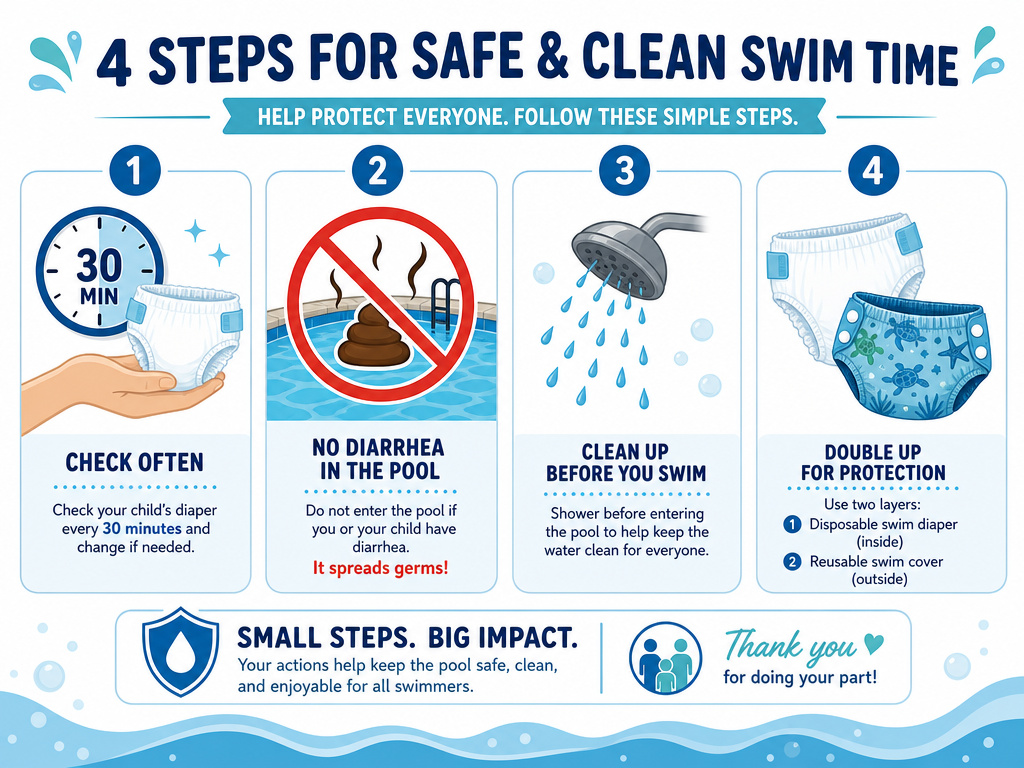
The conversation about swim diapers isn’t complete without the rules that actually keep pools safe. These aren’t tips; they are public health mandates.
- The 30–60 Minute Check: Set a timer. The CDC’s frequency recommendation is based on data. Check the diaper every half hour to hour, even if it feels dry. Change it in a bathroom, not at poolside, to prevent germ spread.
- Diarrhea Means No Swimming: Full stop. A child with loose stools must stay out of the water for at least two weeks after symptoms clear, as per CDC guidance for Cryptosporidium. No swim diaper, disposable or reusable, is effective.
- Rinse Before Entering: Have your child rinse off in a shower before getting in the pool. This washes away loose dirt and reduces the organic load that consumes chlorine.
- Know Your Pool’s Policy. Many require a double-layer system (a disposable under a reusable cover). Others only certify specific brands like the Happy Nappy. Check before you go.
These rules apply universally, whether you’re using the best disposable swim diapers or a homemade hack. Their purpose is to protect all swimmers, not just your child.
Frequently Asked Questions
Can I just put a regular diaper on my baby for swimming?
No. A regular diaper will absorb pool water, become extremely heavy (over a pound), and sag away from your baby’s body. This breaks the essential leg and waist seals, allowing waste to escape directly into the water. It also creates a drowning hazard due to the added weight and bulk.
How long can a swim diaper hold poop?
Well-fitting swim diaper is designed to contain solid waste long enough for you to get your child out of the pool—typically a matter of a few minutes. It is not designed for extended containment. The CDC’s research indicates that even commercial swim diapers only delay the leakage of diarrhea-causing germs for a short time.
What’s the point of a swim diaper if it doesn’t hold pee?
The point is containment of solids, not liquids. Allowing urine to pass through is a feature, not a bug. If a swim diaper absorbed urine, it would also absorb pool water, leading to the same waterlogging and safety issues as a regular diaper. Their design is a trade-off for safety and function in water.
Are reusable or disposable swim diapers better?
For regular use, reusable swim diapers are generally better. They offer a more secure, gasket-like fit (crucial for containment), are more cost-effective over time, and are environmentally friendly. Disposable swim diapers are best for occasional use, travel, or as an inner layer for pools that require a double-diaper system.
My pool requires a swim diaper. What if I don’t have one?
Do not try to use a regular diaper. Purchase a disposable swim diaper (like Huggies Little Swimmers) from a nearby pharmacy, big-box store, or the pool’s own concession stand. The small cost and inconvenience are insignificant compared to the health risk and potential refusal of entry you face with an improper diaper.
Before You Go
Converting a regular diaper into a swim diaper is a physics problem with no clean solution. The absorbent core that makes it work on land guarantees its failure in water. While the core-removal method exists in a patent, the result is a compromised shell that rarely fits well enough to be safe.
Your time is better spent finding a properly fitting, purpose-built swim diaper—either a reliable disposable for occasional trips or a quality reusable like the Splash About Happy Nappy for regular swimmers. Then, focus your energy on the rules that actually matter: the CDC’s 30-60 minute check schedule and the ironclad ban on swimming with diarrhea. That’s what keeps the pool safe for everyone.
