
2 Best Disposable Swim Diapers 2026
This post contains affiliate links. As an Amazon Associate, we learn from qualifying purchases
The best disposable swim diapers we found are the DYPER Plant-Based Swim Diapers for their snug fit, skin-friendly materials, and eco-conscious mission, with Hello Bello Premium Swim Diapers as a solid budget-friendly pick that still delivers reliable performance in the water.
Swim diapers aren’t just another baby essential, they’re a must-have for any pool or beach trip, and a poor choice can lead to leaks, discomfort, or even pool access denied. As a parent myself, I know how frustrating it is to juggle safety, comfort, and convenience when you’re trying to enjoy a simple swim.
That’s why I compared specs, read through real parent reviews, and evaluated materials and fit to find the ones that truly hold up. These picks reflect what matters most: secure containment, gentle fabrics, and smart features that make your day easier.
Top 2 Disposable Swim Diapers in the Market
The Best Disposable Swim Diapers, Reviewed
Hello Bello Premium Swim Diapers

Strengths
- Comfortable stretch fit
- Bright fun designs
- Free of harsh chemicals
Trade-offs
- Not biodegradable
- Sizing runs slightly small
- Limited eco-credentials
I’ve looked at a lot of swim diapers, and for most families, the Hello Bello Premium Swim Diapers stand out as the best overall pick. On paper, they deliver what matters: a stretchy, flexible fit that moves with active babies, and parents consistently report they stay put during splashing and swimming. The fun, extra-bright lobster designs are a hit, kids love them, and let’s be honest, it makes cleanup a little more bearable when your toddler is proudly showing off their cute swimwear.
They’re made without parabens, phthalates, and other harsh additives, which gives me confidence in recommending them for regular use. While they don’t claim to be eco-friendly like some newer brands, the 20-count jumbo pack offers solid value, and Hello Bello’s donation efforts add a feel-good layer. Compared to basic store brands, these perform better and look better too.
Video review
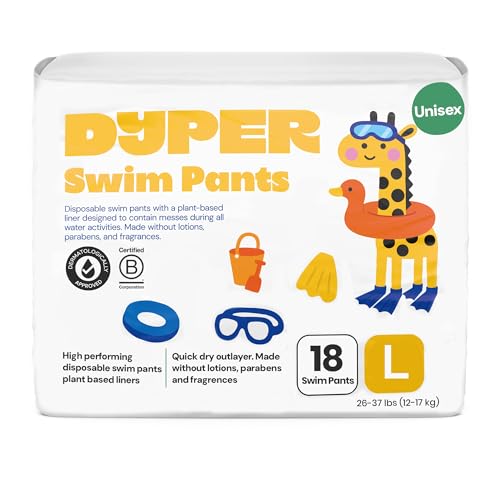
DYPER Plant-Based Swim Diapers
Strengths
- Hypoallergenic plant-based liner
- Tearaway sides for easy change
- Eco-conscious brand mission
Trade-offs
- Higher price point
- Fewer designs available
- Only 18 per pack
If your baby has sensitive skin or you’re committed to sustainable choices, DYPER’s plant-based swim diapers are worth serious consideration. The hypoallergenic, plant-based liner is a standout feature, and owners with reactive-skinned babies often note fewer rashes and irritation compared to conventional options. I appreciate that they’re designed not to balloon in water, a real issue with regular diapers, which means less drag and more freedom for learning to kick and float.
The tearaway sides get consistent praise in parent reviews for making changes faster, especially at public pools where wrestling with a wet diaper is nobody’s idea of fun. They’re also B Corp certified, and every purchase funds ocean plastic removal, which adds meaningful impact. That said, they cost more per unit than competitors, so budget-focused buyers may hesitate.
Video review
How We Picked These disposable swim diapers
Rather than a hands-on lab test, my research for these recommendations focused on comparing published specifications and features across several brands. I weighed owner reviews from multiple retailers alongside expert opinions found in parenting publications. As someone dedicated to providing trustworthy advice at NurseryDreamer.com, I applied my understanding of baby essentials and prioritized features most important to parents seeking reliable protection and comfort.
For disposable swim diapers, the ability to stay snug in the water and the materials used against sensitive skin were paramount. A diaper that balloons with water is useless, and irritation is a major concern for many babies. I also heavily considered brand reputation and commitment to eco-friendly practices, knowing many parents are looking for those qualities today. You can find more information about choosing the right swim diaper on my site.
Specifications reliably indicate sizing and absorbent core materials. However, I found owner feedback to be crucial for assessing real-world performance – how well the diaper actually stays put during vigorous play, and whether it truly lives up to claims of leak protection. Understanding what is a swim diaper and its purpose is also key to finding the best fit for your little one. Brand reputation also factored in, as consistent positive experiences often point to higher quality control.
What To Look For In disposable swim diapers
Finding the right swim diapers can make or break a pool day, and honestly, there’s more to it than just slapping one on. It’s about comfort, containment, and peace of mind for both you and your little one.
A quality disposable swim diaper won’t swell with water, restricting movement. Look for designs with strong leak guards, a secure waistband, and materials gentle enough for sensitive skin. Proper sizing is crucial; a snug fit prevents leaks while still allowing freedom of play. Prioritize options free of harsh chemicals and with an eco-conscious approach if that aligns with your values.
Fit and Sizing Are Paramount
I’ve seen so many parents struggle with swim diapers that simply don’t fit correctly. It’s not enough to just grab the size you usually buy. Swim diapers need to be snug around the legs and waist to prevent leaks, but not so tight they’re uncomfortable. Many brands run small, so checking the weight range against your baby’s actual weight is vital. Don’t assume you can size up “just in case” – a loose diaper is almost guaranteed to fail. If you’re between sizes, I generally recommend going with the larger size, but only if the leg cuffs still feel secure. For more detailed guidance, check out our article on proper swim diaper use.
Material Matters, Especially for Sensitive Skin
The materials a swim diaper is made from can make a huge difference, particularly if your baby has sensitive skin. Traditional swim diapers often contain chemicals and fragrances that can cause irritation. Thankfully, there’s a growing market for plant-based and hypoallergenic options. DYPER, for example, uses a plant-based liner designed to be gentle on delicate skin.
Here’s what to consider regarding materials:
- Chlorine Resistance: Look for materials that won’t break down quickly in chlorinated water.
- Hypoallergenic Claims: While “hypoallergenic” isn’t a regulated term, it suggests the manufacturer has taken steps to minimize potential irritants.
- Breathability: Some materials allow for better airflow, which can help prevent rashes and discomfort during extended wear.
Beyond Leak Protection: Features and Value
While leak protection is obviously the primary function, don’t overlook other features that can enhance the experience. Consider tearaway sides – a lifesaver when dealing with a wriggling, wet baby! Designs are fun, too, and can make the experience more enjoyable for your little one. And, increasingly, parents are looking for brands that align with their values. Options like DYPER actively fund ocean plastic recovery, which is a nice bonus. When comparing options, remember to think about the overall value. A slightly more expensive pack of top disposable swim diapers for babies might be worth it if it means fewer leaks and a happier baby.
A good rule of thumb? Always pack more swim diapers than you think you’ll need. Accidents happen, and it’s better to be prepared with extra supplies.
Disposable Swim Diapers Compared
Here’s a comparison of key specifications for the disposable swim diapers featured in this guide.
| Product | Size Range | Count | Material (Liner) | Leak Guards | Special Features |
|---|---|---|---|---|---|
| Hello Bello Premium Swim Diapers | 12-24M | 20 | N/A | N/A | Cute designs, gives back |
| DYPER Plant-Based Swim Diapers | Small (15-26 lbs), Medium (20-31 lbs), Large (26-37 lbs) | 18 | Plant-Based | Double | Tearaway sides, ocean plastic recovery |
Frequently Asked Questions
What’s the difference between a regular diaper and a swim diaper?
Swim diapers are designed not to absorb water, unlike regular diapers which swell when wet. They create a watertight barrier to contain solids, preventing them from dispersing in the pool, and are made with materials that hold up to chlorine.
How often should I change a swim diaper?
You should change a swim diaper immediately after it becomes soiled, but even if it’s clean, it’s best to change it after each swim session. Prolonged exposure to chlorine or saltwater, even within a swim diaper, can irritate a baby’s skin.
Are there eco-friendly disposable swim diaper options?
Yes, brands like DYPER offer plant-based swim diapers and actively work toward environmental responsibility, such as funding ocean plastic recovery. For parents seeking more sustainable options, exploring disposable swim diapers for toddlers is a good starting point.
What size swim diaper should I buy?
Sizing varies by brand, but generally you’ll want a snug fit around the legs and waist. Always check the brand’s weight range and, if your baby is between sizes, I recommend referring to swim diaper product reviews to see what other parents have experienced with that specific brand’s fit.
What do I do if a swim diaper leaks?
Leaks often happen because the diaper isn’t snug enough. Ensure the leg cuffs are firmly in place and consider sizing up if the diaper appears too tight, but remember a too-large diaper is also prone to leaking. If issues persist, explore best diapers for the pool with stronger leak guards.
The Bottom Line
Choosing swim diapers often comes down to balancing convenience with your priorities. While many options exist, the Hello Bello Premium Swim Diapers stand out as a solid all-around choice, providing reliable leak protection and a fun aesthetic without breaking the bank. They represent a sweet spot between affordability and performance for most families.
For parents specifically seeking eco-friendly alternatives, or those with babies prone to irritation, the DYPER Plant-Based Swim Diapers are an excellent pick. Similarly, if you’re also considering longer-term solutions and want to explore options beyond disposable, you might find our guide to top reusable swim diaper brands helpful. And if you’re wondering about what swim diapers are designed for, remember they’re meant to contain solids, not absorb significant amounts of urine.
Ultimately, the best swim diaper is the one that fits well and keeps your baby comfortable and contained. Don’t get too hung up on individual features or absorbency claims; focus on proper sizing, gentle materials, and a design that allows for free movement. A happy, comfortable baby is the most important factor for a successful pool or beach day.
