
How to Infant Potty Train Using the 4-5 Month Smeets Method
This post contains affiliate links. As an Amazon Associate, we learn from qualifying purchases
To infant potty train, you follow one of two paths: the observational, cue-based method called elimination communication (EC), or the structured, three-phase Smeets method that takes 4-5 months. Both require the baby to sit upright unassisted, consistent daily time investment, and rigorous hygiene. The goal isn’t immediate diaper freedom but building a foundation for later independence.
That 4-5 month timeline comes from a real study. Four infants aged 3-6 months completed the program before turning one, with no reported negative effects. This is a gradual shaping of behavior that demands more from the parent than the child in the early phases.
What follows breaks down both approaches, the specific success criteria from the research, the non-negotiable hygiene rules, and the one sign that tells you to stop and try again later.
Key Takeaways
- The Smeets method is a researched, three-phase program that takes 4-5 months and ends with babies self-initiating potty use before they can walk.
- Elimination Communication (EC) is a cue-and-response practice, not formal training, often starting in the newborn period.
- California law requires a written toilet-training plan for infants in licensed daycare centers, which must be followed.
- Limit sits to five minutes max to avoid resistance and never leave a child unattended on a potty chair.
- If your child resists or shows distress for weeks, pause for 2-3 months. Forcing it creates a power struggle that sets you back.
What “Infant Potty Training” Actually Means
Forget the image of a toddler proudly using the toilet. Infant potty training is a foundational process with two distinct definitions. The first is Elimination Communication, a diaper-optional practice of learning a baby’s pre-elimination cues and offering a potty opportunity. The second is the Smeets method, a formal behavioral program with phases, criteria, and a defined endpoint.
The Smeets et al. (1985) study defined a “training day” as a day when parents spent at least 2 hours actively training their infant. This is the time commitment most online guides omit.
Your choice dictates your daily routine. EC is fluid, integrated into diaper changes and feedings. The Smeets method is a scheduled session. Both require the baby to sit upright without support, a milestone typically reached between 3 and 6 months. Starting before this is not just difficult—it’s unsafe. If you’re unsure about the right age for your child, our guide on determining the right age to start potty training walks through the physical and cognitive signs.
The Two Main Paths: EC vs. The Smeets Method
This core decision shapes your next four to twelve months.
| Aspect | Elimination Communication (EC) | The Smeets Method |
|---|---|---|
| Core Idea | Communication & cue response | Behavioral training & skill shaping |
| Typical Start Age | Newborn to 6 months | 3-6 months (when sitting upright) |
| Parent Role | Observer & facilitator | Active trainer |
| Structure | Flexible, based on baby’s signals | Phased, with specific success criteria to advance |
| End Goal | Reduced diaper use, earlier awareness | Full self-initiation before 12 months |
| Best For | Parents wanting a diaper-light, intuitive connection | Parents wanting a structured, research-backed program with a clear finish line |
Elimination Communication is less about training the baby and more about training yourself. You learn their grunts, squirms, or specific cries that signal an impending pee or poop. You then hold them over a sink, toilet, or potty and use a sound cue (like “ssss” or “psss”). The EC method can begin from birth, but it doesn’t replace diapers entirely for a long time. It’s a part-time practice.
The Smeets Method is what the clinical research tested. It’s a progressive program where the infant learns to associate bodily signals with the potty, then to signal their need, and finally to crawl to the potty independently. The study’s infants took 4-5 months to complete all phases. This is a serious commitment of daily time, but it yields a verifiable result: a child who is potty trained before their first birthday.
The Smeets Method: A 4-5 Month, Three-Phase Plan
This is the detailed procedure from the 1985 study. Treat it as a manual, not a suggestion.
Phase I: Building the Association
- Goal: Teach baby that the feeling of needing to go equals sitting on the potty.
- Action: Watch closely for pre-elimination signals (straining, red face, sudden quietness). The moment you see one, say a cue word like “potty” and immediately place them on the potty chair. Keep them there until they go or for a maximum of five minutes.
- Success Criteria to Move On: The baby must have at least 18 bowel movements in the potty chair and experience at least 8 out of 10 training days without bowel accidents.
Phase II: Learning to Signal
- Goal: Teach baby to touch or reach for the potty chair to communicate need.
- Action: When the baby shows a pre-elimination signal, verbally prompt them to touch the potty. If they don’t, gently guide their hand to it. Then place them on the potty.
- Success Criteria to Move On: The baby must start reaching without prompting for more than 50% of trials for 4-6 days in a row. Accidents must be no more than 10% of total eliminations.
Phase III: Generalization and Independence
- Goal: The baby self-initiates from across the room.
- Action: Move the potty chair progressively farther away (up to 4 meters). Minimize verbal prompts. The baby should crawl to the potty or signal clearly when they need to go.
- Completion: The child is considered trained. They initiate, use the potty, and have minimal accidents.
Where this goes sideways: Rushing through Phase I because you’re tired of diapers. If the association isn’t solid, Phases II and III will fail. The baby needs those 18 successful bowel movements as concrete proof the connection is made.
This method is the definition of early potty training. If the timeline feels intense, methods for slightly older babies, like potty training an 18-month-old toddler, offer a different pace.
How to Start with Elimination Communication (EC)
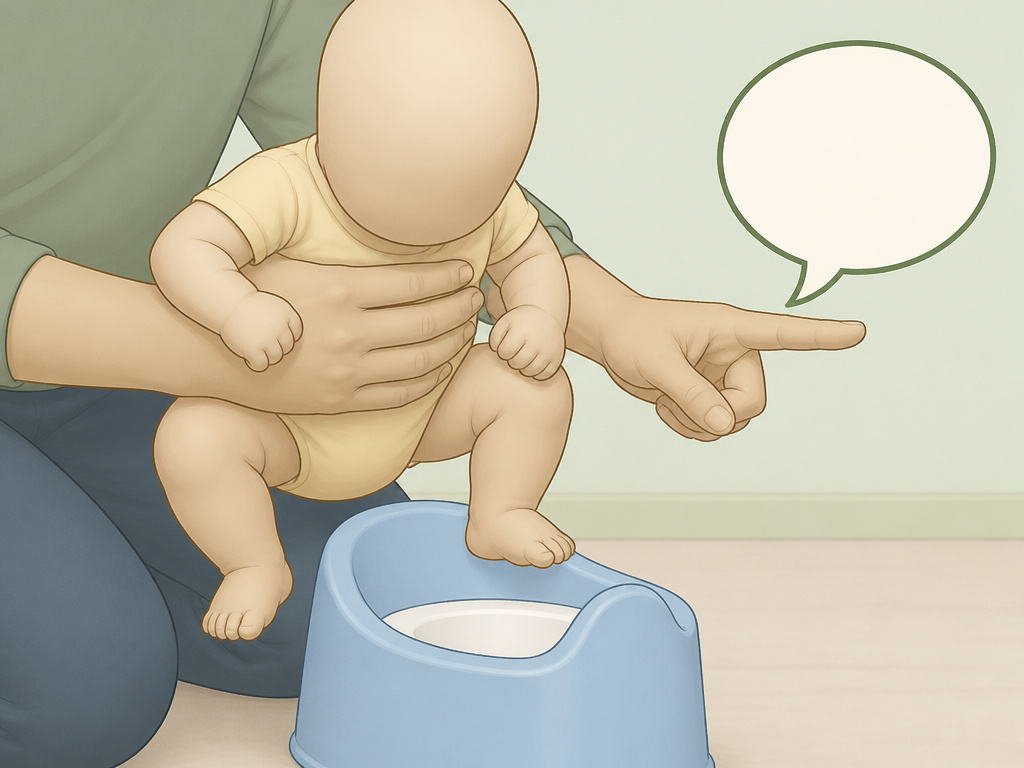
If the Smeets method feels too rigid, EC is your path. You don’t need phases or criteria. You need consistency and sharp observation.
- Pick Your Cue: Choose a sound. A hiss for pee, a grunt for poop. Use it every single time you think they’re going, whether in a diaper or over the potty.
- Learn the Timing: Babies often need to go upon waking, during or after a feeding, and when a diaper comes off (the “diaper-off pee” is legendary).
- Choose Your Hold: For newborns, the “squat hold” over a sink or bowl is standard. Once they sit, use a small potty chair placed securely on the floor.
- Accept the Misses: This isn’t about perfection. Catch one pee a day at first. That’s a win. The goal is communication, not zero diapers.
The key is to integrate it into existing routines. Offer the potty at every diaper change. Keep a potty chair in the main living area. This NIH toilet training clinical review notes that these infant-oriented methods focus on parent responsiveness above all else.
Essential Gear: You Only Need a Few Things
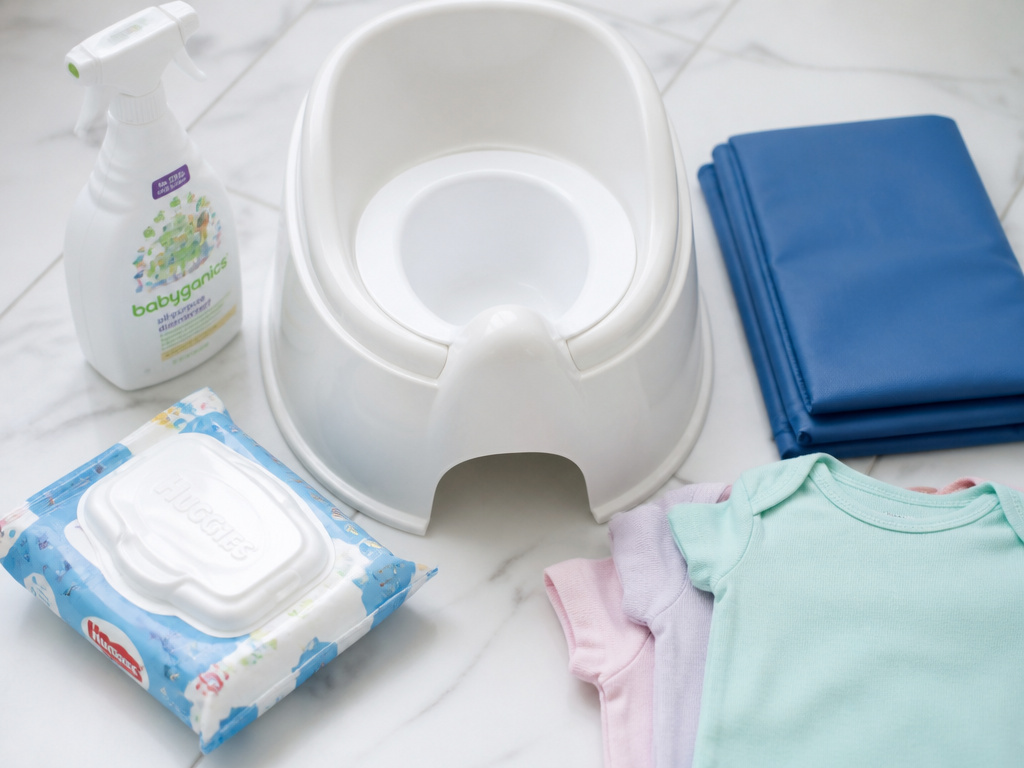
You can spend a fortune, but the research specifies very little.
- A potty chair that sits flat on the floor. Not a seat that attaches to the toilet. The baby needs feet planted for stability and pushing.
- Disinfectant spray or wipes approved for use around children.
- A waterproof mat or towel for under the potty during early phases.
- Lots of spare baby clothes.
Choosing the right equipment matters. A stable, easy-to-clean potty chair is a better investment than a fancy musical toilet. The Baby Bjorn Smart Potty or the Summer Infant My Size Potty are two examples that fit the bill: simple, stable, and no crevices for mess to hide.
Safety and Hygiene Are Non-Negotiable
This is a health requirement, especially if you’re using a daycare.
California Code of Regulations, Title 22, Section 101428 states: “After each use, the potty chair shall be promptly emptied into a flushing toilet, and all surfaces shall be thoroughly cleaned and disinfected.” It also mandates that no infant shall be left unattended on a potty chair.
Those two rules are the bedrock. 1. Never walk away. Not for a phone call, not to grab a towel. If you must leave, take the baby with you. 2. Disinfect every time. Empty contents into the toilet, then spray and wipe all surfaces, including the bottom. This prevents the spread of bacteria like E. Coli.
For centers, the law is even stricter. It requires a written toilet-training plan developed with the parent. This plan dictates when and how training happens, and whether diapers are used. If your baby is in care, ask to see this plan. The Washington State OSPI guidelines echo this need for formal planning, especially for children with additional support needs.
The Realistic Timeline and When to Stop
Manage your expectations. The Smeets study took 4-5 months. EC is an ongoing practice that may lead to full diaper freedom around age 2.
| Milestone | EC Path | Smeets Method Path |
|---|---|---|
| First successful “catch” | Within first few weeks of consistent practice | Within first few days of Phase I |
| Reduced diaper laundry | Gradual, over months | Significant by end of Phase II |
| Self-initiation (no prompts) | Variable, often after 18 months | Achieved in Phase III, before 12 months |
| Daytime diaper-free | 18-30 months | 11-12 months |
When to hit pause: If your baby cries, arches their back, or consistently refuses to sit on the potty for more than a week, stop. The Mayo Clinic potty training guide is clear: pushing a child who isn’t ready leads to a power struggle. Take a break for 2-3 months, then reassess. This is true whether you’re training a 15-month-old baby or a 6-month-old infant.
Troubleshooting Common Problems
Problem: Baby won’t sit still.
They’re an infant. Limit potty sits to 3-5 minutes max. Use a special toy or book only for potty time. If they struggle, end the session immediately. Forcing it teaches them the potty is a place of conflict.
Problem: Constant misses, feeling frustrated.
Re-evaluate your timing. Are you offering at key transition times (after sleep, after meals)? With EC, are you sure you’re reading the cues correctly? Go back to observation for a day. For structured training, ensure you’re in the right phase. Don’t prompt for a reach (Phase II) if the association (Phase I) isn’t solid.
Problem: It was going well, now they regress.
Illness, teething, a change in routine, or a developmental leap can all cause temporary regression. Revert to the previous, successful phase for a few days. Offer more frequently. Stay neutral and consistent. This is normal, even in the final stages of training a 16-month-old infant.
Frequently Asked Questions
Can you really potty train a 6-month-old?
Yes, but only with the Smeets method, and only if they sit upright unassisted. The goal is completing a behavioral program over 4-5 months that ends with them self-initiating, which is a major time commitment.
Is infant potty training the same as elimination communication?
No. EC is a communication practice that can start at birth. Infant potty training typically refers to the structured Smeets method that starts around 3-6 months. Many people use the terms interchangeably, but the methods and goals differ.
What are the benefits of infant potty training?
Potential benefits include significant diaper cost savings, reduced environmental waste from diapers, potentially fewer diaper rashes, and helping a child gain bodily awareness earlier. The clinical study reported no negative side effects.
What is the biggest mistake parents make?
Two tied for first: leaving a child unattended on the potty, and not disinfecting the potty chair after every single use. Both are serious health and safety risks.
My daycare says they can’t help. What do I do?
They can, but they must follow regulations. In states like California, they are required to create and follow a written toilet-training plan if you request it. Provide them with a simple plan detailing your method, timing, and cues. The getting started process is a collaboration.
Before You Go
Infant potty training is a choice that swaps daily diaper changes for dedicated observation and routine. The Smeets method offers a proven, if demanding, road to early independence. Elimination Communication fosters a different kind of connection and awareness. Both require a stable potty chair, relentless hygiene, and the wisdom to pause if your child fights it.
The data point that changes the conversation is the 4-5 month timeline from a peer-reviewed study. This is a gradual skill-building project with defined stages. If that commitment fits your life, the path is clear.If not, a slightly early start at 15 or 18 months is a perfectly valid, and often easier, alternative. The right method is the one that works for your baby without turning the potty into a battlefield.
