
Potty Training an 18 Month Old: The Readiness Guide You Need
This post contains affiliate links. As an Amazon Associate, we learn from qualifying purchases
Potty training an 18-month-old is possible if your child shows five specific physical and cognitive readiness signs, not just dry diapers. The core method involves scheduled practice runs every two hours, a five-minute limit on the potty, and immediate positive reinforcement without punishment for accidents. Expect the process to take at least three months of daily consistency, with most children achieving daytime continence between 22 and 30 months.
The five readiness signs pull from hospital well-child checklists most parents never see. They separate a child who is genuinely capable from one who is just having a lucky dry morning.
This guide walks through those signs, then lays out a three-step plan you can start tomorrow. We’ll compare the gentle, child-led approach against faster intensive methods, and cite the pediatric research on why starting between 18 and 24 months might lower long-term risks of daytime wetting.
Key Takeaways
- Readiness is specific. Look for the ability to follow a simple two-step instruction, not just a dry diaper. If they can’t “go get the ball and bring it to me,” they likely can’t connect the physical urge to the potty action.
- Schedule beats waiting. For a child showing signs, practice runs every two hours, first thing in the morning and after naps, build muscle memory faster than waiting for them to tell you.
- Five minutes is the ceiling. Sitting longer teaches waiting, not peeing. If nothing happens after five minutes, get up and try again in two hours.
- Punishment backfires. Scolding for accidents creates anxiety and hiding. The Mass General 18-month checkup PDF states it clearly: never punish for toilet training accidents.
- The timeline is long. Plan for three months of daily focus. “Quick” methods work for some, but consolidation of the skill takes weeks of repetition after the first success.
Is 18 Months Too Early? What the Readiness Signs Actually Mean
Most pediatric guidelines note that signs of readiness typically appear between 22 and 30 months. That makes 18 months an early start. It is not, however, an impossible one. The distinction hinges on a short list of observable skills, not a calendar.
The common advice to “wait for readiness” is vague. Parents hear “dry for two hours” and “shows interest.” At 18 months, a dry diaper might mean they were just well-hydrated, and interest is fleeting. The usable readiness checklist from pediatric handouts is more mechanical.
The part nobody mentions: Readiness isn’t a feeling. It’s a short list of physical and cognitive abilities that let a child connect an internal sensation to a specific action in a specific place.
If your child hits most of these five markers, starting at 18 months is a reasonable experiment. If they hit one or two, waiting a few more months is the lower-frustration path.
The 5 Specific Readiness Signs (Not Just Dry Diapers)
These signs are compiled from well-child visit handouts from major children’s hospitals. They move from physical awareness to cognitive ability.
- Physical Awareness: They know and can indicate when they are wet or soiled. They might pull at a wet diaper or say “uh-oh.”
- Bladder Capacity: Diapers are consistently dry for at least two hours at a time during the day, or they wake dry from naps.
- Predictable Bowel Movements: Their poops are regular and predictable. You can tell when they’re about to go by their posture or facial cues.
- Motor Skills: They can walk steadily to the bathroom, help pull their own pants down and up, and get on/off a potty chair with minimal help.
- Cognitive/Communication Skills: They can understand and follow simple two-step instructions (“Go get the book and bring it here”). They can communicate a need, even with a single word or sign for “potty.”
The last one is the gatekeeper. If a child can’t follow a simple linked instruction, they will struggle to learn the sequence: “Feel the urge -> Walk to the bathroom -> Pull down pants -> Sit -> Go.”
How to Start Potty Training at 18 Months: A Three-Step Plan
If the signs are there, the first steps are about setup and routine, not performance. Your goal for the first week is building familiarity, not collecting dry underwear.
Step 1: Gear and Mindset Setup
You need two things: a potty chair and a plan. Skip the toilet seat insert for now; a standalone chair gives a child stability and ownership.
Place the chair in a main living area, not hidden in the bathroom. For the first few days, let it be a piece of furniture. Have them sit on it with clothes on during playtime. Read potty books together while seated. The goal is to make it a neutral, normal object before it becomes a task.
Your mindset plan is simple: you are teaching a skill, like using a spoon. There will be mess. There will be days of regression. A 2008 NIH toilet training review article found that starting between 18–26 months was associated with a longer training interval but no increase in adverse events like withholding or infections. You are playing the long game.
Step 2: The Practice Run Routine
This is the core mechanical work. It comes directly from the Mayo Clinic potty training guide and other clinical advice.
| When to Do a Practice Run | What to Do | Why This Timing Works |
|---|---|---|
| First thing in the morning | Sit for 5 minutes | Bladder is fullest after sleep. |
| After every nap | Sit for 5 minutes | Catches the post-sleep void. |
| Every 2 hours during the day | Sit for 5 minutes | Builds routine and muscle memory before accidents. |
| 30 minutes after a big drink | Sit for 5 minutes | Leverages the body’s natural elimination reflex. |
The rule is non-negotiable: five minutes maximum. Use a visual timer. If they go, celebrate calmly. If they don’t, say “Okay, we’ll try again later,” and move on. The lesson is “we sit and try,” not “we sit until something happens.”
This scheduled approach is different from waiting for a child to self-initiate. For an 18-month-old, the scheduled method builds the habit for them. It’s how you potty train quickly once the physical connections are made.
Step 3: Communication and Reinforcement
Language is everything. Use simple, consistent words: “pee,” “poop,” “potty.” When you change a wet diaper, say “You peed. Pee goes in the potty.” Move the dirty diaper to the potty chair to show the connection.
For rewards, keep it immediate and small. A single sticker on a chart, a special dance, or a few seconds of a favorite song right after success works. The reward must happen within seconds of the action.
Never punish your child for toilet training accidents. The hospital handout is explicit. Punishment or shaming teaches a child to hide from you when they have to go, which leads to withholding, constipation, and a much longer road.
If you hit resistance, a stubborn toddler who clamps down, end the practice run immediately. Power struggles are a losing game. Try again in a few days or weeks. This is often a sign the cognitive piece isn’t fully cemented.
Child-Led vs. Intensive Methods: Which One for an 18-Month-Old?
You have two broad paths. Your child’s temperament decides the winner.
The Child-Oriented (Brazelton) Method
This is the “wait for cues” approach. You introduce the potty, read books, and follow the child’s lead. It’s low-pressure and can start at 18 months. Progress is slow and child-paced. Daytime continence often isn’t achieved until an average age of 28.5 months. This method has a very low reported rate of long-term problems.
The Structured (Foxx & Azrin) Intensive Method
This is the basis of the popular 3-day method. It uses scheduled sitting, increased fluids, and intense positive reinforcement. It requires the child to already show all readiness signs. When it works, it can produce daytime training in a very short period.
| Aspect | Child-Oriented Method | Intensive 3-Day Method |
|---|---|---|
| Best for age | 18-24 months, early start | 24+ months, all signs clear |
| Parent role | Facilitator, observer | Active coach, scheduler |
| Pace | Slow, months-long | Fast, days to a week |
| Stress level | Lower for child | Higher for child and parent |
| Best for temperament | Cautious, sensitive child | Eager-to-please, routine-loving child |
For an 18-month-old, the child-oriented method is usually the better fit. Their communication and impulse control are still developing, making the intensive method a high-stakes gamble. However, a very observant, routine-driven toddler with clear signs might surprise you.
Common Problems and How to Solve Them
They won’t sit on the potty.
Back off. Put the chair away for two weeks. This is a sign you’re ahead of their readiness. Revisit the five signs.
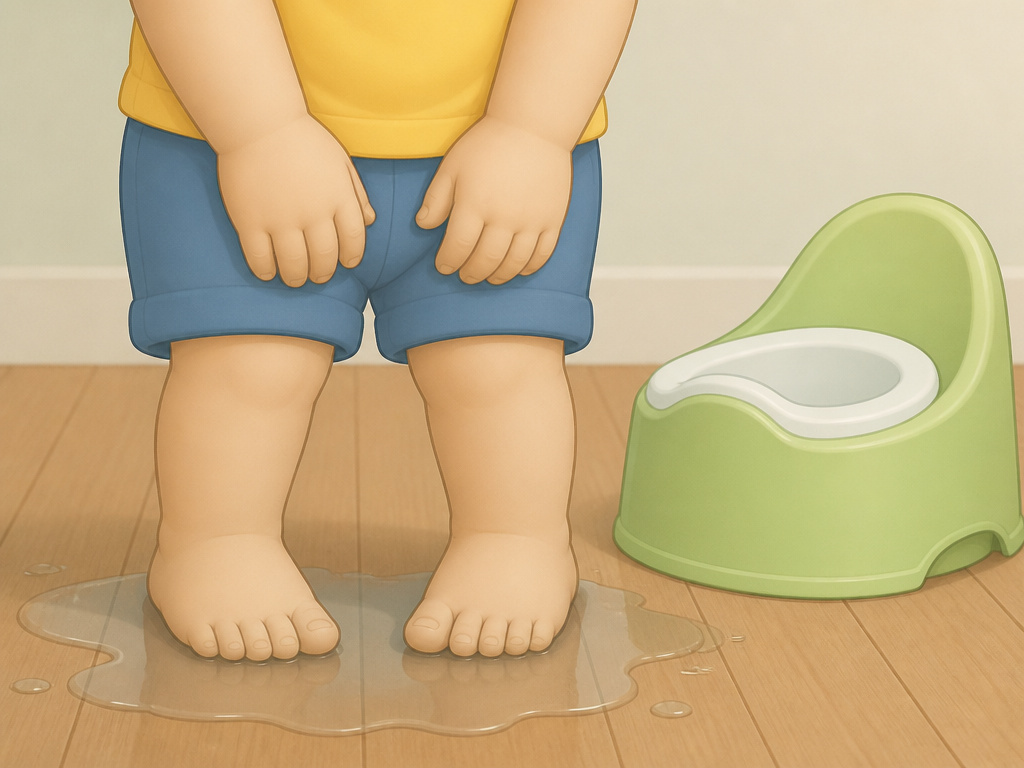
They pee on the floor right after getting off the potty.
This is progress. They held it until the “potty session” was over. Their brain is connecting the sensation to the place, but the timing is off. Don’t scold. Say, “Oh! The pee came out. Next time, let’s try to get it in the potty.” Keep the schedule.
They were dry for a week, then started having accidents again.
This is normal regression. Life events, illness, or a developmental leap can disrupt the routine. Revert to the two-hour practice runs for a few days without comment. Consistency brings them back.
They poop in their diaper but refuse the potty for poop.
This is the most common hurdle. Many children are fearful of the sensation. Keep putting dirty diapers in the potty to make the connection. Offer a small, special reward only for poop in the potty. Be patient, this can take months to resolve.
Frequently Asked Questions
Can you really potty train at 18 months?
Yes, but it’s an early start dependent on specific readiness signs, not just age. A child needs the physical awareness, motor skills, and cognitive ability to follow simple instructions. Without these signs, you’ll be doing most of the work with little progress.
What is the fastest way to potty train an 18-month-old?
The fastest way is a structured, intensive method that uses scheduled potty sits every 20-30 minutes, increased fluids, and immediate rewards. However, this method is high-pressure and has a higher failure rate at 18 months due to limited impulse control. A consistent, scheduled approach with two-hour practice runs is often the most effective quick method for this age.
How long does it take to potty train an 18-month-old?
Plan for at least three months of daily, consistent practice. While a child might have their first successes early, the skill of reliably recognizing the urge, communicating it, and getting to the potty takes weeks or months to consolidate. Research shows starting between 18–26 months is linked to a longer training period but not more problems.
Should I use pull-ups or underwear?
Start with underwear during practice times at home. The uncomfortable wet feeling is a powerful natural teacher. Use pull-ups or diapers for naps, nighttime, and outings until they are consistently dry during awake hours. Switching back and forth confuses the learning process.
My 18-month-old is scared of the potty. What do I do?
Remove the pressure entirely. Let the potty chair be a decoration for a few weeks. Have a doll or stuffed animal “use” it. Read books about pottying. Fear means they are not ready. Forcing it will create a resistant child and delay training by months.
Before You Go
Potty training at 18 months is a project of observation and routine, not force. Your job is to watch for the five concrete readiness signs and then build a predictable, low-pressure schedule of practice runs. The two-hour timer and the five-minute sit rule are your best tools.
If it works, you’ll gain early freedom from diapers. If it doesn’t, you’ve lost nothing but a few weeks of extra laundry. The data suggests that starting in this window doesn’t cause harm, and may even be beneficial. Put the chair out, watch your child, and let their capabilities, not the calendar, make the call.
