
Does Diaper Rash Itch? The Real Discomfort Guide
This post contains affiliate links. As an Amazon Associate, we learn from qualifying purchases
Diaper rash can cause itching, but the primary sensation is usually a stinging, raw pain from inflamed skin. Itching is more common with yeast infections (Candida) or during the healing phase as skin cells regenerate. A baby signals itch through frantic squirming, trying to rub against surfaces, or crying during changes without obvious pain triggers.
The distinction between itch and outright pain hinges on the rash’s cause and depth. An irritated surface stings. A fungal colony pricks. New skin growing back tickles.
What follows is a breakdown of the nerve signals behind diaper rash, how to spot an itchy rash versus a painful one, and the specific creams and routines that calm each type. You’ll know what your baby is feeling by the third section.
Key Takeaways
- Itch signals yeast or healing: A persistent, prickly itch often points to a Candida infection or new skin growth, not standard irritant dermatitis.
- Pain is the default: Most common diaper rashes cause a burning, raw pain, especially when urine or stool touches broken skin.
- Scratching makes it worse: Babies scratch by rubbing their bottoms on surfaces, which introduces bacteria and can turn a simple rash into an infected one.
- Treatment depends on the cause: Zinc oxide paste soothes irritant pain; antifungal cream (like Lotrimin AF) is required for an itchy yeast rash.
- Watch for spread: Itchy red spots appearing outside the main diaper area or in skin folds are a classic sign of a yeast diaper rash needing specific treatment.
The Nerve Science: Why Rash Skin Screams (or Tickles)
Skin has separate nerve pathways for pain and itch. A mild irritant might trigger a light, prickly itch. Deeper damage, like the chemical burn from prolonged stool contact, fires the pain receptors.
Diaper dermatitis is inflammation of the skin in the diaper area. This inflammation directly stimulates the nerve endings just beneath the skin’s surface. Whether those nerves signal ‘itch’ or ‘pain’ depends on the inflammatory chemicals present and the depth of the irritation.
Think of it like this: a mosquito bite (histamine-driven) itches. A scraped knee (tissue damage) hurts. A severe diaper rash is the scraped knee. A yeast overgrowth is closer to the mosquito bite, with a fungal metabolite irritating the nerves.
The single biggest factor is moisture. Wet skin swells, its protective barrier dissolves, and nerve endings become exposed. This is the core mechanism behind most causes of diaper rash. Once the barrier is down, anything, ammonia from urine, enzymes from stool, friction from the diaper, can directly agitate those naked nerves.
The Itch vs. Pain Breakdown
You can’t ask your baby. But their behavior and the rash’s appearance give clear signals.
What Does a Diapering Rash Feel Like to a Baby?
A standard irritant rash hurts. It’s a burning, stinging sensation, particularly acute during a diaper change when air hits the raw skin or when fresh urine contacts it. The baby’s cry is sharp and immediate upon wiping.
A yeast infection itches. The sensation is a persistent, prickly, maddening itch. The baby might fuss constantly, squirm as if trying to scratch, or have trouble settling for sleep. They may cry during changes not from wiping pain, but from the relief of friction against the itch.
Healing skin can itch. As inflammation subsides and new skin cells form, the process can trigger mild itching. This is a good sign but requires vigilance to prevent scratching.
| Rash Type | Primary Sensation | Common Baby Cues | Visual Clues |
|---|---|---|---|
| Irritant Dermatitis | Burning, raw pain | Sharp cry during wiping; avoids sitting; general fussiness | Red, shiny skin on convex surfaces (buttocks, thighs); skin folds usually spared. |
| Yeast (Candida) Rash | Persistent, prickly itch | Squirming/rubbing on surfaces; difficulty sleeping; constant mild fuss | Deep red with sharp borders; satellite pustules; often in skin folds. |
| Healing Phase | Mild, tickling itch | Increased wriggling during changes; less acute crying | Pink, new skin; reduced redness; no open sores. |
Behavior Translation: What You’re Actually Seeing
- The “diaper drag”: Baby scoots their bottom across the crib sheet or play mat. This isn’t play. It’s an attempt to scratch an itch.
- Fussing at rest: A baby in pain often cries during specific actions (peeing, changing). A baby with an itch may be fussy even during calm, dry periods.
- Sleep disruption: Itching tends to be relentless, making it harder for a baby to fall and stay asleep than intermittent pain.
Where this goes sideways: Treating an itchy yeast rash with only zinc oxide paste. The barrier protects but does nothing to kill the fungus, so the itch continues unabated for days. The rash may even spread.
If you see signs of itch, you need to consider a fungal component. Our guide on how to identify a yeast diaper rash details the visual markers.
Itch-Specific Causes and Triggers
Not all itching is equal. Identifying the driver is the first step to stopping it.
- Yeast (Candida albicans): The top culprit for true, persistent itch. Yeast thrives in warm, moist diaper environments. It produces irritants that trigger the itch-specific nerve pathways. A key sign is a rash that won’t quit with standard care.
- The Healing Process: As new skin cells regenerate, they can cause a mild, tickling itch. This is normal but requires a maintained barrier to prevent re-injury from scratching.
- Allergic Reaction: Less common, but an allergy to a diaper material, wipe fragrance, or even a new food can cause an itchy, hive-like reaction. This itch tends to be widespread and appear quickly after exposure.
- Bacterial Infection: Impetigo or other bacterial infections can be itchy and painful. Look for honey-colored crusting or weeping sores.
The part nobody mentions: A baby recently on antibiotics is at high risk for an itchy yeast rash. Antibiotics kill good bacteria that normally keep yeast in check, allowing it to overgrow.
How to Soothe the Itch and Promote Healing
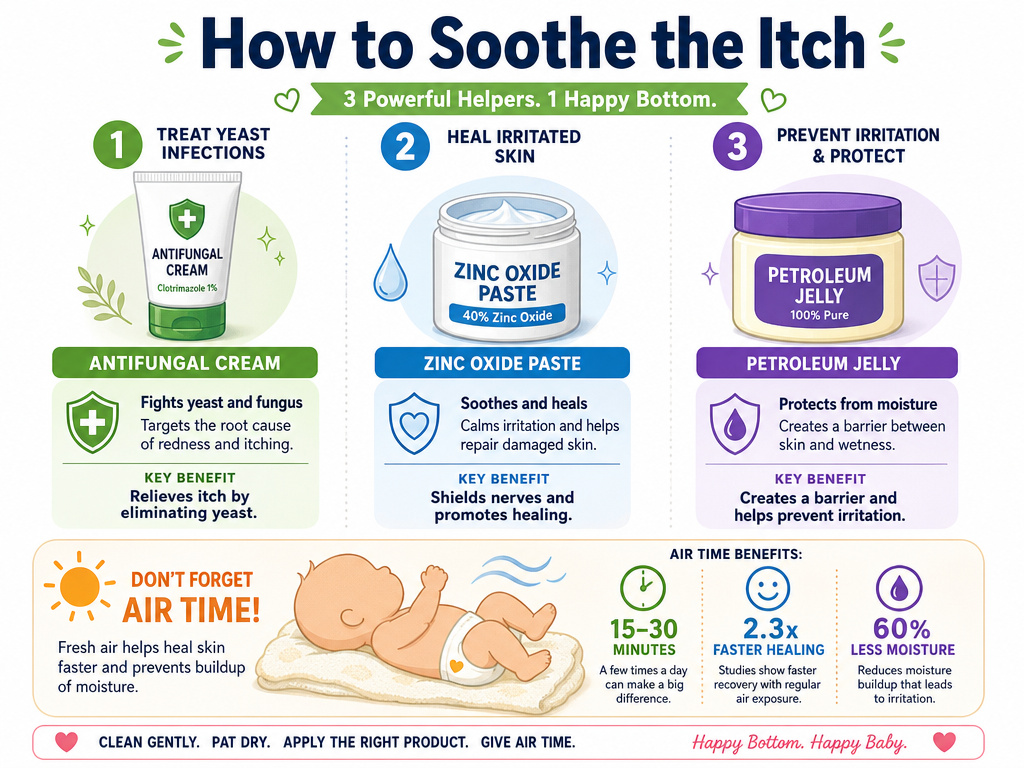
Calming an itchy rash requires a two-part strategy: treat the cause and protect the skin from the baby’s own scratching.
Step-by-Step Anti-Itch Protocol
Step 1: Confirm the cause. Is it in the folds? Are there satellite spots? If yes to either, assume yeast. This Cleveland Clinic diaper rash overview confirms fungal infections are a common complication.
Step 2: Clean gently, but skip the wipes. For an itchy, inflamed bottom, wipes can sting and spread microbes. Use a soft cloth and lukewarm water. Pour water over the area or use a peri bottle for minimal friction.
Step 3: Apply targeted medication.
- For suspected yeast: Use an over-the-counter antifungal cream like Clotrimazole (Lotrimin AF) or Miconazole. Apply a thin layer twice daily before your barrier cream.
- For healing itch or irritant rash: Use a thick layer of a high-percentage zinc oxide paste (like Desitin Maximum Strength or Boudreaux’s Butt Paste). This creates a physical barrier that shields nerves from irritants and moisture.
Step 4: Maximize air time. Diaper-free time is the most effective anti-itch and healing treatment there is. Lay your baby on a towel for 10-15 minutes after each change. Air exposure reduces moisture, cools the skin, and provides itch relief no cream can match.
Step 5: Prevent scratching. Keep nails trimmed and filed. Consider soft cotton mittens at night if rubbing is severe. Ensure the diaper is loose-fitting to minimize friction.
| Product Type | Best For | How It Fights Itch | Application Tip |
|---|---|---|---|
| Antifungal Cream (Lotrimin AF) | Yeast/Candida rash | Kills the fungal colony causing the itch | Apply a thin layer first; let absorb for a minute before barrier cream. |
| Zinc Oxide Paste (40%) | Healing itch, irritant rash | Shields exposed nerve endings from urine/stool | Apply thickly like frosting; it’s okay if it doesn’t all rub in. |
| Petroleum Jelly (Vaseline) | Preventing itch in healthy skin | Creates a water-repellent barrier to prevent irritation | Use a thin layer at every change when there’s no active rash. |
The purpose of diaper rash cream is barrier first, medication second. Knowing which one to reach for stops the cycle.
When Itching Signals a Doctor’s Visit
Most itch settles with the right home care. But some signs mean the rash is beyond a tub of cream.
Contact your pediatrician if: * The rash is bright red with tiny red pustules at the edges and doesn’t improve after 3 days of antifungal cream. * The itching is so severe it causes broken skin or bleeding from scratching/rubbing. * The rash spreads outside the diaper area to the abdomen or thighs. * Your baby develops fever alongside the itchy rash. * You see signs of a bacterial infection: yellowish crusts, weeping sores, or swelling.
These symptoms, detailed in this academic medical center condition page, indicate a need for prescription-strength treatment.
Proactive Prevention: Stopping the Itch Before It Starts
An ounce of prevention is worth a pound of anti-itch cream. The goal is to maintain an intact skin barrier so nerves never get exposed.
Change with obsessive frequency. Check the diaper every 2-3 hours, changing it immediately if wet or soiled. For a baby prone to rash, set a night alarm for one change.
Select diapers for dryness. Look for super-absorbent cores that pull moisture away from the skin. For some babies, breathable cloth diapers with a stay-dry liner cause less irritation than disposables.
Clean with water, not just wipes. Use fragrance-free wipes sparingly. For poop, a warm water wash is gentler and more thorough.
Barrier cream at every change. Make a thin layer of zinc oxide paste or petroleum jelly part of your standard diaper rash prevention routine, not just a treatment.
Investigate diet. For older infants, acidic foods (citrus, tomatoes) can make stool more irritating. Dairy sensitivity can also be a factor. Track any correlations.
This PubMed Central breast milk study suggests the natural properties of breast milk can aid in prevention and healing, but it’s not a substitute for a solid barrier routine.
Frequently Asked Questions
Why is my baby’s rash so itchy at night?
Body temperature drops slightly at night, which can make itch sensations feel more pronounced. Also, with fewer distractions, your baby becomes more aware of the discomfort. A long stretch in a damp diaper overnight is a prime setup for itch.
Can teething cause an itchy diaper rash?
Not directly. However, teething can cause loose stools, and that acidic, frequent poop is a major irritant that can quickly lead to a rash that then becomes itchy if a yeast infection sets in.
Is it normal for a rash to itch more as it heals?
Yes, mild itching during healing is common. It’s a sign of cell regeneration. Ensure you maintain a protective barrier with cream to prevent scratching from re-damaging the new, delicate skin.
What can I use for immediate itch relief?
Cool compresses are safe and effective. Soak a soft washcloth in cool water, wring it out, and gently lay it on the itchy area for a few minutes. Follow immediately with a thick barrier cream to lock in moisture and protect the skin.
Could this be eczema in the diaper area?
Yes, eczema can appear in the diaper area. It is typically very itchy, dry, and scaly, and may also be present in other body creases (like elbows and knees). Eczema requires a different management strategy (like gentle moisturizers and possibly prescription topical steroids), so a pediatrician’s diagnosis is key.
Before You Go
Diaper rash itch is a specific signal. It often points to a yeast guest or healing skin, not the standard raw pain of irritation. Your baby’s behavior, the squirming, the sheet-rubbing, is the translation.
Attack itch by treating its root: antifungal cream for yeast, relentless air time, and a thick, protective paste. Remember, a fussy baby with a rash is trying to tell you something. Listen to the itch, treat the cause, and you’ll both get more peaceful sleep.
