
Learn How to Wash Cloth Diapers to Protect Your Investment
This post contains affiliate links. As an Amazon Associate, we learn from qualifying purchases
Wash cloth diapers with a two-cycle routine: a short cold prewash with a half-dose of detergent, followed by a long, hot main wash with a full dose of glycerin-free detergent. Store diapers dry and wash the entire stash every two to three days, never longer than five, to prevent ammonia buildup and mold.
That five-day ceiling is the line between a manageable routine and a persistent stink problem. Urine contains urea, which bacteria convert to ammonia. The conversion starts within a day or two in a warm, damp pail. Let it go a week, and you’re not just washing diapers; you’re battling a chemical smell that clings to fibers and can irritate skin.
What follows breaks the wash into three mechanical decisions: how you store, how you dose detergent for your water, and how you dry each component. Get those right, and the routine runs itself. Miss one, and you’ll be troubleshooting leaks or odors within a month.
Key Takeaways
- Run your prewash cycle within two days of soiling to interrupt the urea-to-ammonia conversion, the primary source of stubborn diaper odor.
- Match your detergent dose to your water hardness. Hard water needs more detergent or a brand with water softeners (builders); soft water needs less to avoid repelling buildup.
- Never use fabric softener or glycerin-based soap. They coat fibers with a water-repellent layer that causes immediate leaks.
- Separate drying methods by material: PUL covers must air-dry; natural fiber inserts can tumble dry on low.
- Cloth diaper warranties often require you to follow specific washing guidelines. Using bleach or vinegar can void them.
Why a Two-Cycle Wash Isn’t Just Extra Work
Most laundry gets clean in one go. A cloth diaper is a technical absorbent device, not a t-shirt. Its job is to pull moisture in and hold it. That same structure traps waste particles and urea deep in the fibers if you only rinse it once.
A short, cold prewash with a small amount of detergent flushes out the soluble waste and urea before it can turn into ammonia. It also pre-dampens the inserts, which is critical for the main wash’s agitation to work. A loosely loaded drum of uniformly wet diapers sloshes against itself and cleans. A dry insert in a drum of water just floats.
The main wash is where the sanitizing happens. The long, hot cycle, aim for 2.5 to 3 hours, uses sustained heat and mechanical action to kill bacteria and strip away any remaining soiling. This is the cycle that needs to run at full machine capacity to work.
A front-loading washer needs the drum loaded loosely full (between two-thirds and three-quarters) with wet diapers for the main wash. Underloading reduces agitation; overloading jams the diapers so they can’t move, and that can damage the machine’s bearings over time.
The Core Two-Cycle Wash Routine
Do this every two to three days. The clock starts from the first wet diaper in your pail.
Prewash (Cycle 1)
Dump the entire contents of your dry storage pail into the washer. Run a short, cold cycle. For a front loader, that’s a 15–30 minute cycle at 30°C or cold. Use one-third of the detergent manufacturer’s recommended dose for a full load. If you wash every three days, use half the dose instead. This cycle is a rinse with a cleaning boost, not the deep clean.
Main Wash (Cycle 2)
Immediately after the prewash, run the main cycle. Do not let the diapers sit wet in the machine. Set the washer to a long, hot cycle. For most machines, this is the “Cottons” or “Heavy Duty” cycle set to 60°C. Ensure it runs for at least 2.5 hours. Add the detergent manufacturer’s full recommended dose for a heavily soiled load. Use a glycerin-free and softener-free powder detergent.
Where this goes sideways: Skipping the prewash or running it without detergent. Urea isn’t just rinsed away with plain water; it needs a chemical assist to fully suspend and flush out. The ammonia smell will appear in your clean diapers within two weeks.
Your Detergent Dose is a Water Hardness Equation
The “use less detergent” advice for cloth diapers is a myth that originates from soft-water areas. Detergent works by binding to minerals in the water (hardness) and soiling particles. If you have hard water and use a small dose, the detergent binds all its capacity to the minerals first. Nothing is left to lift the waste from the diaper.
| Water Type | Detergent Need | Risk of Low Dosing |
|---|---|---|
| Soft Water | Lower dose effective | Buildup, repelling |
| Hard Water | Full dose or more; detergent with “builders” | Diapers never get fully clean, leading to smells and rashes |
You can find your water hardness number from your municipal utility. If you’ve been washing in untreated hard water for months, you may already have mineral buildup. That requires stripping diapers to reset them.
For a reliable, widely available best detergent choice, look for a powder like Tide Original or Persil. These contain builders for hard water. For a natural powder, Molly’s Suds Cloth Diaper Powder is formulated specifically for the task, use two scoops in hot water.
Storage and Preparation: The Dry Pail Method
You do not need to soak diapers. A dry, airy pail is safer and more effective. Soaking creates a bacterial soup and can degrade elastics and PUL laminate faster.
After a diaper change, dump any solid waste into the toilet. For breastfed babies, the poop is water-soluble and can go straight in the pail. For formula or solid-food poop, you’ll need to remove it. A sprayer attachment over the toilet makes this easy, which is why many parents invest in one of the best diaper sprayers. Place the rinsed, dripping-wet diaper into your pail.
Use a well-ventilated cloth diaper pail with a washable liner or a hanging wet bag. The goal is to let moisture evaporate, not trap it. In humid climates, consider hanging rinsed diapers over the edge of the pail to dry further before tossing them in.
Wash the entire stash within three days. Five days is the absolute maximum. Beyond that, you risk mold spores setting in and ammonia production ramping up, which can break down the diaper’s materials. This timeline is why having a rotation stock of 20-25 diapers is the sweet spot for a family washing every other day.
Drying By Component: What Can Take the Heat
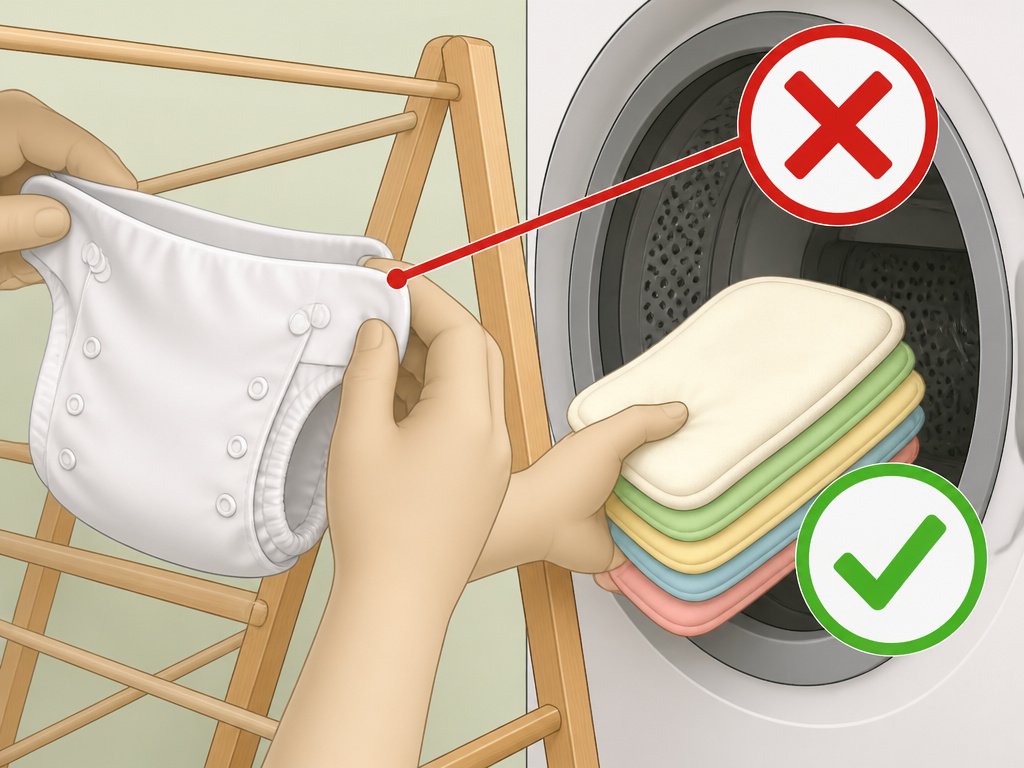 Throwing everything in the dryer is how you ruin waterproof covers. The polyurethane laminate (PUL) that makes diaper covers waterproof delaminates under sustained heat. The laminate separates from the fabric, creating leaks.
Always separate covers from inserts after washing. Use this guide:
| Component | Tumble Dryer? | Air Dry Time | Why |
|---|---|---|---|
| PUL Cover / Shell | No | 1-2 hours | Heat delaminates the waterproof layer. |
| Cotton Insert | Yes, low heat (60°C max) | 4-6 hours | Tumble drying softens fibers and is safe. |
| Bamboo Insert | Yes, low heat (60°C max) | 6-8 hours | Dries very slowly; dryer speeds it up. |
| Microfiber Insert | Yes, low heat (60°C max) | 2-3 hours | Dries fastest of all inserts. |
| Hemp Insert | Yes, low heat (60°C max) | 8-12 hours | Most absorbent, slowest to dry. |
Sun drying is the gold standard for inserts. UV light acts as a natural bleach, removing stains and odors. If you must machine-dry inserts, use low heat and wool dryer balls to reduce time and soften without chemicals.
What to Avoid: Your Warranty Depends on It
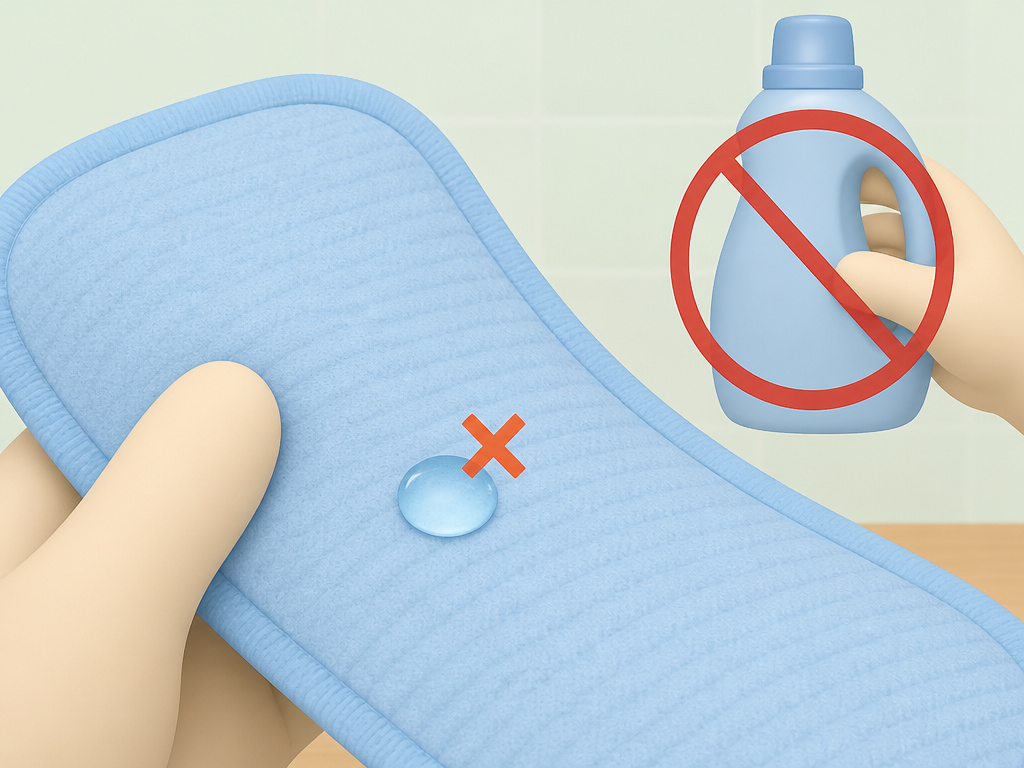 Cloth diaper manufacturers provide washing guidelines to protect their product. Straying from them can void your warranty. Two common additives cause the most trouble.
Fabric Softener & Glycerin
This is non-negotiable. Softeners and glycerin deposit a waxy, hydrophobic coating on fibers. An insert treated with softener will repel liquid instead of absorbing it. The diaper will leak immediately. If this happens, a full stripping cloth diapers process is required to restore absorbency.
Bleach and Vinegar
While a tiny, occasional amount of bleach might be recommended for sanitizing, routine use damages natural fibers and can void warranties. Vinegar is an acid that can degrade elastics and PUL over time. If your routine is sound, you should not need these additives. When you do need to sanitize, follow a precise, one-time protocol from a source like The Cloth Option washing guide.
Troubleshooting: Smells, Leaks, and Rashes
If your clean diapers smell like ammonia or barnyard immediately after a pee, you have a cleaning failure. The most likely culprit is detergent dosing for your water hardness. Strip the diapers, then recalculate your dose.
If diapers are repelling (beading up liquid), you have buildup from either too much detergent in soft water or from softener/glycerin. Strip them and switch to a cleaner diaper soap.
If your baby gets a rash, ensure your diapers are truly clean and that you’re using a diaper rash cream that is cloth-safe. Many common creams contain petroleum, which coats fibers and causes repelling.
For on-the-go, a reliable wet bag is essential. It uses the same dry storage principle, containment without soaking, to get diapers home.
Frequently Asked Questions
Can I wash cloth diapers every day?
You can, but it’s not necessary or efficient. Washing a full machine load every two to three days provides better agitation and cleaning than washing a few diapers daily. It also saves water and energy.
Is it okay to wash diaper covers with the inserts?
Yes, in both the prewash and main wash cycles. The covers benefit from the cleaning agitation. Just remember to separate them before drying, as the covers must air-dry.
What if I need to wait longer than three days to wash?
If you must stretch to day four or five, run a 60°C prewash cycle with a half dose of detergent immediately after storing the last diaper. This interrupts the ammonia cycle. Then proceed with your normal two-cycle routine on wash day.
Can I use laundry pods or liquid detergent?
Powder detergent is strongly recommended. It typically contains water softeners (builders) that liquid detergents lack, making it more effective, especially in hard water. Pods often contain glycerin or softeners and don’t allow you to adjust the dose for the prewash.
How do I know if I have hard water?
Check your local water utility’s annual report online. You can also buy a simple test strip from a hardware store. Signs include white, chalky residue on faucets and persistent dinginess in white fabrics.
Before You Go
The cloth diaper wash routine is a system of three timed actions: store dry, prewash quickly, and main wash hot and long. Its success hinges on matching your detergent to your water and keeping harmful additives out of the machine. Start with a powder like Molly’s Suds or a mainstream brand with builders, and wash a full load of 20-25 diapers every other day. That rhythm prevents the chemistry of ammonia from ever starting, which is how you keep diapers simple, clean, and durable for years.
