
How Often to Wash a Newborn to Prevent Dry, Irritated Skin
This post contains affiliate links. As an Amazon Associate, we learn from qualifying purchases
To wash a newborn, bathe them 2–3 times per week after the first two weeks of life. Delay the first full bath for at least 24 hours, and ideally up to two weeks, to protect the skin’s natural barrier and regulate temperature. Each bath should last no more than 5–10 minutes using warm water and a minimal amount of pH-neutral or slightly acidic baby cleanser.
That schedule is the midpoint where hospital guidelines, pediatric research, and the reality of infant skin biology meet. The first weeks are about transition, not cleanliness.
What follows: the evidence behind the 24-hour to two-week first-bath delay, the exact bathing technique that minimizes stress, the one cleanser mistake that raises skin pH, and how to spot the signs your specific baby needs a different schedule.
Key Takeaways
- Delay the first bath 24 hours to two weeks to let the protective vernix caseosa strengthen the skin barrier and aid temperature regulation.
- Bathe a healthy, full-term newborn only 2–3 times per week to prevent dry, cracked skin.
- Keep every bath under 5–10 minutes and use a dime-sized amount of pH-neutral or slightly acidic cleanser.
- For the first two weeks or until the umbilical cord falls off, use sponge baths only.
- Increase bathing frequency only for specific reasons: visible spit-up, diaper blowouts, or after starting solid foods.
Why Timing the First Bath Matters More Than Frequency
The “when” of the first bath dictates the “how often” for the next six months. Rushing it strips a biological shield.
Leave vernix caseosa, the creamy, waxy coating, on the skin for at least 6 hours after birth. This barrier is 80% water and lipids that protect the newborn epidermis, promote temperature stability, and support the development of the skin’s acid mantle.
The vernix is a final layer of uterine insulation. Wiping it off immediately is like peeling a plaster off a fresh wound.Major health bodies anchor their first-bath timing to this protection. The World Health Organization advises a 24-hour delay. The Association of Women’s Health, Obstetric and Neonatal Nurses (AWHONN) recommends a window of 6 to 24 hours. Some pediatric centers, like UT Southwestern, advocate delaying the first full bath for two weeks.
The conflict in timelines exists because the primary goal is universal: achieve thermal and cardiorespiratory stability first. A baby who is cold, stressed, or struggling to breathe should not be bathed. Once stable, the decision balances vernix benefits with practical hospital discharge protocols.
The exception proves the rule. For infants born to an HIV-positive mother, the first bath should happen immediately after birth to remove potentially infectious bodily fluids. This underscores that the delay is a protective strategy, not a rigid rule.
| Guideline Source | Recommended First Bath Timing | Primary Reason |
|---|---|---|
| World Health Organization (WHO) | Delay 24 hours (min. 6 hours if culturally needed) | Thermoregulation, breastfeeding initiation |
| AWHONN | Between 6 and 24 hours after birth | Thermal/cardiorespiratory stability |
| UT Southwestern Medical Center | Delay for at least two weeks | Vernix protection, skin barrier maturation |
| Brigham and Women’s Hospital | At least 6-24 hours for full-term infants | Stability, vernix retention |
Bottom line: Your hospital will likely follow the 6-24 hour guideline. If given the option, waiting longer, even up to two weeks with sponge baths, provides continued skin barrier benefits. The WHO newborn care instructions are clear: wipe the baby dry, but delay the bath.
The Newborn Bathing Schedule (0-6 Months)
Frequency is a calculation of infant skin tolerance.
For a healthy, full-term newborn, the magic number is two to three baths per week. This isn’t a guess. The European Roundtable on infant skin care explicitly recommends baths 2–3 times weekly, and Brigham and Women’s Hospital guidelines state to “limit bathing to every few days.”
Common mistake: Bathing daily because it’s part of a bedtime routine. Newborn skin is 30% thinner than adult skin and loses moisture rapidly. Daily washing strips natural oils, leading to dryness, cracking, and eczema flare-ups within a week.
This 2-3 times per week bathing schedule holds from about two weeks old until your baby starts crawling and regularly encountering food messes. The schedule is a ceiling, not a floor. If you miss a bath, nothing is wrong.
When to Bathe More Often
Adjust the schedule for real mess, not hypothetical dirt. – Major spit-up or diaper blowout: A quick, targeted clean is better than a full bath. Use a warm washcloth on the affected area. – After starting solids: Around 6 months, food gets everywhere. You may need baths every other day or even daily during this messy phase. – Hot, humid weather: If sweat is visible in skin folds, a quick rinse can prevent irritation. – Doctor’s orders: For conditions like severe eczema, your pediatrician may recommend specific, medicated bath routines.
The proper cloth diaper wash routine for your laundry is more frequent than the bath schedule for your baby. Don’t conflate the two.
What You Need (And What to Skip)
The right tools prevent problems. The wrong ones create them.
The Must-Haves:
- A soft, clean washcloth: Designate one for the face, another for the body.
- A gentle, pH-neutral or slightly acidic baby cleanser: Look for “pH balanced” or a pH between 5.5 and 7.0. Cetaphil Baby Wash & Shampoo and Mustela Foam Shampoo for Newborns are formulated in this range.
- A small tub or clean sink: The Primo EuroBath has a supportive newborn sling. A clean kitchen sink lined with a towel works perfectly.
- A hooded towel: It traps heat. The Burt’s Bees Baby Hooded Towel is absorbent and soft.
- A fragrance-free, dye-free moisturizer: Apply within 3 minutes after patting dry. Vanicream Moisturizing Cream is a pediatrician favorite.
What to Skip:
- Baby powder: It’s a inhalation risk and can irritate skin.
- Antibacterial soap: It’s harsh and disrupts the skin’s microbiome.
- Lotions with heavy fragrance or dyes: They are common allergens.
- Loose cotton balls: Fibers can stick to the face. Use washcloths instead.
Choosing a safe baby wash means checking the label for neutral pH and avoiding sulfates like SLS. The cleanser is for the baby, not the bathwater, a dime-sized amount is plenty.
Where this goes sideways: Adding extra cleanser to make more suds. More soap raises the water’s pH, creating an alkaline solution that can disrupt the skin’s natural acidic barrier. This leads to dryness and irritation by the next bath.
Step-by-Step: Giving a Safe Newborn Bath
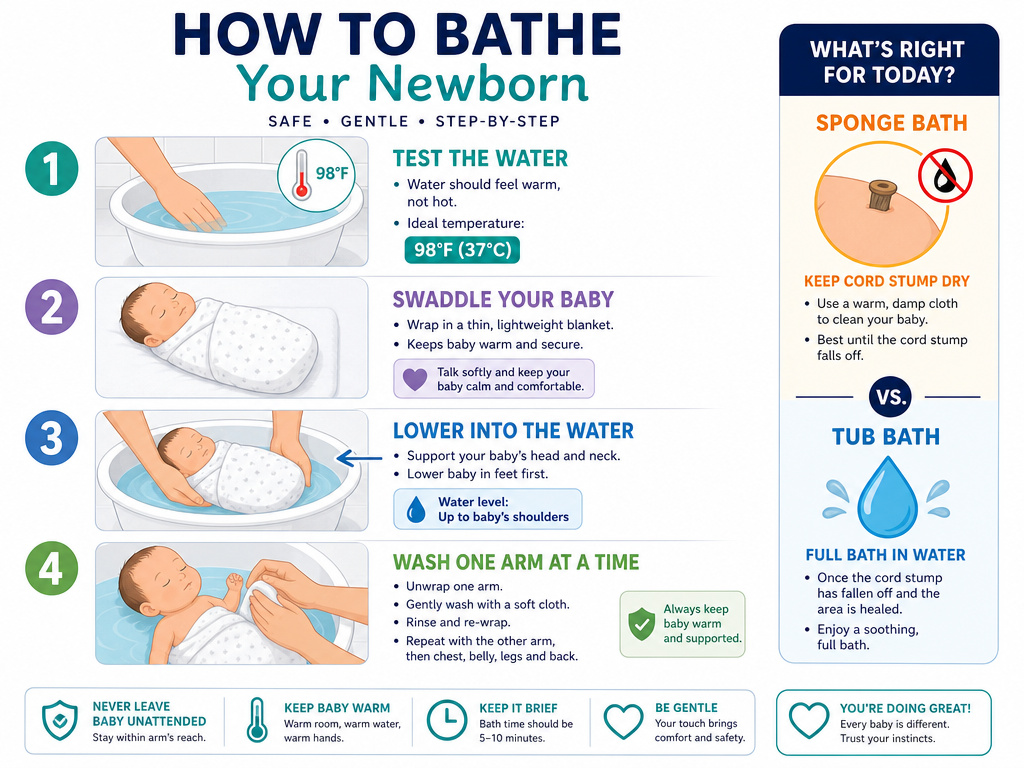
The technique matters as much as the timing. A stressed baby is a slippery baby.
Before you start: Gather everything. Never turn away. Assemble the washcloth, towel, cleanser, clean diaper, and clothes within arm’s reach. The bath should last 5 minutes, 10 max.
For Sponge Baths (First 2 Weeks or Until Cord Falls Off)
- Undress the baby on a padded, stable surface, keeping them wrapped in a towel.
- Start with the face. Use a damp, clean cloth with water only. Wipe from the inner eye outward.
- Clean the body. Uncover one section at a time. Use a drop of cleanser on the wet cloth for the neck, chest, arms, and back. Pay attention to creases.
- Save the diaper area for last. Clean thoroughly, especially skin folds.
- Keep the umbilical cord dry. Dab around it if needed. Do not submerge it.
If the cord gets soiled, clean it gently with water and a mild cleanser, then pat it completely dry. This prevents infection.
For Immersion (Tub) Baths
- Fill the tub with 2-3 inches of warm water. Test it with your wrist or elbow, it should feel warm, not hot (95–100°F).
- Swaddle the baby loosely in a thin blanket. This is the swaddle bath method.
- Lower them into the water up to their shoulders, supporting the head and neck.
- Unwrap, wash, and rewrap one limb at a time. This maintains warmth and calm.
- Shampoo last, if needed. Use a tear-free formula 1-2 times a week at most.
Always support the head. Always keep one hand on the baby. If you’re washing soiled cloth diapers separately, that’s a more vigorous process. Newborn skin needs a gentler touch.
Special Circumstances and Adjustments
Not all babies are full-term. Not all skin is typical.
Preterm Infants (<37 weeks gestation):
- <32 weeks: Use warm sterile water only for the first week of life.
- <37 weeks: Delay the first bath until approximately 24 hours of age. Their skin barrier is even more immature. Follow the NICU’s protocol exactly.
Babies with Eczema or Very Dry Skin:
- Reduce bathing to 1-2 times per week.
- Use a moisturizing cleanser like CeraVe Baby Wash & Shampoo.
- Apply a thick moisturizer (ointment or cream) immediately after bathing. Bathing can hydrate, but over-bathing strips oils. It’s a balance.
Umbilical Cord and Circumcision Care:
- Cord: Sponge bath only until it falls off (usually 10-14 days). Keep it dry and exposed to air.
- Circumcision: Sponge bath only for 3-4 days after the procedure. Clean the site with water only.
These are non-negotiable timelines. Immersion before the cord is off can lead to omphalitis, a serious infection. The StatPearls newborn care guide emphasizes dry cord care as the safest standard.
Frequently Asked Questions
Can I bathe my newborn every day?
You can, but you shouldn’t. Daily bathing strips the natural oils from skin that is still developing its protective barrier. For most newborns, this leads to dry, flaky, and irritated skin within a week. Stick to 2-3 times per week unless there’s a major mess.
How do I know if I’m bathing my baby too often?
Watch for visible signs: pronounced dry patches, redness (especially in skin folds), flaking that looks like dandruff, or increased fussiness during or after the bath. If you see these, cut back to once a week and focus on moisturizing.
What’s the best time of day to bathe a newborn?
There’s no universal best time. Some parents find a warm bath calming before bedtime. Others prefer mid-morning when everyone is alert. Avoid bathing immediately after a feeding. Watch your baby’s cues, if they consistently scream through evening baths, try the afternoon.
Is it okay to use just water, no soap?
Yes, especially for newborns. For the first few weeks, plain water is sufficient for everything except the diaper area, where a tiny bit of cleanser helps break down oils. As they get older and messier, a pH-neutral cleanser becomes helpful for removing grime from skin folds.
How do I clean my baby’s hair?
Shampoo 1-2 times per week at most. Use a tear-free formula. Gently massage a drop onto the scalp, rinse by cupping water in your hand, and pat the head dry with the towel. Cradle cap is common; it’s often worsened by over-washing, not under-washing.
What should I do if my baby hates bath time?
Try a swaddle bath. Keep the room very warm. Ensure the water temperature is correct. Talk softly and maintain eye contact. Keep it short, under 5 minutes. Sometimes, skipping a bath and just doing a sponge clean for a week can reset their tolerance. The goal is hygiene, not a prolonged experience.
Before You Go
The rhythm of newborn baths is slow. Two to three times a week is enough. The first bath can wait a day, or even two weeks, to let their skin armor set.
Use a tiny amount of the right cleanser. Keep the cord dry. Watch for dryness, not the calendar.
The rest, the spit-up, the diaper changes, the cleaning a diaper bag that holds it all, is just logistics. The bath is biology. Follow its lead.
