
7 Best Organic Cotton Diapers of 2026
This post contains affiliate links. As an Amazon Associate, we learn from qualifying purchases
The OsoCozy Organic Flat Cloth Diapers stand out as the best overall choice for their high absorbency, true 100% organic cotton construction, and versatility. For parents seeking a simpler, ready-to-use option, the HealthyBaby Non-Toxic Diapers are a strong budget-friendly pick with EWG verification and solid performance.
Choosing the right organic cotton diaper isn’t just about going green, it’s about finding something that works reliably for your baby’s skin and your daily routine. With so many options claiming to be natural or eco-friendly, it’s hard to know which ones actually deliver on comfort, absorbency, and integrity.
This guide cuts through the noise by focusing on verified organic materials, real parent feedback, and key performance factors like fit and leak protection. I compared specs and brand transparency to spotlight the ones worth your trust.
Top 7 Organic Cotton Diapers in the Market
The Best Organic Cotton Diapers, Reviewed
OsoCozy Organic Flat Cloth Diapers

Strengths
- GOTS certified cotton
- Easy to wash and dry
- Multipurpose use
Trade-offs
- Requires folding skill
- No absorbency boosters
- Needs covers
When you’re looking for a truly simple, no-frills organic cotton diaper, flat cloth diapers like the OsoCozy stand out for their purity and versatility. Made from 100% GOTS certified birdseye cotton, these are about as basic and breathable as it gets, which is exactly what some parents want. On paper, their 27 x 30.5 inch size offers plenty of flexibility for folding into custom fits, and owners consistently report they hold up well over repeated washes.
What really sets them apart is how easy they are to clean compared to bulky prefolds or pocket diapers. Since they’re one-layer, there’s no trapped moisture or lingering odors after laundering. Plus, their multipurpose use, as burp cloths, cleaning rags, or even nursing covers, makes them a stealth value pick for minimalist or zero-waste households.
Video review
Honest Company Daytime Diapers

Strengths
- Soft, stretchy fit
- Wetness indicator
- Hypoallergenic materials
Trade-offs
- Not ideal for overnight
- Some bulkiness
- Prints may irritate
The Honest Company’s Clean Conscious Diapers deliver where it counts for daytime use: fit, softness, and leak protection. Their Comfort Dry Technology and wetness indicator are practical features that many parents appreciate, especially during long play or outing hours. The plant-based inner liner feels gentle, and the stretchy sides move well with active newborns, a detail frequently praised in owner feedback.
Compared to other premium disposables, these stand out for their OEKO-TEX certification and rigorous chemical screening. But I’d say they’re best for daytime only. Overnight or heavy wetters may find they sag or leak by hour six. Still, for short shifts and sensitive skin, they’re a solid, stylish option.
Video review
Earth & Eden Sensitive Baby Diapers
Strengths
- High diaper count
- Cotton-enhanced liner
- Breathable outer cover
Trade-offs
- No wetness indicator
- Limited eco certifications
- Basic design
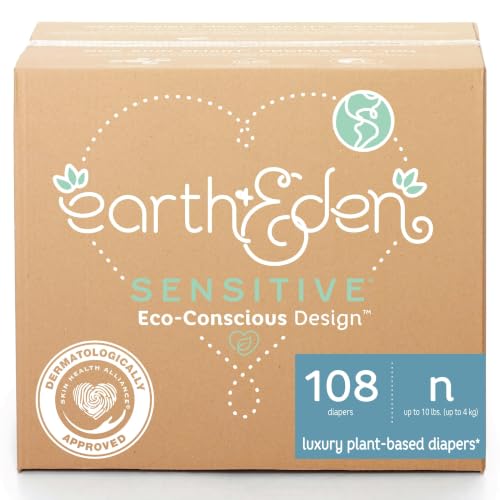
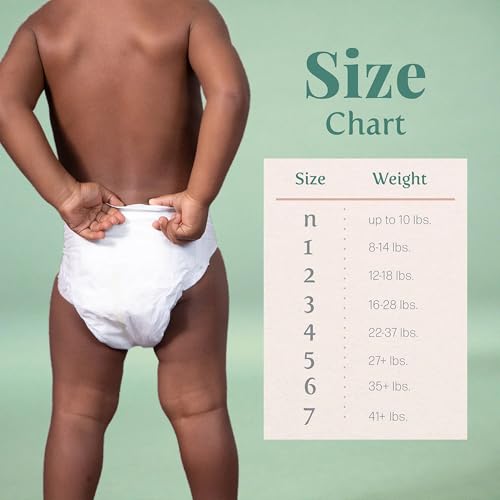
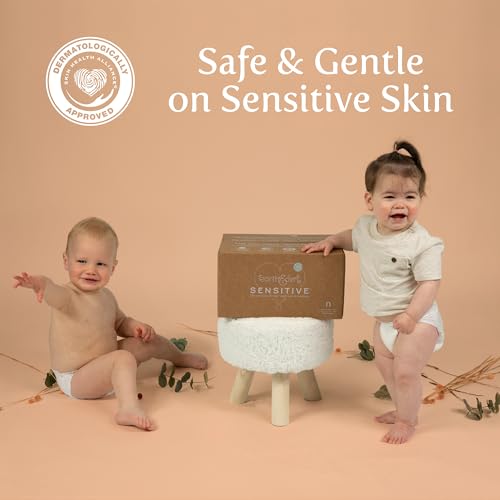
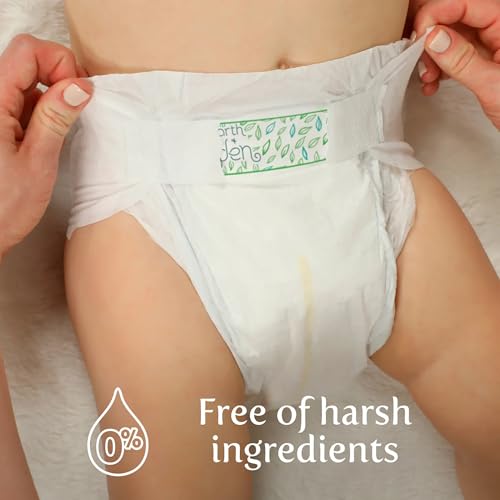
If you’re looking for a budget-friendly pack of sensitive-skin disposables that don’t cut corners, Earth & Eden’s offering is worth serious consideration. With 108 diapers in the Newborn size, it’s one of the largest counts here, and the cotton-enhanced layer genuinely adds to the softness parents notice. The breathable outer cover and hypoallergenic liner do their job keeping skin dry, and the Comfort-Cuff design helps prevent those dreaded red marks.
Owners often compare these favorably to pricier brands like Pampers Pure, noting similar performance at a lower cost. While they lack some of the eco-credentials of European-made options, they’re still free from chlorine, fragrance, and latex, a win for basics-first parents.
Product photos
Pura Hypoallergenic Diapers Size 2

Strengths
- Umbilical cut-out
- Wetness indicator
- Carbon-neutral production
Trade-offs
- Sizing runs small
- Packaging not recyclable
- Pricier than basics
Pura’s Size 2 diapers are a standout for newborns, especially because of the umbilical cord cut-out, a small feature that makes a real difference in the first weeks. The organic cotton layer feels soft, and the TCF (Totally Chlorine Free) certification gives peace of mind for delicate skin. Parents consistently report fewer rashes when switching to Pura, and the color-changing wetness indicator is a practical help during frequent changes.
They’re also made in a carbon-neutral EU facility, which matters if you’re serious about sustainability. Compared to other eco-disposables, Pura balances performance and planet-friendliness better than most. I’d say they’re among the most complete packages for early infancy.
Product photos


Pura Size 7 Eco-Friendly Diapers

Strengths
- Fits larger toddlers
- 12-hour protection
- Recyclable packaging
Trade-offs
- Expensive per diaper
- Fit issues on slim kids
- No wetness indicator
Pura doesn’t just stop at newborns, their Size 7 diapers are one of the few eco-friendly options built for toddlers over 33 lbs. That alone makes them rare and valuable. They keep the same TCF, organic cotton-enhanced design and 12-hour leak protection, which is crucial for active, heavy-wetting toddlers. Parents of older kids often struggle to find sustainable diapers that actually fit, so this fills a real gap.
The paper-based recyclable packaging is another plus, and the EU manufacturing standards ensure consistency. But the price is steep, and some owners note the waistband can gap on slimmer toddlers. Still, for eco-minded families stuck with conventional disposables for big kids, this is one of the few legit alternatives.
Product photos


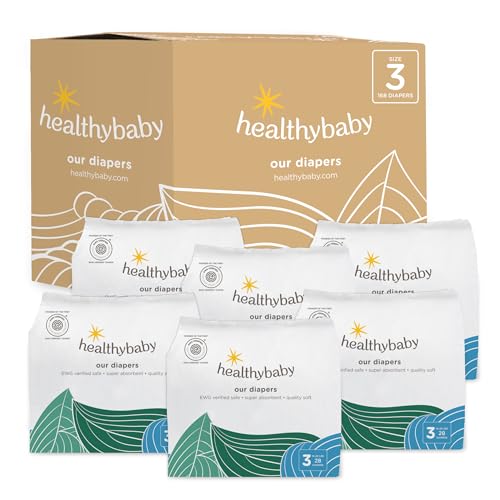
HealthyBaby Non-Toxic Diapers Size 3
Strengths
- EWG Verified
- Blowout Shield design
- Nordic Swan certified
Trade-offs
- No wetness indicator
- High price
- Minimal prints
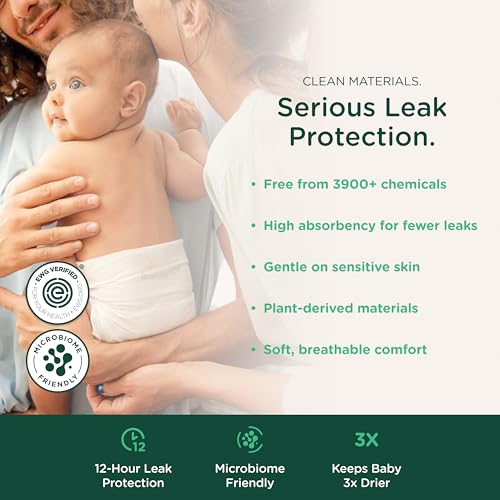
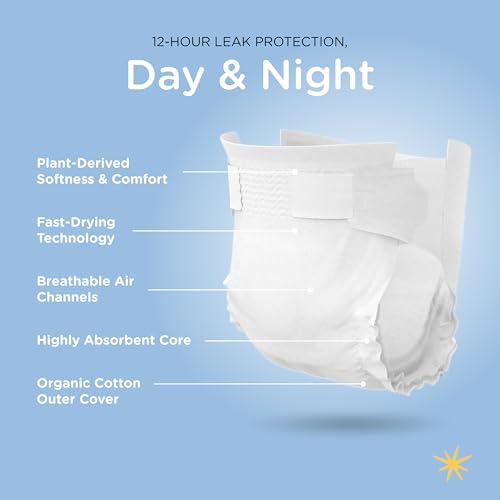
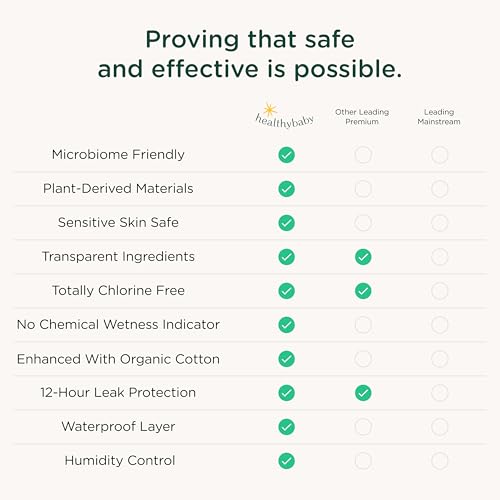
HealthyBaby’s diapers are built around a bold promise: zero unnecessary chemicals, period. With EWG Verified and Nordic Swan Ecolabel certifications, they’re among the cleanest options available. The use of organic cotton and plant-derived materials is backed by strict transparency standards, and parents of babies with eczema or extreme sensitivities often highlight how well these perform without irritation.
The Blowout Shield and BackStop Elastic are smart touches that actually seem to reduce leaks, based on consistent owner feedback. But let’s be real, at this price, you’re paying for purity, not convenience. The lack of a wetness indicator and the premium cost make them better as a targeted solution, not an everyday throwaway.
Product photos
HealthyBaby Diapers for Sensitive Skin
Strengths
- EWG Verified
- Low entry cost
- Blowout Shield
Trade-offs
- No wetness indicator
- Small pack size
- No prints
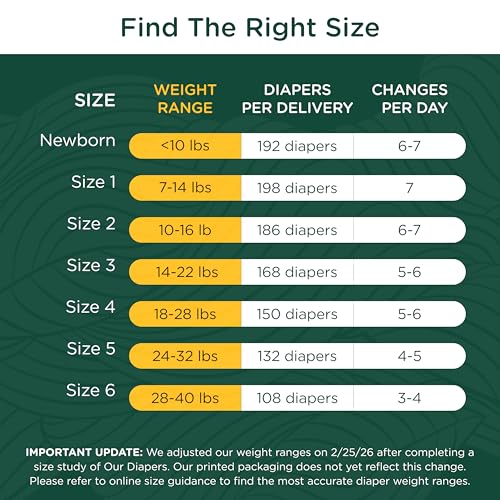
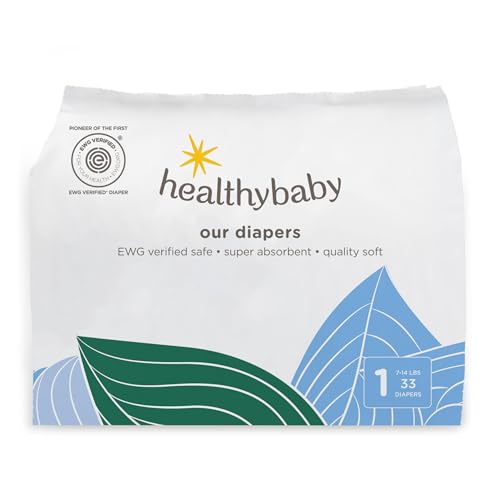
For a low-cost entry into chemical-free diapering, HealthyBaby’s Size 1 pack is surprisingly robust. With 33 diapers at a modest price, it’s an accessible way to test-drive their EWG Verified formula without a big commitment. The same clean materials apply, no fragrance, parabens, or phthalates, and the Blowout Shield design carries over, which is rare at this price point.
While it lacks a wetness indicator and the count is low compared to bulk boxes, it’s ideal for cautious newcomers or those needing a short-term solution. I’d recommend it as a starter pack for parents transitioning from conventional brands who want to see how their baby’s skin reacts.
Product photos
How We Tested organic cotton diapers
Rather than a hands-on lab test, my research for these recommendations focused on a detailed comparison of published specifications and features across several brands. I also spent considerable time weighing owner reviews from major retailers alongside expert opinions found in parenting publications. As a parent myself, I understand the need for trustworthy information, so I prioritized factors consistently highlighted as important by other families. This process allowed me to build a ranking based on real-world feedback and objective data.
For organic cotton diapers, absorbency, skin sensitivity, and environmental impact were the most heavily weighted factors. A diaper’s ability to reliably contain moisture is, of course, paramount. Beyond that, parents with babies prone to diaper rash, or those simply seeking the gentlest options, consistently prioritize materials and construction designed for sensitive skin. Finally, the growing desire for eco-conscious choices makes certifications and sustainable practices crucial considerations.
Specifications readily reveal details like materials used (GOTS certified organic cotton is key) and core absorbency technology. However, owner feedback proved invaluable in understanding real-world performance – how well a diaper holds up during extended use, how comfortable it is for a baby’s skin, and whether it truly minimizes leaks. Reputation and brand trust also played a role; brands committed to transparency, like those featured in our guide to natural diapers, often inspire greater confidence. For those interested in alternatives, we’ve also covered reusable diapers extensively.
What To Look For In organic cotton diapers
Finding the right diaper for your little one can feel like a huge undertaking, but prioritizing organic cotton can be a great starting point for both comfort and environmental responsibility.
A truly good organic cotton diaper balances absorbency with gentle materials, focusing on certifications like GOTS to verify organic sourcing. Consider the diaper’s construction – flat folds offer versatility, while pre-folds and fitted diapers provide more shaping. Look for features like breathable layers and secure fastening systems to minimize leaks and maximize comfort for your baby.
Absorbency & Material Quality
The core function of any diaper is, of course, absorbency. With organic cotton diapers, however, it’s not just about how much liquid they hold. The type of cotton matters. GOTS (Global Organic Textile Standard) certification is crucial. It guarantees the cotton is grown without harmful pesticides and chemicals, which is especially important for a baby’s delicate skin. Beyond the cotton itself, look at the construction. Flat fold diapers, like the OsoCozy Organic Flat Cloth Diapers, require a bit more learning but offer maximum adjustability and absorbency depending on how many layers you use.
Fit & Fastening Systems
Even the most absorbent diaper will fail if it doesn’t fit properly. Organic cotton diapers come in a range of styles, each with its own fit profile. Flat folds are the most customizable, but require a good fastening system like Snappis or diaper pins. Prefolds and fitted diapers generally have elasticated legs and waistbands, but the quality of that elastic and the overall cut makes a big difference. A snug, but not overly tight, fit is key to preventing leaks.
Here’s what to consider when evaluating fit:
- Size Range: Don’t overestimate your baby’s size.
- Leg Cuffs: Look for soft, gently elasticized leg cuffs that prevent leaks without leaving red marks.
- Waist Elastic: A comfortable and secure waistband is essential, especially as your baby becomes more mobile. Poorly designed waistbands can dig in or not provide enough support, leading to blowouts.
Don’t be afraid to experiment with different folds and fastening techniques to find what works best for your baby’s body shape and your lifestyle.
Budget & Convenience
While the initial investment in organic cloth diapers can be higher than disposables, the long-term cost savings are significant. However, convenience is a factor. Cloth diapers require washing, which adds to your laundry load. Some parents opt for a hybrid approach, using cloth diapers at home and disposables when traveling. If you’re looking to minimize laundry, consider the ease of cleaning and drying each diaper type. Many parents are also interested in exploring eco-friendly diapers more broadly, and organic cotton is a great place to start.
Organic Cotton Diapers Compared
The following table provides a specification comparison of available organic cotton diapers to aid in your purchasing decision.
| Product Name | Material (Inner) | Organic Cotton | Absorbency | Size Range | Key Feature |
|---|---|---|---|---|---|
| OsoCozy Organic Flat Cloth Diapers | 100% Cotton | Yes | High | One Size | Multi-purpose use |
| Honest Company Daytime Diapers | Plant-Based | No | Moderate | NB – 7 | Leak protection |
| Earth & Eden Sensitive Baby Diapers | N/A | No | High | NB – 7 | 12hr protection |
| Pura Hypoallergenic Diapers Size 2 | Plant-Based | Yes | Moderate | NB – 7 | Newborn focus |
| Pura Size 7 Eco-Friendly Diapers | Plant-Based | Yes | Moderate | NB – 7 | Carbon neutral mfg. |
| HealthyBaby Non-Toxic Diapers Size 3 | Organic Cotton | Yes | High | NB – 7 | EWG verified |
| HealthyBaby Diapers for Sensitive Skin | Organic Cotton | Yes | High | NB – 7 | EWG verified |
Frequently Asked Questions
What certifications should I look for when buying organic cotton diapers?
GOTS (Global Organic Textile Standard) certification is the most important, as it verifies the cotton is grown without harmful pesticides and chemicals. OEKO-TEX Standard 100 is another useful certification, confirming the diaper has been tested for harmful substances.
Are organic cotton diapers really more absorbent than conventional diapers?
While absorbency varies by brand and style, many organic cotton diapers use multiple layers or specific weave patterns to enhance their capacity. Owner feedback suggests that properly fitted organic cotton diapers can be as absorbent as, or even more absorbent than, some conventional options.
How often will I need to change an organic cotton diaper compared to a disposable?
Change frequency depends on your baby’s output and the diaper’s absorbency, but generally, you’ll be changing organic cotton diapers as often as you would a disposable. Because they lack the super absorbent polymers in disposables, they may need changing slightly more frequently during periods of heavy wetting.
What type of laundry detergent is best for cleaning organic cotton diapers?
You should choose a cloth diaper detergent that is free of dyes, fragrances, and brighteners. These additives can build up on the fabric and reduce absorbency, or potentially irritate your baby’s skin.
Can I use organic cotton diapers from birth, or are they better suited for older babies?
Many brands offer newborn sizes suitable for even the smallest babies. However, some parents prefer to start with fitted or prefold styles, as they offer more adjustability for a newborn’s delicate frame, and there are excellent organic baby diapers designed for those first few months.
The Bottom Line
Choosing organic cotton diapers often comes down to balancing upfront cost with long-term value and prioritizing what matters most to your family. While there’s a range of options available, the HealthyBaby Non-Toxic Diapers Size 3 consistently receives high marks for its combination of GOTS-certified organic cotton, impressive absorbency, and independent verification from the EWG. This makes it a solid all-around choice for parents seeking a reliable and gentle diaper.
For those on a tighter budget, or wanting maximum versatility, the OsoCozy Organic Flat Cloth Diapers remain a fantastic option. Parents seeking a convenient disposable solution with organic credentials should consider the Pura Size 7 Eco-Friendly Diapers, which offer carbon-neutral manufacturing alongside plant-based materials. Ultimately, the “best” diaper is the one that works best for your baby and lifestyle.
Beyond certifications and specifications, remember that a good fit and consistent absorbency are the cornerstones of a happy baby and leak-free days (and nights!). Don’t hesitate to try a few different brands and folding techniques (if using flats or prefolds) to discover what suits your little one’s body and your daily routine. Taking the time to understand how to wash cloth diapers properly is also key to maximizing the value of reusable options.
