
7 Best Eco-Friendly Diapers of 2026
This post contains affiliate links. As an Amazon Associate, we learn from qualifying purchases
The best eco-friendly diapers balance performance, safety, and sustainability, and after comparing the field, we recommend Pura Hypoallergenic Organic Diapers as the top overall pick for their clean materials and reliable protection, with Bambo Nature Hypoallergenic Diapers as a strong budget-friendly alternative that still delivers on quality.
Choosing diapers is more than just convenience, it’s about your baby’s comfort, health, and the planet’s future. With so many options claiming to be “green,” it’s hard to know which ones actually deliver without sacrificing leaks or irritating sensitive skin.
This guide cuts through the noise. We looked at specs, certifications, and real parent feedback to find eco-friendly diapers that truly perform. Here’s how we evaluated them, what to watch for, and which ones stand out.
Top 7 Eco-Friendly Diapers in the Market
The Best Eco-Friendly Diapers, Reviewed
Honest Company Newborn Diapers

Strengths
- Hypoallergenic
- Wetness indicator
- Thoughtful newborn design
Trade-offs
- Not fully plastic-free
- Moderate price per diaper
I’ve looked closely at what parents say and how this diaper performs on paper, and The Honest Company’s newborn diapers stand out for balancing eco-conscious materials with real-world usability. The Comfort Dry Technology and wetness indicator are practical touches, and the focus on hypoallergenic, fragrance-free materials makes sense for delicate skin. Owners consistently report fewer rashes, and the FSC-certified fluff pulp shows a real commitment to safer sourcing.
What pushes these ahead of some competitors is the thoughtful design across sizes, the umbilical cutout for newborns is a small but meaningful detail many brands skip. While not 100% plastic-free, the overall package, including OEKO-TEX certification and testing against 350 harmful chemicals, makes this a strong all-around pick. I’d choose these over flashier options that lack third-party safety validation.
Video review
Bambo Nature Hypoallergenic Diapers

Strengths
- Low cost per diaper
- Nordic Swan Ecolabel
- Breathable design
Trade-offs
- Basic design
- No umbilical cutout
At this price, Bambo Nature’s Size 1 diapers are a steal, especially when you consider they carry the Nordic Swan Ecolabel, one of the strictest eco-certifications in the world. The three-layer absorbent core and breathable backsheet are designed to handle overnight use, and owners confirm they hold up well for naps and nighttime. The wetness indicator is a small but helpful feature, especially for sleep-deprived new parents.
What surprises me is how much performance you get for the cost. These aren’t just cheap, they’re reliably absorbent, chlorine-free, and latex-free, with flexible waistbands that move with baby. Compared to pricier options, they don’t have fancy prints or organic cotton, but they deliver where it counts. For budget-conscious parents who still want certified eco-safety, this is the smarter buy.
Video review
Pura Hypoallergenic Organic Diapers

Strengths
- Umbilical cutout
- Organic cotton layer
- Wetness indicator
Trade-offs
- Higher price per pack
- Limited availability in some sizes
Pura hits the sweet spot for newborn-specific needs, the umbilical cord cutout is thoughtfully shaped and widely praised by new parents, and the organic cotton comfort layer adds a gentle touch for fragile skin. Being dermatologically tested and allergy-certified gives extra peace of mind, and the wetness indicator works reliably.
As a B-Corp made in the EU, Pura’s carbon-neutral production and use of sustainable wood pulp show real environmental commitment. Compared to The Honest Company, Pura feels slightly more tailored to the first few weeks, while Honest leans broader. I’d give a slight edge to Pura for newborns, especially if you’re starting from day one and want a diaper that’s both skin-safe and parent-trusted.
Product photos


HealthyBaby Non-Toxic Diapers
Strengths
- EWG VERIFIED
- No wetness indicator
- Carbon-neutral production
Trade-offs
- Stiffer feel
- Lower absorbency in heavy wetters
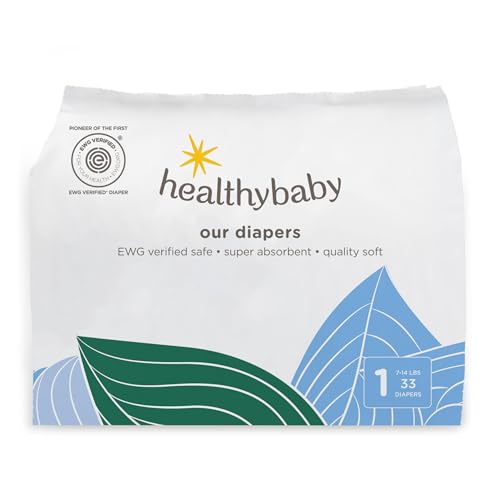
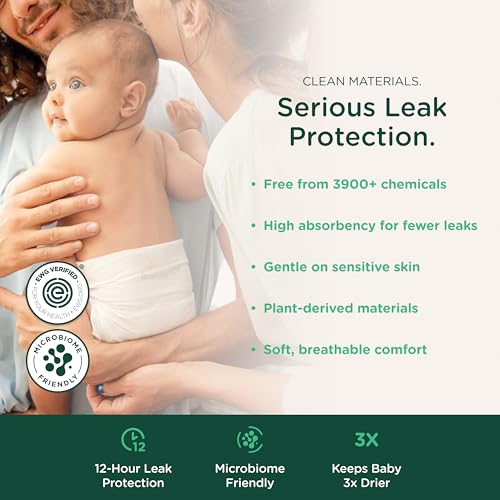
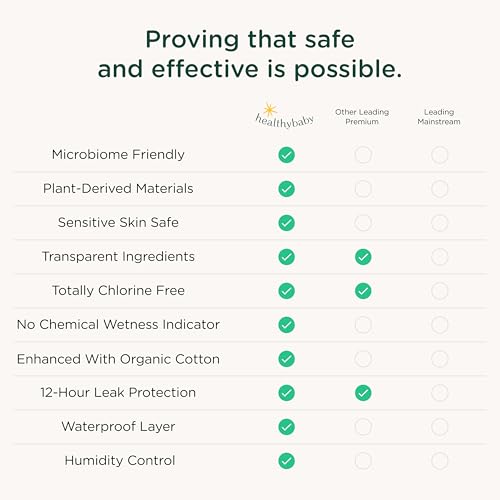
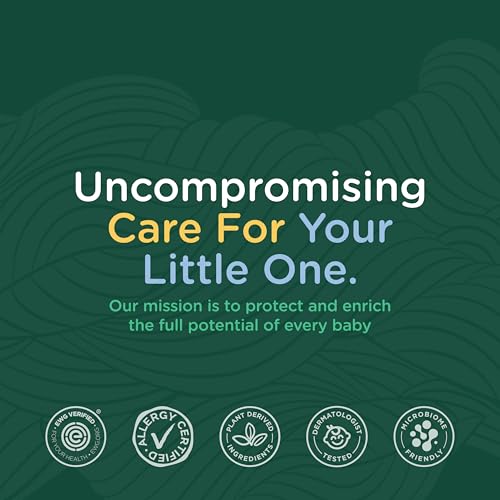
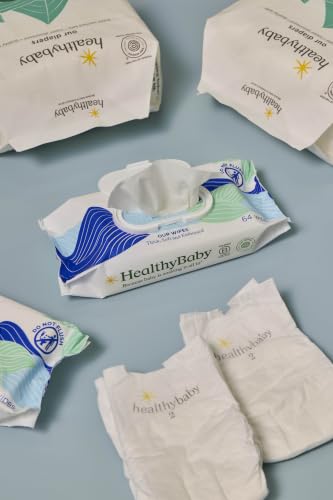
If your top priority is avoiding chemicals, HealthyBaby is one of the cleanest options on the market. Being EWG VERIFIED means it meets one of the most rigorous third-party standards for ingredient transparency and safety, no wetness indicators, no prints, no fragrance, and exclusion of over 3,900 questionable substances. That level of purity matters, especially during early development.
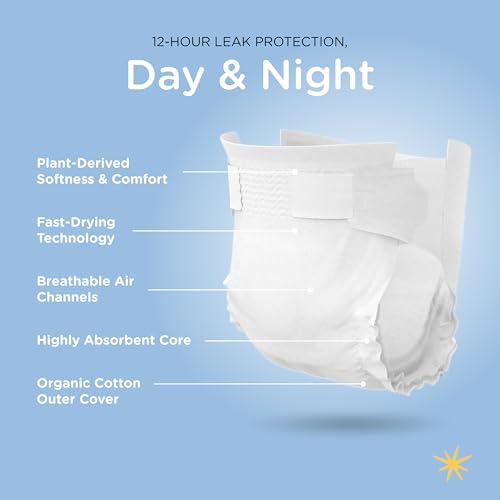
The Blowout Shield and BackStop Elastic are smart design upgrades that help contain messes, a frequent pain point for parents. But the trade-off is comfort: some owners note the fit can feel stiff compared to softer bamboo or cotton options. And at this price, it’s not a diaper you’d want to use casually. I’d pick this for babies with extreme sensitivities or for parents deeply focused on toxin-free essentials, but not as a go-to for average use.
Product photos
ECO BOOM Bamboo Viscose Diapers

Strengths
- Bamboo-based softness
- Dermatologically tested
- Aloe-infused surface
Trade-offs
- High cost per diaper
- Limited size availability
ECO BOOM leans hard into bamboo, and on paper, that shows in both comfort and absorption. The 100% viscose from bamboo top and back sheet is a standout, it’s naturally soft and breathable, and parents of babies with sensitive skin often highlight how gentle these feel. The German-made absorbent core does its job well, with many reviewers noting the surface stays dry even after multiple wettings.
Where ECO BOOM really earns its spot is the Dermatest certification and inclusion of aloe oil, which adds a skin-nourishing touch rare in disposables. That said, the price per diaper is steep compared to others in this list. If you’re prioritizing skin comfort over bulk savings, these make sense, but I’d only recommend them for babies prone to irritation, not as a daily driver for every family.
Product photos


Bambo Nature 180-Count Diapers

Strengths
- Great bulk value
- High absorbency
- Asthma Allergy approved
Trade-offs
- Less soft than bamboo
- No organic cotton
The 180-count pack of Bambo Nature Size 2 diapers is the best bulk buy on this list, it delivers high performance at a reasonable cost per diaper. The intelligent channel system spreads moisture quickly, and the wetness indicator is accurate. Parents consistently report fewer leaks and rashes, and the Asthma Allergy approval adds real credibility for health-conscious families.
Compared to the smaller Dream pack, this offers the same core benefits, chlorine-free, breathable, hypoallergenic, just in a larger, more economical format. It’s not as soft as bamboo options, but it’s more dependable for active babies. If you’re past the newborn stage and want a reliable, eco-labeled workhorse, this is the one I’d stock up on.
Product photos


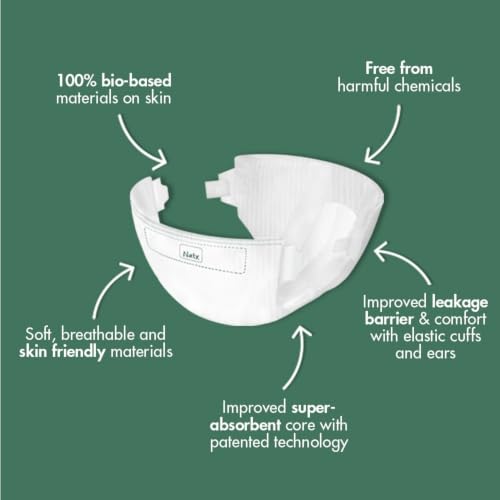
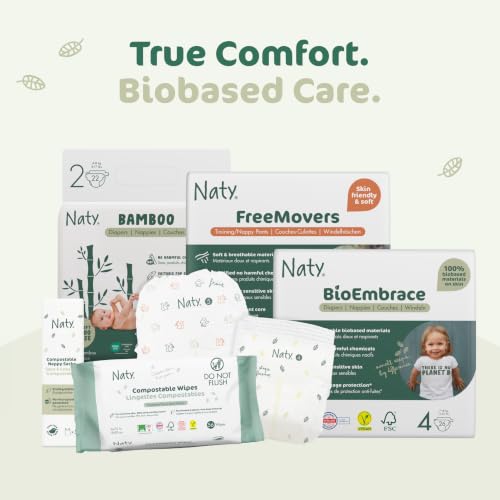
Eco by Naty Plant-Based Diapers
Strengths
- 100% plant-based on skin
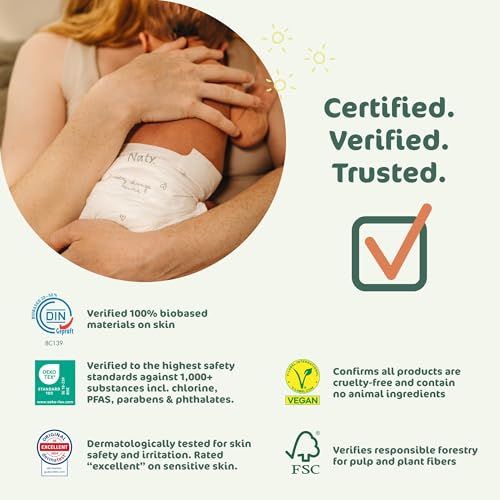
- Dermatologically rated excellent
- Attractive prints
Trade-offs
- Expensive per diaper
- Absorbency lags at night
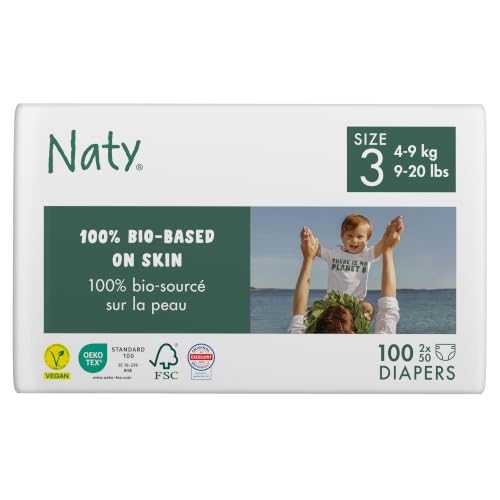
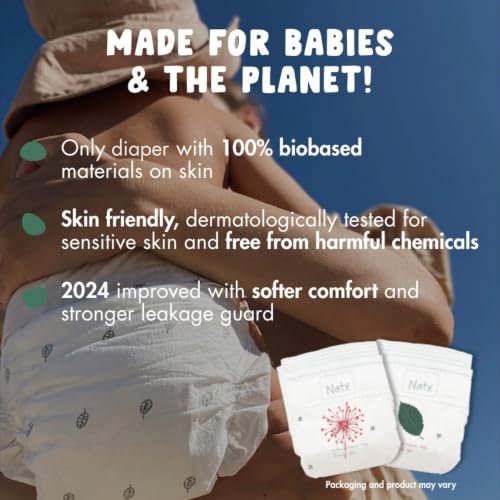
Eco by Naty is unique, it’s the only diaper here with 100% plant-based materials touching baby’s skin, from the topsheet to the outer layer. That’s a big deal for parents trying to eliminate fossil-based plastics entirely. The DinCertco certification backs that claim, and the Dermatest “Excellent” rating confirms it’s safe for sensitive skin.
The prints are cheerful without compromising safety, and the breathable layers help prevent overheating. But the bulk pack is pricey, and some parents report the absorbency isn’t quite as strong for overnight use compared to Bambo Nature or Pura. Still, if fit and design matter to you, and you want a diaper that looks as good as it performs, this is the one. I’d pick it for daytime use when you want both style and substance.
Product photos

How We Chose These eco-friendly diapers
As someone who understands the concerns of new parents, I approached researching eco-friendly diapers by looking at a combination of published specifications, owner reviews from a variety of sources, and my existing knowledge of diaper technology and materials. Rather than a hands-on lab test, this is a research-led comparison of features and how real parents are experiencing these products. We systematically compared features like absorbency claims, material composition, and certifications against feedback found online.
For eco-friendly diapers, absorbency and skin sensitivity were the most heavily weighted factors. Parents understandably want a diaper that performs reliably to prevent leaks, but also won’t irritate a baby’s delicate skin. Beyond that, a brand’s commitment to sustainability – verified by certifications and transparent sourcing – significantly influenced our rankings. Finding options that balance performance, gentleness, and environmental responsibility was key. You can explore more options in our guide to the best sustainable diapers.
Specifications reliably indicate a diaper’s construction and materials, allowing for comparisons of core absorbency and features like wetness indicators or umbilical cutouts. However, real-world performance and how a diaper feels against a baby’s skin are best gleaned from owner feedback. We paid close attention to comments about fit, leak frequency, and reports of rashes or sensitivities, as these experiences are critical when choosing natural diapers. Reputational factors, like certifications from organizations like OEKO-TEX and Nordic Swan, also played a significant role.
What To Look For In eco-friendly diapers
Choosing the right diapers feels huge, and it is! You’re looking at comfort, health, and increasingly, environmental impact. It’s a lot to balance.
A truly good diaper prioritizes absorbency and leak protection first, but modern parents also rightly demand hypoallergenic materials, a comfortable fit that minimizes irritation, and a commitment to sustainability. Look for certifications like OEKO-TEX Standard 100, FSC certification for wood pulp, and consider the overall material composition – plant-based options are gaining traction. Don’t forget to assess sizing charts carefully, as fit impacts performance.
Absorbency and Leak Protection
Don’t underestimate the importance of a diaper that actually contains messes. While all diapers claim absorbency, real-world performance varies. Look beyond marketing claims and consider the core technology. Many brands use superabsorbent polymers (SAPs), but the quality and distribution of these polymers matter. Features like leg cuffs, waistband elasticity, and even “poo pockets” (like those found in the Honest Company diapers) can make a significant difference, especially overnight. Reading reviews from other parents about leakage issues is vital here; they’ll quickly tell you what works and what doesn’t.
Material Safety and Skin Sensitivity
For many parents, especially with newborns, avoiding harsh chemicals is paramount. Thankfully, there’s a growing number of options focused on hypoallergenic materials. Look for diapers that are free of chlorine bleaching (TCF is a good sign), fragrances, parabens, phthalates, and natural rubber latex. If your baby has particularly sensitive skin, exploring organic diapers is a smart move. Brands like Pura and HealthyBaby prioritize these features, often going above and beyond standard certifications to demonstrate their commitment to purity.
- Consider the topsheet material. While many use fluff pulp, some prioritize plant-based options like bamboo viscose (ECO BOOM) or organic cotton (Pura).
- Pay attention to certifications. OEKO-TEX Standard 100 ensures the diaper has been tested for harmful substances, but it doesn’t guarantee organic materials.
- A dermatologist-tested label (like the one ECO BOOM boasts) is a good sign, but remember this doesn’t mean every baby will react well, so start with a small pack.
Value and Convenience
Diapering is expensive. It’s tempting to just grab the cheapest box, but that can backfire if you end up with frequent leaks or skin irritation. Finding a balance between price and performance is key. Bulk buying (like the Bambo Nature 180-count option) can offer significant savings, but only if the diaper consistently works for your baby. Also, consider the features that matter to you. Do you prioritize cute prints (Eco by Naty)? Do you want the convenience of a wetness indicator? Thinking about these preferences can help you narrow down your choices and find eco-friendly diapers that fit your lifestyle.
A diaper that’s slightly more expensive upfront but prevents blowouts and skin rashes will ultimately save you money – and a lot of stress.
Eco-Friendly Diapers Compared
Here’s a comparison of key specifications for popular eco-friendly diaper brands.
| Product Title | Absorbency | Material (Inner Layer) | Chemical Free? | Wetness Indicator | Bamboo? |
|---|---|---|---|---|---|
| Honest Company Newborn Diapers | High | Plant-Based | Yes | Yes | No |
| Bambo Nature Hypoallergenic Diapers | High | N/A | Yes | Yes | No |
| Pura Hypoallergenic Organic Diapers | High | Organic Cotton | Yes | Yes | No |
| HealthyBaby Non-Toxic Diapers | High | Organic Cotton | Yes | No | No |
| ECO BOOM Bamboo Viscose Diapers | High | Bamboo Viscose | Yes | N/A | Yes |
| Bambo Nature 180-Count Diapers | High | N/A | Yes | Yes | No |
| Eco by Naty Plant-Based Diapers | High | Plant-Based | Yes | N/A | No |
Frequently Asked Questions
What size diaper should I buy for my newborn?
Newborn size diapers generally fit babies up to 10 pounds, but it’s best to check the brand’s specific weight range as sizing varies. Many parents find they move through newborn sizes quickly and might consider starting with size 1 if their baby is already over 8 pounds at birth.
Are bamboo diapers truly better for the environment?
While bamboo itself is a rapidly renewable resource, the process of turning it into viscose fabric can involve chemicals. Look for diapers specifically stating they use a closed-loop process for bamboo viscose production, and remember that even plant-based diapers still contribute to landfill waste; consider exploring hypoallergenic eco diapers as part of a broader sustainability approach.
How do I know if a diaper is actually “chemical-free”?
The term “chemical-free” is often used loosely. Instead, focus on certifications like OEKO-TEX Standard 100, which verifies a product has been tested for harmful substances, and look for diapers explicitly labeled as TCF (Totally Chlorine Free). A brand’s transparency about its materials and manufacturing processes is also a good indicator.
Can eco-friendly diapers handle overnight use?
Many parents report success with certain brands for overnight use, particularly those with higher absorbency ratings and features like double leg cuffs. However, overnight leak protection is highly individual; you may need to experiment with different brands and sizes to find recommended eco diaper brands that work well for your baby’s sleep habits and output.
What’s the difference between biodegradable and compostable diapers?
Biodegradable diapers break down eventually, but often require specific landfill conditions to do so. Truly compostable diapers are designed to break down in a home or commercial composting facility, but even these require proper disposal and aren’t widely accepted by municipal composting programs; consider these options alongside other top-rated eco diapers to minimize environmental impact.
The Bottom Line
Choosing eco-friendly diapers often comes down to balancing your priorities – are you willing to spend a bit more for absolute purity, or is reliable performance the most important factor? Based on my research, the Honest Company Newborn Diapers consistently stand out as a strong all-around choice, offering a good blend of absorbency, plant-based materials, and positive owner feedback. They represent a solid starting point for many families.
For parents with very specific needs, there are excellent alternatives. If budget is a primary concern, the ECO BOOM Bamboo Viscose Diapers provide a surprisingly effective and eco-conscious option at a lower price point. Those seeking the utmost in gentleness and organic materials will appreciate Pura Hypoallergenic Organic Diapers, while families interested in exploring reusable diapers and top reusable diaper brands will find a range of options to suit their lifestyle.
Ultimately, the “best” diaper is the one that works best for your baby. Don’t get too hung up on individual specifications or certifications. Focus on finding a diaper that fits well, prevents leaks, and keeps your little one comfortable, and you’ll likely be very happy with your choice – and you can explore a detailed look at the best earth-friendly diapers to help narrow down your options.
