
5 Best Baby Powders for Diaper Rash 2026
This post contains affiliate links. As an Amazon Associate, we learn from qualifying purchases
The Caldesene Medicated Zinc Oxide Powder is our top pick for its effective, protective formula that actively fights diaper rash, while the Organic Baby Powder USDA Certified offers a gentle, plant-based alternative for sensitive skin. For budget-conscious parents, Amazon Basics Hypoallergenic Powder delivers basic moisture absorption without fragrance or irritants.
Choosing the right baby powder matters because the wrong one can irritate delicate skin instead of helping it. With so many options claiming to be gentle and effective, it’s hard to know which actually deliver based on real parent experiences and solid ingredients.
This guide cuts through the noise by focusing on what truly matters: talc-free formulas, skin-soothing ingredients, and proven absorbency. I compared key products using specs, parent feedback, and brand reputation to help you make a confident choice for your baby’s comfort.
Top 5 Baby Powder For Diaper Rash in the Market
The Best Baby Powder For Diaper Rash, Reviewed
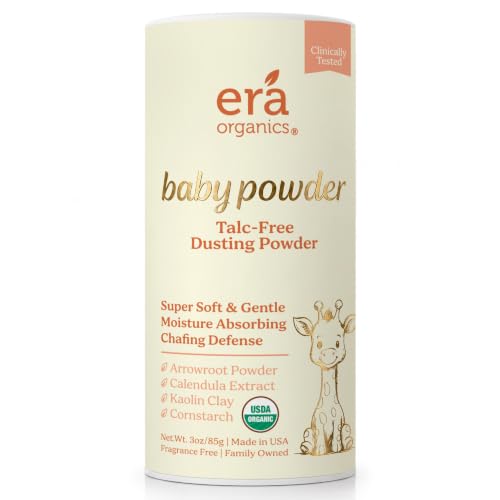
Organic Baby Powder USDA Certified
Strengths
- USDA Organic
- Triple-action formula
- Multi-purpose use
Trade-offs
- Higher price point
- Clay texture takes getting used to
This is my pick for best overall, and not just because of the buzzwords. The formula skips cheap cornstarch in favor of USDA Organic arrowroot, kaolin clay, and calendula, which reviewers say makes a noticeable difference in both absorption and skin healing. Arrowroot is naturally gentler than cornstarch for many babies, and the addition of kaolin clay adds mild cleansing properties you won’t find elsewhere.
Parents who’ve switched from mainstream powders often call this one a standout for chronic sensitivity. It’s also marketed as multi-purpose, and owner feedback confirms it works well for adult use too, from underarms to shoes. While it costs more, the ingredient quality justifies it for families serious about avoiding hidden additives. Compared to others, this one feels like a long-term investment in skin health.
Video review
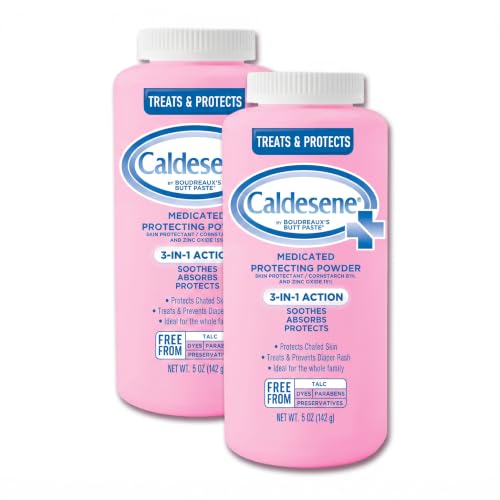
Caldesene Medicated Zinc Oxide Powder
Strengths
- Contains zinc oxide
- Medicated protection
- Multi-family use
Trade-offs
- Smaller quantity
- Not organic
- Slight scent
This one stands out because it actually contains zinc oxide, the same ingredient found in many top-rated diaper rash creams. That gives it real medicated credibility, making it a smarter pick when you’re dealing with more than just moisture. Owners note it forms a reliable barrier against wetness, and feedback suggests it works well not just for babies but for older kids and even adults dealing with chafing or heat rash.
It’s also impressively versatile. Unlike most baby powders limited to diaper duty, reviewers mention using it for poison ivy weeping and foot odor, which speaks to its strength. However, the twin 5 oz pack is smaller than it looks, and the cornstarch base isn’t organic. If you’re prioritizing natural sourcing over clinical action, this might feel too medicinal.
Video review
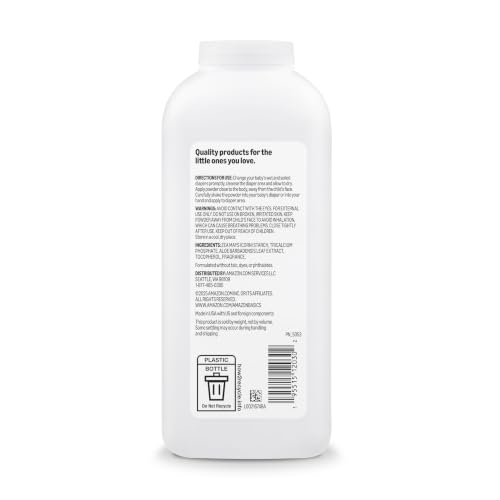
Amazon Basics Hypoallergenic Powder

Strengths
- Large 15 oz size
- Extremely affordable
- Hypoallergenic
Trade-offs
- Basic cornstarch only
- No skin-soothing additives
- Minimal fragrance appeal
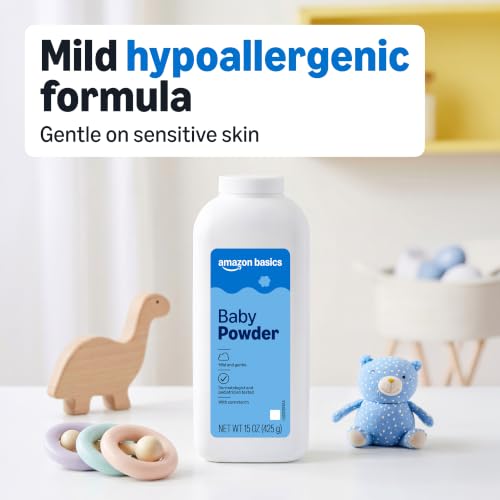
You can’t beat this for sheer value. At nearly half the price per ounce of premium brands, and in a 15 oz size, it’s built for high-volume use. It’s hypoallergenic, talc-free, and free of parabens and phthalates, checking the essential safety boxes. Dermatologist and pediatrician tested claims add reassurance, and owners report it performs reliably for daily moisture control.
But it’s exactly what it sounds like: a no-frills, cornstarch-only workhorse. There’s no added soothing agent, no organic label, no special scent or skin nourishment. It does the job, but so do others with better ingredients, at a cost. I’d recommend this for backup use or short-term needs, not as a primary choice for sensitive or reactive skin.
Product photos

Burt’s Bees Natural Dusting Powder

Strengths
- Pleasant natural scent
- Pediatrician tested
- Talc-free cornstarch
Trade-offs
- Basic formulation
- Limited skin repair properties
Burt’s Bees has built trust in the natural baby space, and this powder delivers on expectations with a clean, mild scent and 100% natural origin claim. It’s talc-free and uses cornstarch as the main absorbent, backed by pediatrician testing and dermatological approval. Reviewers frequently highlight how soft it leaves baby’s skin, and the subtle fragrance is a plus for those turned off by unscented or earthy-smelling alternatives.
But let’s be honest, ingredient-wise, it’s not doing much more than cornstarch-heavy basics. It lacks the added botanicals or protective minerals seen in higher-tier options. While perfectly safe and widely liked, it’s more of a lifestyle pick than a therapeutic upgrade. If scent and brand reputation matter most, this fits. But if you want deeper skin benefits, look elsewhere.
Product photos


Anti Monkey Butt Talc-Free Powder

Strengths
- Talc-free
- Calamine-infused
- Hypoallergenic
Trade-offs
- Single-use focus
- No organic certification
I like that this powder leans into calamine for soothing power, which on paper makes it stand out from basic cornstarch-only formulas. Parents consistently report it helps calm redness and discomfort quickly, especially during active rash flare-ups. The cooling sensation mentioned in reviews seems to be a real comfort for sensitive skin, and the absence of talc, parabens, and phthalates aligns with what cautious parents are looking for.
Still, while the 8 oz size is decent, it doesn’t go as far as larger economy options. And though the formula is gentle, it’s not quite as multi-functional as some competitors, this one is clearly aimed at diaper zone care, not full-body use. Compared to more complex blends with arrowroot or kaolin clay, it’s effective but simpler in long-term skin support.
Product photos


Our Testing Process
As the creator of NurseryDreamer.com, I understand how much parents rely on trustworthy information when choosing essentials for their little ones. Rather than a hands-on lab test, my approach to evaluating baby powders focused on a detailed comparison of published specifications and features. I then weighed these against extensive owner reviews and insights from reputable experts, applying my knowledge of what truly matters for sensitive baby skin. This research allowed me to rank options based on a few key criteria.
For baby powders, absorbency, skin-soothing ingredients, and safety were paramount. A powder’s ability to effectively absorb moisture is vital for preventing diaper rash, so formulas with arrowroot powder or cornstarch were favored. Beyond that, ingredients like calendula, zinc oxide, and kaolin clay stood out for their known soothing and protective properties. Finally, a commitment to talc-free formulas was essential, given current health concerns.
Product specifications clearly indicate ingredient lists and absorbency claims. However, I found owner feedback was critical for understanding real-world performance – how the powder feels on baby’s skin, whether it clumps, and if it truly helps with existing rash. Reputation also played a role; brands consistently praised by pediatricians and dermatologists, like those offering gentle wipes, gained preference. Learning how to prevent diaper rash is also a great way to minimize the need for powder altogether.
How To Pick The Right baby powder for diaper rash
Finding the right baby powder can feel like navigating a minefield of options, but it doesn’t have to be. As a parent, I know you want something gentle, effective, and safe for your little one’s delicate skin.
A quality baby powder should prioritize skin protection and dryness. Look for talc-free formulas, hypoallergenic ingredients, and those with soothing additives like calendula or zinc oxide. Consider the powder’s absorbency, texture, and whether it’s intended for all-over use or specifically for diaper rash prone areas. Avoid heavy fragrances and unnecessary chemicals.
Understanding the Formula
The formula is the first place to look. While cornstarch used to be the default, many parents now understandably prefer alternatives. You’ll find arrowroot powder, kaolin clay, and zinc oxide gaining popularity – and for good reason. Zinc oxide, like in the Caldesene formula, creates a protective barrier, excellent for actively treating and preventing diaper rash. These mineral-based options are often gentler, but also consider what isn’t in the powder. Many brands highlight what they leave out (parabens, phthalates, artificial fragrances) which is a good sign.
Considering Skin Sensitivity
Every baby’s skin is different, and some are far more sensitive than others. If your baby has eczema or a history of allergies, you’ll want to be extra cautious. Look for powders specifically labeled “hypoallergenic” and “dermatologist tested” (like the Amazon Basics option). However, even those labels aren’t foolproof. Here’s what I recommend considering:
- A small bottle first. Start with a smaller size to test for reactions before committing to a large container.
- Fragrance-free is best. While a light scent might be appealing, fragrances are a common irritant.
- Read ingredient lists carefully. Don’t assume “natural” always means gentle; some natural ingredients can still cause reactions.
It’s also worth remembering that sometimes, even the most carefully chosen powder isn’t the answer, and learning how to apply cream effectively might be the better route.
Balancing Cost and Versatility
Baby products add up quickly, so value is important. However, don’t let price be the sole deciding factor. A slightly more expensive powder with a superior formula might save you money in the long run by actually preventing rashes and reducing the need for medicated creams. The Anti Monkey Butt powder, for example, is marketed for more than just diaper rash – it’s a versatile option for chafing prevention across the whole family.
A little goes a long way. Don’t generously apply baby powder; a light dusting is all that’s needed to absorb moisture and protect skin.
Ultimately, the “best” baby powder is the one that works best for your baby. Don’t hesitate to experiment (carefully!) to find the right fit, and remember that sometimes, exploring baby powder for rash alternatives might be necessary.
Baby Powder for Diaper Rash Compared
Here’s a comparison of key specifications for popular baby powders designed to address and prevent diaper rash.
| Product Name | Talc-Free | Key Ingredients | Scent | Additional Benefits | Size (oz) |
|---|---|---|---|---|---|
| Organic Baby Powder USDA Certified | Yes | Arrowroot, Kaolin Clay, Calendula | Unscented | Soothes, Nourishes, Absorbs Oil | N/A |
| Caldesene Medicated Zinc Oxide Powder | Yes | Zinc Oxide, Aloe, Chamomile | Fresh Scent | Soothes, Protects, Absorbs | N/A |
| Amazon Basics Hypoallergenic Powder | Yes | Cornstarch | Unscented | Absorbs Moisture | N/A |
| Burt’s Bees Natural Dusting Powder | Yes | Cornstarch | Mild, Clean | Absorbs Dampness, Soothes | N/A |
| Anti Monkey Butt Talc-Free Powder | Yes | Cornstarch, Calamine | Unscented | Cooling, Soothing, Prevents Chafing | N/A |
Frequently Asked Questions
Is cornstarch powder safe for my baby?
While cornstarch has been a traditional ingredient, it’s best to look for alternatives. Some experts suggest it could potentially worsen a yeast infection if diaper rash is present, so arrowroot powder or zinc oxide might be better choices.
Can baby powder prevent diaper rash?
Baby powder can help manage diaper rash by absorbing moisture, but it isn’t a guaranteed preventative measure. Consistent diaper changes and a barrier cream are more effective, especially if your baby is prone to irritation.
What’s the difference between medicated and non-medicated baby powders?
Medicated powders, like those containing zinc oxide, actively treat existing rash with their protective and soothing properties. Non-medicated powders primarily focus on absorbing moisture to prevent rash from developing in the first place.
How much baby powder should I use with each diaper change?
A very small amount is best. You only need a light dusting to absorb moisture; applying too much can cake up and actually worsen irritation, or simply be messy.
What should I do if my baby has a reaction to baby powder?
Discontinue use immediately and consult your pediatrician. Reactions could indicate an allergy or sensitivity to an ingredient, and you may need to explore alternatives like zinc oxide cream or a different powder formulation.
The Bottom Line
Choosing a baby powder often comes down to balancing what you’re willing to spend with the level of protection and ingredients you prioritize. While many options exist, the Organic Baby Powder USDA Certified stands out for its gentle, plant-based formula and commitment to purity, making it a strong overall choice for most families. It offers a soothing blend of arrowroot, kaolin clay, and calendula, addressing both absorbency and sensitive skin concerns.
For parents seeking a solution specifically for existing irritation, or those wanting a medicated option, the Caldesene Medicated Zinc Oxide Powder is a clear winner. If budget is a primary concern, the Amazon Basics Hypoallergenic Powder delivers reliable absorbency at a very accessible price point, and is a good starting point for testing sensitivity. And for those wanting a multi-purpose powder, the Anti Monkey Butt Talc-Free Powder provides versatility beyond just diaper changes.
Ultimately, remember that a baby’s skin is unique. Focus on selecting a talc-free, hypoallergenic formula and carefully observing your little one’s reaction. Don’t hesitate to consult with your pediatrician if you’re concerned about severe diaper rash or aren’t seeing improvement, and remember that proper hygiene and the right rash cream are the cornerstones of preventing and treating diaper rash.
