
How to Make Potty Training Fun and Effective for Your Child
This post contains affiliate links. As an Amazon Associate, we learn from qualifying purchases
To make potty training fun, keep sessions under five minutes, pair sitting with a favorite activity like a song or book, and use immediate, tangible rewards like stickers. The goal is to create positive associations, not to force results. For children with sensory needs or communication delays, visual schedules and environmental adjustments are non-negotiable for reducing anxiety.
That five-minute ceiling is the line between a game and a grind, not a suggestion. Go over it, and you’re no longer training, you’re holding a tiny, resentful hostage negotiation.The fun evaporates, and with it, any chance of cooperation.
What follows breaks down the mechanics of fun. We’ll cover the timed-session rule backed by pediatric sources, how to build reward systems that don’t backfire, and sensory tweaks that make the bathroom feel safe instead of scary. You’ll leave with a plan that treats potty training as a skill to be learned through play, not a power struggle to be won.
Key Takeaways
- Cap potty sits at 3–5 minutes. The Mayo Clinic and Johns Hopkins set this hard limit to prevent frustration and power struggles.
- Fun is a tool, not a trick. Pair sitting with a genuinely enjoyable activity (a special song, a quick story) to build a positive neural pathway.
- Immediate rewards beat delayed praise. A sticker placed on a chart the moment they succeed links action to outcome in a toddler’s brain.
- Sensory comfort is foundational. For hesitant kids, address lighting, noise, and stability with a footstool and potty seat before anything else.
- Transition from external rewards to internal pride. Phase out the sticker chart once the habit is stable, celebrating the skill itself.
Why “Fun” Is Your Most Practical Tool
Forget the glitter and cartoons for a second. In behavioral terms, “fun” is just positive reinforcement. You’re wiring a new, complex behavior by attaching it to something the brain already wants. The moment the potty feels like a time-out or a test, that wiring fails. Resistance isn’t stubbornness; it’s a rational response to a negative experience.
The research is clear on the alternative. A 2023 practice guide in Behavior Analysis in Practice explicitly notes that pairing toilet sitting with a preferred activity increases motivation and reduces refusal. This approach is about lowering the anxiety threshold so learning can happen.
Common mistake: Extending the potty sit until something happens. This teaches the child that the toilet is a place of indefinite detention, not a quick pit stop. Frustration guarantees a fight next time.
Your first job is to reframe the bathroom visit from a demand into an invitation. The difference is everything.
The 3-Minute Rule (And Why It Works)
How long should a potty training session last? The consensus from major child health institutions is specific and short.
| Source | Recommended Max Sit Time | Key Rationale |
|---|---|---|
| Mayo Clinic | 5 minutes | Prevents frustration and maintains a positive association. |
| Raising Children Network | 3–5 minutes | Lets the child get off without feeling forced, preserving cooperation. |
| Down’s Syndrome Association | About 1 minute | Keeps the child from missing a preferred activity, reducing resistance. |
The common thread is time pressure, on you, not them. A three-minute timer transforms the dynamic. It becomes a predictable, brief event with a clear end. You can present it honestly: “We’re going to sit and read this book until the timer beeps, then we’re all done.” No surprises, no negotiations.
This is where your potty training chart becomes a clock. One sticker for sitting, a second for producing. The sitting sticker is earned the moment the timer beeps, regardless of outcome. This separates the effort from the result, which is critical early on.
The NIH toilet training study reviewed methods dating back to the 1960s and found child-oriented, non-coercive approaches consistently produced better long-term outcomes. The three-minute rule is that philosophy in practice.
Building a Reward System That Doesn’t Backfire
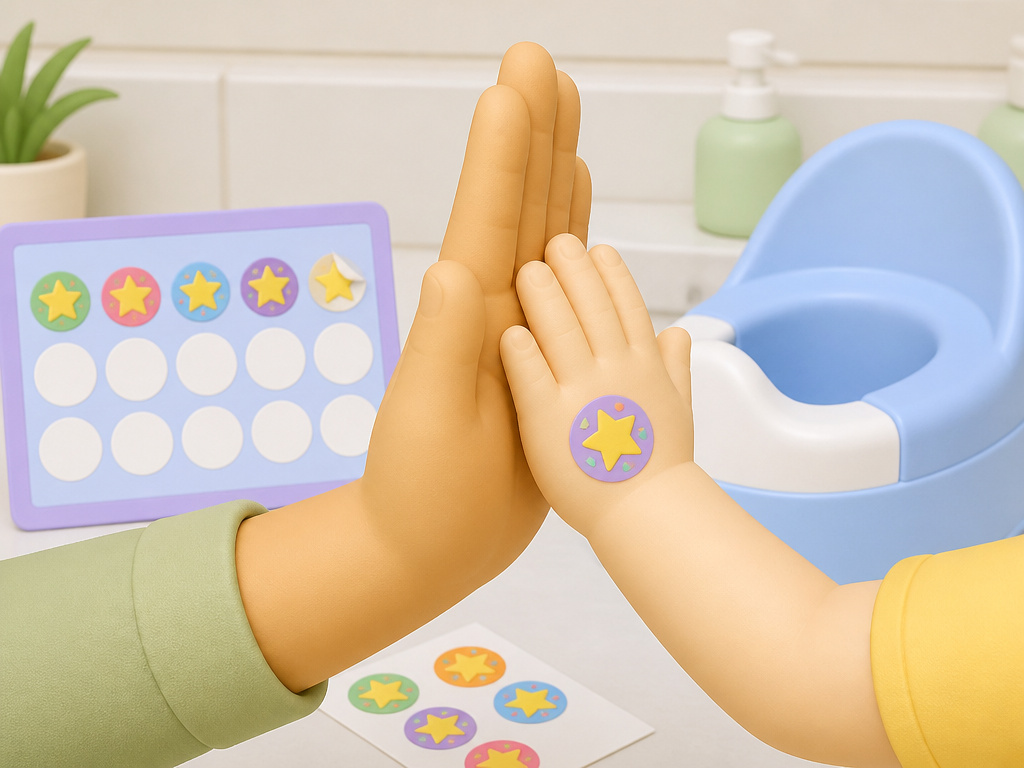 Rewards get a bad name when they’re random, delayed, or fade into entitlement. Done right, they’re simple feedback. The rule is immediate, consistent, and tangible.
Start with these three layers:
- The Sitting Reward (The “Thank You for Trying”). This happens every single time they sit, full stop. A high-five, a specific cheer (“Good sitting!”), or a sticker on the chart. This reward is for compliance with the routine, not for performance.
- The Success Reward (The “You Did It!”). This is for actual urination or defecation. Make it marginally bigger, two stickers, a dot on a hand with a washable marker, a spin of a “reward wheel.” It must follow within 10 seconds.
- The Independence Reward (The “You Remembered!”). This comes later, when they start self-initiating. A special “big kid” privilege, like choosing the story at bedtime.
The Down’s Syndrome Association guide is blunt: “Try not to make comments if they don’t have a wee. It’s better not to say anything so that they relate the praise with using the toilet.” Your neutral reaction to an empty potty is as important as your celebration of a full one.
Where this goes sideways: Using food or toys as a primary reward from day one. You have nowhere to go when you need to raise the motivation for a harder step, like pooping or going in a public restroom. Start small and social.
Your potty training rewards strategy should feel sustainable for at least three months. If you’re dreading the sticker chart by week two, it’s too complicated.
Sensory Play & The Bathroom Environment
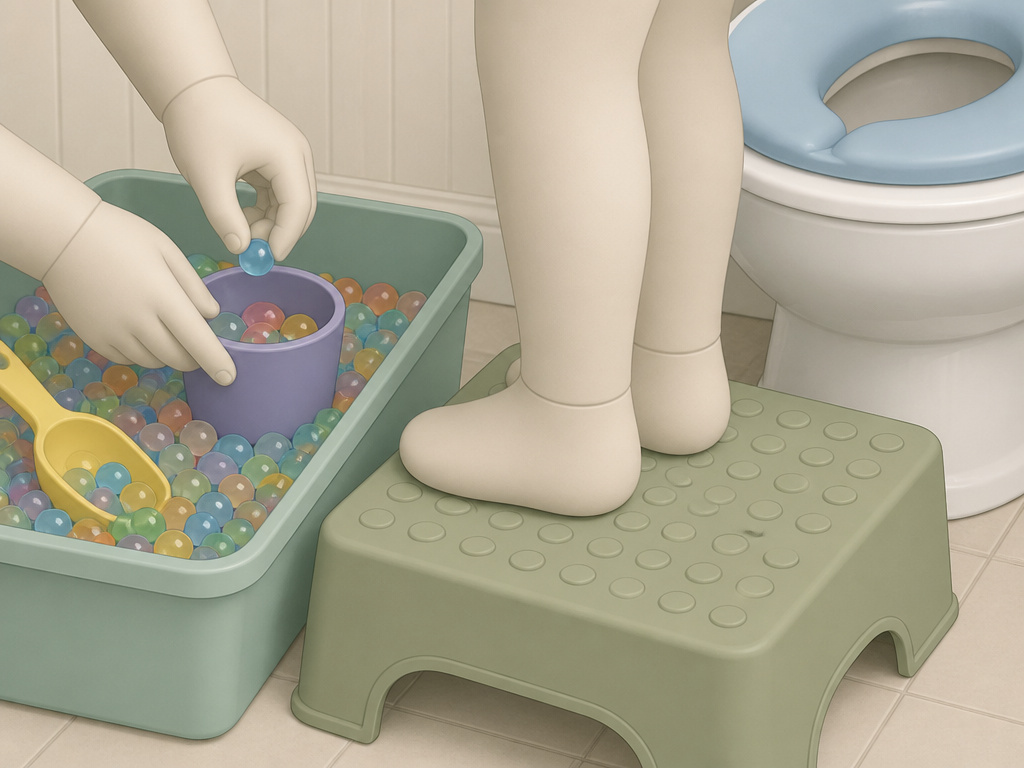 For many children, resistance is about the room, not the potty. The flush is loud, the seat is cold, their feet dangle.These are sensory hurdles you can fix.
First, audit the space:
- Lighting: Is it a harsh overhead? Add a small, plug-in nightlight for a softer glow.
- Sound: Does the toilet flush scare them? Let them press the handle after they stand up, or use a noise-reducing toilet like the Kohler Cimarron.
- Stability: Dangling feet create a core instability that makes relaxation physically difficult. A sturdy footstool is non-negotiable. The OXO Tot Step Stool is wide and grippy.
- Comfort: A cold plastic seat ring is a shock. Use a padded insert like the BabyBjörn Potty Seat or a simple padded ring that fits your toilet.
Now, bring the fun to the threshold. Sensory play demystifies the process.
- For water curiosity: Place a sensory bin with water beads, cups, and a toy potty next to the real toilet during playtime. The association is built through parallel play.
- For understanding “going”: Read books like “Everyone Poops” by Taro Gomi or “P is for Potty” (Sesame Street). The visual explanation removes mystery.
- For routine clarity: A visual schedule with laminated pictures (pants down, sit, wipe, flush, wash hands) placed on the wall provides a predictable sequence, reducing anxiety for children with communication delays.
These are functional accommodations that lower the stress load so the child’s brain can focus on the new skill.
Game-On! Turning Tasks Into Play
Abstractions like “listening to your body” mean nothing to a two-year-old. Concrete games do.
Here are three that actually work:
- The Target Game: Drop a few biodegradable, dissolvable targets (like a single piece of toilet-safe confetti or a Cheerio) into the bowl for boys. It gives aim and immediate visual feedback. For everyone, adding a drop of blue food coloring to the water that turns green with yellow urine is a magic trick they’ll want to repeat.
- The “Potty Party” Song: Designate one short, upbeat song as the official potty song. It only plays during sits. When the timer beeps, the music stops. This auditory cue defines the session.
- The Sticker Story: Don’t just put stickers on a chart. Use them to build a scene. Each sticker is a piece of a train track that grows across the wall. The final sticker completes the picture, offering a long-term visual goal alongside the daily win.
The Johns Hopkins toilet training guide notes that setbacks are normal during illness or emotional stress. When they happen, revert to these low-pressure games instead of escalating demands. You’re maintaining the positive association above all else.
Navigating the Inevitable Hiccups
Fun doesn’t mean perfect. Expect three specific friction points and have a plan for each.
| Hiccup | Why It Happens | The “Fun-First” Response |
|---|---|---|
| Poop Resistance | Fear of the sensation, loss of control, or privacy. | Read a humorous poop-themed book together away from the toilet. Use potty training pants for confidence on outings. |
| Public Bathroom Fear | Overwhelming noise, automatic flushes, unfamiliar space. | Make a “public potty pack” with a foldable seat cover, sticky notes to cover sensor flushes, and headphones. Frame it as a mission. |
| Regression After Success | New sibling, travel, illness, or simply mastering a new physical skill. | Drop all pressure. Say, “Your body’s remembering. Let’s just sit for our quick song.” Revert to the sitting reward only. |
If resistance is your default state, your approach needs a reset, not more force. Our guide on how to potty train a stubborn toddler digs into de-escalation tactics for power struggles.
The equipment you choose matters. A secure, comfortable seat like the BabyBjörn Smart Potty or the OXO Tot Potty Training Seat removes a variable. Don’t fight a battle on two fronts, a wobbly seat and a wary child is a losing combo.
Phasing Out the Fanfare
The end goal is a child who uses the toilet independently, not one who performs for stickers. The transition is gradual.
- First, fade the sitting reward. Once sitting is automatic, stop the timer and the specific song. Just say, “Time for a quick check.”
- Next, intermittent success rewards. Start giving the success sticker only for every other accident-free day, then every few days. Surprise rewards feel more genuine than expected transactions.
- Finally, shift to social pride. Replace the chart with a “Big Kid Club” announcement at dinner. “Guess who stayed dry all day at the park? That’s a club move.”
This mirrors the evidence-based practice of “dissolving supports over time” recommended for children with disabilities, encouraging them to recognize their own body cues. The skill becomes internalized.
Frequently Asked Questions
What if my child is scared of the potty?
Fear usually stems from sensory overwhelm or a bad first experience. Go back to pre-potty play. Let them decorate a potty trainer seat with stickers while it’s on the floor. Practice sitting on it fully clothed during playtime. The goal is zero pressure until the object itself is neutral.
How many times a day should we try?
For typical training, aim for 5-7 scheduled sits: after waking, after each meal, and before bath/bed. The Down’s Syndrome Association recommends a trip every 40-60 minutes for children who need more frequency. Watch for their personal cues (crossing legs, hiding) and add an extra “cue sit.”
Are rewards the same as bribery?
No. A bribe is offered to stop a negative behavior (“I’ll give you a cookie if you stop screaming”). A reward is given after a positive behavior as positive reinforcement. The key is the order: the behavior must come first. Rewards inform. Bribes negotiate.
How do I clean accidents without shame?
Keep a neutral, business-like tone. “Oops, our pee/poop missed the potty. That’s okay. Let’s clean up.” Involve them in fetching clean clothes or wiping the floor with a paper towel (followed by your sanitizing). The message: accidents are a cleanup problem, not a moral failure. Our guide on how to clean a potty training toilet makes this routine hygienic and quick.
When should I seek outside help?
If you see strong resistance lasting months, signs of pain (straining, crying), chronic constipation, or if interfering behaviors (hitting, biting) make the process unsafe, talk to your pediatrician. They can rule out medical issues and refer you to an occupational therapist or behavior specialist. You’re not failing; you’re gathering your team.
Before You Go
Fun is a strategy, not a magic wand. It means choosing a three-minute song over a fifteen-minute standoff.It means investing in a footstool before you buy a bigger sticker pack. The mechanics are simple: short sessions, immediate feedback, and a comfortable environment.
The real work is in your patience. Progress isn’t linear. A week of wins followed by three days of accidents is standard, not a setback. Your consistency, not your enthusiasm, is what builds the routine. Keep the sessions short, keep the reactions neutral, and let the small wins add up. The goal isn’t a dry child tonight, but a confident one in a few months.
