
How to Clean a Potty Training Toilet Safely and Effectively
This post contains affiliate links. As an Amazon Associate, we learn from qualifying purchases
Clean a potty training toilet with a two-step system: a daily wipe-down and a weekly deep clean. Use a mild dish soap or a dedicated bathroom spray on the exterior and a gel-based toilet cleaner inside the bowl. For plastic seats and electronic bidet attachments, only use a soft cloth dampened with water or a diluted neutral cleanser, and avoid abrasive pads, bleach, and in-tank cleaners that can cause permanent damage.
That distinction between the ceramic bowl and the plastic or electronic parts is where most cleaning routines fail. The bowl can handle a gel cleaner; the seat, especially a fancy one with a WASHLET, cannot. Get that wrong, and you’re not just dealing with a stain—you’re looking at cracked plastic, malfunctioning sensors, or a voided warranty.
What follows is the breakdown: the daily drill that takes under three minutes, the weekly scrub that actually works, and the manufacturer-specific rules for brands like TOTO that most parents never see in the store manual. You’ll also get the list of what never to use, and why the “easy” cleaner is usually the one that ruins the finish.
Key Takeaways
- Match the cleaner to the material: Ceramic bowls need gel-based cleaners; plastic seats and electronic bidets require only water or a diluted neutral cleanser to prevent cracking and electrical damage.
- Skip the bleach and abrasives: Bleach weakens plastic over time, and scrub pads scratch the glaze on ceramic and the finish on plastic, making future stains stick faster.
- Rinse bowl cleaners fast: If you use a toilet bowl cleaner with a plastic seat attached, rinse it off within three minutes and leave the seat up to prevent corrosive vapors from seeping into hinges and electronics.
- Dry everything thoroughly: Lingering moisture under a seat or in crevices is the primary cause of mold and mildew growth in a humid bathroom.
- Read the manual for premium brands: Products with coatings like TOTO’s CEFIONTECT or integrated bidets (WASHLET) have strict, non-negotiable cleaning rules that override general advice.
Why a “Kid’s Toilet” Needs More Care, Not Less
A potty training toilet isn’t just a smaller version of the adult fixture. It’s a hybrid object: part durable ceramic, part delicate (and often porous) plastic, and sometimes part sophisticated electronics. Each material reacts differently to chemistry. What dissolves mineral buildup on porcelain can craze the surface of a plastic seat within months. The humidity and… let’s be honest, the frequent “misses”… create a perfect environment for stains and odors to set if you’re not consistent.
The part nobody mentions: The gap between the removable potty bowl and the outer chair is a mold incubator. If you only clean the bowl, you’re missing the reservoir where moisture and bacteria collect unseen.
This isn’t about aesthetics. A visibly dirty or smelly potty is a huge deterrent for a toddler. Consistency and cleanliness are directly tied to potty training success. The goal is a routine that’s so quick and simple you’ll actually do it every day.
The Daily Cleaning Drill (Under 3 Minutes)
This is the non-negotiable habit that prevents 90% of problems. Do this after every use, or at a minimum, once at the end of the day.
- Empty and rinse. Dump the contents into the big toilet. Rinse the inner bowl with cold water from the sink or shower. Hot water can set protein-based stains.
- Spray and wipe the exterior. Use a spray bottle with a mix of warm water and a few drops of mild dish soap like Dawn. Spritz the outside of the chair, the lid, the handle, and the splash guard. Wipe with a dedicated microfiber cloth. This removes germs and any… splatter.
- Dry the hidden spots. This is the step people skip. Use a dry corner of the cloth or a paper towel to wipe the rim where the bowl sits, the underside of the seat, and any crevices. Leave no moisture behind.
Where this goes sideways: Using a disinfectant wipe for this daily wipe-down. The alcohol or quats in most wipes dry out and degrade plastic over time, making it brittle. Save the disinfectant for the weekly clean.
The Weekly Deep Clean & Disinfection
Once a week, or immediately after an illness, perform this full clean. You’ll need a soft-bristled plastic brush, your gel-based toilet cleaner, and your all-purpose spray.
| Step | Focus Area | Tool & Cleaner | If You Skip It |
|---|---|---|---|
| 1. Disassemble | Remove bowl, seat, and any splash guards. | Your hands. | You cannot clean the contact points where mold grows. |
| 2. Soak the Bowl | Interior surface of the removable pot. | Gel-based toilet bowl cleaner. Let sit 5-10 min. | Mineral and urine scale builds up, causing permanent staining and odor. |
| 3. Scrub the Bowl | Inside the soaked bowl. | Soft-bristled plastic brush. | The gel cleaner loosens grime but doesn’t remove it; it just redeposits. |
| 4. Clean the Chair & Parts | All plastic surfaces, crevices, hinges. | All-purpose spray or soapy water, cloth. | Surface germs and grime remain, undermining the deep clean. |
| 5. Disinfect | All non-porous surfaces. | EPA-registered disinfectant spray or wipe. | You’ve cleaned but not killed potentially harmful bacteria and viruses. |
| 6. Rinse & Dry | Every part, especially after disinfectant. | Cool water, then dry cloths. | Disinfectant residue can irritate skin; moisture invites mold. |
Worth knowing before you start: An EPA-registered disinfectant needs to stay wet on the surface for its stated “contact time” (often 3-10 minutes) to actually work. Read the label. Spraying and immediately wiping is just cleaning.
After the disinfectant contact time, rinse every part with cool water to remove any chemical residue. Dry everything completely with clean towels before reassembling. A dry potty is a happy potty.
The Safe vs. Dangerous Cleaner List
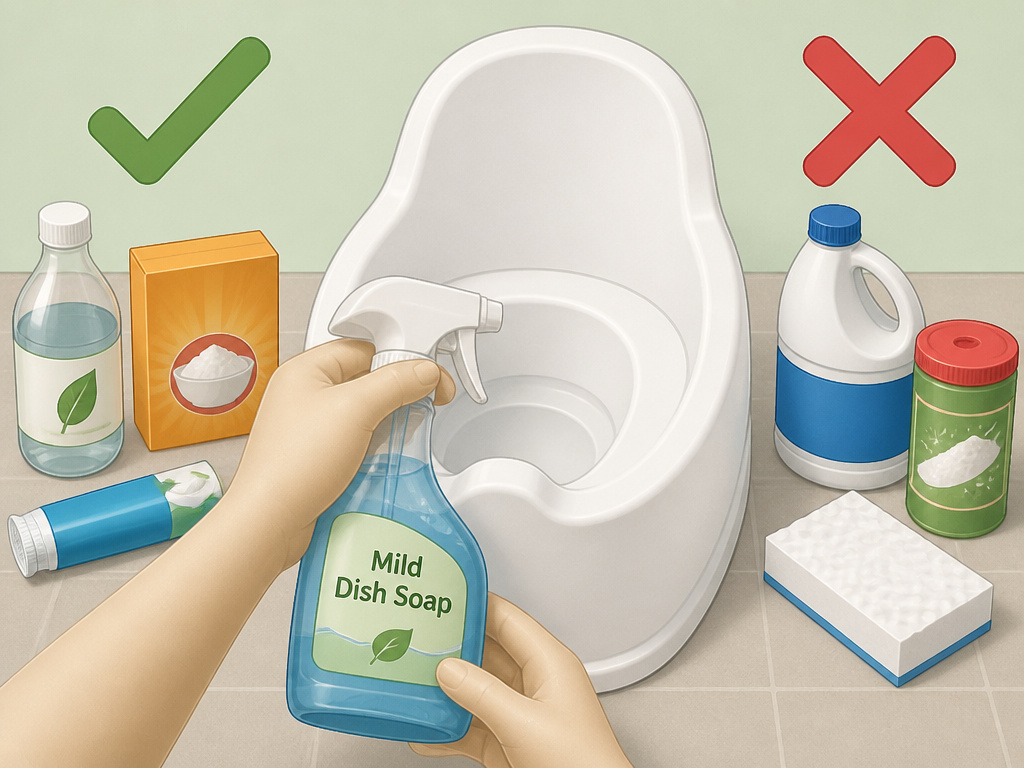
Your cleaning cabinet is full of agents that can ruin a potty chair. Here’s the definitive breakdown.
Safe & Recommended:
- Mild dish detergent: For daily wiping of plastic and ceramic. It cuts through grime without harsh chemicals.
- Gel-based toilet bowl cleaner: Formulated for ceramic. Clings to vertical surfaces to dissolve scale.
- White vinegar: A natural acid for tackling hard water limescale on ceramic. Do not use on plastic.
- Baking soda paste: A gentle abrasive for stubborn ceramic stains. Make a paste with water.
- Diluted neutral pH cleanser: The only chemical option for sensitive plastic or electronic bidet seats. Think baby bottle cleaner or a plain soap.
Dangerous & Damaging:
- Bleach & chlorine cleaners: They weaken plastic polymers, causing yellowing and cracking. TOTO explicitly warns that in-tank chlorine tablets damage fittings, leading to leaks.
- Abrasive cleansers (powders, creams): Scratching the surface of ceramic or plastic creates microscopic grooves where stains and bacteria anchor permanently.
- Magic Erasers (Melamine foam): They are micro-sandpaper. They will absolutely dull and scratch glossy plastic finishes.
- All-purpose acidic cleaners (e.g., Lime-A-Way): Too strong for many materials and can irreversibly etch surfaces.
- Steam cleaners: The intense heat and moisture can warp plastic and destroy electronic components in seats with bidet functions.
Special Cases: Tackling Stains and Hard Water
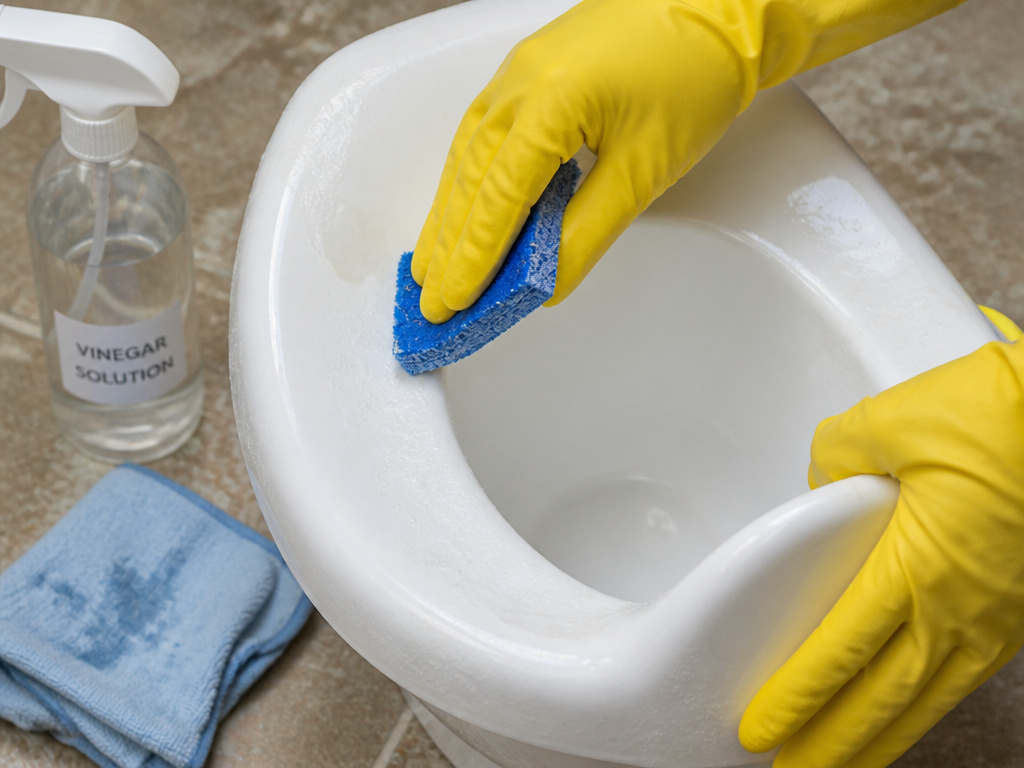
For persistent problems, you need a targeted approach.
Hard Water (White/Chalky) Stains on Ceramic:
This is one of the few times a slightly more aggressive tool is sanctioned by manufacturers like TOTO. For a ceramic bowl with a CEFIONTECT or similar glaze, use a non-scratch scour pad (the white or blue kind) with vinegar or a lime-dissolving cleaner. Let the acid sit for 10-15 minutes to break down the mineral deposit, then gently scrub.
Rust Stains:
These are often from minerals in your water, not the potty itself. A paste of cream of tartar and hydrogen peroxide can work. Apply, let sit for an hour, and scrub gently. For severe cases, a commercial rust remover labeled safe for porcelain is the last resort.
Mildew in Crevices:
This means moisture is consistently trapped. After your deep clean, ensure the area is bone-dry. A preventative spray of a 50/50 water and white vinegar solution (on ceramic parts only) after each weekly clean can deter growth. Increase bathroom ventilation.
Cleaning Integrated Bidet Seats (e.g., TOTO WASHLET)
If you have a high-end training toilet with an electronic bidet seat, the rules change completely. These are appliances. The manual for a TOTO WASHLET is uncompromising.
Before you start: Turn the power switch to OFF. Never use toilet paper, dry cloths, microfibre, sponges, or brushes on the seat or wand. These can scratch or generate static electricity that can cause malfunctions.
The Procedure:
- Power Off. Always.
- Seat & Casing: Wipe with a soft cloth moistened with water only. If needed, use a cloth moistened with a diluted neutral kitchen detergent. Immediately follow with a water-dampened cloth to remove all residue.
- Wand Nozzle: Use the seat’s self-cleaning function to extend the wand. Clean gently with a water-dampened cloth. Never pull or apply pressure.
- Critical Rule for Bowl Cleaning: If you use a toilet cleaner in the bowl, you must rinse it off within 3 minutes and leave the seat and lid open. Vapors from the cleaner can rise and seep into the main unit, damaging plastic parts and electronics.
This is non-negotiable. Treat it like cleaning a smartphone, not a toilet.
Choosing a Potty That’s Easy to Clean
Your cleaning battle is won or lost at the point of purchase. When you’re comparing the best potty chairs or best potty training toilets, prioritize cleanability.
- Smooth, Sealed Surfaces: Avoid models with deep texture, faux-wood grain, or numerous stickers. Grime gets in and won’t come out.
- Fully Removable Bowl: The bowl should lift out easily with one hand for rinsing. A built-in pour spout is a bonus.
- Minimal Nooks & Crannies: Look for a simple, one-piece design under the seat. The more seams and gaps, the more hiding places for mess.
- High-Quality Plastic: Cheaper, thinner plastic stains and scratches more easily. It’s worth investing in a reputable recommended potty chair from brands known for durability.
A standalone potty toilet like the Baby Björn Smart Potty is famous for its minimal, seamless design. A training toilet like the OXO Tot 2-in-1 Go Potty has a removable liner that simplifies cleanup. Your choice should make the daily drill effortless.
Frequently Asked Questions
Can I use Clorox wipes on a plastic potty seat?
You can, but you shouldn’t make it a habit. The chemicals in disinfectant wipes, including bleach and quaternary ammonium compounds, are harsh on plastics. Over time, they cause the plastic to dry out, become brittle, and discolor. For daily cleaning, soap and water is safer. Reserve Clorox wipes for weekly disinfection, and always rinse the surface with water afterward.
How do I get the urine smell out of a potty chair?
Persistent ammonia smell means urine has soaked into porous plastic or dried scale is present in the ceramic. For the plastic parts, a long soak in a sink with warm water and a scoop of oxygen-based cleaner (like OxiClean) will break down the odor molecules. For the ceramic bowl, a thorough scrub with a gel toilet cleaner and a brush is needed. The ultimate fix is complete and thorough drying after every single use.
Is it safe to put a potty chair in the dishwasher?
Check the manufacturer’s instructions. Some high-quality, one-piece polypropylene chairs (like the Baby Björn) are top-rack dishwasher safe. Most are not. The heat and powerful detergents can warp plastic, fade colors, and degrade adhesive on stickers or decals. Hand washing is almost always the safer bet.
What’s the best way to clean a potty chair on the go?
This is where travel potty seats shine. Most portable seats are designed to be wiped clean. Carry a small pack of water-wetted paper towels and a travel-sized bottle of mild soap or a sealed pack of baby wipes. The key is to dry the seat thoroughly before folding it back into its travel bag to prevent mildew.
How often should I replace a potty training toilet?
Replace it if you see deep cracks (which can harbor bacteria), if the plastic has become excessively stained or brittle, or if parts like the seat hinges are broken. With proper care, a good quality potty should last through one child’s training and be in good enough condition to store for a sibling. If you’re looking for a fresh start, our guides on potty chairs for boys and best toilet training seats can help you choose a successor.
Before You Go
Cleaning a potty training toilet isn’t complicated, but it is specific. Remember the material split: gel cleaner for the ceramic bowl, gentle soap and water for the plastic. Ban bleach and abrasives from the job. Dry every nook completely, every time.
The real secret is the daily three-minute wipe-down. It prevents the big, disgusting clean-ups that make you want to quit. Pair this routine with a potty training chart for rewards and keep the process positive. A clean, fresh potty is one less obstacle between your toddler and success.
