
Your Guide on How to Potty Train a 3 Year Old Effectively
This post contains affiliate links. As an Amazon Associate, we learn from qualifying purchases
To potty train a 3 year old, commit to a structured, consistent schedule of practice sits every 1-2 hours, use immediate positive reinforcement for any success, and expect the process to take weeks, not days. Starting after 24 months is linked to a higher risk of daytime wetting issues, so a clear plan is your best defense against prolonged struggles.
That timeline from the research reframes the entire job. You’re not just teaching a skill; you’re working against a documented statistical trend. The goal shifts from hitting an arbitrary finish line to building a reliable habit through mechanical consistency.
What follows is the framework that turns that consistency into results: a five-step method grounded in professional guidelines, the specific gear that prevents physical hurdles, and the data on why nearly a quarter of kids backslide, and how to pull them forward again.
Key Takeaways
- Starting potty training after a child’s second birthday is associated with an increased risk of daytime urinary incontinence, per a regression analysis cited in professional guidelines.
- Nearly 25% of children experience a temporary loss of toileting skills during training; this regression is normal and doesn’t mean starting over.
- Limit initial potty sits to 5 minutes maximum to avoid turning the toilet into a battleground.
- For children with developmental delays or suspected conditions, expert guidelines mandate an offer of professional support in the first year of life, waiting for traditional readiness signs is not advised.
- Immediate, tangible rewards given only for potty success are more effective than general praise for a 3-year-old’s learning cycle.
Why a 3-Year-Old Isn’t “Late” (But the Clock is Ticking)
The question is what kind of learning curve you’re facing based on the calendar for your 3-year-old. A 2022 review in the journal Pediatrics noted the age of toilet training has crept up in recent decades.We’re starting later. That shift has a cost.
One key regression analysis found that initiating toilet training after 24 months of age is linked to higher odds of daytime wetting later in childhood.
This is about setting realistic expectations, not blame. A three-year-old has stronger opinions, more entrenched habits, and a will that can turn a potty chair into a power struggle monument.Your advantage is their cognitive ability to understand simple sequences and their capacity for genuine bladder control, they can typically stay dry for two-hour stretches.
The old checklist of readiness signs? Professional guidelines from Bladder & Bowel UK state there’s “no consensus or evidence base for how many, or which readiness signs should be present.” Waiting for a magical combination of dry naps, verbal cues, and interest in underwear means many kids pass the physiological ideal window. At three, you use the signs you have: physical capability and your own readiness to be relentless.
The 5-Step Structured Potty Training Method
This is a scaffolding method that builds the habit layer by layer, and it’s particularly effective for older toddlers who need clarity. It is not a three-day magic trick.
Step 1: The Equipment Introduction. Before day one, let the potty or toilet seat reducer live in the bathroom for a week. Let your child sit on it, fully clothed, during your own bathroom trips. Name it. The goal is neutral familiarity, not performance.
Step 2: The Schedule Launch. Pick a long weekend or a period with few outings. Switch to underwear. Set a visual timer for 90 minutes. When it goes off, it’s a non-negotiable potty sit. The instruction is a calm statement, “Time to try the potty”, not a question. This step creates the muscle memory of the routine.
Step 3: The Reward Protocol. The reward must be instant, tangible, and reserved exclusively for potty success. A small sticker, two chocolate chips, 30 seconds of a favorite song. It leaves no ambiguity about what earned it. Hand it over the second the stream starts or the bowel movement is done.
Step 4: The Accident Procedure. Accidents are data points, not failures. Use a neutral “Oops, pee goes in the potty” and have the child help with the minimal cleanup. No drama, no shame. Then guide them through a “positive practice” walk to the toilet and back five times. This is a calm, mechanical correction that links the accident to the correct location, not a fun activity.
Step 5: The Fade-Out. After 4-5 days of consistent successes on the schedule, start stretching the timer intervals to 2 hours, then 2.5. Watch for when they start telling you they need to go, and then honor those requests immediately. Slowly replace the tangible reward with enthusiastic, specific praise.
Skipping the schedule creates random practice, which extends training by weeks. Skipping the exclusive reward muddles the cause-and-effect for the child. The mechanical consistency is what makes the neural pathway.
Where This Goes Sideways: The “Frequent Small Void” Loop
Common mistake: Interpreting constant small accidents as a lack of bladder control. When a child starts passing tiny amounts of urine every 20 minutes after ditching diapers, it’s often a sensory reaction. They feel the new sensation of wetness, clench to stop, and the partially full bladder refills quickly, triggering another urge. The fix is sticking to the 90-minute schedule, it retrains the bladder to fill fully before signaling.
Equipment That Actually Helps (And What to Skip)
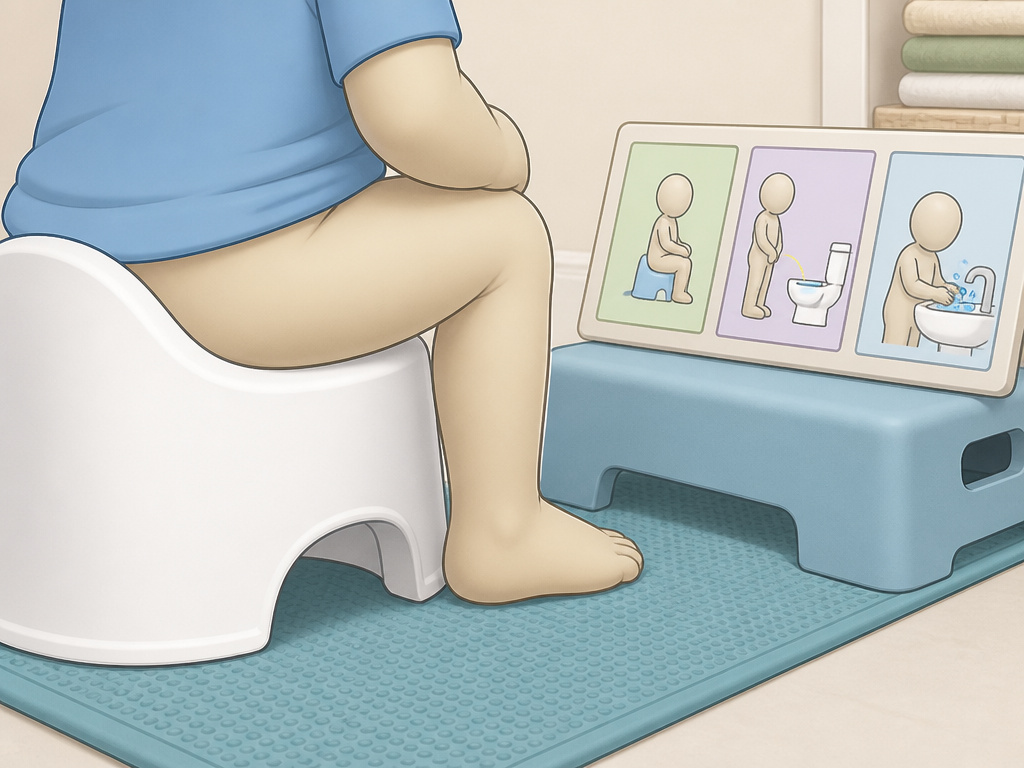
The right gear removes physical barriers. The wrong gear creates them.
| Equipment | Purpose & Spec | Risk If Wrong |
|---|---|---|
| Potty Chair | Provides stability, feet-flat positioning. Best for initial independence. | A wobbly potty creates fear and refusal. It must not slide. |
| Toilet Seat Reducer + Step Stool | For direct toilet training. The stool must be high enough that knees are higher than hips. | Feet dangling creates pelvic floor tension, making emptying difficult and encouraging withholding. |
| Visual Schedule | A simple, laminated strip with 3-5 picture cards: Pull Down Pants > Sit > Pee/Poo > Wipe > Flush/Wash Hands. | Without a visual cue, multi-step tasks overwhelm a 3-year-old’s working memory, leading to frustration and skipped steps. |
| Timer | A visual, non-verbal cue for schedule sits. Removes you as the “nag.” | Using your voice to announce “time to go” turns you into the antagonist in the routine. |
The IKEA LOCKIG potty is a stable, no-frills workhorse. For a toilet insert, the Summer Infant My Size Potty Seat mimics an adult seat and locks securely. Skip the musical or light-up potties, they distract from the core task and can create a dependency where the child only goes for the show.
The posture point is non-negotiable. A 2021 Kennedy Krieger toilet training guide for children with developmental delays stresses that feet support is critical for relaxation. It’s not a comfort tip; it’s a biomechanical requirement for the sphincter to release.
Navigating Stubbornness, Regression, and Other Hurdles
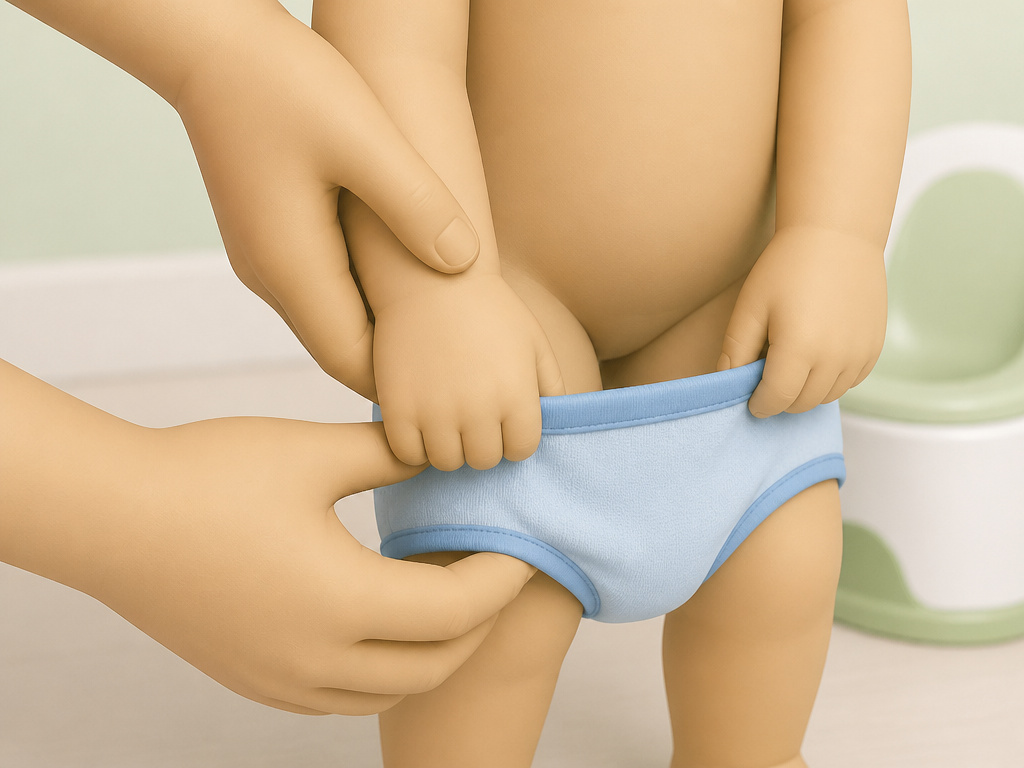
At three, behavior is the main event. You’ll face refusal, power struggles, and the dreaded regression.
For outright refusal: Drop the verbal debate. Use hand-over-hand guidance to walk them to the bathroom, help them sit for 5 seconds, then reward that microscopic cooperation. You’re reinforcing compliance with the routine, not the result. Gradually reduce the physical prompt over days.
For the child who holds it for hours then has an accident: This is often a control play or a fear of the sensation. Increase fluid intake (watermelon, smoothies) to make the urge stronger than the will to hold. Protect naptime and nighttime with a pull-up to take the pressure off, but keep the daytime schedule rigid.
Regression is the rule, not the exception. A 2022 study cited by BBUK found 24.8% of families reported a loss of skills during training. A new sibling, an illness, a vacation, any disruption can trigger it. The response is to revert to Step 2: The Schedule Launch, not to diapers. Go back to 90-minute sits, tangible rewards, and mechanical consistency for 3-4 days.The relearning is faster the second time.
If you’re dealing with a particularly strong-willed child, our guide on potty training a stubborn toddler breaks down the tactical shift from persuasion to structured choice.
When to Suspect More Than Just “Strong Will”
Sometimes, the struggle points to a developmental or physical factor. The professional guidelines are clear: children with suspected delays should be offered support in their first year of life.
Key indicators that warrant a pediatrician chat: * No periods of dryness longer than 90 minutes by 3.5 years old. * Extreme fear or sensory meltdowns around flushing, sitting, or feeling waste. * Chronic, rock-hard constipation alongside refusal. * Inability to follow other simple, two-step directives.
For children with autism, ADHD, or sensory processing differences, standard potty training strategies for a three-year-old boy or girl might need adaptation. Visual schedules become essential. A Wet-Stop alarm clipped to underwear can provide the clear, immediate feedback some children need to connect the internal sensation with the outcome. The core principle from the NIH toilet training research review still applies: structured, consistent, reward-based methods show the best evidence.
If your child is closer to four and you’re just beginning, the dynamics change slightly. Our resource on potty training a 4 year old addresses the social awareness and peer comparisons that can be leveraged at that age.
Frequently Asked Questions
What is the fastest way to potty train a 3-year-old?
The most efficient path is the structured, intensive schedule method. It condenses learning into a focused block of time, but “fast” is relative. A three-day potty training method can work for some motivated children, but for many 3-year-olds, it sets up a 3-day power struggle followed by weeks of mopping. The 5-step method outlined here typically shows solid progress within a week, with full reliability taking several more.
My 3-year-old refuses to poop on the potty. What do I do?
This is incredibly common. First, rule out constipation with a pediatrician, hard stools hurt, and the child associates that pain with the potty. If it’s behavioral, create a low-pressure routine. Try sits 15-20 minutes after a meal when bowel urges are strongest. Use a specific, high-value reward only for poop success. Allow them to sit with a book or quiet toy. Never force or hold them on the seat.
Should I use pull-ups or underwear during training?
Switch to underwear during all waking hours. Pull-ups feel too much like a diaper and don’t provide the immediate, unpleasant wet sensation that motivates a child to get to the potty next time. Use pull-ups only for naps and overnight once daytime training is underway.
How do I handle potty training when we’re out of the house?
Plan the first 5-7 days as a home-bound boot camp. After that, practice short outings right after a successful potty visit. Always scout the bathroom location first upon arrival. Bring a portable potty seat insert for public toilets and a full change of clothes. Keep the trips brief at first.
Is it too late to start potty training at 3?
No, it is not too late. While the typical potty training age range has shifted younger, three is still a very common and appropriate age to achieve daytime dryness. The process may require more deliberate structure and patience than starting at 18 months, but the capacity is there.
Before You Go
Potty training a 3-year-old is a logistics project with a side of developmental psychology. Your leverage isn’t in waiting for readiness; it’s in engineering the conditions for success. Commit to the schedule. Weaponize the exclusive reward. Get the posture right.
When the inevitable regression hits, and it will for nearly one in four kids, don’t read it as failure. Reboot the schedule. The path is a series of practice runs where the data point that matters is consistency, not perfection. It is not a straight line.
For many families, the sticking point isn’t knowledge but motivation. If you’re struggling to build momentum, look at how to make potty training fun with games and engagement, or refine your system with the right potty training rewards. And if it all feels overwhelming, that’s normal. The very fact that you’re researching a detailed plan means you’re already doing the work.
